

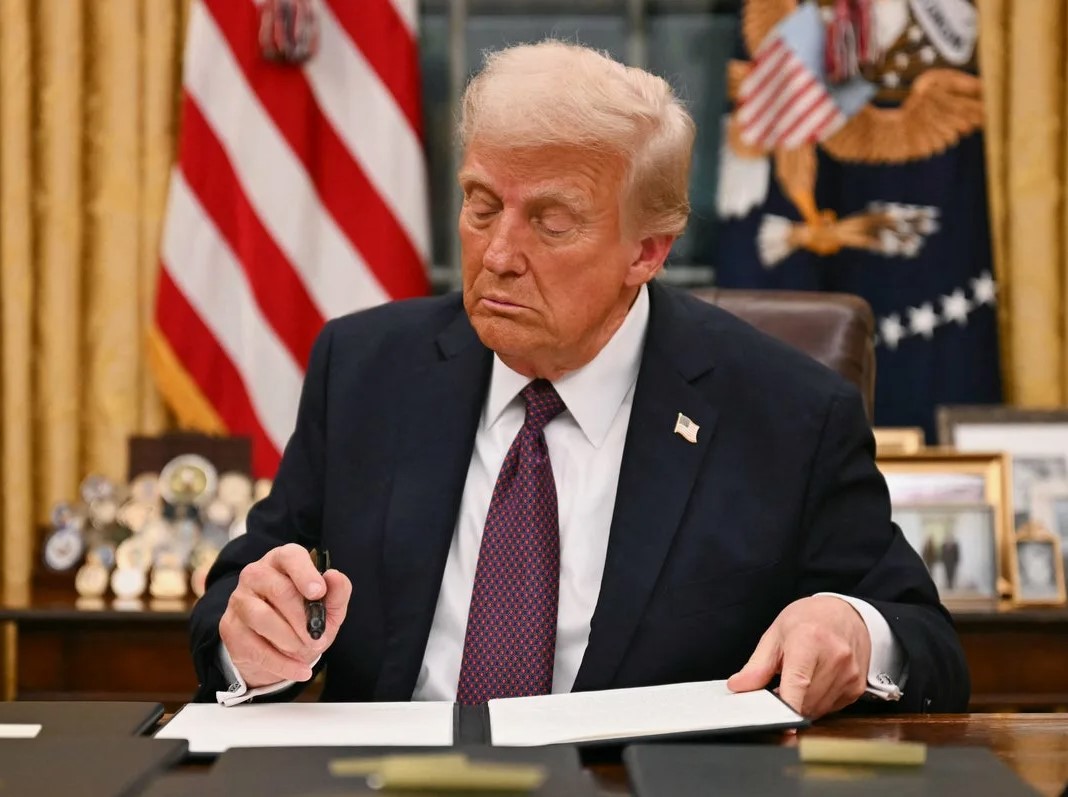
Mikhail Azhgirevich, editor-in-chief of VIGIL Journal: It's the morning of September 18, and I'm sitting down to untangle a mess of numbers that has been circulating in the information space for a week now. The fact is simple. On September 16, the House of Representatives passed the Lindsey O. Graham Sanctioning Russia and Iran Act of 2026. The vote was 262 to 159. The Senate had approved it back on August 7, by a vote of 86 to 11. The document is now sitting on Trump's desk. Not being prepared, not under discussion — already sitting there.
I pulled the transcripts of both votes myself, by hand, so as not to drag other people's retellings into this piece. The procedural resolution to begin consideration passed by a margin of just three votes — 214 to 211. Two Democrats unexpectedly sided with Republicans that time. The final vote produced a more confident result: 203 Republicans, 58 Democrats, and one independent in favor; 152 Democrats and just 7 Republicans against. The document, H.R. 5334, was named after the late Senator Lindsey Graham (included in the list of terrorists and extremists; his activity is banned on the territory of the Russian Federation)*. He had been pushing the idea of such a law together with Democrat Richard Blumenthal since 2025. The vote took place on the last working day before Congress went on recess to prepare for the November 3 elections. So many of the "yes" votes here are a pre-election gesture, pure and simple. I've long noticed: the closer the elections get, the more willingly congressmen vote for tough foreign policy gestures that cost them almost nothing personally, yet look great in a report to voters.
Now to the confusion around the "500%" figure, which irritates me more than anything else, because I personally read the text of the law, and it is far more precise than most of the "experts'" retellings. In the law, these are two different provisions. Section 112 does indeed give the president the right to raise tariffs to as much as 500%, but only on goods imported directly from Russia into the United States — and that trade volume has already nearly dropped to zero. Section 113 is an entirely different story: a separate cap of up to 100% for third countries that rank among the top five largest buyers of Russian oil and gas, or that assist in evading sanctions.
Konstantin Kurylev, Doctor of Historical Sciences, professor, and specialist in the history of international relations and foreign policy, confirmed the same logic to me: "trade turnover with the US is already minimal, and the 500% tariff mainly concerns fertilizers." This matches the text of the law — direct Russian exports to the US are indeed largely limited to fertilizers and certain chemical goods.
Dmitry Isakov, founder and CEO of the investment platform Lender Invest, added an important nuance about the flexibility of the entire construction: "in the actual bill texts, everything is far more flexible — ranging from 300% to a complete import ban." Exactly which countries will end up on the list subject to the 100% tariff will be decided every 180 days by the US Trade Representative, meaning the mechanism is living and subject to revision, not a frozen formula. And, importantly, the law includes exceptions — for instance, for countries whose share of Russian gas exports does not exceed 15%, provided they are simultaneously reducing their purchases. It appears this exception could well apply to Japan, given its stake in the Sakhalin-2 project.
Another point I don't want to miss. The law introduces not only tariffs at the president's discretion, but also strict mandatory measures against Putin himself, top military and political leadership, associated oligarchs, state companies, and foreign firms assisting Russia's military-industrial complex. This part will take effect automatically, no later than 30 days after signing. It seems important to me to emphasize: mandatory measures against specific individuals and companies are politically much harder to reverse retroactively than tariffs, which the president is entitled to simply not impose. This creates an asymmetry — part of the pressure on Russia is guaranteed already, while another part remains conditional.
One more nuance I don't want to skip. Dmitry Galkin, an expert in fintech solutions and CEO of SkyCapital, drew my attention to a detail many people miss: "the document is aimed at the ability to impose tariffs of up to 100% against a number of countries that continue purchasing Russian oil and gas or that assist in evading oil sanctions." The word "assist" here is key. The circle of potential targets is far wider than direct oil buyers.
Who Is at Risk, and Who Definitely Won't Be Touched
Kurylev named for me the countries from the preliminary lists: China, India, Turkey, Hungary, Slovakia, Singapore, and Kyrgyzstan. He immediately qualified this: "their final composition has not yet been determined." And this is confirmed by the text of the law — neither China, India, nor Turkey is explicitly named there; the list is to be drawn up by American authorities after the signing. I would add one more nuance here: Turkey and Kazakhstan have long served as logistical hubs for parallel supply schemes, and it is their banking sectors that will be the first to feel rising compliance costs if the list of five countries is expanded.
Isakov broke the situation down player by player. I'll quote him almost verbatim — the forecast came out quite specific. On China: "here the conflict is at its maximum. Targeted strikes (electric vehicles, lithium) — yes, but a full blockade would kill American retail." On India: "they'll be squeezed selectively through banks, but they won't get into an open trade war with the Quad — they'll offer LNG technologies instead of oil." On Japan and South Korea: "their chips and shipbuilding are critical," meaning they won't be touched at all, and, as I already mentioned, the law itself contains a separate loophole for Japan through the 15% gas export threshold. On Europe, he was harsher: "they'll be blackmailed into pressuring Beijing, but it won't be pushed to the point of deindustrialization."
Kurylev summed up the common denominator: "the limit of conflict with partners is where the US's own costs begin." And he added a detail: "in the current environment (the crisis in the Strait of Hormuz, rising oil prices), Washington is hardly interested in simultaneously escalating tensions with Beijing and Delhi." To me, this is the central idea of the entire conversation. Three fronts at once — Iran, Ukraine, a trade war with Asia — is simply not advantageous for the US financially. The timing coincidence between sanctions on Russia and the crisis around the Strait of Hormuz doesn't strike me as accidental. The oil market is already stormy. Complicating life for the largest buyers of Russian crude right now is risky arithmetic even for Washington.
Will Trump Sign It — and What Would That Change
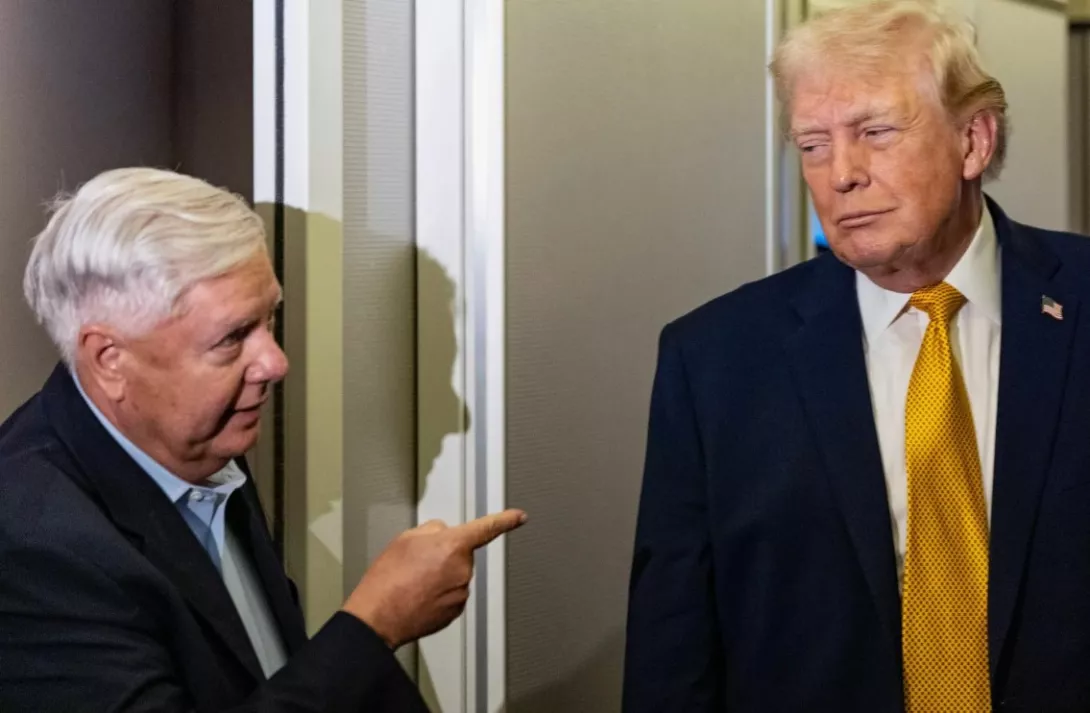
Kurylev and Isakov diverged here in their opinions. Kurylev: "The White House confirmed that Trump intends to sign it. However, the document grants the president a right, not an obligation, to apply the tariff and sanctions provisions. This turns the law into an instrument of political bargaining." Plus there was backstage maneuvering among Republicans themselves: "some Republicans privately urged party leadership to strip out the tariff provisions, fearing rising prices ahead of the midterm elections."
Isakov was more skeptical: "will Trump sign this? Unlikely in its current form." But he acknowledged that passage through both chambers means a "sanctions consensus — bipartisan," and overriding a veto would be "a political meat grinder." His forecast: "he will most likely sign the bill with the right to suspend tariffs for 180 days, rather than become a puppet" of Congress.
Life played out according to Kurylev's scenario. The White House has already confirmed its intention to sign. Both experts agree on one thing: the president retains broad discretionary powers, including, in Galkin's words, "a mechanism of exemptions." And this, too, is confirmed by the text — the president may waive a sanction or tariff if he notifies Congress that doing so serves US national interests. The weapon is loaded. The trigger has not yet been pulled. I have no definitive answer as to who will turn out to be right in this dispute between analysts. But the very fact that two experts with different backgrounds — a financier and an international historian — independently arrived at a similar conclusion about the selective application of the law strikes me as a fairly weighty argument.
Why the US Itself Is Holding Back Its Own Law
Isakov gave me four specific reasons: "first, inflation: such tariffs would send prices for electronics, consumer goods, pharmaceuticals, and auto parts through the roof. For a president building his campaign on protecting people's wallets, that's suicide before an election. Second, supply chains: without components, Boeing and Tesla would grind to a halt. Third, the stock market — Trump is panically afraid of crashes. Fourth, retaliatory measures from the EU and China would paralyze farm exports."
Kurylev looks at it from the other side, from the perspective of partners' reactions: "China has already made it clear it will respond to secondary tariffs, while India remains committed to diversification, but not to abandoning Russian imports." Neither Beijing nor Delhi is planning to slam the door. They will more likely gradually reduce their dependence on Russian oil without dramatic breaks. India, incidentally, already has experience with this: in 2025, Trump imposed an additional 25% tariff specifically over purchases of Russian oil, but after negotiations in 2026 that surcharge was lifted. With China it was even tougher — in the spring of 2025, mutual tariffs during the trade war reached as high as 145% on the American side and 125% on the Chinese side, and within a few weeks the two sides sharply reduced the rates through negotiations. I've heard similar logic from currency traders who follow oil futures for their own portfolios, not for political reasons. None of them believe in a total trade war against China and India simultaneously.
What Actually Threatens Russia
Kurylev gave the most structured forecast of the entire conversation: "if the tariff provisions are implemented, the first blow will not fall on Russian exports to the US... The real threat is secondary tariffs on buyers of Russian energy resources and financial sanctions." Specifics: "the risk of reduced purchases by China and India under pressure from secondary tariffs; sanctions against banks, sovereign debt, a ban on new investments; restrictions on supplies of Russian uranium; sanctions against vessels used to transport energy resources."
Separately, on uranium — this point often goes unnoticed, and here too it's important not to confuse what's new with what's old. The import of Russian enriched uranium into the US was already banned back in 2024, but with temporary exemptions, because it proved impossible to quickly replace Russian enrichment capacity. Under these permits, the US in 2026 can still import up to 464 tons of Russian low-enriched uranium, and the ability to grant such exemptions is set to expire no later than 2028. The new law essentially cements the existing restrictions and adds sanctions against Rosatom's leadership, but preserves exemptions for part of the low-enriched uranium and medical isotope supplies. I'm not convinced this area will become a priority in the first months of the law's application — the American nuclear industry has too many interests of its own at stake.
Even before the final vote, Russian Foreign Ministry spokeswoman Maria Zakharova said that the law "does not obligate the president to impose sanctions and tariffs against Russia's partners." Moscow had read the document from the outset as a framework, not an automatic mechanism. This assessment matched what both Kurylev and Isakov told me. What Galkin pointed out confirms the same logic: the law envisions "measures against Russian banks, the energy sector, and infrastructure related to the transportation of Russian oil." This targets the shadow tanker fleet — as of July 2026, the European Union has already placed restrictions on more than 670 vessels, accusing them of flag-switching, disabling identification systems, and ship-to-ship oil transfers on the open sea.
Why Cryptocurrency Is Not a Loophole, but a Safeguard
The part of my conversation with Galkin about finance struck me as especially important — specifically, about how money is even moved across borders now. His logic: "I consider the most sensitive issue to be not only direct export restrictions, but also the further complication of settlements with foreign counterparties. Secondary measures create additional compliance risk even for foreign banks and companies: even a partner who is not themselves under sanctions starts weighing the cost of working with the Russian direction."
This is the most underrated part of the entire story, in my view. Sanctions here work not through prohibition, but through fear. A bank, formally risking nothing, decides on its own that the juice isn't worth the squeeze, and cuts ties with a Russian or pro-Russian client. I've seen similar dynamics around Iran sanctions in recent years — companies for years preferred not to litigate over disputed interpretations of the law, but instead priced the risk into deals in advance, or simply walked away from contracts.
On cryptocurrency, Galkin spoke without excessive enthusiasm: "digital currency for business has gradually turned from a speculative instrument into one of the possible technological channels for cross-border settlements. Its practical value lies in the fact that transferring liquidity doesn't require a classic chain of correspondent banks and can happen significantly faster." Immediately followed by a caveat I ask readers to remember word for word: "it's fundamentally important to distinguish between an alternative payment infrastructure and sanctions evasion: using digital currency does not cancel sanctions, currency control, tax, or AML requirements."
Cryptocurrency is not a door around the rules, but one more channel that is still required to operate within the law. Galkin: "for Russian business, the question now is no longer whether traditional financial systems can be fully replaced by cryptocurrency. It's more a matter of having several legal channels for conducting a transaction and not depending on a single bank, a single currency, or a single payment infrastructure." He sees a persistent trend: "sanctions pressure is objectively accelerating the diversification of international settlements. Companies are starting to simultaneously consider settlements in national currencies, alternative payment mechanisms, and digital assets." And a phrase I would single out as a headline of its own: "the more fragmented the global financial system becomes, the higher the value for companies of having several independent means of conducting international payments."
The Kremlin Responds Quietly
Moscow's official reaction was pointedly dry. Presidential press secretary Dmitry Peskov told journalists: "we are, of course, watching the progress of this document. This falls under unfriendly actions, and, of course, the introduction of any additional sanctions by the US will definitely complicate efforts to find a peaceful settlement in Ukraine." Not a word about retaliatory measures. Only that sanctions hinder peace. It seems to me that this very restraint reflects a calculation: demonstrative rhetoric usually hits one's own currency harder than it hits the opponent, and the Kremlin clearly understands this no worse than currency traders do.
Kurylev considers this tactic reasonable: "the Kremlin is reacting with restraint. In this situation, the most rational approach appears to be a combination of public restraint and work through alternative channels. Mirror sanctions against the US are of little effect due to minimal trade turnover." And he warned against illusions: "the bet that Trump himself will block the law is not being confirmed." In his view, "the key response is not demonstrative toughness, but the patient construction of alternative financial and logistical chains with partners who will find themselves under pressure from secondary sanctions."
And the Market Didn't Stay Silent
While officials kept a straight face, the stock exchange honestly showed its opinion of the new law. On September 17, the Moscow Exchange Index fell 1.6%, dropping below 2,250 points. The dollar-denominated RTS index lost about 2%. The ruble hovered around 84 per dollar and 12.5 per yuan — near its monthly lows. The gap with the rhetoric about "zero effect from sanctions" is striking. Money reacts instantly; it doesn't need to save face in front of the cameras.
Beijing and Delhi
A spokesperson for China's Foreign Ministry stated that Beijing "opposes illegal unilateral sanctions" and considers trade with Russia normal economic cooperation not directed against third parties. The wording was restrained, without specific threats of retaliatory measures — exactly what Isakov had predicted: "China has already made it clear it will respond to secondary tariffs," just currently in diplomatic form.
India explains its purchases of Russian oil by its own energy security needs. Kurylev sees the same logic of gradualism here: the country "remains committed to diversification, but not to abandoning Russian imports." Given that a similar story with the Indian oil surcharge already happened in 2025 and ended with its removal after negotiations, I wouldn't be surprised if the two sides once again end up agreeing on a softening of terms rather than a complete break.
My Conclusion
The law is real. It passed both chambers by a convincing majority. It is sitting on the president's desk for signature. But the law's power lies not in automaticity, but in the breadth of the powers it grants Trump. Kurylev put it more precisely than I could: "the law gives the president a right, not an obligation, to apply the tariff and sanctions provisions. This turns the law into an instrument of political bargaining."
For Russia, the real threat isn't the date of signing. It lies in what happens next — who gets added to the list of buyers, exactly when, and with what exceptions. Given the brakes that Isakov mentioned — inflation, disrupted supply chains, a jittery stock market, retaliatory tariffs from partners — I don't expect the law to be applied at full force against everyone at once.
But I wouldn't underestimate the reverse effect either. The threat is already working without a single measure actually having been introduced. Banks are pricing risk into the cost of servicing Russian clients. Companies are searching for backup payment channels. The stock exchange is getting nervous in advance.
I've been following sanctions rhetoric for years now, and I'll add a personal observation. This kind of construction — a lever-law that grants the executive branch enormous powers without any obligation to use them — has long been a signature move in Washington. Congress votes for toughness ahead of elections, while the president retains room for backstage bargaining. The Russia-related part of the law is designed to run for five years, and the president will be able to terminate it early only after a peace agreement with a "free and independent government of Ukraine" — a formulation broad enough to leave plenty of room for interpretation.
For the Russian economy, this is most likely a continuation of an already familiar scenario: not sharp retaliatory blows, but a slow restructuring of settlements, logistics, and partnerships. Kurylev is right about mirror measures — trade turnover with the US is too small for them to have any real impact on anything.
*Lindsey Graham — his activity has been declared undesirable/he has been placed on the list of terrorists and extremists on the territory of the Russian Federation.







.png)
.png)

.png)
.png)