


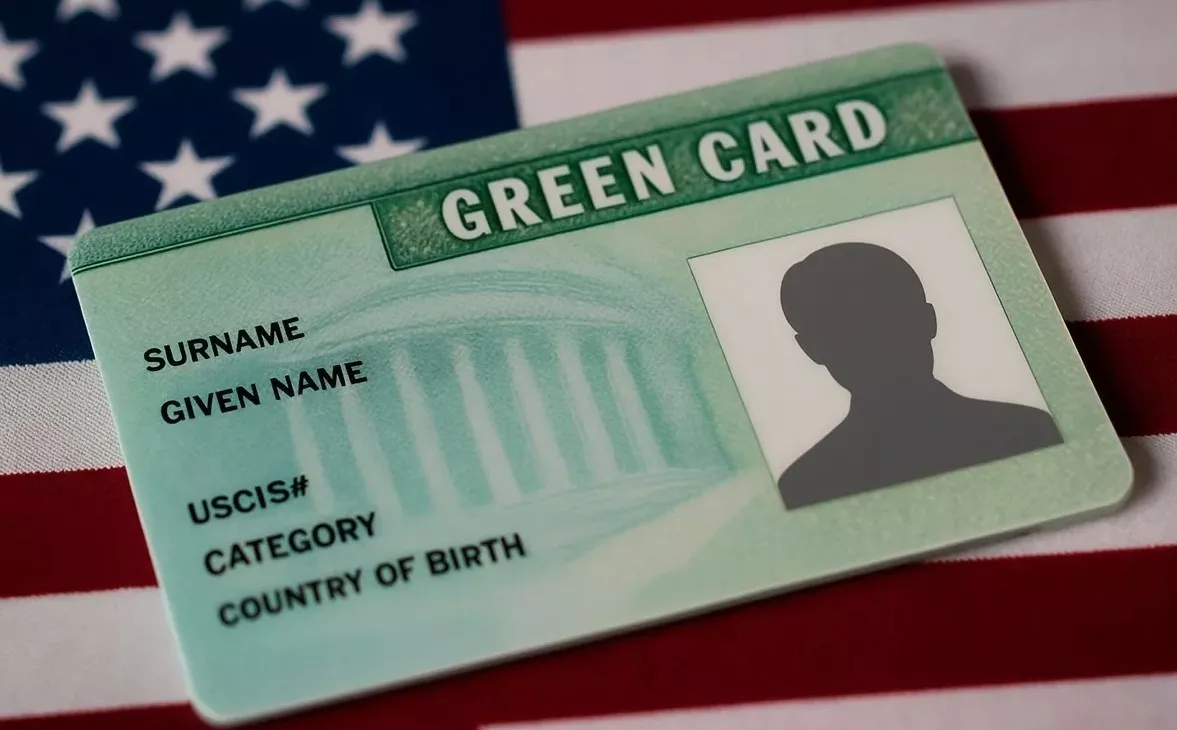
Four years ago, within weeks of February 24, 2022, thousands of Russians were searching for tickets to any country they could still fly to. Today, in October 2026, the picture looks fundamentally different. Entry to the United States has formally become harder, the number of people wanting to leave for good has fallen, and among those who have already left, a growing number are discussing a return. The wave of emigration has not fully receded, but it has changed form. Those who try to understand the logic of 2026 migration through the lens of the chaos of 2022 risk making serious errors in their forecasts.
The First Wave: A Scale That Did Not Fit Into the Statistics
Estimates of the outflow from Russia after the start of the "special military operation" still differ several-fold, which is telling in itself. Rosstat recorded a relatively modest 419,000 departures by early September 2022 and 668,000 for the whole year. But Forbes sources estimated that in the two weeks after the announcement of partial mobilization on September 21, 2022 alone, around 700,000 people may have left the country, which is more than the official figure for the entire year. According to the Migration Policy Institute, the total number of Russian emigrants reached 3.2 million by the end of 2023, compared with 1.9 million in 2021, while the UN Refugee Agency (UNHCR) counted more than 2 million people who had left since the start of full-scale hostilities as early as September 2023.
The United States played a noticeable, though not the main, role in this first wave. According to the U.S. Census Bureau, the country took in roughly 110,000 Russian immigrants in 2022, which is 2.3 times more than the year before. By comparison, the main flow in the first months went to Georgia, Armenia, Kazakhstan, and Turkey, countries with no visa barriers that could be reached by direct flight. America became not the first but rather the second or third stop on many relocants' routes. People arrived from third countries, and it took them longer, because the visa process for Russians was noticeably harder than for citizens of most other states even before 2022.
Who Increased: A Portrait of the New Russian America
The structure of emigration has changed markedly compared with the earlier waves of the twentieth century. These are not so much pensioners or refugees in the classic sense as young, educated professionals. According to the Levada Center, about 40% of Russian emigrants in 2022 were under 30, and the largest age group, 25 to 29, accounted for 18% of all those who left. The Russian Academy of Sciences estimated that up to 1.5 million specialists, including IT workers, doctors, and engineers, may have left the country since 2022.
In the United States, this trend was especially evident among technology specialists. According to the U.S. Bureau of Labor Statistics, in 2023, 70% of Russian migrants in the country worked in a profession related to their previous specialization, compared with 58% for other immigrant groups. This points to a high share of skilled professionals who were leaving not for the unknown but through pre-built professional channels: company relocations, offers from American employers, or academic visas.
At the same time, the number of Russians seeking asylum in the United States grew explosively. The Moscow Times, citing 2022 data, recorded an almost 50-fold increase in asylum applications from Russian citizens between fiscal years 2020 and 2022. It is also telling that until recently, Russians' chances of success remained among the highest of any nationality. According to TRAC at Syracuse University, the approval rate for Russian applications in fiscal year 2024 was 85.2%, the fifth highest among all countries and higher than for most groups of asylum seekers. Since January 2025, about 53% of Russian cases have been successful. The figure has dropped noticeably but is still above average for many other nationalities.
Is It Harder to Move Permanently? The New Visa Reality
In 2022-2023, the main obstacle to moving to the United States was logistics: closed airspace, no direct flights, and the need to obtain a visa through third countries. By 2026, a fundamentally new barrier had been added: the immigration policy of the Trump administration itself. Since January 2026, the State Department has suspended the issuance of immigrant visas to citizens of 75 countries, including Russia, Iran, and Afghanistan. The stated reason is the fight against migrants who might become a "burden on the welfare system." The pause affected only immigrant visas for permanent residence; tourist, business, and work visas were formally not affected.
In August 2026, a federal judge in New York ruled this policy unlawful, saying that Secretary of State Marco Rubio had exceeded his authority and that the measure "directly violates" the procedure for individual assessment of applicants established by Congress. Nevertheless, while the court proceedings continue, thousands of cases of Russians who applied for green cards are effectively stuck in limbo. At the same time, the administration extended for another year the requirement to pay $100,000 for an H-1B visa, the main channel for skilled specialists, including many Russian IT workers and engineers who previously used this visa as a bridge to permanent status.
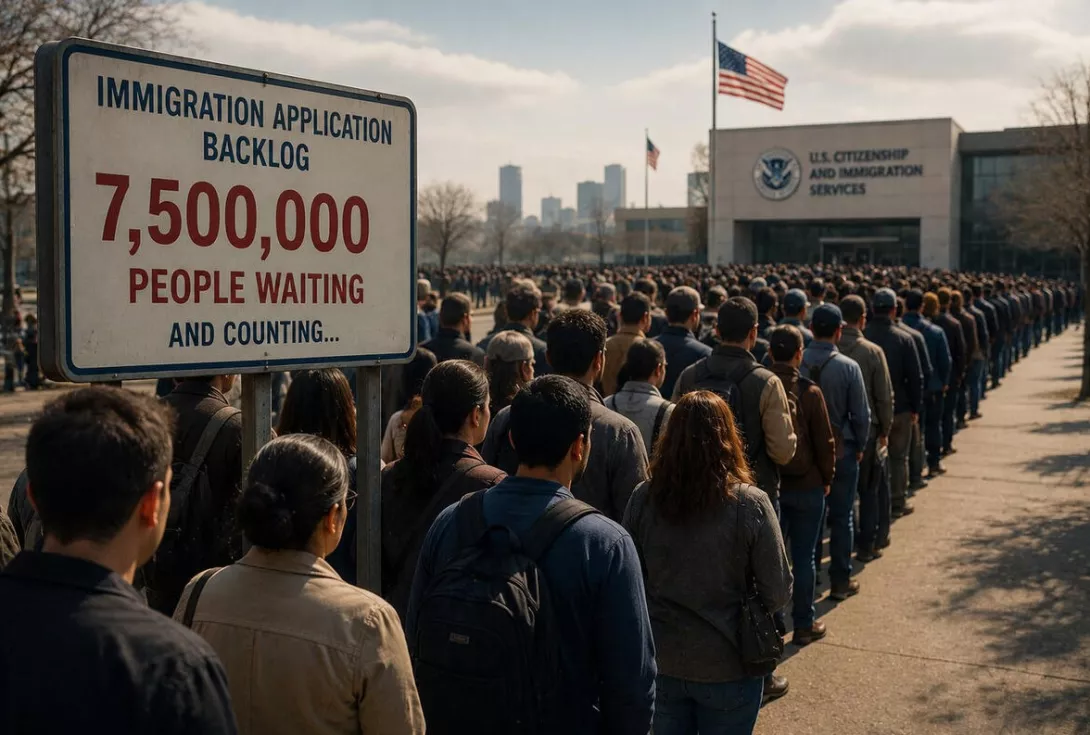
For asylum seekers, the situation turned out to be even more confusing. In December 2025, USCIS introduced an indefinite freeze on the processing of all asylum applications regardless of the applicant's nationality, a decision that affected hundreds of thousands of already filed cases, including a significant share of Russian ones. By the end of March 2026, the freeze was partially lifted for applicants from countries not on the "high-risk" list, and Russia was not on that list, so formally the cases of Russians should be moving. In practice, however, according to the Boston Globe, citing data from Verstka and TRAC, the share of denials in Russian asylum cases rose to 31% in 2025, the highest in 24 years of observation. According to the same data, about a thousand Russians who had applied for asylum were held in American deportation detention centers in 2026.
The bottom line is simple and unpleasant for those wishing to move: the formal channels (green cards, work visas, asylum) have become slower, more expensive, and less predictable than four years ago. But they have not closed entirely, and in the case of the H-1B visa and some academic programs, they remain workable for those with the right sponsoring employer.
Do They Want to Return, and How Easy Is It?
Alongside the tightening of American immigration policy, a quieter but no less significant process is under way within the Russian diaspora itself: talk of returning is no longer taboo. The OutRush project, which has surveyed about 18,000 Russians who left since 2022, found that between summer 2023 and summer 2024, 8% of surveyed emigrants returned to Russia, while another 21% moved to third countries. The following year, the share planning to return fell to 5%, but 54% of those not planning to return in the coming year allow for the possibility "someday in the future," depending on political changes in Russia.
Estimates of the overall share of returnees differ dramatically, from 8-10% according to RANEPA and OutRush to 40-45%. OutRush itself acknowledges that many of these estimates are methodologically unreliable. As for the United States specifically, willingness to move back there is among the lowest of any host country: only 4% of Russian emigrants in America plan to return in the coming year, versus 6% in Germany and 10% in Spain. This is partly explained by the fact that the path to the United States initially required more effort and resources than a move to Georgia or Turkey, which means that those who settled there are on average more deeply rooted and less likely to consider a quick turnaround.
According to the same OutRush survey, the reasons returnees gave were split roughly evenly: inability to find a good job abroad (34%), dissatisfaction with the host country (32%), and plain homesickness (34%). At the same time, more than half of returnees (52%) admitted that the decision was driven by a "combination of individual reasons" that is hard to reduce to a single factor. Germany offers the most formalized path back in this respect: under the German voluntary repatriation program, 1,334 people returned to Russia in 2025. No comparable organized return programs exist for the United States, and the logistics of moving back (selling property, closing out visas, taking children out of American schools) make the decision to return from America noticeably more laborious and costly than from countries neighboring Russia.
What This Means, Bottom Line
The migration picture of 2026 is more complex than a simple opposition of "left" versus "stayed." The United States has both tightened formal barriers for new immigrants from Russia and preserved work channels for already established professionals. The number of people wanting to come has shrunk not so much because of lost interest in America as because of real bureaucratic obstacles: frozen visas, an expensive H-1B, and a higher share of asylum denials. And the number of those wanting to return among Russians already in the United States remains one of the lowest compared with other destination countries, not because everything in America is easy, but because the route there and back is too costly to travel twice.


















.png)
.png)

.png)
.png)