

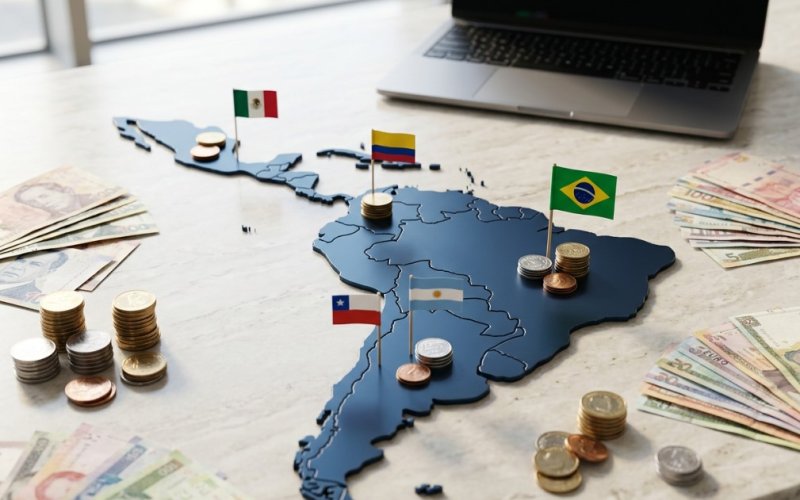
On October 4, Brazil will elect a president amid a high Selic policy rate of 13.75% and pressure on the real from a strong dollar. The outcome will determine whether the country remains within the orbit of U.S. economic policy or strengthens its multipolar course within BRICS. Which scenario is more likely, and what would it mean for the United States and Russia?
Macroeconomic Context: High Rates, Slowing Growth and Elections
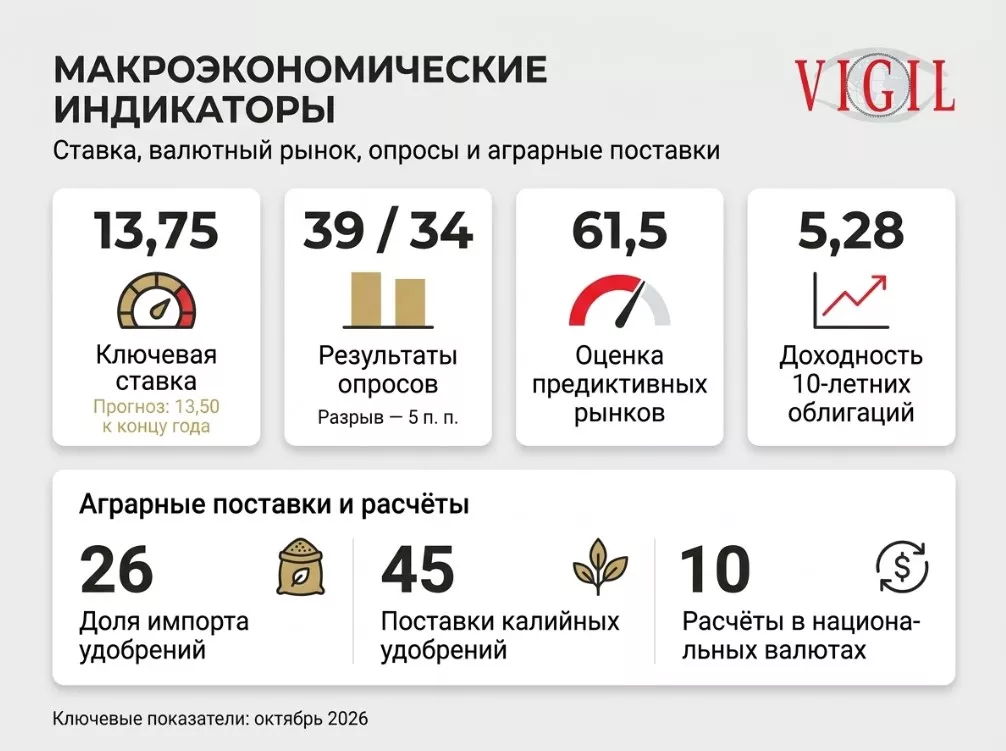
On September 16, Brazil’s Central Bank cut the Selic rate by 25 basis points to 13.75%—the fifth consecutive reduction from its peak of 15.00%. Private-sector economists surveyed by the central bank in its weekly Focus survey now expect the rate to end 2026 at 13.50%, implying one further cut before year-end.
The decision was made amid signs of slowing economic growth ahead of the election. Inflation stood at 4.44% in July, while the economy is growing at around 2% in 2026. At the same time, the real is under pressure from a strong dollar and 10-year U.S. Treasury yields of around 5.28%. This creates a classic dilemma for the regulator: cut rates to support growth, or keep them high to defend the currency and contain inflation.
The election adds political risk. Campaign spending is loosening fiscal policy precisely as the central bank is trying to complete its disinflation effort. The Monetary Policy Committee, or Copom, voted unanimously, but gave no signal about its next move, preserving room for manoeuvre after the vote.
Balance of Forces: Lula vs. Bolsonaro Jr.
Despite 13 candidates, the presidential race has effectively narrowed to a duel between incumbent President Luiz Inácio Lula da Silva of the Workers’ Party and Senator Flávio Bolsonaro of the Liberal Party, the son of former president Jair Bolsonaro.
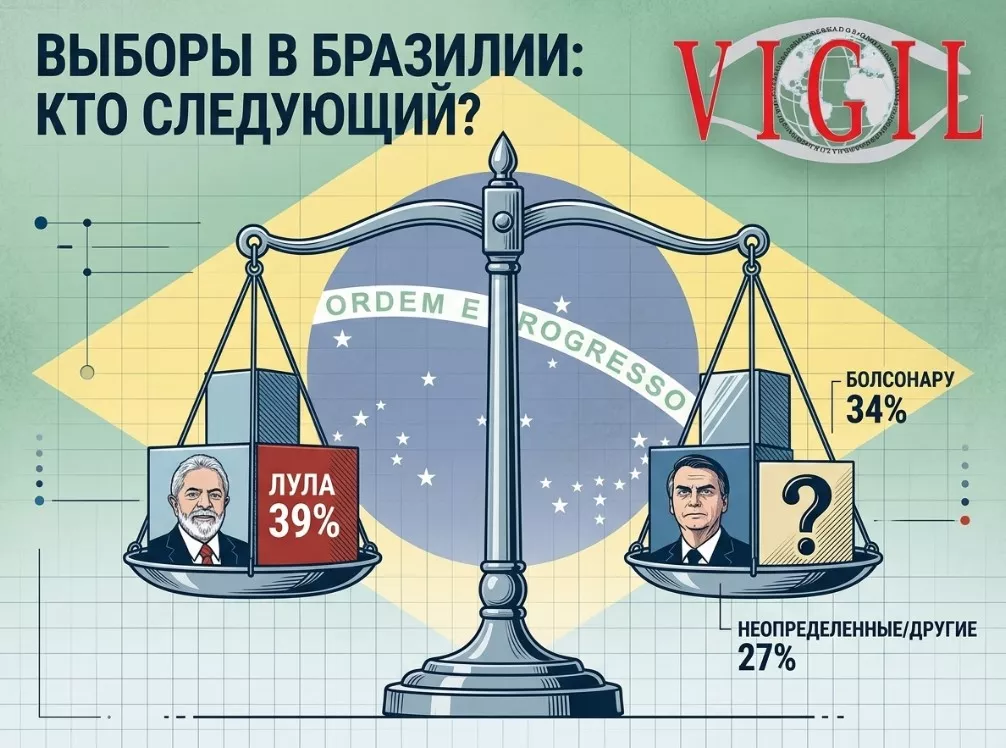
Polls point to a statistical dead heat. According to a Quaest survey published on September 28, 39% of respondents were prepared to vote for Lula in the first round, compared with 34% for Flávio. A BTG Pactual/Nexus poll released the same day presented a more favourable picture for the incumbent: 42% versus 37% in the first round.
If the contest goes to a runoff, scheduled for October 25, polls show an even race: 42% for each frontrunner according to Quaest; 46% for Lula against 44% for Bolsonaro according to BTG/Nexus. Datafolha, for Folha de S.Paulo and TV Globo, gives Lula 46% and Flávio 44%.
At the same time, prediction markets—Polymarket, Kalshi, PredictIt and Smarkets—give Flávio Bolsonaro the advantage, with a probability of 57–61%, creating a notable gap with opinion polls. As of late September, Polymarket gave Bolsonaro a 61.5% chance of victory, compared with 38% for Lula.
Scenario One: Lula da Silva Wins
Lula’s re-election would mean the continuation of the course he has pursued since 2023. For the United States, this would preserve a difficult partner in the Western Hemisphere. Lula balances between the West and the Global South, maintaining relations with Washington, Beijing and Moscow through BRICS.
For Russia, this is the most favourable scenario. Under Lula, Brazil has not joined Western sanctions against Russia, has maintained trade flows, and has been developing settlements in national currencies. By the end of 2025, Brazilian exports to Russia amounted to around $1.5 billion, while imports of Russian goods totalled $9.4 billion.
The key area is fertilizers. Russia supplied 26% of Brazil’s fertilizer imports and 45% of its potash fertilizer imports. Brazil’s ambassador to Moscow, Sérgio Rodrigues dos Santos, has stated that Brazil is interested in increasing settlements in rubles and reals; at present, the two currencies account for around 10% of trade payments.
Lula also advocates reform of international institutions and a stronger role for BRICS, which aligns with Russian priorities. His victory would reduce the risk of Brazil becoming “stuck in the United States’ backyard,” as some analysts put it.
There are, however, limits. Lula cannot completely disregard Washington: Brazil depends on access to the U.S. market, technologies and financial systems. His room for manoeuvre is constrained by the need to maintain an attractive investment climate and prevent capital outflows.
Scenario Two: Flávio Bolsonaro Wins
A victory by a member of the Bolsonaro family would signal a rightward turn and closer alignment with the U.S. administration. Flávio presents himself as a continuation of his father’s course, under which Jair Bolsonaro built close ties with the U.S. Republican Party during the first Trump administration.
For the United States, this would be the preferred scenario. It would bring Brazil back into the orbit of U.S. influence and create a counterweight to left-wing governments in Latin America. Flávio would be more likely to take a tougher line toward Russia and China, although a complete break with BRICS is unlikely because of economic considerations.
For Russia, this would create risks. Under Bolsonaro Jr., Brazil could join sanctions pressure, restrict trade in sensitive sectors such as fertilizers and energy products, and reduce the use of rubles and reals in settlements. This would not necessarily lead to a complete rupture: Brazil’s business community has an interest in Russian fertilizers and export markets. However, the political rhetoric would change.
There is another nuance: Flávio is a senator, not a president with Jair Bolsonaro’s experience. He would have to balance ideology and pragmatism. Full-scale confrontation with Russia would hurt Brazilian farmers, who depend on Russian fertilizers. Therefore, even if he wins, a complete rupture is unlikely, although a cooling of relations is probable.
Impact on Currency Markets and Trade
Regardless of the outcome, volatility in the real will persist through the second round on October 25 and for some time afterward. Markets dislike uncertainty, and Brazilian politics has traditionally been polarized. A strong dollar and high U.S. Treasury yields of around 5.28% are creating additional pressure on emerging markets, including Brazil.
For Russia, two channels of influence matter. The first is trade. Brazil remains a major BRICS partner, and any scenario that preserves or expands settlements in national currencies benefits Moscow. The second is geopolitical. Brazil is one of the leaders of the Global South, and its position affects how successfully the West can isolate Russia in multilateral forums.
A transition to ruble-real settlements could reduce the number of intermediary currency conversions, but it would not in itself guarantee lower fees or faster payments: the outcome depends on the banking chain and the service terms of a specific transaction. Further expansion of bilateral trade could make national currencies more convenient for both sides.
What It Means for the United States
For Washington, Brazil’s election is a test of influence in the Western Hemisphere. A Bolsonaro victory would strengthen U.S. positions in the region and create additional leverage against left-wing governments in Latin America. A Lula victory would mean that the United States must continue competing for influence with China and Russia in a region traditionally regarded as its backyard.
There is also an economic dimension. Brazil is Latin America’s largest economy and an important market for U.S. companies. Political instability or a sharp policy shift could hurt investment and trade. Therefore, even if Washington prefers Bolsonaro, it has an interest in stability rather than chaos.
What It Means for Russia
For Moscow, Brazil’s election is part of a broader struggle for a multipolar world. Lula’s success would strengthen BRICS as an alternative to Western institutions. Bolsonaro’s success would weaken the bloc, but not destroy it: Brazil is too large to completely leave a format that gives it access to the markets of China, India and Russia.
The key issue is fertilizers and food security. Russia remains a critical supplier to Brazil’s agricultural sector. Any Brazilian president seeking to completely sever ties with Moscow would face resistance from the country’s own agribusiness. This creates a natural constraint even for a right-wing government.
Bottom Line: A Tie in the Polls, Different Worlds in the Scenarios
Polls show a statistical tie, while prediction markets give Bolsonaro an advantage, but no source can guarantee the outcome. The October 25 runoff will be a real test for Brazilian democracy and for external players.
For the United States and Russia, the stakes are high. A Lula victory would preserve the status quo, with elements of cooperation through BRICS and trade. A Bolsonaro victory would mean cooler relations with Moscow and closer alignment with Washington, though not necessarily a complete rupture because of economic interdependence.
In any case, Brazil is too large and too independent to become a mere satellite. Its election will affect not only Latin America, but also the global balance of power between the West and the multipolar Global South.








.png)
.png)

.png)
.png)