
Закон Грэма подписан Конгрессом: разбираем с экспертами, что реально грозит России

The Graham Act Has Been Passed by Congress: Experts Break Down What Actually Threatens Russia

Mikhail Azhgirevich, editor-in-chief of VIGIL Journal: It's the morning of September 18, and I'm sitting down to untangle a mess of numbers that has been circulating in the information space for a week now. The fact is simple. On September 16, the House of Representatives passed the Lindsey O. Graham Sanctioning Russia and Iran Act of 2026. The vote was 262 to 159.

Выручка и прибыль: цифры, которые врут, если не задавать вопросы

Revenue and Profit: The Numbers That Lie If You Don't Ask Questions

Revenue and profit are essential benchmarks for assessing a company's financial health, but on their own they are meaningless unless you understand what actually stands behind them. Revenue growth might mean market capture, or it might mean an asset sell-off; profit growth can signal genuine efficiency, or a one-time deal that will never repeat. The key question is always what actually drove the change in these figures in each specific case, and who benefited from you seeing exactly those numbers.

Канадская нефть разворачивается в Китай – топливо в США под угрозой

Canadian oil is turning toward China — U.S. fuel supply under threat

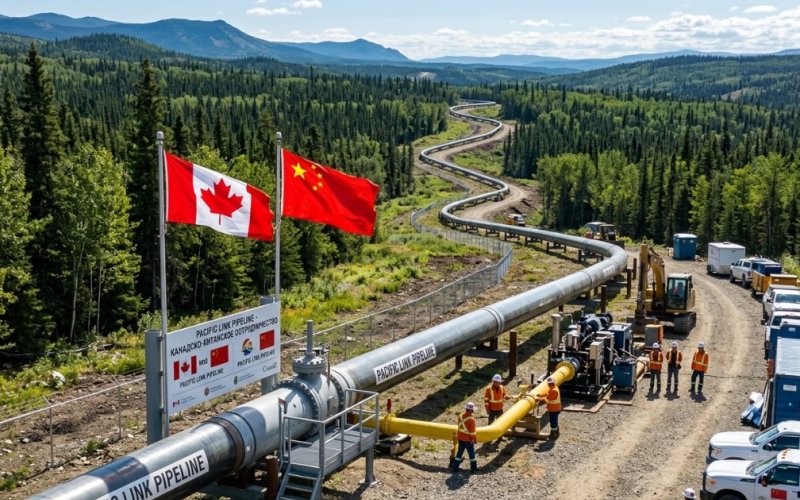
The United States is at war with Iran and mired in protracted Middle Eastern maneuvering. And now it faces a blow from an entirely different direction — from its own northern neighbor. Canada is methodically redirecting its oil flows toward China. Washington's share of Canadian exports is falling to a historic low. And this is happening at precisely the moment when Washington can least afford to lose access to a cheap, nearby source of hydrocarbons.

Макрон и Лекорню

France's Economy: A Troubling Diagnosis, Not Yet a Reason for Panic

France's economy, over the period from early 2022 to September 2026, has traveled a path from post-pandemic recovery to a state that can only be described as troubling. Growth has shriveled to a statistical rounding error, debt has crossed 115% of GDP, and the political system seems to have forgotten what a stable government looks like. This is not a temporary setback—it is a structural shift that financial professionals cannot afford to ignore.

Бензин есть

How Russia Is Keeping Its Fuel Market Under Control

Russia's oil refining sector is going through a difficult year. But the government has already rolled out a whole package of measures that are gradually bringing the situation back under control. While some refineries are still recovering from attacks, the authorities are keeping the market afloat through an export ban, flexible regulation of standards, and the launch of new projects capable of closing the resulting shortfall.

What's happening at the refineries — and how it's being handled

Олег Троицкий, Яринтербанк, vigiljournal.com

Russian Banks: A Record Safety Margin Amid Rising Risks

Russian banks and the banking system as a whole are posting figures that developed economies now consider an unattainable luxury: double-digit return on capital, growing profit, and capital adequacy hitting new highs. At the same time, the sector is balancing on the edge — the share of problem loans has reached a level that analysts openly call a formal crisis.

Capital Is Growing Faster Than Risk

Долги компании - это не яд, но и не панацея. Всё дело в дозировке.

Corporate Debt Isn't Poison, But It's Not a Cure-All Either. It's All About Dosage.

Corporate debt is like coffee for an office worker: in moderate doses it energizes and boosts productivity, but in excess it turns life into a thriller with a racing heart and the risk of a heart attack. The key thesis running through the entire history of corporate finance is this: debt is a critically important tool for growth, but its uncontrolled accumulation is a direct path to financial instability and the loss of control over one's own future.

Доктрина Монро против Бреттон-Вудса: почему США променяли внутренний рост на глобальный контроль, vigiljournal.com

The Monroe Doctrine vs. Bretton Woods: Why the U.S. Traded Domestic Growth for Global Control

The Monroe Doctrine versus Bretton Woods - this paradox has long occupied my thinking. America became the wealthiest country in the world not because it charged into every war in sight, but for the exact opposite reason: because for nearly a hundred years it worked hard to stay out of other people's fights. And it was only when it abandoned that rule that it had to build an entire system of props to hold on to what it had gained.

Зерновая сделка, fondsk.ru

The West Deceived Us on Grain. Did Anyone Expect Otherwise?

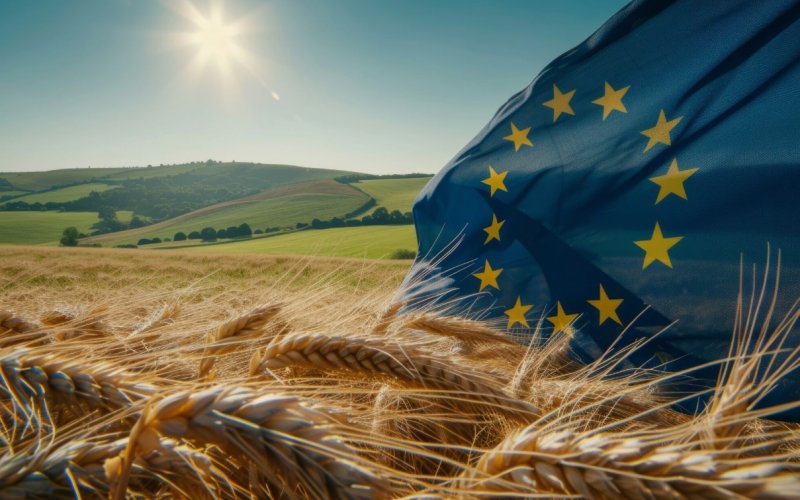
At his press conference following the SCO summit in Bishkek, Putin uttered a phrase that was meant to sound like an exposure of Western hypocrisy, but in fact sounds like a statement of a long-obvious fact. More than 99% of Ukrainian grain under the grain deal went not to starving African countries, but to a perfectly well-fed Europe. The West deceived us again. The question is different: why did we expect any other outcome from countries that officially labeled us an existential threat?

Россия и Германия

Russia and Germany: Fate Has Closed the Circle Again

Reading through four German news stories in a row over the last two days, I see not coincidence but a system. Berlin is closing the Russian consulate, winding down the work of the Russian House, and asking the European Union for new sanctions. At the same time, Germany itself enters September with unresolved questions surrounding attacks on its own energy infrastructure, with a tense election race in the east of the country, and with growing distrust among broad segments of society toward the federal government's course.