


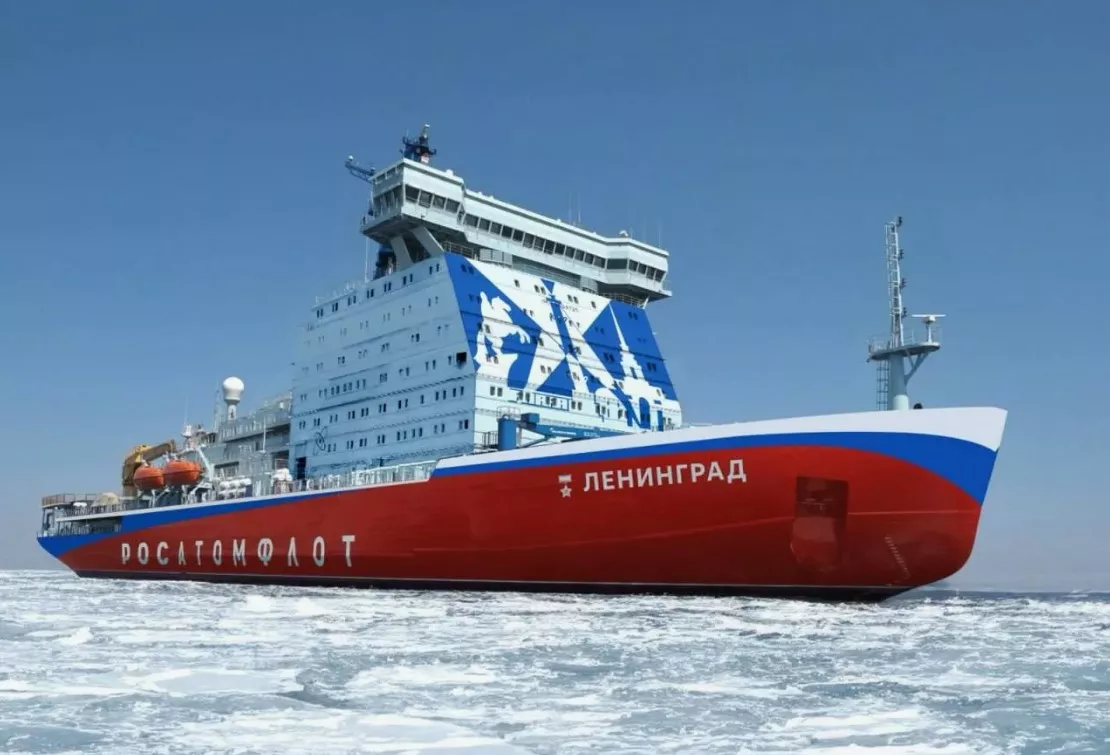
Just five years ago, most experts greeted the idea of the Northern Sea Route as a serious alternative to the Suez Canal with an indulgent smile. The navigation window was too short, icebreaker escorts too expensive, and ice conditions too unpredictable for major global carriers to consider the Arctic route over the familiar southern path through Suez, even for a moment. Today, in autumn 2026, that same route supports a regular weekly container service between China and the United Kingdom, and cargo volumes are heading for an annual record. The skeptics did not merely get the details wrong. They got the very essence of the forecast wrong.
From Experiment to Timetable
In 2025, the first international container transit from China to Europe took place on the NSR. Most commentators at the time dismissed it as a one-off PR stunt with no practical future. A year later, that "experiment" has a timetable. In August 2026, Rosatom granted the Chinese shipping company Sealegend Shipping permission to send seven container ships along the NSR. As Alexei Likhachev, head of the state corporation, stressed, unlike earlier one-off voyages, the 2026 program provides for a full-fledged liner service, with a vessel departing every week throughout the navigation season. The container ship Dubai Tower, which opened the service in mid-August, covered the route from China's Ningbo-Zhoushan to Felixstowe in Britain in 20 days, compared with the usual 37 days via the Suez Canal. This is not a theoretical saving on paper but a documented fact from one specific voyage.
Growth Figures the Skeptics Did Not Foresee
To gauge the scale of change, it is enough to compare the dynamics of recent years. In 2014, 4 million tonnes of cargo were shipped along the NSR. By 2025, that figure had grown almost tenfold, to 37 million tonnes, according to Alexei Chekunkov, Minister for the Development of the Far East and the Arctic. In the first eight months of 2026, volumes reached 24.2 million tonnes, up 15% on the same period last year. Russia's Ministry of Transport expects a final figure of 40 million tonnes for the whole of 2026. For a route that a decade ago was seen as a geographic curiosity, such a trajectory is not a local spike but a sustained structural trend.
Container transit is growing even faster than overall cargo flow. The number of transit voyages, meaning through trips from Asia to Europe that bypass Russian and domestic routes, reached a record 103 in 2025, against 97 the year before. The Chinese operator Sea Legend Shipping has already sent the first vessel along the new regular route, and, according to analysts, at least seven more Chinese container ships will follow this season.
Skeptics Said: The Navigation Window Is Too Short
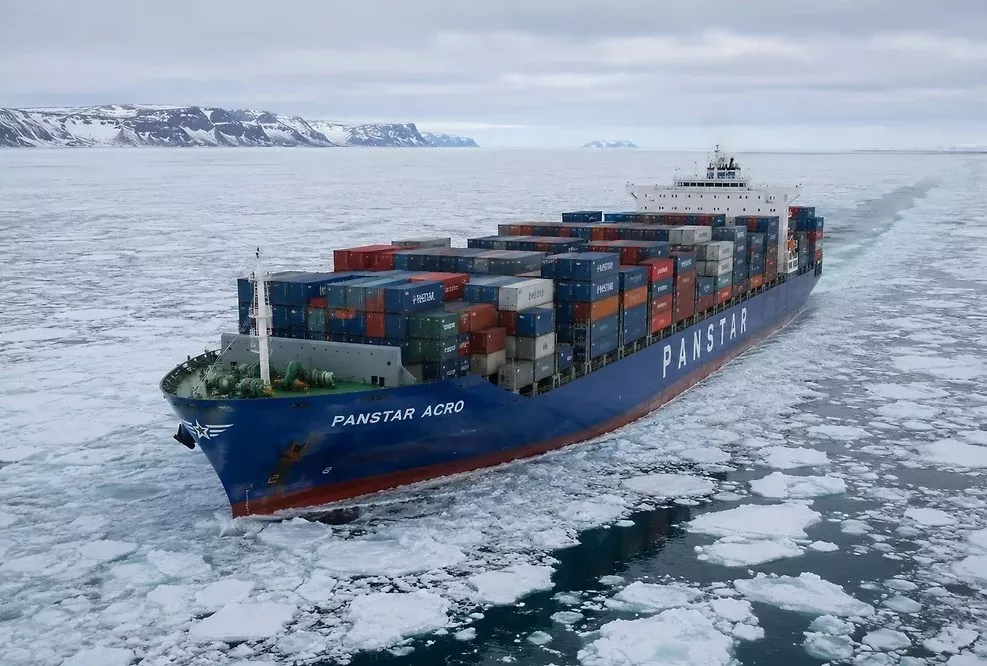
The main argument of the NSR's critics in recent years was that Arctic navigation is possible only a few months a year, and so the route could never compete with the Suez Canal, which operates year-round. The argument remains technically correct, but practice has shown that business is ready to operate on a seasonal basis if the economics of the voyage justify it. Sealegend Shipping's container ships sail on schedule from August to October, using ice-class vessels with reinforced hulls and ice-resistant propellers, which allow them to operate in light and medium ice conditions without icebreaker escort. The South Korean PanStar Arco, built at the Guangzhou Wenchong shipyard, became a telling example of this approach: not a full-fledged Arctic supertanker, but an ordinary container ship with an ice-strengthened hull, capable of using the route in the shoulder season.
Seasonality has not disappeared, but it has ceased to be a fatal obstacle. Instead of waiting for a year-round fleet of high ice class, the market adapted and began squeezing economics out of the window that exists. That proved enough to launch a regular commercial service.
Skeptics Said: Transit Will Remain Marginal
The second common thesis among critics held that even if transit shipping along the NSR is possible, its volume would remain a statistical rounding error against Russian exports along the same route. This is partly confirmed by the figures: in 2025, international transit amounted to only 3.2 million tonnes, or about 8.6% of the route's total cargo flow, while Russian exports, primarily LNG, oil and gas condensate, accounted for roughly 60% of the entire flow. Experts rightly note that, by number of containers carried, international transit is still dozens of times smaller than Russia-China shipments along the same route: roughly 14,000 containers of transit capacity per season, against approximately 450,000 containers of Russia-China shipments in the first half of 2026 alone.
But the very emergence of a regular, rather than one-off, transit service is a qualitative, not merely quantitative, shift. The market is moving from the stage of "can this be done technically" to the stage of "how far can this be scaled commercially." Shipments between Chinese and Russian ports already make up almost 15% of the NSR's total cargo flow, and under joint Russian-Chinese plans this figure is to reach 20 million tonnes by 2030.
Practice Confirms the Route's Suitability for Russian Imports
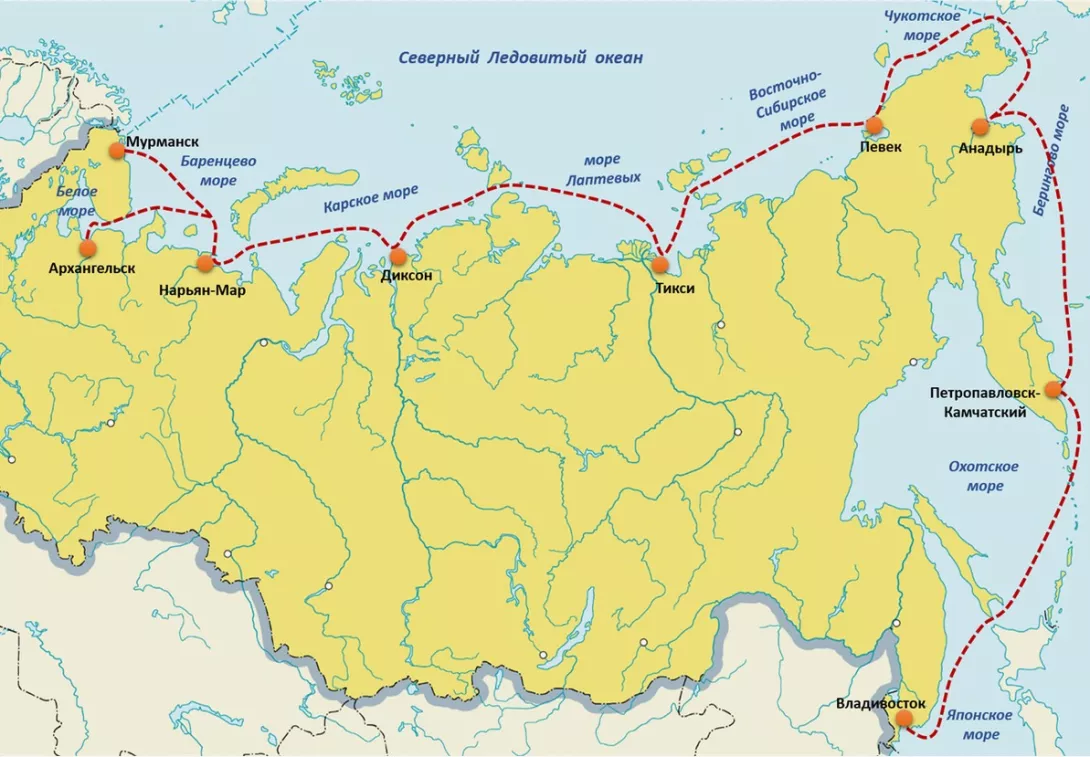
Another skeptical argument concerned the route's one-sidedness: the NSR, it was said, benefits only Russian raw-materials exports and is unsuitable for return cargo and imports. This hypothesis was refuted by this year's practice. The Russian multimodal operator Ruscon (part of the Delo Group) tested delivery of cargo from China to St. Petersburg via the Northern Sea Route, and the voyage took 25 days. This is no longer a single publicity voyage but practical confirmation that the route works in both directions and is applicable to a real import flow, not only to the export of hydrocarbons and mineral raw materials.
At the same time, more specialized two-way trade is growing: in August 2026, the vessel New Shipping Line delivered 502 containers of automotive components from China to Murmansk and, on the return leg, carried 26,400 tonnes of potash fertilizers for Southeast Asian countries. Such two-way loading is exactly what, in the skeptics' view, the route would forever lack to be economically self-sufficient.
What This Means for the Mining Industry
About 3 million tonnes of mining-industry cargo are sent via the NSR every year. That is a relatively modest share compared with LNG and oil, but this category of cargo benefits especially from shorter delivery times. For companies that depend on supplies of specialized equipment and components from China, the difference between 37 days via Suez and 20 to 25 days via the Arctic means not just saved time but a real reduction in working capital tied up in transit, and the ability to respond faster to equipment breakdowns in remote mining regions. Given that maritime transit through the Suez Canal has in recent years been complicated by attacks on ships in the Red Sea, the Arctic route offers the industry not only a shorter corridor but also a more predictable one in terms of security.
Where the Route Goes Next
Statistics for recent years show a steady, if uneven, upward trend: 36 million tonnes in 2023, 38 million tonnes in 2024 (up 5.6%), a slight decline to 37 million tonnes in 2025, and a confident upturn in 2026, with 24.2 million tonnes already in the first eight months against the Ministry of Transport's forecast of 40 million tonnes for the full year. Traders expect 2026 results to exceed the 2025 level for two reasons, one economic and one geopolitical, and the route's turnover may reach a new record.
True, in absolute terms the NSR still carries less than 0.3% of global maritime cargo, and calling it a full replacement for the Suez Canal would be premature. But the question the skeptics posed ten years ago was not about absolute shares of the global market. It was whether an Arctic route could be turned into a commercially viable, regular and predictable transport corridor at all. In 2026, that question has received an unambiguous answer, recorded not in forecasts but in container ships running on schedule, real delivery times and growing volumes of two-way trade. The breakthrough that many doubted has already happened. It simply came more quietly and later than the enthusiasts expected, but far sooner than the skeptics predicted.
I think it is important to separate emotion from fact here. I have not found a single independent source that refutes the specific figures: delivery times, tonnage, number of voyages. They all agree that the route works, and works better and faster than even the optimists of five years ago assumed. Skepticism was a rational reaction to a project with enormous technical risks. But a rational reaction is not the same as a correct forecast, and in the case of the NSR the two, as it turns out, have parted ways.



















.png)
.png)

.png)
.png)