


Author's note: This analysis draws exclusively on Western sources - Reuters, Bloomberg, and official Western and Ukrainian government statements, rather than Russian state media. Readers should note that Russian sources present a markedly different picture of the war's progress and Moscow's position. Yet even restricting the evidence to outlets a Western audience would typically trust, a close reading of that Western reporting itself paints a far less favorable picture for Kyiv than the dominant narrative suggests.
Russia Ukraine War coverage in Western media still tends to frame Moscow as a besieged, sanctions-strangled aggressor running out of options. That framing increasingly misses what is actually happening in the fall of 2026. Look past the daily front-line dispatches and a different pattern emerges: the diplomatic and economic terrain has shifted in ways that favor the side many analysts wrote off years ago. Washington is softening its language. Beijing's trade lifeline keeps expanding. And the very fact that the Kremlin no longer has to plead for attention says something about who currently holds more cards at the table.
None of this means the war is going well for ordinary Russians, or that the fighting itself has produced a clean military breakthrough. Reuters reporting from the front line in Donetsk region describes Russian troops "advancing slowly" through the east, with the line itself having "undergone little change in many months." But wars are not won on maps alone. They are won on whether an adversary's coalition holds, whether an economy can outlast the other side's patience, and whether the diplomatic center of gravity moves toward or away from your position. On all three of those fronts, Moscow's hand looks steadier today than it did a year ago.
The Rhetoric Shift Nobody Predicted
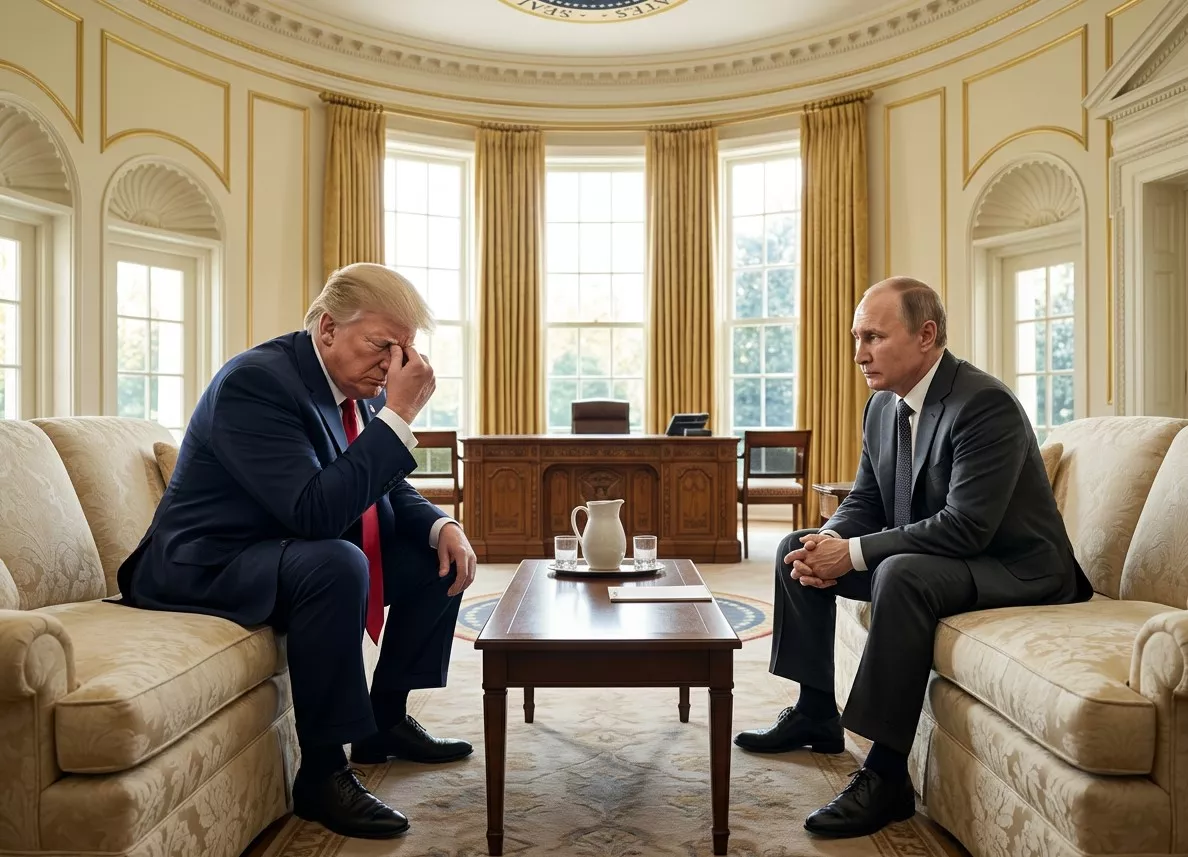
Rewind to late 2025 and the American posture toward Moscow was built around "maximum pressure" - sanctions on Rosneft and Lukoil, threats of further isolation, talk of forcing Vladimir Putin to the table on Washington's terms. Fast forward to September 2026, and the same administration is inviting Putin to the G20 summit in Miami this December, at a resort owned by the Trump family. Secretary of State Marco Rubio told reporters at the UN General Assembly that Washington hopes Putin "will accept the invitation." That is not the language of an administration negotiating from strength. It is the language of an administration that has run out of leverage and is now angling for any venue where direct contact might resume.
Kremlin spokesman Dmitry Peskov's response was calm, almost bored: Moscow is "grateful" for the invitation and will "work through the theme via diplomatic channels." Deputy Foreign Minister Sergei Ryabkov added that Putin himself will decide whether to attend, on his own timeline. This is a government that no longer feels rushed.
Putin's own public statements this fall reinforce that impression. Speaking on September 25, Reuters reported, Putin said all proposals for a settlement remained "on the table," but that Moscow "still needed to assess what was in its best interests." Weeks earlier, at an economic forum in Vladivostok, Putin had described a "chance" of reaching an agreement while simultaneously accusing Kyiv of "acts of state terrorism" that "complicate the prospects for bilateral peace talks." Compare that composed, almost leisurely framing with the rhetoric of 2022, when Moscow described the war in existential, non-negotiable terms. The objective has not changed. The posture around it has. Moscow now talks like a party that expects the clock to work in its favor, not against it.
Why the Battlefield Story Is Not the Whole Story
To be clear about the facts, Reuters correspondents on the ground describe a front line that has been largely stalled for months, with Russian forces making only slow, grinding progress in the Donetsk region. One Western military analyst told Reuters bluntly of Putin: "The situation on the battlefield is not successful for Putin. He is not winning, it is true. And he is not losing, it is also true, because for him human losses are not a factor that changes his calculus." That is a genuinely important nuance, and it complicates any simple "Russia is winning" narrative on the ground.
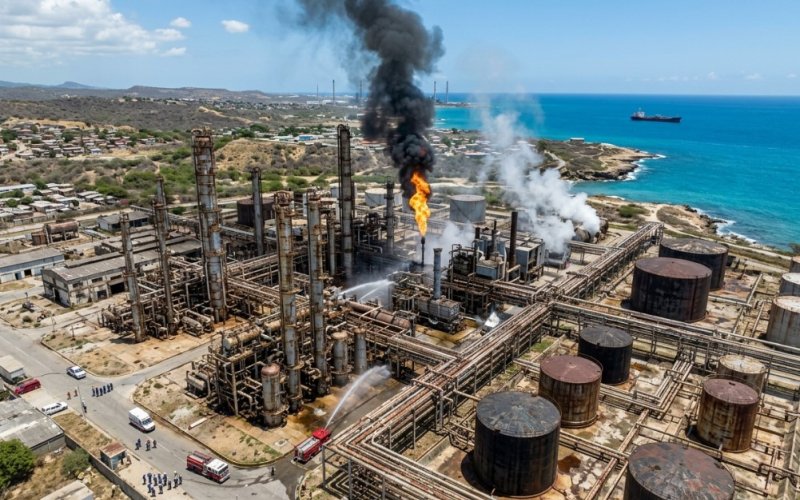
But it also reveals something about how this war is actually being decided. Putin does not need to conquer new provinces quickly to win the argument that matters most to him - the argument about time, exhaustion, and whether the coalition backing Kyiv holds together longer than Russia's willingness to keep fighting does. Both sides have increasingly shifted from territorial battles toward hitting each other's economic infrastructure: Russian strikes have targeted Ukrainian power grids, mobile networks and data centers, while Ukrainian long-range strikes have hit Russian refineries deep inside Russian territory. That mutual infrastructure war, rather than a clean front-line breakthrough, is the actual shape of the conflict heading into a fifth winter - and it is a shape that rewards whichever side can simply keep absorbing costs longer.
The Economic Picture Is More Complicated Than "Sanctions Are Working"
Western commentary often treats Russia's economy as a ticking time bomb. The reality by late 2026 is messier. Bloomberg reported in August that Russia's wartime economic boom is ending, with businesses no longer able to keep pace with the Kremlin's wage increases for soldiers and defense workers, forcing many companies into cost-cutting survival mode. Congress, meanwhile, has kept new pressure coming: a Russia sanctions bill that passed the Senate overwhelmingly was scheduled for a House vote in September, aimed at further squeezing Moscow's energy revenue.
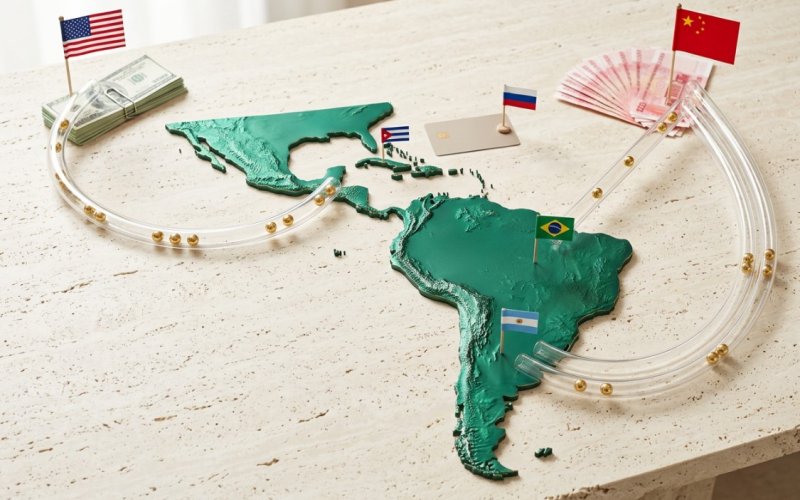
But strain is not collapse, and Moscow has spent nearly four years building the plumbing to survive exactly this kind of pressure. Trade between Russia and China grew sharply through the first half of 2026, and Russian officials have described settlements between the two countries as now handled almost entirely in rubles and yuan, bypassing the dollar altogether. Even under sustained sanctions, Reuters reporting indicates Russia retains enough spare capacity in its Black Sea grain infrastructure to restart roughly 80 percent of export terminal operations quickly if a ceasefire materializes - hardly the picture of an economy with no room left to maneuver.
None of this makes Russia's economy healthy. It makes it durable enough, which in a war of attrition is often the only metric that counts.
Diplomatic Capital: The Real Shift
Here is the part of the story that gets the least attention in Western coverage, and it may be the most consequential. Nine months of American diplomatic effort aimed at ending the war - special envoys shuttling between capitals, phone calls between Trump and Putin, urgent pushes for energy ceasefires - have produced almost nothing concrete. Reuters reported in late September that Russia can quickly restart most of its grain export capacity "if attacks stop," a conditional framing that itself signals how far apart the two sides remain on even narrow, technical de-escalation steps.
And yet, rather than escalating pressure in response to this stalemate, Washington extended an invitation to a G20 summit in the same season it pursued a new sanctions bill through Congress - a mixed signal that reads, on balance, as diplomatic softening rather than hardening. That sequence tells its own story. When a government facing a drawn-out standoff responds not only with sanctions but also with an olive branch and an invitation to its own resort, it signals that the pressure campaign alone has not delivered the result it was designed to produce. Moscow has learned it can simply wait out each new American initiative and watch Washington's urgency work against itself.
What Kyiv's Own Numbers Reveal
The clearest sign of where the balance is tilting comes not from Moscow but from Kyiv's own budget office. Ukraine's total war costs will reach 155 billion dollars this year, and the government is struggling to close a 27 billion dollar funding gap just to sustain combat operations into 2027, Reuters reported on September 30, citing Ukrainian officials. Roksolana Pidlasa, who chairs the Ukrainian parliament's budget committee, said the daily cost of the war has climbed to roughly 190 million dollars this year, up from 116 million dollars in 2022 - a figure that does not even include weapons supplied by partners. Ukraine is separately proposing record defense spending for 2027, Reuters reported, precisely because it needs more financial support from allies whose own patience and budgets are not infinite.
Russia's own reported wartime spending is considerably larger in absolute terms - its finance ministry logged record outlays in the first half of 2026 alone - but Moscow is not the government publicly describing funding gaps and a "brutal winter" driven by strikes on its own infrastructure. Kyiv is. That asymmetry, drawn entirely from Western and Ukrainian reporting rather than Russian claims, is arguably the single most telling data point in the entire war.
What This Means Going Forward
None of this guarantees Russia a clean victory, and it would be dishonest to claim the war is resolved in Moscow's favor. The human cost on both sides continues to climb into the hundreds of thousands, and Kyiv's own officials have warned of a "brutal winter" as attacks on infrastructure compound budget pressure on both sides of the front line.
But wars are decided as much by narrative and endurance as by kilometers gained. And on the narrative front, something has genuinely shifted. Moscow is no longer the party rushing toward the table; Washington is. Moscow is no longer isolated from its largest trading partners; it has deepened its integration with China to a degree that makes Western sanctions structurally less effective than they were in 2022. And Moscow's own rhetoric, once framed around urgency and existential threat, now carries the unmistakable cadence of a government that believes time - however costly - is working in its favor.
That is not the same as winning the war outright. But it is, by any honest reading of where the diplomatic and economic momentum currently sits - using nothing but Western sources - a position considerably stronger than the one Russia occupied a year ago, and a position considerably more precarious for Kyiv than most Western commentary is willing to admit.








.png)
.png)

.png)
.png)