


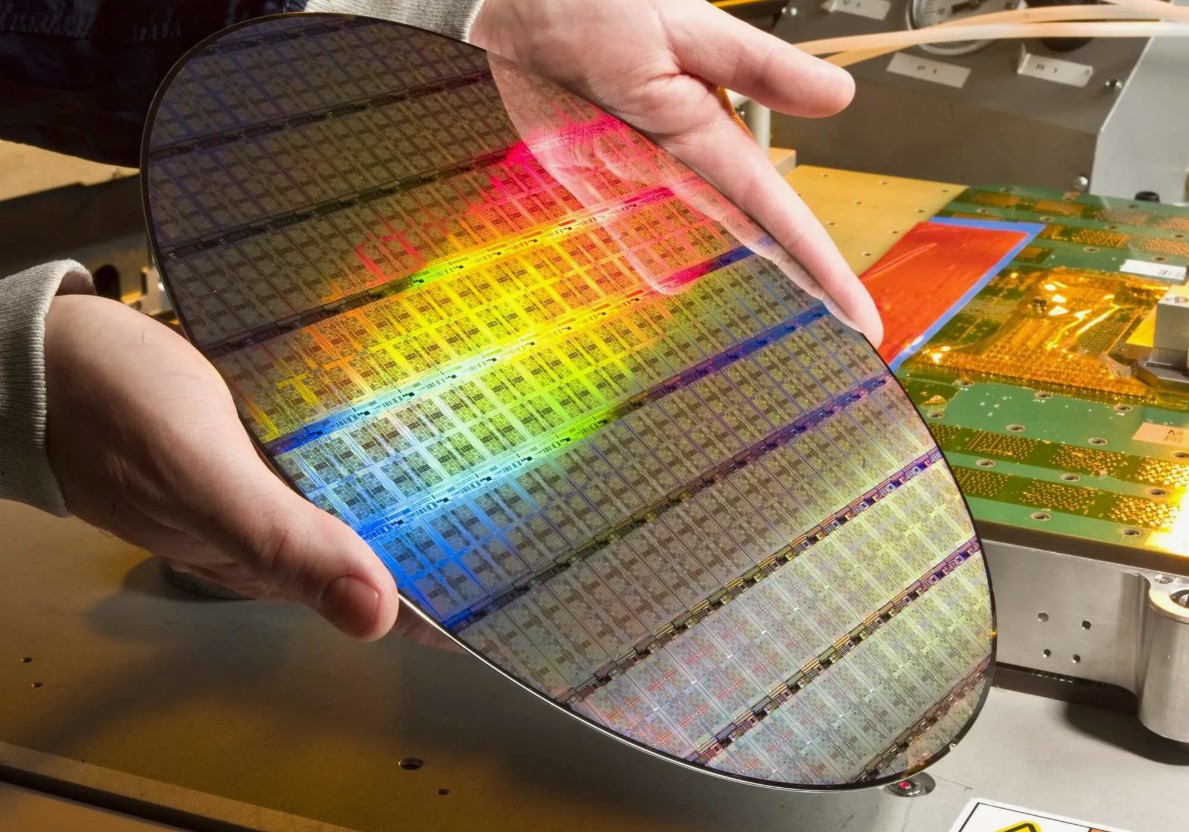
Can Russia get access to TSMC chips? Formally, no, and the situation has not changed since 2022. What is stuck in Taiwan? What workarounds remain? What is being used instead? Let's take it step by step.
What Russia Actually Lost
TSMC halted shipments to Russia on February 27, 2022, three days after the start of the "special military operation." Production of the processors that Russian companies had ordered from Taiwanese fabs stopped along with the shipments. Taiwan joined the international sanctions, and the world's largest contract chipmaker complied with export rules. Since then, the formal answer to the question in the headline has been the same: no.
Before 2022, TSMC manufactured the most prominent Russian processors: Baikal and Elbrus. Baikal Electronics and MCST have no fabs of their own, like most chip designers worldwide, so they placed their manufacturing orders in Taiwan. After the sanctions, the Taiwanese side suspended all contracts with Russian clients.
The scale of the loss was disclosed in October 2025 by Baikal Electronics representative Yevdokimov. According to him, more than 200,000 processors had been ordered, and by spring 2022 the company had managed to receive about 60,000. More than 150,000 finished or partially finished chips remained in Taiwan, and the money paid for them was not returned. Digital Development Minister Maksut Shadayev said much the same back in December 2022: the batches of Baikal and Elbrus chips were ready, but no one wanted to ship them.
These processors were not exotic. They are used in Russian computers and servers, and the US, UK and EU sanctions lists justify the refusal by the developers' ties to the defense sector. Getting the order back is legally almost impossible, however the case might look from the standpoint of ordinary business.
Gray Channels: What Still Leaks Through
It has not been possible to shut off the flow completely. In late 2024, CNews reported that about a thousand Baikal-S server processors, probably made at a Taiwanese fab, had been delivered to Russia in circumvention of the sanctions. It was an isolated case, but it shows that loopholes exist.
The picture with Nvidia AI chips is similar. A US investigation reported by Fortune in May 2026 showed that smuggling runs through shell companies, and small microcontrollers continue to reach Russia in large volumes. US law enforcement has foiled attempts to ship out batches of servers with H100s and 50 H200 processors, but the flow has not stopped. The main corridors are said to be China, Turkey, the UAE and India, and prices on the gray markets are higher than official ones.
Why "Buying From China" Doesn't Solve It
The first thought is obvious: if TSMC is closed, turn to Chinese fabs. German Gref said in May 2026 that he would like to run GigaChat on Chinese processors. Element, controlled by Sberbank and the largest Russian chip manufacturer, is reportedly already producing goods in China for the local automotive market.
But this path has three limitations. Chinese companies fear secondary sanctions and are cautious about large-scale cooperation with Russia. Advanced Chinese fabs are loaded with their own orders: Huawei and SMIC are building a supply chain for the domestic market. And technologically, China still lags behind TSMC, so chips in the class of modern accelerators cannot be obtained from there.
What Remains Domestic
Russia's own production is limited to process nodes of roughly 65-90 nanometers. That is enough for many industrial and defense tasks, but not for AI accelerators. Meanwhile, TSMC is mass-producing chips at 3 nanometers and ramping up 2 nanometers. The gap is measured not in years but in generations.
Russia is trying to build its own capacity. Baikal has resumed processor deliveries, and as early as 2022 Shadayev named 2028 as the date by which the country might be able to produce such processors independently. But according to Vedomosti, the yield of good packaged processors at Baikal was below 50%, and at such a yield mass deliveries become expensive.
In practice, the market splits as follows: according to industry sources, Nvidia-based products still account for about 84% of sales by volume, but more and more buyers are looking at Chinese solutions. In addition, electricity and server space in Moscow are scarce, so even a purchased chip has to be put somewhere.
What This Means Going Forward
Direct access to TSMC is closed to Russia, and it can be restored only together with the lifting of sanctions. Taiwan is unlikely to risk its relationship with the US for the sake of Russian orders. Gray supplies continue, but they are more expensive, less stable, and unsuitable for a large data center.
The main bet is on Chinese solutions and domestic development. This path has a ceiling: it allows Russia to sustain industry, the public sector and some AI projects, but not to take part in the race for the most powerful models. While TSMC posts record earnings on AI accelerators for American customers, the Russian market chooses between expensive gray imports and less powerful but available Chinese hardware.
For business, the practical takeaway is this: budgets must account not only for the price of equipment but also for the risk that a supplier will disappear or fall under sanctions. For the state, the lesson is this: dependence on a single external source has already once led to 150,000 finished processors sitting in someone else's warehouse.



















.png)
.png)

.png)
.png)