


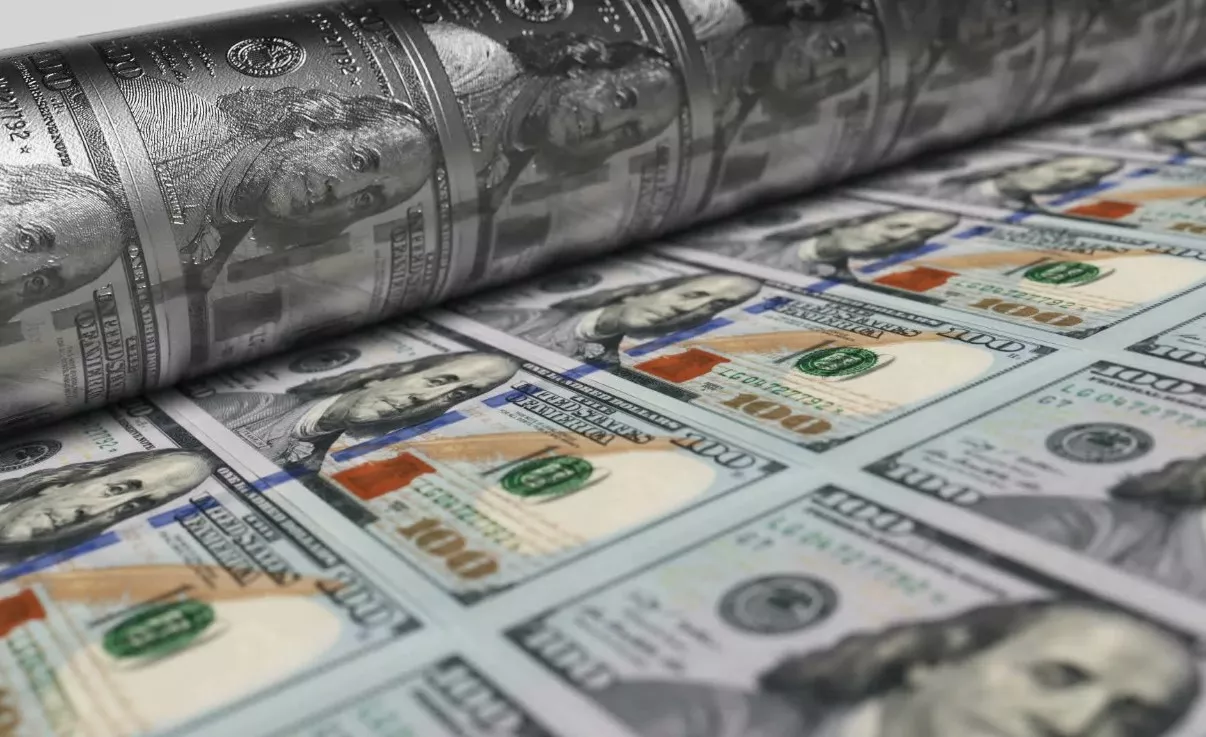
The U.S. Treasury has recorded a historic milestone: on August 18, the nation’s total public debt surpassed $40 trillion. This figure concerns not only Washington: how long the market continues to believe in American obligations will determine exchange rates, borrowing costs, capital flows, and the stability of the global financial system.
A Trillion in Five Months
The most troubling aspect of this news is not the sum itself, but the speed at which it was reached. The $39 trillion mark was crossed only about five months ago. Over the past six weeks, U.S. debt has increased by roughly $524 billion. That is more than $11 billion in new obligations every single day, including weekends and holidays.
Against this backdrop, talk of “temporary borrowing” looks increasingly unconvincing. The state is not taking on debt to fund a single emergency project or to weather a short recession. For years it has been covering a chronic budget deficit while maintaining high levels of social spending, military appropriations, and tax breaks. Debt has ceased to be an instrument of development and has become a way to sustain the previous level of consumption.
Over the past decade, the total amount of obligations has effectively doubled. In January 2017, federal debt stood at about $20 trillion. It has now crossed $40 trillion. The U.S. economy has grown over this period, but clearly not enough to justify such an acceleration in borrowing. The American financial system is increasingly resembling a person who takes out a new credit card to pay off an old one, then tells the family this is not debt but “flexible liquidity management.”
Interest Payments Are Eating the Budget
The critical point lies not in a neat round number, but in the cost of servicing the debt. From October 2025 through August 2026, federal interest payments reached approximately $1.17 trillion. Over the same period, Pentagon spending totaled about $804 billion. The U.S. government is already paying creditors more than it spends on the world’s largest military machine.
Daily interest outlays are estimated at roughly $3.18 billion. This money does not build roads, create new factories, or raise labor productivity. It simply goes to holders of Treasury bonds in exchange for Washington’s right to continue living on borrowed money for one more day.
The problem is compounded by the cost of new borrowing. The average rate on outstanding debt in June was about 3.4%, but the yield on 10-year Treasury notes has risen to around 4.68%, and on 30-year bonds to about 5.24%. When old, cheap debt must be replaced with new, expensive debt, the debt spiral begins to accelerate on its own. Washington can no longer borrow on previous terms: it is forced to borrow ever more and pay ever more for it.
The Debt Ceiling Is Not Infinite Either
The statutory limit on federal debt is set at approximately $41.1 trillion. Between that level and current debt there remains just over $1 trillion. At current growth rates, this is not a strategic reserve but a short postponement.
From here, Congress will again have to choose between two unpleasant options. The first is to raise the ceiling and continue borrowing. The second is to engineer a political crisis around the risk of a technical default, in which the state formally cannot meet some obligations on time. Over the past fifteen years, Washington has already walked this path repeatedly. Each time, the parties argued until the last moment, then raised the limit and pushed the problem further down the road.
In a normal economy, such a mechanism would long ago have been called uncontrolled. In the U.S., it is called the budget process. The only difference is the packaging.
Why the Market Still Tolerates It
The American debt system rests not only on the strength of the economy, but also on the absence of a full-fledged alternative. The dollar is still used in a vast number of international contracts, and the U.S. Treasury market retains colossal liquidity. This is precisely why Washington can borrow for decades without, so far, facing an immediate flight by creditors.
But the absence of an alternative does not mean the absence of risk. In recent years, central banks have become more active buyers of gold, have increased settlements in national currencies, and have reduced their share of dollar-denominated assets. By the end of 2025, the dollar’s share of global reserves had fallen to about 56.77%, reaching its lowest level since 1995. This is not yet a collapse, but the direction of travel is clear.
Every new sanctions conflict, freeze on reserves, or political threat of confiscation of American assets accelerates the search for alternatives. Washington itself is turning the dollar from a universal financial instrument into a political lever, and then wonders why other countries begin holding fewer such assets.
Three Paths to a Resolution
The softest option is inflationary erosion of the debt. The Federal Reserve lowers the cost of money, inflation gradually reduces the real value of obligations, and the population pays for budgetary stabilization through a decline in purchasing power. This scenario allows a formal default to be avoided, but undermines confidence in the dollar.
The second path is harsh spending cuts. Social programs would have to be trimmed, the military budget reviewed, and part of the tax breaks abandoned. For U.S. politicians, this is almost political suicide: every member of Congress is ready to talk about discipline until cuts affect their own voters.
The third option is a debt crisis of confidence. If investors decide that American obligations are no longer unconditionally reliable, bond yields will surge. Then interest payments will consume the budget even faster, and Washington will have to choose between default, inflation, and large-scale spending cuts. A vicious circle.
Is the Bubble Already Bursting, or Still Inflating?
Calling U.S. debt an ordinary bubble is not entirely accurate. A bubble can burst in a single day, whereas a sovereign debt system can unravel over years. That is precisely why the danger is even greater: society develops the illusion that if catastrophe has not happened today, it will not happen tomorrow.
$40 trillion is not the date of America’s end, nor a guarantee of an immediate dollar collapse. It is a threshold beyond which the previous model becomes ever more expensive and demands ever tougher political decisions. If Washington continues to increase obligations at the same pace, the question will no longer be whether the bubble will burst, but who will first find themselves under its debris: American taxpayers, holders of Treasuries, U.S. allies, or the global financial system as a whole.
















.png)
.png)

.png)
.png)