

If you think the protests in Europe flared up by chance, you are mistaken. But there is no single hand on the remote control either. Who gains from the fires? Why did Washington deliver its diagnosis in advance? And what does Russian gas have to do with it?
What Was Actually Burning
On October 17, roughly half a million people took to the streets across France. Police detained at least 1,800. According to France 24, about 1,500 shops were damaged. In Lyon, a tourist office was set on fire; in Limoges, the town hall; in Marseille, rioting broke out in the middle of a march, and one protester lost a hand. Reuters called it some of the most violent protests in years.
It did not start with migrants or with Brussels. For several weeks, student and school protests had been under way across the country over a lack of funding for education and public services. Then trade unions, pensioners, farmers and the "yellow vests" joined, and the slogans shifted toward prices and inequality. The "ultra-left" label was pinned on the protesters by the authorities; the demonstrators themselves did not sign up to it. As the NYT notes, most of the protests were peaceful.
The main cause lies in the economy. For a third week, the European Union has been trying to work out a joint response to rising energy prices, while national leaders demand urgent measures from the European Commission to support fuel markets and industry. Budgets are straining. At the same time, the war around Iran continues, and on October 18 the IRGC again declared the Strait of Hormuz closed. For a continent that lives on imported energy, that is a monthly bill.
The protests were not limited to France. The same day, hundreds of thousands of people took to the streets in Belgium, Italy and Portugal. No one coordinated these actions, and that is the key point: the same cause, with no single headquarters. Hundreds of thousands also marched in Madrid.
The claim repeated by many "sources" that "the riots are happening in Macron's cities while it's quiet in right-wing ones" does not hold up. According to French media, looted shops have been reported in various cities, including Nice, which is considered a model of calm. Bardella's statement should be read as a campaign platform, not as a record of facts.
Version One: Washington Steps In
Washington's diagnosis arrived faster than the fire in Limoges town hall was put out. Trump wrote that France is burning, that immigration has destroyed the country, and demanded that borders be closed. Vance posted a video of the burning town hall and added that "Western liberals brought the third world into France in the name of diversity." Then he uttered the phrase for which, probably, the whole post was written: he hopes Americans are watching closely, because this is the future that Democrats in Congress are seeking. Well, what did you expect?
With the midterm elections on November 3 fifteen days away, the European fire has turned into a campaign advertisement. The frame was ready in advance: as early as October 6, Trump explained the unrest in France by Islam and migration. A prepared diagnosis is rarely accidental.
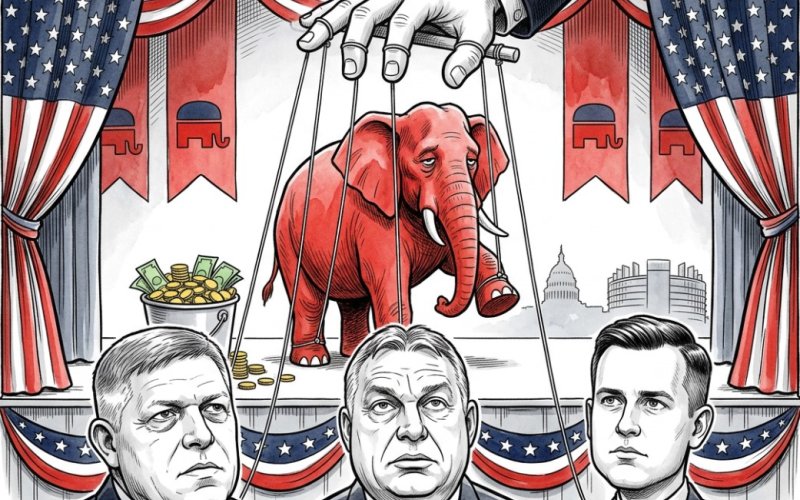
Washington does not need to organize riots. It is enough to exploit them. December's National Security Strategy explicitly names "cultivating resistance" to Europe's current course from within as an objective, and the State Department is preparing grants for conservative groups on the continent. Burning town halls prove this thesis better than any grant, and cost the administration nothing.
There is a second benefit. If the American voter sees France in flames and hears nearby that "Democrats want the same," the problem of high prices recedes. Expensive gasoline in Iowa is explained not by the war with Iran but by a riot in Lyon. It is an old trick, but it works flawlessly.
Version Two: Macron and Merz
The mirror-image theory holds that the unrest benefits Europe's leaders: it gives them a pretext to tighten a militarist course and possibly introduce emergency measures. The benefit is visible. Macron is serving out his second term, presidential elections are due in the spring, and his ratings are low. Talk of violence displaces talk of prices, and in the very first hours the authorities said that peaceful demonstrations had been "hijacked by rioters." Macron declared that there is no place for violence. Such rhetoric is useful to any government today.
There is no evidence in open sources that Paris or Berlin are planning martial law. There are no documents, no troop deployments to cities, no bills on emergency powers. The question "who benefits?" applies to every side, because everyone benefits. A conspiracy theory can be tested against three markers: decrees declaring a state of emergency, changes to the law on demonstrations, and the use of the army inside the country. So far, none of them is present.
There is, however, a risk that both camps are silent about. When almost fifteen hundred shops have been wrecked, and police unions publicly accuse the government of giving no clear orders and failing to provide funding, any next cabinet receives a political mandate for toughness. That mandate does not need to be organized; it grows out of the chaos on its own.
Gas: A Lifeline at Someone Else's Expense
Here is where it gets most interesting. On October 17, the New York Times reported that the Trump administration is proposing that Europe return to buying Russian gas as part of a peace deal on Ukraine. The paper calls it a lifeline for Russia. Witkoff and Kushner, according to the publication, discussed the idea with Europeans and with Zelensky. The channel the reader refers to adds details about Nord Stream, transit through Ukraine, and American investors who could receive a stake. The NYT text emphasizes that Europe is wary and that critics fear a strengthened Moscow. But here is the question: does Moscow really need this lifeline?
The irony of the situation is obvious. For several years Washington demanded that Europe abandon Russian gas, sold it its own LNG, and called dependence on Moscow a security threat. Now, when the continent is searching for a way to pay for energy, the same Washington proposes a return to the pipe. As early as October 3, the NYT wrote that peace talks had expanded into an oil deal: Witkoff and Kushner argue that restoring economic ties with the West will push the Kremlin to agree to peace. Economic motivation has moved to the foreground, and ideology has stepped aside.
The thesis that "prices rose because of the rejection of Russian gas, not because of Iran" needs a correction. The data on which the article relies names the war around Iran and the disruption in the Strait of Hormuz as the main cause of the current price shock. The IRGC warned that vessels violating the rules would "burn," and reported two tankers on fire. America sits at an advantageous point in this story: it needs buyers for its LNG, while Europe remains hostage to someone else's war.
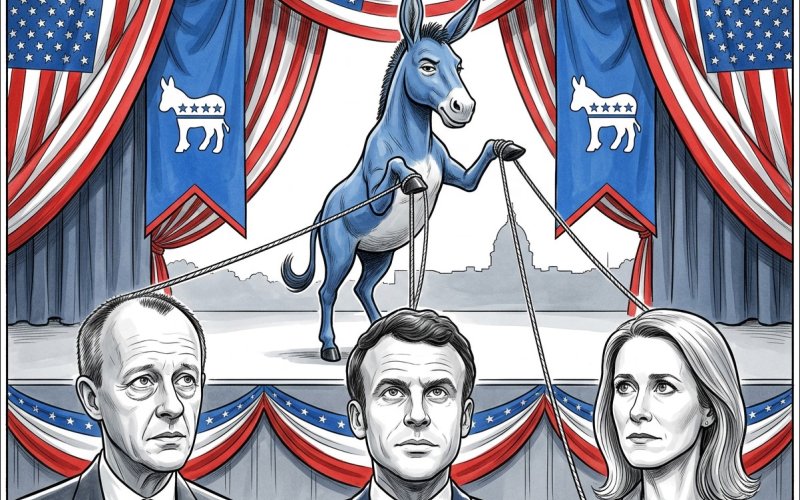
I repeat: all of this looks like knocking the support out from under the EU's political elites, who are under the control of the U.S. Democratic Party. We are watching the American pre-election race unfold in Europe.
What Comes Next
First: the anti-European campaign in American rhetoric will intensify until November 3. Vance and Trump have already shown that the European fire is turning into an argument for domestic politics. Each subsequent speech will likely end with a line about Democrats, because the frame is already worked out.
Second: the gas issue will split Europe. If Washington continues to promote the return of Russian gas in a package with a peace deal, some capitals will agree because of prices, others will reject it because of security. Brussels will have to decide what matters more: household bills or a matter of principle. Political forces promising cheap energy will receive their main trump card.
Third: French politics will swing to the right. The right already calls the unrest an argument in its favor, and elections are near. Marine Le Pen has promised to cut aid to Ukraine six months after being elected, and every burning town hall works for her, regardless of who set it alight and why.
Fourth: winter. If the Strait of Hormuz does not reopen and prices do not fall, the protests will return. Watch the countries that have already seen demonstrations: Belgium, Italy, Portugal, Spain.
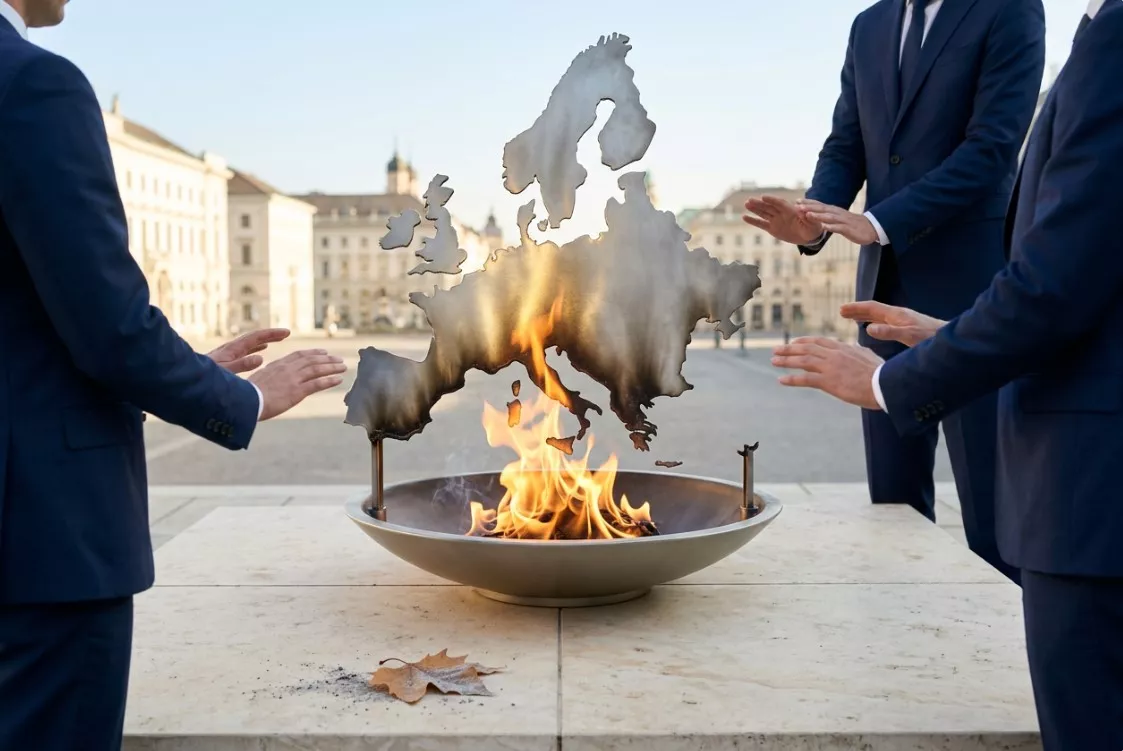
The bottom line is simple, if uncomfortable. There is probably no organized conspiracy from a single center. There is a genuine social explosion caused by prices and underfunding, and three camps that instantly figured out how to work with it. Washington delivered its diagnosis in advance and is using the imagery in its campaign. Paris and Berlin get a reason to talk about security instead of prices. Moscow gets an argument that Europe is weakening, and, possibly, a gas lever. Everyone wins. No one set the fire, but everyone came to warm themselves by it. This is a fire that no longer needs an arsonist, and putting it out will not be easy.








.png)
.png)

.png)
.png)