



Prospects for a change in the US approach to Ukraine received concrete confirmation over the past week: a diesel deal with Moscow, a speed limit on Starshield, and discussion of easing sanctions on tankers. What exactly happened? How much of a turning point is it? What does it give Russian business and the budget? Let us go through the facts.
What Happened This Week
On October 9, Trump announced an agreement with Putin on diesel, and on October 10 the Russian government partially lifted the export ban, allowing 500,000 tonnes. According to an analysis by Carnegie Politika, the schedule is as follows: 300,000 tonnes in October, 500,000 in November, and one million per month through April 2027. In exchange, the US is suspending sanctions on Russian diesel until April 1, 2027. At the same time, Trump announced an energy truce between Russia and Ukraine, which Kyiv said it supports.
Pressure on Kyiv
According to CNN, for several days Europe and Kyiv feared that the US would cut intelligence sharing and aid if Ukraine continued to strike Russian fuel industry facilities. Trump denies that he has stopped sharing intelligence. On the night of October 14, a speed limit was introduced on Starshield terminals: the connection dropped when moving faster than 160 kilometers per hour. Presidential adviser Beskrestnov said there had been no warning and that some missions had failed. In the evening, Fedorov reported that connectivity at speeds up to 160 kilometers per hour was being restored. Musk said that Starshield belongs to the US government and that the limits are set by the military.
The claim that the Pentagon "cut off geolocation and the combat positioning system" is not confirmed in that form: a speed restriction is known, but there is no information about geolocation as such. The limit hits medium-range drones, which need to accelerate, and interceptors against jet-powered drones.
Sanctions and Europe
According to Reuters, the administration is considering easing sanctions on "shadow fleet" vessels in order to bring down record freight rates. Companies would have to obtain licenses from the Treasury. The Department of Energy stated that Russian sanctioned oil does not fall under this measure, but the diesel deal separately suspends restrictions on Russian diesel. These two stories are easy to confuse, and headlines often mix them up.
Marine Le Pen said that France "can no longer finance Ukraine." According to Le Parisien, if elected she would maintain aid for six months and then end financial support. This is a campaign promise by a candidate in next year's election, not a government decision. The EU's 90 billion euro loan for 2026 and 2027, approved in December, remains a safety net for Kyiv.
What This Means for Russia and Russian Business
The market reacted instantly. After the news, shares of Rosneft (up 7.2%), Sovcomflot (6%), LUKOIL (5.8%), and Surgutneftegas (4.6%) rose on the Moscow Exchange. But stocks react to expectations, while the real money looks more modest. The theoretical value of the deal is about 7 billion dollars if 5 million tonnes are sold over six months, but according to Sergey Vakulenko's calculations, it cannot be counted as a gain: most of the diesel would have been exported anyway, albeit by circumventing the ban. Seaborne exports did not stop during the months of the ban, according to tanker loading data: 1.6-1.8 million tonnes were shipped in that period. He estimates the real gain at 30-40 dollars per tonne, that is, tens of millions per month, and it will go to companies, not to the budget. The budget will receive part of it through profit tax.
The budget picture is contradictory. The state does not earn from rising oil product prices, but it does pay the damper when export prices are high. Therefore, a drop in global diesel prices would, paradoxically, reduce payouts. The main source of budget revenue remains the same: the oil price. In 2025, oil and gas revenues fell from 11.13 to 8.48 trillion rubles, with an average Urals price of 55.7 dollars and an exchange rate of 83.4 rubles, and the deficit was 5.63 trillion. For 2026, 59 dollars and 8.9 trillion were budgeted, and back in April Kommersant wrote that at high prices revenues could exceed 10 trillion. Expensive oil is currently linked primarily to the war around the Strait of Hormuz, not to the deal.
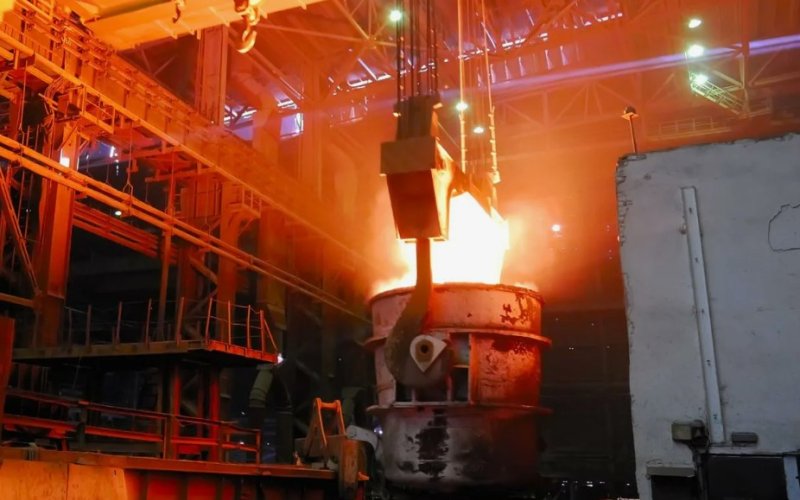
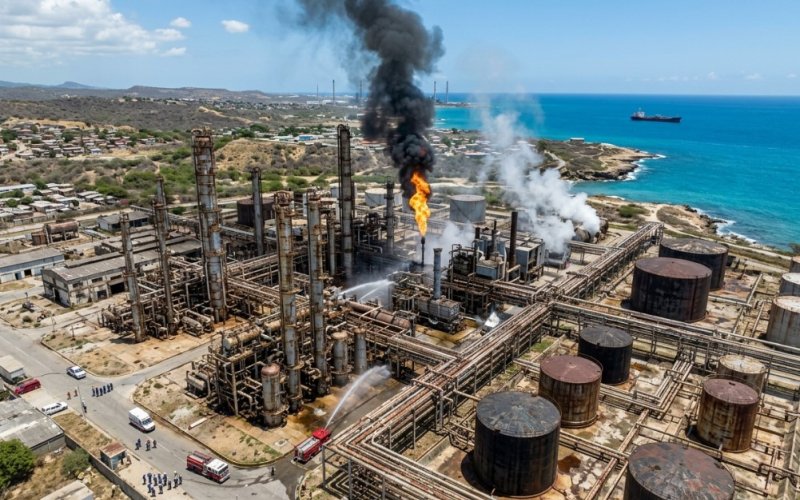
The physical constraints have not gone away. In spring, about 3 million tonnes of diesel per month were available for export; by September, only 300-350 thousand remained because of strikes on refineries, seasonality, and domestic shortages. Refining is holding at 3.8-4.0 million barrels per day versus a norm of 5.5 million. As long as the strikes continue, it will not be possible to sell much in practice, and analysts estimate that a full recovery of exports will take several months.
The deal gives the rest of business almost nothing. The key rate remains at 14%, the next Central Bank meeting is scheduled for October 23, and Sberbank expects the rate to be held. Loans are not getting cheaper. The gasoline ban has been extended to January 31, 2027, and independent filling stations and traders have long complained about reduced quotas for exchange sales. Diesel at filling stations cost about 88 rubles per liter in September. If freight rates really do fall, logistics could ease somewhat, but European insurers and vessels remain closed off, so the effect will be moderate.
The planning conclusion is simple: the suspension of sanctions is limited to April 2027, European restrictions remain in force, and Europe and Zelensky have already criticized the deal. Building investment plans on such terms is risky, but short-term contracts and tanker loading are worth revisiting.
Scenarios and Conclusion
Three options are possible going forward. In the first, Washington continues to combine pressure on Kyiv with targeted concessions to Moscow, and Russia gets a breather in the fuel market. In the second, the steps prove tactical and are rolled back at the first breakdown in negotiations: the Starlink speed limit has already been partly reversed. In the third, the pressure provokes a response in Europe, which takes on part of the American burden.
No strategic reversal is visible yet. What is visible is a set of levers with which Washington is addressing its own oil market objectives ahead of the November 3 elections. For Russia this is a window of opportunity, but the monetary effect is modest and the time frame is limited.












.png)
.png)

.png)
.png)