

A fire at the Cardón refinery in Venezuela has shut down the country's second-largest plant, and the world has barely noticed. Is it an accident or a symptom? Why does Caracas have no money for repairs? And what does any of this have to do with the depleted US strategic reserve? Let's start with the facts.
What Happened at Cardón
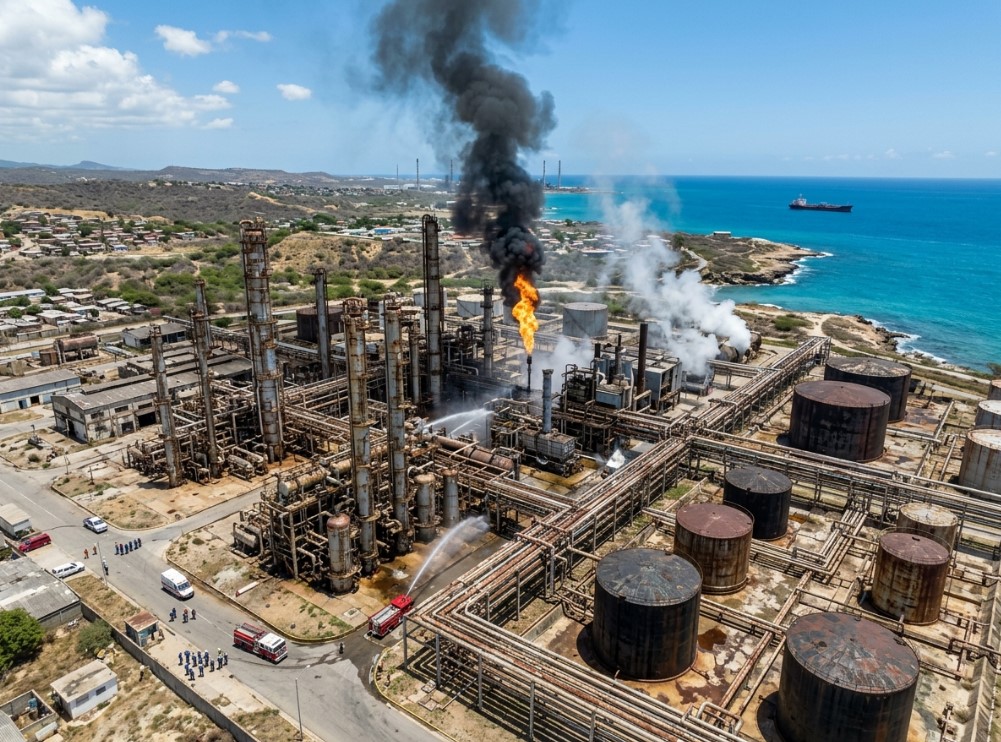
On October 6, at about 3:25 p.m. local time, a gas pipeline feeding the boilers ruptured at the Cardón plant in Falcón state. A fire broke out, accompanied by explosions. Staff were evacuated, and then the entire plant was shut down. The fire was extinguished in less than an hour. PDVSA said there were no injuries and no serious damage, and set up a commission to investigate. No one has given a restart date.
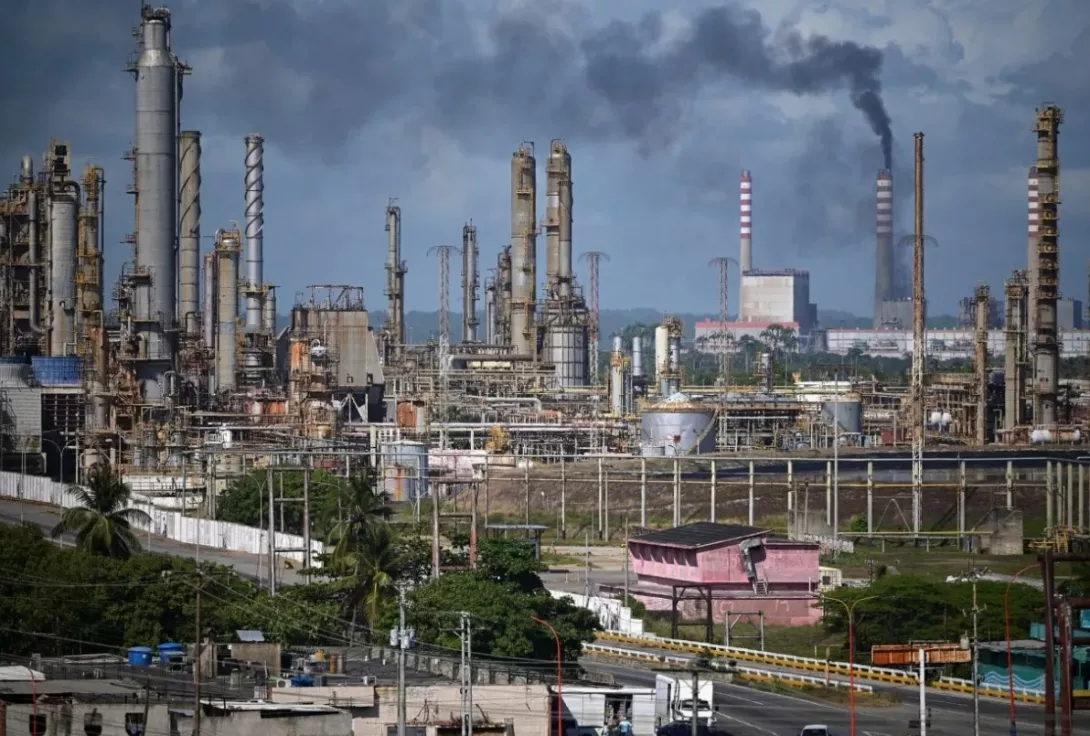
Cardón has a capacity of 310,000 barrels per day and is one half of the Paraguaná complex, the country's largest refining hub, with 955,000 barrels per day. But there is an important detail buried in the reports: the plant was operating well below its design capacity even before the fire. According to industry publications, in April all Venezuelan refineries together processed about 399,000 barrels per day against an installed capacity of 1.29 million. That is 31%. Workers and contractors at Paraguaná say there has been no significant maintenance there in 2026.
Now to the theories. The hint from some analysts about a "greeting to Trump" is understandable, but there is no confirmation of sabotage. PDVSA speaks of a pipe rupture, with the causes under investigation. The Venezuelan government previously warned of "extremist sabotage" against the energy system, but no one has publicly linked that to Cardón. From an engineering standpoint, the explanation is simpler and more uncomfortable: an old pipe that had not been replaced for a long time, and a protection system that failed to work. Accidents like this happen where maintenance has been replaced by hope.
The Money That Isn't There
Restoring the refining system to full capacity would cost no less than $20 billion, according to analyst Oswaldo Felizola. For a country whose output remains around 1.1 million barrels per day, against three million in the past, that is an enormous sum. According to OPEC's August data, production was 1.145 million, while the government cites 1.2 million. PDVSA's year-end target is 1.3 million.
Where could the money come from? Not from inside the country. The state company has lived for years without investment, and sanctions formally remain in place. Trade proceeds under general licenses from the US Treasury, which allow Chevron, Eni, Repsol, BP and several other companies to operate. But the licenses permit buying and exporting oil, not rebuilding someone else's refineries.
Tellingly, PDVSA purchased naphtha abroad this year to compensate for the weak output of its own refineries. In other words, the country with the world's largest proven oil reserves is importing fuel components. This is not a joke but the normal outcome of a decade of neglected maintenance.
Why the US Is in No Hurry to Pay
Here I must clarify my point so as not to mislead the reader. Washington has no shortage of desire to get involved in Venezuela: after the capture of Maduro, the country is run by acting president Delcy Rodríguez with US support, the hydrocarbons law was amended in January, and the implementing regulations came out in July. The White House announced 100-year concessions on 17 fields with reserves of about 65 billion barrels for the company North American Blue Energy Partners. The American interest is obvious, but it is directed upstream, toward heavy oil production.
Refining is not part of this scheme. Columbia University's Center on Global Energy Policy points out that the new rules admit private investors into refining, but only under a license of indefinite duration, after which the asset reverts to the state. Analysts believe this will scare off investors and will not solve the fuel problem. Who will invest billions in a plant that will later be taken away?
Washington's logic is clear, if cynical. US Gulf Coast refineries need Venezuelan crude, not Venezuelan gasoline. Repairing someone else's refineries so that Venezuelans can fill their tanks more cheaply is not in America's interest. So the oil goes for export, and domestic fuel remains Caracas's problem.
Who Could Fix It and Why They Don't
There are willing players in the country. Chevron produces about 244,000 barrels per day through three joint ventures, alongside Eni, Repsol and Maurel & Prom, and at the recent oil summit in Caracas, foreign companies were literally jostling for access to the crude. But they are all after oil in the ground, not rusting pipes.
There is also a political backdrop that cools any ambitions. Chevron's license was revoked in February 2025 and returned in a reduced form only in July. For an investor committing money for thirty years, that history sounds like a warning.
Another curious point: the current licenses prohibit deals with counterparties linked to Russia, Iran, North Korea and Cuba, as well as with companies owned or controlled by China. That means Caracas's traditional partners in refinery and power-grid repairs have been shut out. American business has not yet rushed to replace them.
What This Means for the US Reserve
Now the main point for the global economy. In the first week of October, the US Strategic Petroleum Reserve held 283 million barrels, the lowest since October 1982. Since March 20 it has fallen by 132.5 million barrels, or 32%. The cause is well known: since the end of February, the war with Iran has almost halted tanker traffic through the Strait of Hormuz, and the US began large-scale sales from the reserve. Brent topped $100 in the first quarter and is trading around $105 in early October.
How is Venezuela connected? Through physical oil. Venezuelan crude went to the US in September at 629,000 barrels per day; in July there was a record of 786,000. It is a heavy grade, suitable for American refineries. While the reserve is empty, every thousand barrels that go to the Gulf of Mexico replace what would otherwise have to be drawn from storage.
Now imagine that it is not Cardón but Venezuela's production infrastructure or ports that fail. Under normal circumstances, the US would have a cushion. Right now there is none. A third of surveyed oil executives believe the reserve has already reached, or is close to, the "bottom of the tanks." The Department of Energy says at least 70 million barrels must be left for the safe operation of the caverns.
The Cardón fire has no direct effect on supplies to the US. It is important to say this honestly. But it shows how fragile the system is on which Washington now depends, because it currently has no other fallback.
What This Means for the Global Industry
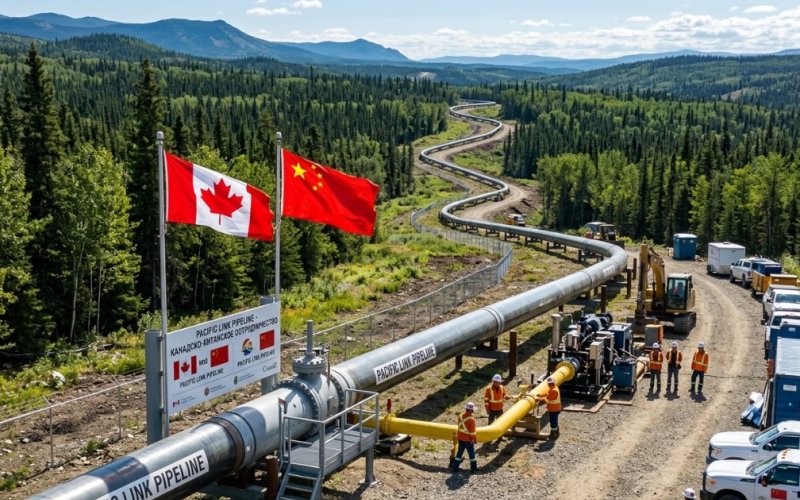
First: heavy oil is becoming scarce. Middle Eastern flows are disrupted, so anything that can be sourced from the Western Hemisphere is doubly valuable. Canada is building a new pipeline to the Pacific, and Venezuela is ramping up production under the American umbrella; both stories are about America trying to replace the Persian Gulf with closer sources.
Second: the petroleum products market is more vulnerable than the crude market. Oil can be produced, but refineries take years to build and they age. When one of the region's largest refineries goes offline, a country usually buys more diesel and gasoline on the world market. This is only a probable scenario, with no confirmation yet, but against a backdrop of expensive shipping and a tight market, any extra order pushes prices up.
Third: a lesson for everyone who builds oil policy around production. Venezuela shows that you can have the largest reserves and still be unable to refine them properly. Where money is saved on maintenance, pipes sooner or later crack.
Conclusion
The Cardón fire is most likely not sabotage but the bill for years of deferred maintenance. Venezuela cannot pay it, and the US does not want to, because it is interested in the oil, not the refinery. With the reserve at a minimum and Hormuz still a problem, the world cannot afford even small disruptions. The news passed almost unnoticed, but these are exactly the stories worth reading carefully.














.png)
.png)

.png)
.png)