


Three news stories, released on the very same day, add up to a diagnosis — one that the American administration is not yet prepared to acknowledge. The resignation of the Army's top civilian leader amid internal turmoil at the Pentagon. Ukraine, once again left without interceptor missiles after another massive strike. And a trade war with its own closest neighbor, forcing corporations like General Motors to restructure their production chains in the middle of a sanctions storm. Each of these stories looks like a separate item on its own. But together, they paint a picture of a system fighting on several fronts at once — and growing weaker on every one of them.
Ammunition runs out, but politics goes on
I'll start with the most painful issue — defense. Over the last two missile strikes on Kyiv, Ukraine reportedly expended at least 18 Patriot interceptor missiles. These were precisely the "remnants of a small batch" of interceptors that Zelensky had mentioned. The interception success rate against ballistic targets was around 30 percent, and against hypersonic munitions, zero percent. Worse still, one of the missiles failed to function after launch — an indirect indication that the munition itself had exceeded its shelf life.
If the "small batch" indeed did not exceed twenty units, the Ukrainian side has effectively exhausted its interceptor reserve once again. As early as August 5, Ukrainian armed forces failed to shoot down a single one of the 28 ballistic missiles launched by Russia, precisely due to a lack of adequate air-defense assets. Without missiles, Patriot systems turn into useless scrap metal. Each time, the situation repeats along the same script: a brief resupply, a series of intercepts, and the arsenal is back to zero.
EU High Representative for Foreign Affairs Kaja Kallas has already called on bloc member states to hand over to Ukraine interceptors that are simply approaching the end of their storage life. In essence, this is a proposal to give away what will soon be written off anyway. Italy, meanwhile, confirmed the delivery of four SAMP/T batteries and Aster 30 missiles. But gestures like these look like patching holes rather than a systemic solution. Patriot production lines simply cannot keep pace with the rate of munitions expenditure — neither on the Ukrainian front nor in European stockpiles, which have themselves been depleted by the war with Iran.
A symbolic response to this shortage arrived on the very same day that a new gap in Kyiv's air defense was exposed. The US Department of War signed framework agreements with General Dynamics Ordnance and Tactical Systems and Lockheed Martin. The plans are ambitious: tripling production of PAC-3 MSE interceptors and quadrupling THAAD output. But a question immediately arises: what exactly do they intend to do in the meantime, while the factories ramp up? Agreements like these are not implemented in weeks or months, but in years. They require workforce expansion, bulk raw-material procurement, and plant modernization. While the production base accelerates, Ukrainian skies and NATO's eastern flank remain essentially uncovered — here and now. Notably, this same vicious cycle has already played out before, only on different theaters: in March, when the US itself depleted its Patriot and THAAD stockpiles during the war with Iran, and it was then that talk of a critical interceptor shortage in Europe first emerged.
A rift in their own ranks
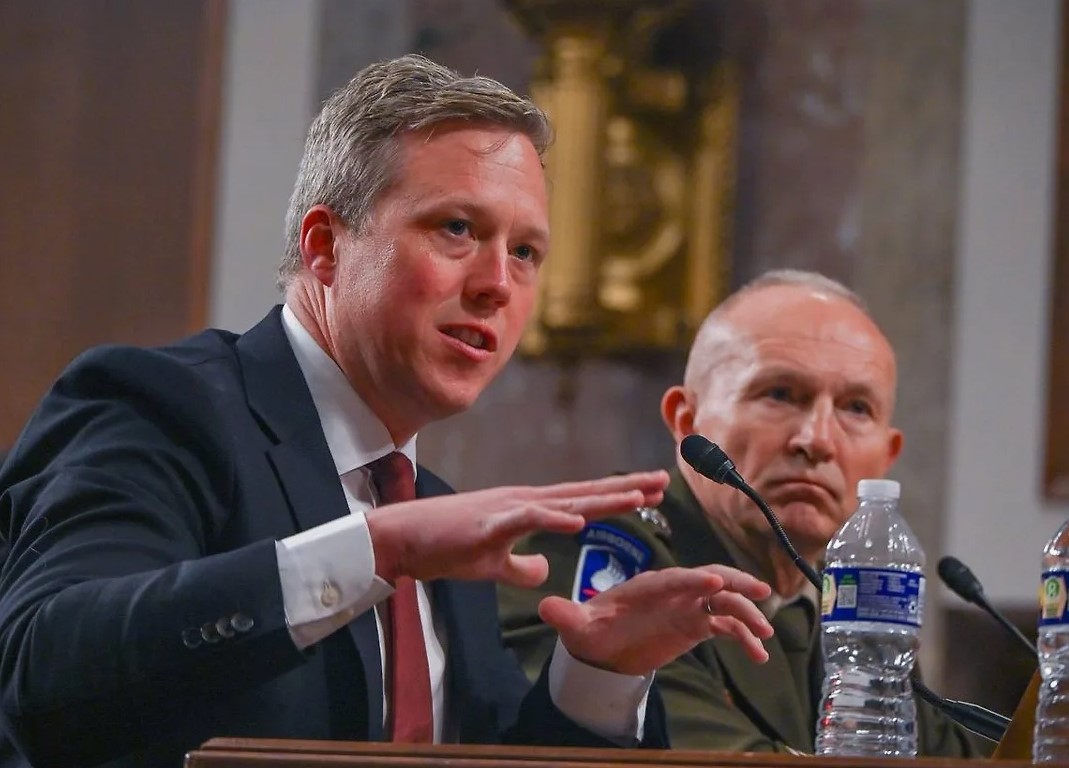
Against this backdrop, the second piece of news looks especially telling — the resignation of US Army Secretary Daniel Driscoll. According to the Wall Street Journal, he stepped down after months of conflict with Pentagon chief Pete Hegseth. The dispute centered on disagreements over the direction of the armed forces' development and the dismissal of a number of senior officers. His deputy, Dave Fitzgerald, is leaving the post alongside him. In effect, the Army's leadership has been left entirely headless.
The outcome of this reshuffling looks almost absurd for a superpower simultaneously waging war against Iran, supplying Ukraine, and attempting to deter Russia: there is no longer a single civilian or military leader confirmed by the Senate at the head of the US Army. The duties of Army Chief of Staff are being temporarily performed by General Christopher Lanave, who took the post after Hegseth dismissed his predecessor, General Randy George. According to The Hill, Driscoll had wanted to leave earlier, by Labor Day, but the White House had insistently asked him to stay at least until the midterm congressional elections in November. The priority here is obvious, and it is political rather than military.
The result is a picture of personnel chaos at the very top of military leadership — rare in American history — occurring precisely at a moment when the strategic burden on the armed forces is the heaviest it has been in decades. It seems to me that arguing inside the Pentagon over who to dismiss and where to steer the Army, while three separate theaters of war demand simultaneous attention, is far from a recipe for stability. It is worth noting that this leadership vacuum in the Army coincides with growing public criticism of Hegseth's own methods. According to several outlets, a portion of senior officers consider his approach to dismissals chaotic and damaging to morale.
Trade war finishes off the industrial base
The third front is economic, and it is no less telling. General Motors announced an investment of 1.1 billion Canadian dollars in plants in the province of Ontario — for the production of V8 engines, GMC Sierra pickup trucks, and new transmissions. At first glance, the news looks like a success story and a vote of confidence in the North American auto industry. In reality, it is a forced corporate response to the chaos that the American administration itself created in relations with its closest trading partner.
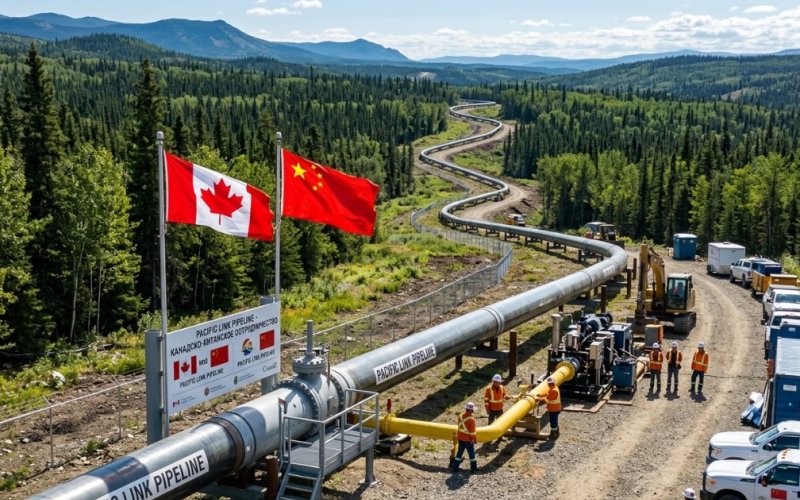
Washington imposed 25 percent tariffs on Canadian vehicles and is threatening to raise them to 50 percent starting in 2027. Trump accused Ottawa of having "ripped off" the United States "for years." Canada responded in kind, with its own tariffs on hundreds of categories of American goods, set to take effect on September 8. The real-world effect of this exchange has already begun hitting Americans themselves: CNN noted rising prices and supply-chain disruptions directly tied to the tariff war with its northern neighbor. Meanwhile, Chinese electric-vehicle manufacturers, while Washington and Ottawa argue over percentages, are quietly strengthening their position in the Canadian market. The upshot is that a conflict Washington itself provoked ends up benefiting Beijing.
Vice President J.D. Vance, according to leaks from closed-door events, reportedly told associates even before the talks collapsed that American economic power is not limitless, and that Canada is fully capable of proving that in practice if the trade dispute drags on.
Hence the paradox: in order to punish Canada for a perceived injustice, the administration imposes tariffs that strike at its own manufacturers and consumers. Corporations like GM are forced to urgently restructure their production chains, while Chinese competitors, meanwhile, claim the market space vacated within an allied economy.
Three fronts, one shared logic of failure
Taken together, all three stories add up to a troubling pattern. The military machine promises to boost interceptor production, but these are promises for years down the road. Meanwhile, Ukraine and Europe's allies remain, right now, without protection against ballistic and hypersonic strikes. Army leadership is paralyzed by internal disputes at a moment of maximum strategic strain. And trade policy, instead of strengthening the industrial base, is pushing its own auto industry to seek refuge abroad while simultaneously opening the door for Chinese competitors in allied markets.
It seems to me that this is where the real danger to America's status as global hegemon lies — not in any single specific failure, but in a systemic mismatch between ambitions and actual capabilities. The United States is simultaneously trying to wage war against Iran, contain Russia through Ukraine, compete with China, and punish allies with trade barriers. Meanwhile, the industrial base is not elastic, personnel policy at the Pentagon is faltering, and trade wars are boomeranging back onto the domestic economy.
Each of these fronts, taken individually, could be manageable if the administration had the time to focus on a single priority. But waging several conflicts at once stretches already-limited resources to the breaking point. Production capacity expands more slowly than munitions are consumed. Personnel reshuffles in military leadership coincide with moments that demand maximum cohesion. And trade conflicts with the closest neighbors undermine the very industrial foundation that would be needed if a long-term mobilization of resources were ever truly required.
The cost of error grows every month
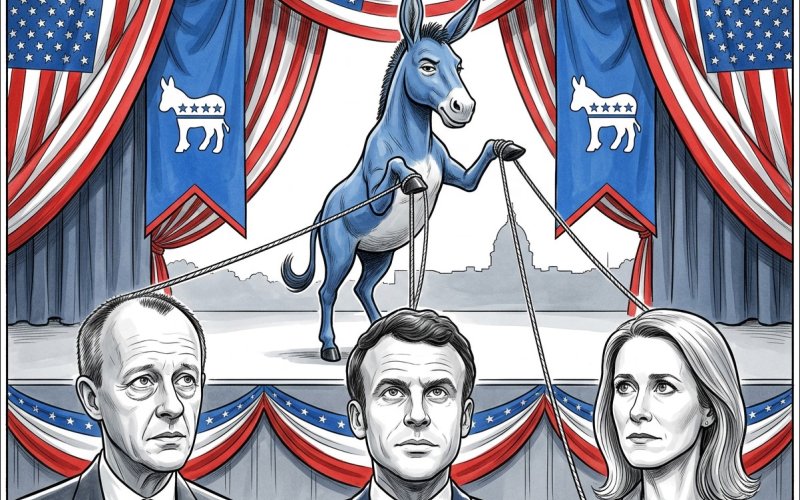
The most dangerous part is that each of these problems compounds the others. The shortage of interceptors in Europe and Ukraine weakens the position of the US and NATO vis-à-vis Moscow at precisely the moment when negotiations over the future of the Ukrainian conflict are entering a decisive phase. Internal division within military leadership reduces the effectiveness of any decisions made at the top, including the allocation of those very interceptors among theaters. And the trade war with Canada diverts resources and attention away from more serious strategic adversaries, while simultaneously eroding allied trust in the reliability of American commitments overall.
The way out of this tangle of problems will inevitably be painful. Washington will either have to sharply scale back military commitments on one or several fronts, acknowledging the limits of its own capabilities — a step that will inevitably be perceived as retreat and a loss of influence. Or the administration will continue spreading its already-limited resources across Iran, Ukraine, and trade wars, risking failure on multiple fronts simultaneously — which would damage the hegemon's reputation far more severely than a single localized retreat.
History offers no shortage of examples where it was simultaneous overextension across multiple fronts, rather than a single military defeat, that marked the beginning of the end for a dominant power. Historians have observed similar dynamics in other empires of the past — Britain after the Suez Crisis, and seventeenth-century Spain under excessive military strain in both Europe and its colonies. In each case, the key factor behind the decline was not one lost battle, but the inability to match ambitions to the real resources of the treasury and the industrial base.
I think it's important to add: even the sheer speed at which these three crises are unfolding — a resignation at the Pentagon, the depletion of the air-defense arsenal, and an escalating tariff war — speaks not to coincidence, but to a structural overload of the entire decision-making system in Washington. When several agencies are fighting different fires at the same time, coordination between them inevitably suffers — and it is precisely that coordination which usually determines whether a superpower can maintain balance across several fronts at once.















.png)
.png)

.png)
.png)