



Russian banks and the banking system as a whole are posting figures that developed economies now consider an unattainable luxury: double-digit return on capital, growing profit, and capital adequacy hitting new highs. At the same time, the sector is balancing on the edge — the share of problem loans has reached a level that analysts openly call a formal crisis.
Capital Is Growing Faster Than Risk
According to the Central Bank, the overall capital adequacy ratio of the banking sector rose by 0.7 percentage points in the first quarter of 2026, to 13.9%. That is the best result since 2022: for the first time in several years, the indicator did not decline but rose steadily. Capital growth amounted to 1.2 trillion rubles, and almost the entire volume was provided by the sector's net profit, reinvested back into capital.
Bank of Russia Governor Elvira Nabiullina estimates banks' free capital buffer at 10 trillion rubles — an amount that, in her words, is sufficient to absorb virtually any unforeseen losses. "We don't see risks. There is negative revaluation of securities, and banks are managing these risks. Banks have enough capital," she said in July 2026.
The sector's profitability remains impressive as well. Return on equity (ROE) stood at 20.5% in June 2026, up 1.1 percentage points over the month. In July, the sector earned 443 billion rubles in net profit, a notable increase from previous months. According to the Central Bank's forecast, banks will earn a combined 3.3 to 3.8 trillion rubles for the full year 2026, comparable to the record figures of previous years.
Why This Outpaces the Global Average
For comparison, a return on equity above 20% is a rarity even among emerging-market banking systems — banks in the United States and the European Union typically show ROE in the range of 10-14%, and European banks spent decades rebuilding capital after the 2008 crisis precisely because reinvested profit failed to keep pace with the growth of risk. The Russian sector, operating under harsh sanctions, disconnection from SWIFT, and limited access to external capital markets, has managed not merely to survive but to expand its capital buffer to a historic high.
Part of the secret lies in the high key interest rate, which for a long time kept banks' interest margins at a comfortable level, and in the conservative provisioning policy the Central Bank has been building since 2022. The state's dominance in the capital of the largest players — Sberbank, VTB, and Gazprombank — also plays a role, allowing potential problems to be managed systemically, preventing depositor panic, and ensuring recapitalization by hand when necessary.
The Flip Side: Overdue Debt Hits Records
But behind the glossy capital and profit figures lies a less pleasant picture of loan portfolio quality. According to independent experts, from a formal standpoint the Russian banking system has been in a state of crisis since the start of 2026, as the share of "bad" assets exceeded the 10% threshold. The volume of problem loans — including loans with a high probability of default and payments overdue by more than 90 days — grew 19% over 2025, and a further 5.2% in the first two months of 2026, reaching 13.6 trillion rubles, or 6.5% of all banking assets, up from 5.4% a year earlier.
The retail segment has suffered especially visibly. Overdue debt owed by citizens on unsecured consumer loans reached a record 1.65 trillion rubles at the start of 2026 — up a third over the year. The share of problem unsecured consumer loans rose to 13%, up from 9% a year earlier. Fresh reporting from the largest state-controlled banks for the first half of 2026 confirms the worrying trend: at Sberbank, the share of Stage 3 problem loans rose from 4.8% to 5.5% over the quarter, provisions for possible losses grew 8.6%, and overdue debt on the mortgage portfolio jumped by almost 50%.
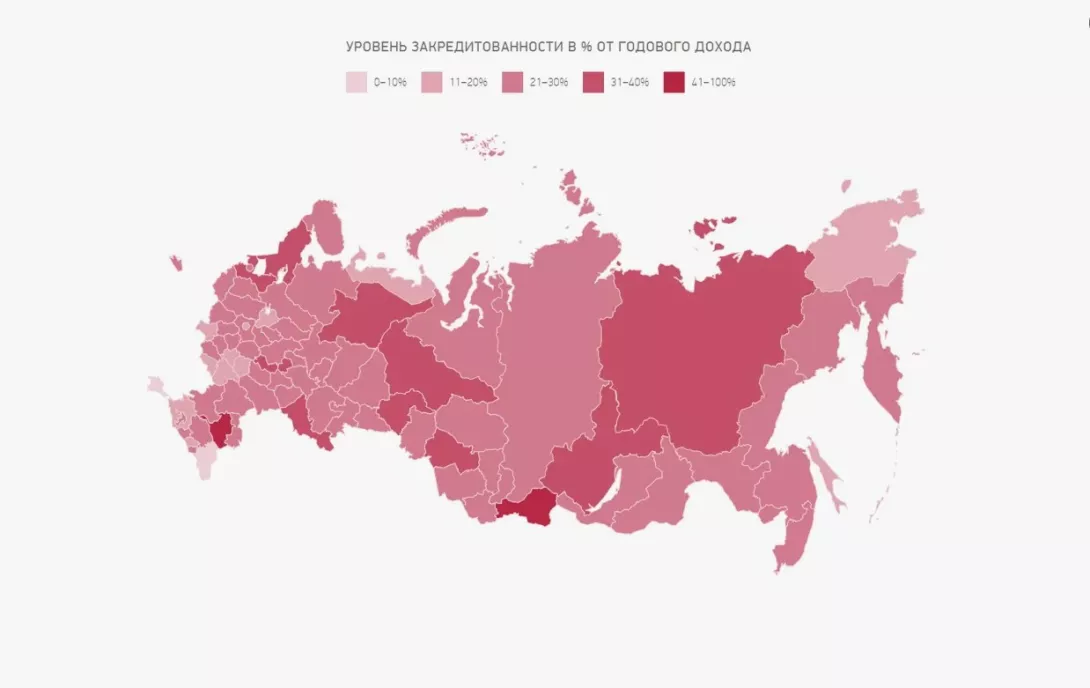
Analysts identify the most vulnerable banks as those that aggressively expanded unsecured consumer lending in 2023-2024, as well as lenders to developers, logistics companies, and IT firms — precisely the industries where overdue debt is growing fastest.
Risks Are Real but Still Manageable
The key question is whether the system can absorb the growing volume of problem debt without shocks. Most analysts agree there is no direct threat to the sector's stability. Finam analyst Igor Dodonov notes that despite a marked deterioration in portfolio quality, the situation does not look critical: banks built up reserves in advance, and coverage of problem loans is assessed by the Central Bank as adequate. For comparison, in 2015 the share of overdue consumer loans exceeded 8%; today's figure is nearly half the peak crisis level of that time.
There are more skeptical assessments as well. Analyst Yegor Zinovyev stresses that the risks are real and will keep growing, pointing to logistics, trucking, real estate development, IT, and sharing services as the industries most vulnerable to further corporate defaults.
An important factor is the easing of monetary policy: with the key rate declining in the second half of 2026, experts expect a gradual recovery in lending and stabilization of the share of overdue loans. According to analyst Dmitry Gritskevich's forecast, the relative level of problem debt could fall to roughly 8.5% by the end of the year as a dilution effect from new, higher-quality loans takes hold.
What to Keep in Mind
The overall picture is dual, and it is precisely this duality that makes the Russian banking system such an interesting case to watch. On one hand there is record capital, resilient profitability, and statements from the regulator that there are no systemic threats, backed by a substantial 10-trillion-ruble buffer. On the other, there is rising overdue debt approaching thresholds that, in past crisis cycles, preceded more serious shocks.
For now, the Central Bank is keeping the situation under control through conservative provisioning, hands-on management of state banks, and a gradual rate cut, so an acute liquidity or solvency crisis in the sector is not to be expected. But the system's dependence on manual regulation and state support is itself a risk worth keeping in mind: this model works only as long as the economy can generate a sufficient stream of fresh, high-quality profit to cover old problem debt. If the growth rate of overdue debt outpaces banks' ability to build reserves from current income, the resilience the sector can genuinely take pride in today may prove far less solid than it appears at first glance.




















.png)
.png)

.png)
.png)