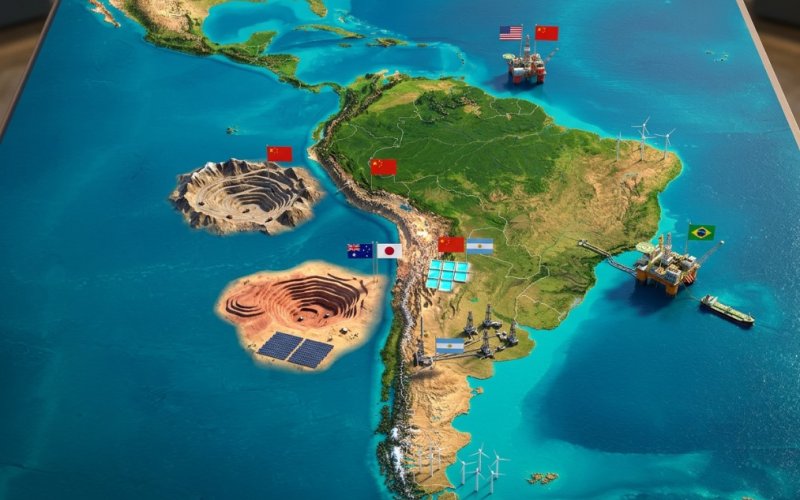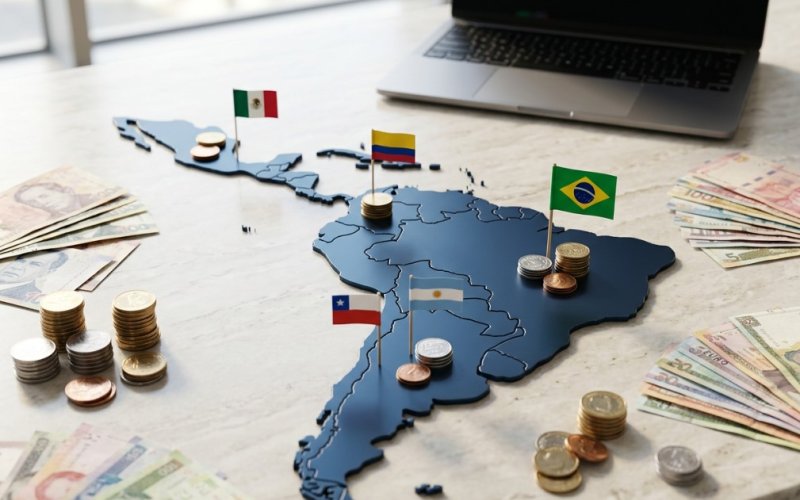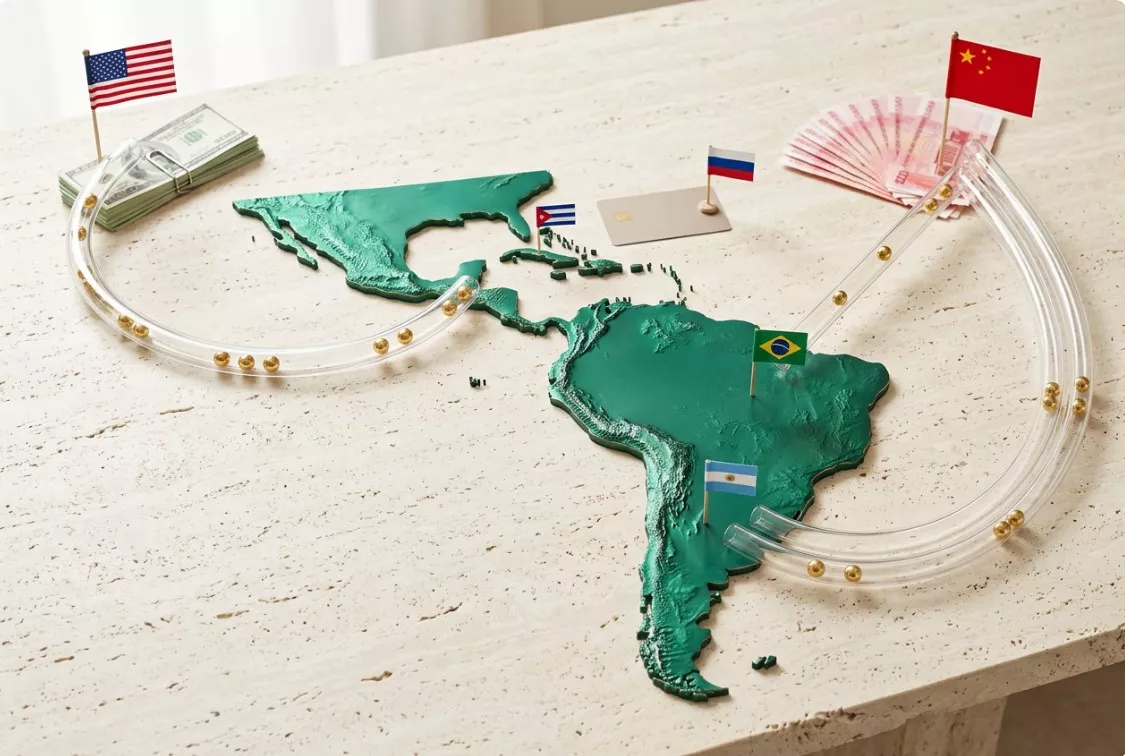
The region is not abandoning the dollar, but it is increasingly refusing to rely on it alone. Argentina keeps a yuan credit line, Brazil is building direct payment channels with China, and Cuba and Venezuela are hunting for workarounds. How does it all work? What do the numbers show? And how is Washington responding?
The Dollar Stays, but Not Alone
Start with a caveat that nearly every analyst makes: the dollar has not gone anywhere. Material on Brazil–China settlements says so outright. In recent years, both countries have expanded trade in reais and yuan, but companies remain free to choose whichever route they prefer. A consultancy review of BRICS payments for 2026 puts it this way: settlement in national currencies is growing "at the margins," while the dollar still anchors global finance. Yuan internationalization, the mBridge digital-currency pilot and bilateral payment agreements each add a little more.
Ideology is not the driving force here. Two practical motives are. The first is cost: every additional conversion eats into margins, and a soybean exporter or an electronics importer watches the fees closely. The second is risk. Latin American currencies swing widely. The real, the Mexican peso and the Argentine peso have all moved sharply against the dollar over the past two decades, making it harder to price deals and to exit them. In practice, it looks like this: if the dollar index breaks down through a key level, fresh demand for the real and the peso could emerge, and if it reverses, arbitrage positions could unwind quickly.
There is also an outside push. The Center for Strategic and International Studies (CSIS) argues in its October 13 report that Beijing and Moscow are promoting de-dollarization to reduce their exposure to the American sanctions system, and that China has extended swap lines worth billions of dollars to the region. Moscow, however, frames it differently. Dmitry Peskov has said Russia is not pursuing "de-dollarization" and is ready to use any acceptable means of payment. Russia's shift to other currencies was driven more by necessity than choice: after US and EU sanctions, including the freezing of more than $300 billion in Russian reserves, the country had no real alternative.
Argentina: A Yuan Cushion
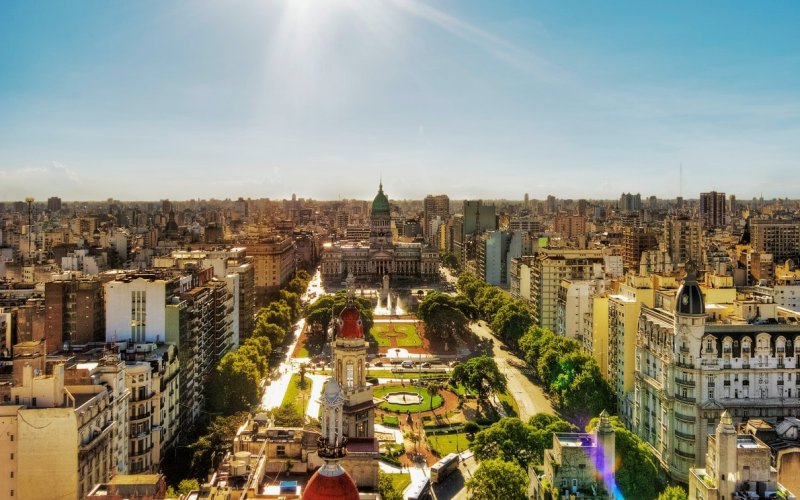
The most conspicuous arrangement sits in Buenos Aires. On August 5, 2026, Argentina's central bank and the People's Bank of China renewed a swap worth 130 billion yuan, roughly $19 billion. The term is five years, through 2031, two years longer than the previous deal. According to the South China Morning Post, Washington pressed Buenos Aires to drop the Chinese line, and the US Treasury had offered a rival mechanism a few months earlier. Argentina held its ground.
The mechanics are straightforward. Argentina's central bank hands pesos to Beijing and receives yuan, then later returns the yuan with interest and takes back the pesos. The full amount shows up in gross reserves, but only the activated portion can actually be spent, and once it is, it becomes debt. The yuan can pay for Chinese imports, support the peso and cover other payments that Argentina would rather not route through dollars.
The latest episode came on October 14. Economy Minister Luis Caputo told investors that Argentina could tap the Chinese swap if it fails to refinance its dollar bonds issued under local law, known as Bonares. The trigger was market anxiety over the situation heading into an election year. Central bank reserves stood at $49.7 billion on October 14, and the Rio Times notes that the bank's leadership wants to build them up before the vote.
It is important not to confuse two different instruments. In September, the Economy Ministry and the central bank carried out a $2 billion exchange of dollar securities. That was an internal debt swap between government bodies, not a currency swap and not the Chinese line.
Brazil: Direct Clearing with China
Brazil is taking a different route: not a loan that bolsters reserves, but trade flows. According to Trade Council, Brazil and China finalized a bilateral agreement on a direct clearing system on August 12, 2026. Contracts can be settled directly in yuan and reais, with no mandatory detour through the dollar. The scheme is laid out in reference materials from the Brazilian portal BRICS Brasil, which walks through how a company can arrange such a settlement.
In practice, a Brazilian exporter is paid in reais at home, the Chinese buyer pays in yuan in China, and the exchange rate between the two currencies is set directly. Customers only need to tell their bank they want to pay in local currency. For large commodity contracts, where volumes run into the billions, the savings on conversion are significant.
Brazil also has its own political backdrop. It has long maintained that sanctions not backed by a UN Security Council decision are not binding, and it trades with partners on opposing sides. That matters for the "Russia and Latin America" format as well. The CORAL 2026 forum, organized by the Russian side, drew representatives from Brazil, Argentina, Colombia, Costa Rica, Guatemala, Honduras, Chile, Venezuela, Paraguay, Ecuador and Russia. They discussed trade, development and economic mechanisms for cooperation.
Sanctioned States: Cuba and Venezuela
For countries under direct American restrictions, settling outside the dollar is not about saving money. It is about being able to pay at all. In June 2026, Cuba faced a suspension of payments through Visa and Mastercard. Speaking at the St. Petersburg International Economic Forum, the island's deputy prime minister said Russia's Mir system allows financial operations to continue.
The Bank of Russia says the System for Transfer of Financial Messages, Russia's alternative to SWIFT, is expanding rapidly this year. Sanctions have boosted use of the system and the issuance of Mir cards, while Visa and Mastercard suspended operations in Russia.
Venezuela, after its change of government, finds itself in the opposite position. According to the Rio Times on October 14, US Treasury licenses determine which foreign companies may produce and sell Venezuelan oil, and those same licenses shut out partners from China, Russia, Iran, Cuba and North Korea. The payment channels that once linked Caracas to those countries are now governed by American permits.
Workarounds nonetheless remain. TradersUnion examines the collapsed oil deal involving Poland's Orlen, which showed how stablecoins such as USDT are used to pay for commodities and sidestep sanctions on Venezuela. Such schemes emerge wherever official payment channels are closed, and regulators struggle to police them.
What Comes Next
The balance of power today looks like this. On one side, China offers the region tools the United States cannot match at this scale: long-term swaps, direct clearing and lending. Argentina has kept its yuan line despite the pressure and treats it as a cushion in case dollar refinancing runs into trouble. On the other side, Washington holds the lever of licenses and sanctions, as Venezuela shows, and offers its own credit mechanisms.
For Russia, the picture is mixed. It uses its payment tools where others are unavailable, as in Cuba's case. But Peskov's statement that Moscow does not aim for de-dollarization points to a pragmatic approach: money flows wherever there is a way to pay. We will soon see how well these mechanisms hold up. A series of tests lies ahead: Argentina's election cycle, the refinancing of the Bonares and the path of the dollar index, on which the real and the peso depend.