


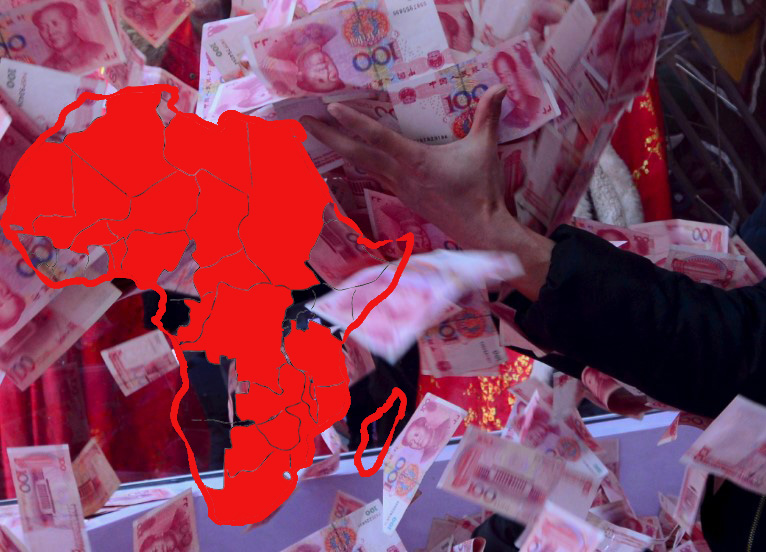
If you're tracking where global capital flows are heading after the era of unconditional dollar dominance, here's a concrete indicator: trade turnover between China and Africa hit a record 1.41 trillion yuan in the first half of 2026, and each new transaction in this chain increasingly bypasses the American currency altogether.
Libya Opens a Direct Settlement Channel
In July, the head of the Central Bank of Libya, Naji Mohammed Issa, and the governor of the People's Bank of China (PBOC — China's central bank), Pan Gongsheng, agreed to connect Libyan commercial banks to the Cross-Border Interbank Payment System (CIPS — China's counterpart to SWIFT, which allows settlements directly in yuan, bypassing the dollar). According to the Libyan central bank's statement, this will enable direct interbank trade settlements, simplify cross-border transfers, and reduce dependence on the dollar. Libya is simultaneously preparing to issue panda bonds — debt securities denominated in yuan and issued by foreign entities on mainland China's market — to help finance the country's post-war reconstruction. The agreement also gives Libyan banks access to letters of credit directly through Chinese lending institutions. A visit by Libyan banking officials to Beijing is already planned to formalize the arrangements.
This is not an isolated episode but part of a systemic expansion of Chinese payment infrastructure across the continent: South Africa's Standard Bank, 20% owned by the Industrial and Commercial Bank of China, announced on July 27 that it had processed 8 billion yuan (about $1.2 billion) in CIPS transactions since late last year. The bank is authorized by the PBOC to conduct yuan clearing in 19 African countries, effectively making it the nodal point of China's financial expansion on the continent. In Angola, Banco de Fomento Angola is preparing to become the country's first national bank to join CIPS — meaning the network keeps growing literally month by month.
The Mechanism: Tariff-Free Trade as Fuel for the Yuan
Here it's important to understand the cause-and-effect relationship rather than simply list facts. The record jump in trade turnover is not a coincidence but a direct consequence of a policy decision in Beijing: in May 2026, China introduced a tariff-free trade regime for imports from all 53 African states with which it maintains diplomatic relations. The result was immediate. In May and June, Chinese imports from Africa grew 23.5% year-on-year. According to Reuters analysts' assessment, the elimination of tariffs is expected to stimulate settlements specifically in yuan rather than dollars, since trade flows that bypass customs barriers naturally gravitate toward the buyer country's currency when convenient infrastructure for that exists — and CIPS provides exactly that kind of infrastructure.
The cost of this shift for the old system is already tangible: the more African banks connect to CIPS, the fewer incentives local exporters and importers have to use the dollar as an intermediary settlement currency, gradually draining demand for the American currency out of one of the fastest-growing trade regions in the world.
From Payments to Debt: The Yuan Digs Deeper
Yuan expansion is not limited to trade settlements — it has already reached the fiscal and debt policies of individual African states. In January 2026, Zambia began collecting taxes and royalties from Chinese mining companies directly in yuan, channeling that currency back to Beijing to finance imports and service its own debt. A year earlier, Kenya converted its railway debt into yuan, and now Ethiopia and Mozambique are negotiating similar restructuring of their debt obligations. This represents a fundamentally different level of integration compared to ordinary trade settlements: when a country collects taxes and services its sovereign debt in a foreign currency, that currency stops being merely a convenient tool for a specific transaction and becomes part of the state's sovereign financial architecture.

Who Benefits — and Why There's No Room for the Dollar Here
The beneficiary in this configuration is obvious: China gains not only an expanded market for its own currency but also long-term leverage over countries whose sovereign debt and tax revenues are already tied to the yuan. Beijing-based corporate lawyer Kai Xue, quoted by the South China Morning Post, laid out the strategy plainly: by expanding CIPS and yuan operations, China aims to reduce dependence on the dollar in international trade and build an alternative payment infrastructure. Charlie Robertson, an economist specializing in the African region, put the logic even more bluntly: since China remains Africa's largest trading partner, the yuan risks becoming more important to the continent than the dollar itself.
The losing side in this story is the old dollar-based settlement infrastructure, which just a decade ago was seen as the unrivaled standard for international trade. Every new African bank joining CIPS, every new deal converting sovereign debt into yuan, is not a one-off exception but a building block in the foundation of a parallel financial system — one being constructed not through loud political declarations, but through routine banking agreements signed almost unnoticed by the global media.
Flight From the Dollar as a Slow but Irreversible Trend
The accumulation of facts — from tariff-free trade and record trade turnover to tax collection in yuan and debt restructuring — shows that de-dollarization in Africa is proceeding not through one-off political gestures but through a systemic overhaul of financial infrastructure at the level of central banks, commercial banks, and sovereign budgets. This is fundamentally different from earlier talk of "the end of the dollar," which often remained at the level of rhetoric: here we are talking about concrete signed agreements, functioning clearing centers, and real settlement volumes that have already passed through the alternative system.
The question that remains open is how far this integration will go if the continent's largest economies — Nigeria, Egypt, Morocco — follow the example of Libya and Angola: will the yuan become Africa's truly dominant reserve and settlement currency as early as the start of the next decade, or will the continent ultimately develop a more balanced multi-currency model, in which the dollar retains part of its position simply through the inertia of the global trading system and the habit of major commodity contracts remaining pegged to it.



















.png)
.png)

.png)
.png)