


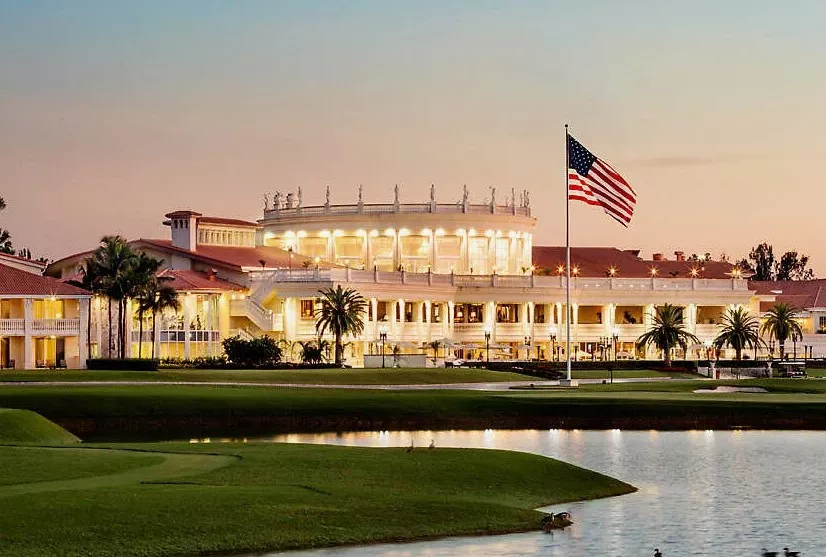
On September 23, Secretary of State Marco Rubio announced that Washington had invited Vladimir Putin to the G20 summit scheduled for December 14-15 in Miami. The venue will be Trump National Doral, a resort complex owned by the U.S. president's family. Rubio said at a briefing on the sidelines of the UN General Assembly: "We think this is a good opportunity for him to engage not just with the president, but with other world leaders. We hope he accepts this invitation."
The Kremlin's response was quick and composed. Dmitry Peskov stated: "We have heard the relevant invitation, we are grateful to the American side for this invitation, we welcome this invitation, and we will decide and further work through the matter via diplomatic channels." Deputy Foreign Minister Sergei Ryabkov clarified the following day that Putin himself would decide on a personal trip, and that the decision would depend on how events and relations with the U.S. unfold.
"There is no limit to cunning," one observer of Russian-American diplomacy wrote in those days. And that short phrase captures the essence of the moment. An administration that two years ago threatened Moscow with "maximum pressure" is now literally asking the Russian president to come celebrate at his own hotel.
Two Months Instead of a Grand Deal
A day after Putin's invitation, another symbolic event took place. On September 24, the Chinese president's state visit to the United States concluded. Trump personally met Xi Jinping at the foot of the airplane stairs, with a red carpet, an honor guard, and a military flyover. No such protocol had been seen in 60 years: typically, the American president does not personally go out to greet a foreign guest at the airstairs.
And still, the result was modest. Treasury Secretary Scott Bessent announced an extension of the U.S.-China trade truce, but only by two months, until January 10, 2027, instead of the previously set expiration of November 10, 2026. According to the Financial Times, ahead of the September summit, Beijing had been pushing for an extension of the truce through the end of Trump's presidential term, while the American side had proposed limiting it to six months. In the end, the two sides agreed to an even shorter term than the Americans themselves had proposed.
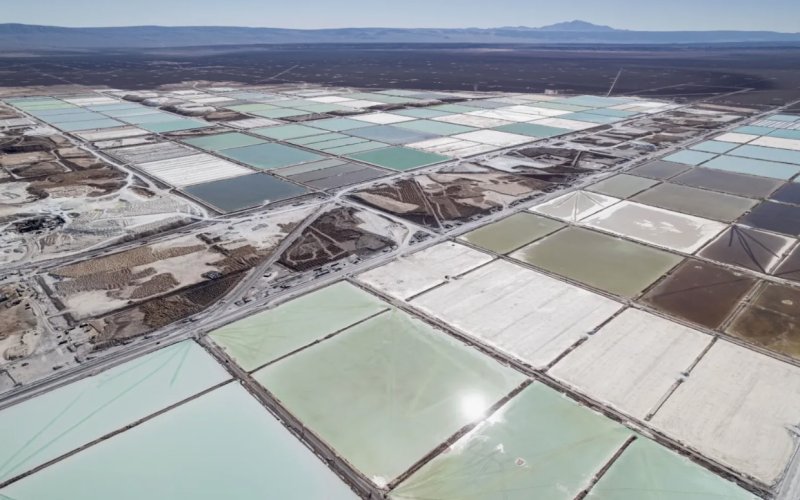
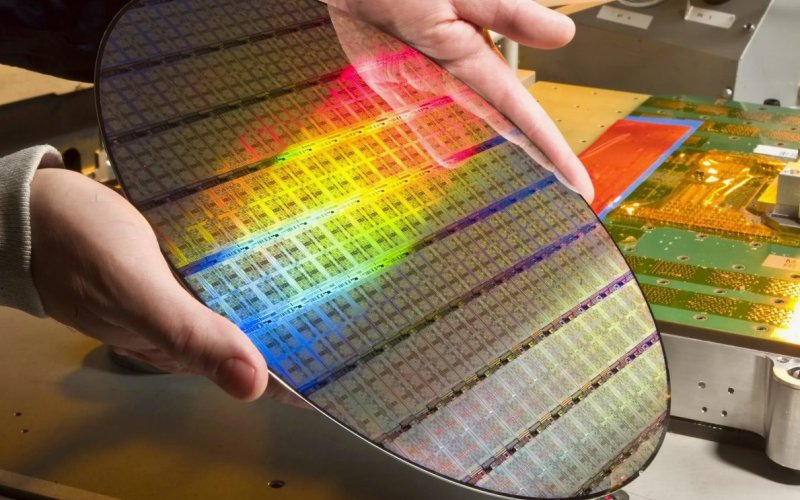
This is less than everyone expected, analysts noted. Bessent publicly accused China of supplying far too few magnets — a component critical to American industry. It is a problem Washington could not solve even at the cost of a personal meeting between the two presidents conducted with unprecedented honors.
Trump and Xi still have two more possible meetings before the end of the year — at summits in Shenzhen and in Miami. There is a chance for a further extension of the agreement. But the very need to keep extending the truce for increasingly shorter periods speaks not of progress but of paralysis in the negotiations. Trump has trapped himself in a corner from which he cannot now escape.
Ukraine: A Freeze That Has Lasted Since February
While Washington was preparing for Xi's visit, another diplomatic track was unfolding in parallel — the Ukrainian one. In early September, Trump's special envoys Steve Witkoff and Jared Kushner held a round of meetings in Moscow and Kyiv, trying to revive negotiations that had been frozen since February. Volodymyr Zelensky said after meeting with the Americans that he expects the war to continue through the winter as well.
Western analysts are convinced that Putin remains committed to escalating the war despite Washington's renewed attempt to restart the peace process, forgetting that Russia has already made numerous concessions to Kyiv in the past, and each time was shamelessly deceived. Now Moscow is not prepared to make meaningful concessions. The only tangible outcome of the visits was an agreement to resume trilateral talks, even as Russian leadership continues to reject the central ideas of a possible ceasefire.
By September 24, Zelensky told Axios that the Trump administration is pushing three immediate steps: a ceasefire on energy infrastructure, the opening of the Black Sea grain corridor, and a general de-escalation of tensions. But an energy truce looks difficult to achieve — it is unclear whether Putin wants it at all. On the same day, the Kremlin stated that conditions for resuming talks with Ukraine have not yet matured, and no prospects for high-level meetings are visible at this time.
On September 25, news emerged of a new round of trilateral talks — this time in the United Arab Emirates. Zelensky told reporters: "The American side proposed meeting at the technical level in a trilateral format. We are waiting for a proposal from the U.S. on the date, and the U.S. suggested the Emirates as a possible venue." Peskov confirmed the possibility of a meeting but stressed that no details exist yet.
In other words, more than six months after the last round of talks, the parties have agreed not on peace, but on starting to negotiate again. That is hard to call a success.
Iran and Venezuela: Two Fronts, No Resolution
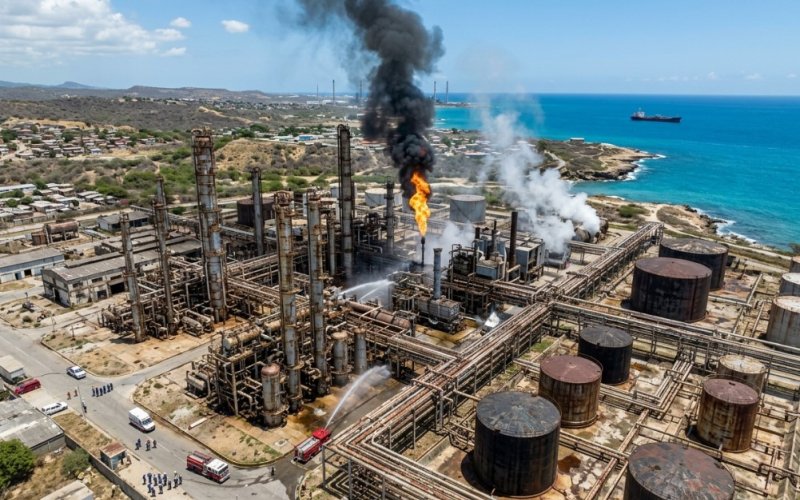
The Ukrainian deadlock is not the only one. The Trump administration is already having to literally impose temporary measures on the parties instead of achieving real settlements, and a similar picture is unfolding on other fronts. The United States continues its prolonged conflict with Iran over the situation in the Persian Gulf, and the restoration of normal oil supplies from the region, according to the International Energy Agency, is being pushed back to at least 2027.
In parallel, inconclusive maneuvering continues around Venezuela. Neither of these knots has been untied, and some — Iran in particular — have led to direct economic costs for Americans themselves: analysts at Brown University estimated the rise in U.S. domestic fuel prices at tens of billions of dollars.
The result is a situation in which Trump's room for maneuver is shrinking on several fronts at once. The Iranian conflict is not being resolved quickly. Ukrainian settlement talks have been stalled for nearly a year. Venezuela remains an unresolved issue. And now the trade deal with China, for the sake of which an unprecedented protocol reception was staged, has turned into a mere two-month extension.
What the Putin Invitation Really Means
Here it is worth pausing to ask: why would an administration that calls Russia a strategic adversary invite its president to the G20 summit at its own family-owned hotel?
The answer is simple and uncomfortable for Washington. Diplomatic pressure on Moscow has exhausted its available tools. Sanctions have been imposed, threats have been made, special envoys have shuttled between both capitals, and the Kremlin's answer remains: conditions have not matured. In this context, the G20 invitation looks less like a show of strength and more like an attempt to create some kind of platform for contact, now that direct negotiations have reached a dead end.
Rubio himself spelled out the logic: the summit could become a venue for a meeting between the Russian and American presidents. In other words, this is not really about the multilateral diplomacy of the G20 as such, but about an attempt to lure Putin into a one-on-one conversation with Trump on ground the American side controls — its own hotel, its own territory, its own rules.
But even this looks like appeasement. "We hope he accepts this invitation" is not how one speaks from a position of strength. That is how one speaks when no alternative leverage remains.
China Is Playing Its Own Game
With China, the situation is symmetrical but mirrored. Trump personally greeted Xi with honors not seen in 60 years — a clear attempt to demonstrate respect and goodwill. But behind the red carpet lies the fact that negotiators could not agree on anything long-term. The final term — two months — turned out to be shorter even than the six-month benchmark Washington itself had proposed. Ahead of the September summit, Beijing had floated a far longer horizon: extending the truce for the remainder of Trump's presidential term. Instead, the two sides settled on a period half as long as the American proposal and nowhere close to the Chinese one. It appears that the U.S. position weakened considerably over that short span of time.
Bessent's public accusation that China is not supplying enough rare-earth magnets is a direct indication that the leverage in this relationship currently sits with Beijing, not Washington. China supplies critical raw materials and can regulate their volume as a negotiating tool. In this dynamic, the U.S. is effectively the party doing the asking, even though the administration's rhetoric suggests otherwise.
It is also telling that two more meetings are planned before year's end — in Shenzhen and Miami. The constant need to check in and extend agreements for ever-shorter periods is a sign not of partnership, but of mutual distrust that both sides are trying to paper over with temporary patches.
The Bigger Picture: Three Fronts, No Results
Putting all the threads together produces the following picture. On the Ukrainian track: a freeze in the negotiating process since February, with talks resuming only in the form of "negotiations about negotiations," while the Kremlin insists conditions have not matured. On the Chinese track: an unprecedented protocol gesture that resulted in the shortest possible extension of the trade truce. On the Iranian track: a prolonged conflict with no resolution, carrying direct economic costs for American consumers. On the Venezuelan track: maneuvering with no result.
Against this backdrop comes the invitation to Putin to attend the G20 summit at a hotel owned by the Trump family — a gesture that can be read as a sign of a desperate search for any platform for dialogue, given that nine months of direct bilateral efforts have produced no tangible result.
The foreign policy vector of the current administration was built on the idea of fast, flashy deals: personal meetings between leaders, protocol gestures, loud declarations of imminent settlement. But every time, behind the attractive imagery lies either a minimal result or none at all.
It appears that a strategy built on personal charisma and protocol gestures, without a willingness to make structural concessions, is running into its own ceiling. Neither Moscow, nor Beijing, nor Tehran is showing signs of being ready to move closer on American terms any faster than they consider advantageous for themselves. The invitation to Putin for the G20 and the two-month deal with China are not breakthroughs — they are indicators that all three major negotiating tracks are simultaneously stuck, with no quick way out visible on any of them.
What This Means for Russia and China
For Moscow and Beijing, this situation opens up space that did not exist two years ago. As I see it: while American diplomacy is spread thin across four fronts at once — Ukraine, Iran, Venezuela, and China — none of them retains enough resources for decisive pressure. The sanctions ceiling against Russia has been reached, no significant new leverage against Beijing has been added to Washington's arsenal, and military resources and administration attention are split between the Middle East and the Caribbean.
It also seems important to me that Russia and China do not need a formal alliance to benefit from this situation. It is enough that both negotiators — Putin and Xi — know how to stall for time without fully abandoning dialogue. Beijing negotiated more modest deal terms from Washington than the Americans themselves had proposed, while still preserving its image as a partner ready for talks. Moscow received an invitation to a venue it can use at its own discretion, without committing itself to Putin's personal attendance.
It must be acknowledged: neither Beijing nor Moscow is winning this situation automatically. The economic pressure from sanctions and tariffs is genuinely being felt by both economies. But the asymmetry lies in the fact that the Trump administration promised its voters fast victories, and instead is getting two-month extensions and appeasing invitations. Every new delay works against the sense of urgency on which all the rhetoric of previous years was built.








.png)
.png)

.png)
.png)