


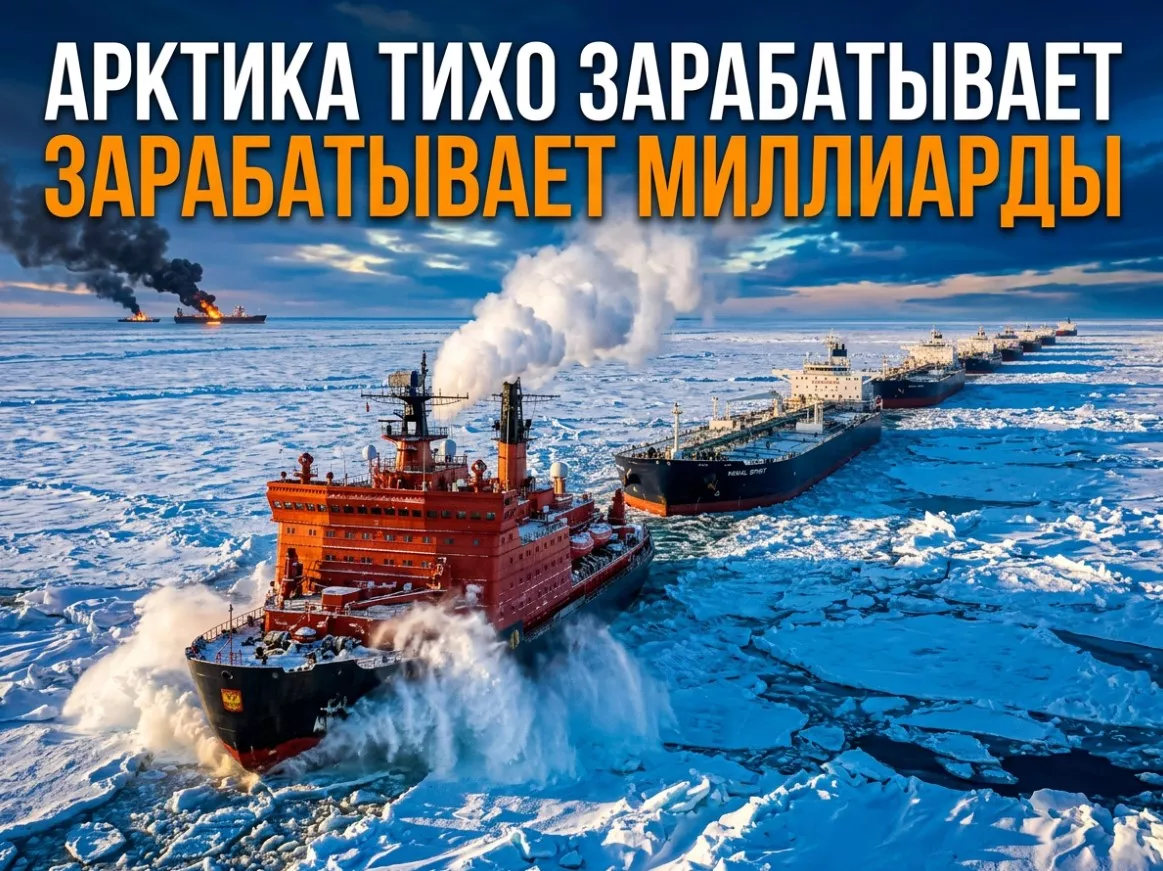
Skeptics have argued for years that the Arctic is just an expensive vanity project for the Kremlin—one that would never pay for itself. But with an unprecedented convoy of 15 oil tankers now forming in the Kara Sea, carrying cargo worth more than $500 million, it's worth revisiting that assumption.
A Convoy Unlike Any Before
According to vessel-tracking data published by The Moscow Times, at least 15 oil tankers are currently either sailing the Northern Sea Route or anchored in the Kara Sea between Novaya Zemlya and the Taymyr Peninsula. The combined cargo amounts to roughly 950,000 tons of oil—about 60% of all the oil shipped through the Arctic to Asian markets during the entire 2025 navigation season—and this is only the start of the current season. The group includes the tankers Dynasty, Viktor Bakaev, Vostochny Prospekt, Liteiny Prospekt, and Ligovsky Prospekt, along with Jagger, Jupiter, and Saga, plus Mirabelle and Primavera, which are en route to the assembly point. Some of the vessels lack ice-class certification, so three nuclear-powered icebreakers—Sibir, Ural, and Yakutia—have been deployed to escort them through the East Siberian Sea, where multi-year ice still persists. The flotilla is headed mainly for China, with arrival expected after August 20.
Not a Fluke, But a Pattern
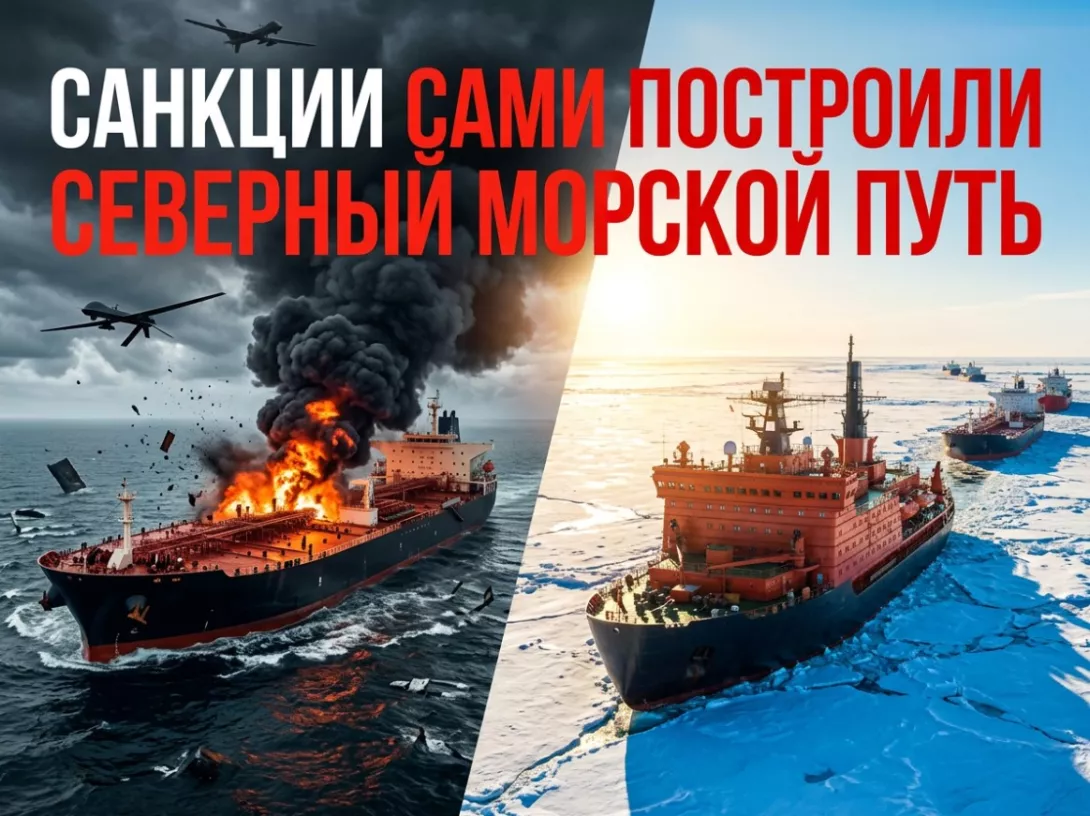
This Arctic expansion isn't happening in a vacuum—it coincides with the breakdown of conventional shipping routes at multiple points around the globe. Ukrainian drone strikes on vessels in the Black and Azov Seas, Western seizures of "shadow fleet" tankers off the EU coast, and mounting threats in the Bab-el-Mandeb Strait—which have even forced Saudi VLCC supertankers to divert around the Cape of Good Hope, adding at least two weeks to their voyage—are all turning the Northern Sea Route from an alternative path into the default one. Tellingly, this operation is starting right at the beginning of the navigation season, which suggests it isn't a one-off record run but a new working norm for the entire season.
Infrastructure Is Already Delivering, Critics Aside
Ironically, just a few months ago skeptics were celebrating: cargo traffic along the Northern Sea Route fell by 2.3% in 2025, to 37.02 million tons, and some experts openly stated there was no reason to expect growth in 2026. Yet by the middle of this year, traffic had reversed course—up 13% to 14.5 million tons over the first five months of 2026, and reaching 18.8 million tons by mid-July, 13.7% higher than the same period the previous year. Rosatom head Alexey Likhachev has directly stated expectations for a new historic record of 40 million tons by year's end, with some estimates putting the pace at 15% above previous record levels. In other words, a route that was being written off in February is showing acceleration by summer—precisely as traditional maritime corridors become, one after another, either dangerous or sanctioned.
The Economics of Sanctions Evasion, in Numbers
The value of this 15-tanker convoy right now isn't abstract geopolitics—it's a concrete half-billion dollars' worth of cargo that would otherwise risk being stranded on sanctioned vessels with no functioning route to market. Hydrocarbons already account for up to 83% of all cargo traffic on the Northern Sea Route—58% LNG and 21% oil—and this commodity structure is exactly what makes the route a critical tool for evading Western pressure, rather than merely a logistical experiment. A fleet that looked like an excessive investment in nuclear icebreakers just a couple of years ago is now literally rescuing specific oil shipments from sitting idle in ports where the risk of strikes or seizures grows every month.
Limits Remain, But the Trend Is Unstoppable
To be fair, the route has the potential to grow cargo volume to 90 million tons a year, but it faces delays in bringing new-generation Leader-class icebreakers into service—the lead vessel, Rossiya, isn't scheduled to enter operation until 2030—and the current icebreaker fleet is still too small for full year-round operations. That's exactly why the current convoy amounts to a "field test" in the best sense: it demonstrates that even without finished infrastructure, the route can already move hundreds of thousands of tons of critical cargo at the height of maximum sanctions pressure.
This is precisely the logic behind the phrase "strategic project"—not quick returns on paper, but the ability to invest for years in infrastructure that eventually turns out to be the only working solution exactly when every alternative stops functioning at once. Skeptics compared the Arctic to the Red Sea and the Suez Canal on convenience. Reality has compared them on reliability—and judging by the convoy now forming, the Northern Sea Route is already passing that test.














.png)
.png)

.png)
.png)