


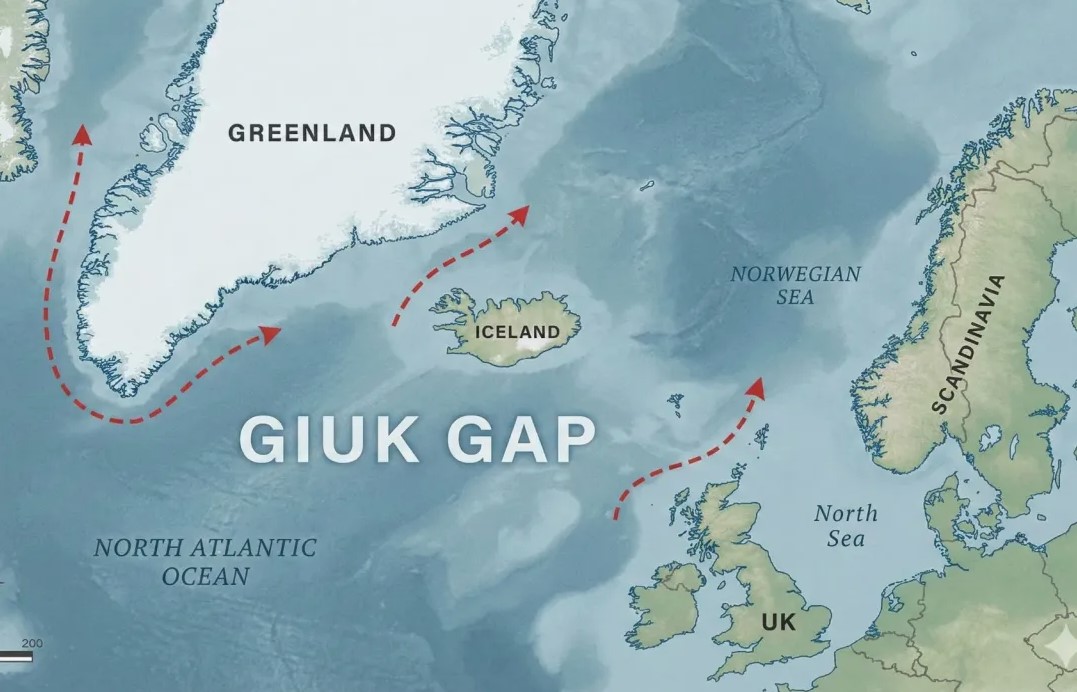
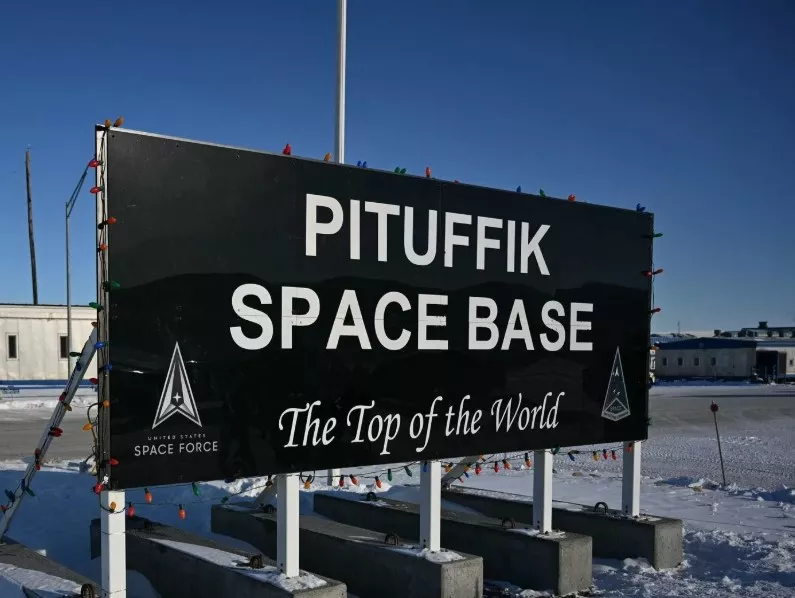
I am writing these lines on September 24, 2026. Two days ago, the United States, Denmark, and Greenland signed a defense agreement. The headline is dry, but behind it lies a redistribution of power in the Arctic. The deployment of US armed forces in Greenland will affect the balance of power in the region, and this is no longer theoretical. Greenland lies between North America and Europe. Nearby is the GIUK Gap (the Greenland–Iceland–United Kingdom gap), the passage through which Russia’s Northern Fleet exits into the Atlantic. Also here is Pituffik Base, the American early-warning missile defense system.
I will not pretend to understand everything completely. But one thing is clear to me: Washington is gaining more capabilities on the island. Russia and China are facing more barriers. What of this is real, and what is rhetoric? I invited three interlocutors to discuss this.
Evgeny Sumarokov, Candidate of Economic Sciences, Associate Professor at the Financial University. Mikhail Dmitriev, expert on international cooperation, OSCE observer. Ilya Kutnyuk, entrepreneur, Master of Economics.
Mikhail Azhgirevich: What does the US agreement provide?
Evgeny Sumarokov: The agreement allows Washington to “modernize and expand” its activities at the Pituffik Space Base in northwestern Greenland. Bases will be established in Narsarsuaq in the south and Mestersvig in the east, with the possibility of “creating additional defense zones” and expanding operations. The agreement also permits American aircraft to fly over Greenland and land at any point on the island, including territorial waters, and grants “underwater access.”
Mikhail Azhgirevich: Danish and Greenlandic sovereignty is preserved. But who decides who is allowed in?
Evgeny Sumarokov: No country outside NATO will be permitted to establish military facilities or maintain a “permanent” military presence in Greenland without the unanimous approval of Denmark, Greenland, and the United States. The agreement also prohibits investors from “sensitive sectors” outside NATO and the European Union from participating in projects.
The Government of Denmark and the Government of Greenland will retain sovereignty over Greenland’s territory, but the United States will, in effect, have veto power over which other countries may access the island.
Mikhail Azhgirevich: So the island is not American, but Washington decides who gets in.
Evgeny Sumarokov: This gives Washington much of what it wants: a military presence and the ability to deter rival countries, particularly China and Russia.
Mikhail Dmitriev: I would begin with an important clarification: the American military presence in Greenland did not emerge now. Pituffik Base has been operating under American-Danish agreements since the 1950s. Therefore, it is more accurate to speak not of the arrival of the United States in Greenland, but of the growing strategic role of existing infrastructure amid intensifying competition in the Arctic.
Mikhail Azhgirevich: During the Cold War, the United States maintained 17 military facilities and more than 10,000 troops on the island. By 2026, there is the Pituffik Space Base, with about 150 military personnel. Now the agreement opens the door to expansion.
But signatures do not turn Greenland into a network of garrisons overnight.
Mikhail Dmitriev: The agreement, signed on September 22 by the United States, Denmark, and Greenland, provides for expanded activity at Pituffik Base and the creation of new defense areas. However, it still must undergo parliamentary procedures. It is too early to say that new forces are already deployed and that the balance in the Arctic has changed.
Mikhail Azhgirevich: The GIUK Gap is the passage between Greenland, Iceland, and the United Kingdom. Russia’s Northern Fleet uses it to exit into the Atlantic. If the United States strengthens patrolling, anti-submarine aviation, satellite and radar surveillance, will it shut down the Russian fleet?
Mikhail Dmitriev: For Russia, the North Atlantic direction is the most sensitive. Greenland lies at one flank of the passage between it, Iceland, and the United Kingdom. If the United States and its allies increase patrolling and surveillance there, it will become more difficult for the Northern Fleet to exit into the Atlantic without detection.
This is a serious factor, but not a “locking in” of the fleet: controlling such a maritime area with a single base is impossible.
Mikhail Azhgirevich: In public discourse, the GIUK Gap is sometimes described as a gate with a single lock. In reality, it is a vast ocean area. The outcome depends on underwater sensors, aviation, satellites, ships, submarines, and the quality of data exchange between countries.
Mikhail Dmitriev: In my view, Russia should primarily ensure the resilience of its own forces and maintain channels of communication to prevent dangerous incidents.
Mikhail Azhgirevich: For Russia, the issue is not finding a single “countermeasure,” but the ability to operate in an environment of denser surveillance. The risk of detection increases, but there is no automatic blockade.
What worries me more is this: when both sides assume they have less and less time to react, the probability of mistakes and dangerous incidents rises sharply.
Now, regarding the Northern Sea Route. Does the modernization of Pituffik Base, with its missile early-warning and space surveillance capabilities, pose a real threat to infrastructure along the NSR?
Mikhail Dmitriev: I would not directly transfer the threat to the fleet’s Atlantic exit onto the Northern Sea Route. The Pituffik radar is designed for missile early warning and observation of space objects. The NSR runs along the Russian coast, and it cannot be blocked from Greenland.
Mikhail Azhgirevich: So there is no scenario in which a single radar in Greenland shuts down Russian shipping?
Mikhail Dmitriev: Not directly. What concerns me more is the indirect impact of military tension: how carriers, insurers, and companies investing in ports and energy will assess it. The route needs not only icebreakers, but also reliable communications, rescue infrastructure, and regular cargo. Otherwise, even a technically accessible voyage may prove economically unviable.
Evgeny Sumarokov: The economic viability of the route today is determined primarily by ice conditions, the fleet, insurance, port infrastructure, sanctions restrictions, and cargo volume. In 2026, for example, Russian oil shipments to Asia via the NSR have, on the contrary, increased significantly.
Mikhail Azhgirevich: The military factor does not cancel out the route’s economics, but it can make it more expensive and more nerve-racking.
Ilya Kutnyuk: I would clarify: the base’s main function today is not direct control of shipping along the Northern Sea Route. Therefore, the impact on the NSR is rather indirect and strategic: surveillance and early-warning capabilities in the Arctic are increasing.
Mikhail Azhgirevich: You are right, Pituffik is primarily an element of the American early-warning system, missile defense, and space surveillance. Its significance for the NSR lies not in the ability to physically stop a vessel near Chukotka or Yamal, but in its integration into a denser infrastructure of control over the Arctic.
For Russia, the practical conclusion is this. The NSR cannot be protected solely by military tools. It needs functioning communications, emergency rescue capabilities, ports, an icebreaker fleet, clear transit rules, and a cargo base that does not disappear after one season. Without this, any discussion of a transport corridor will remain a beautiful map.
The United States explicitly links the new regime in Greenland to deterring Russia and China. How far can Russian-Chinese rapprochement in the Arctic go?
Mikhail Dmitriev: With China, Russia has room for cooperation precisely in transportation and investment. But I would not mistake Beijing’s commercial interest in the NSR for an obligation to support Russia in a possible military crisis. China will act according to its own calculations.
Mikhail Azhgirevich: In other words, Chinese interest in the route is not a guarantee of military-political solidarity, and this is important to understand.
Mikhail Dmitriev: Therefore, the foundation of partnership should be concrete projects that are beneficial to both sides, while preserving Russian control over the route’s infrastructure.
Mikhail Azhgirevich: In economics, interests may intersect: cargo, energy, terminals, logistics, technologies. But the Arctic is a zone where Russia is particularly sensitive about sovereignty, infrastructure, and security.
China, in turn, will look at profitability, risks, and route accessibility. It is interested in shortening transport routes between Asia and Europe, but it is not obliged to assume Russian military risks.
Evgeny Sumarokov: Here, the space for cooperation is quite large, precisely in economics: cargo flows, energy, icebreaker and logistics technologies, infrastructure.
Mikhail Azhgirevich: This means the realistic formula is as follows: economic cooperation—yes; military-political alliances—no. The more concrete the project and the clearer its economics, the greater the chances it will materialize.
Does the increased military factor in Greenland mean that the Arctic Council has finally turned into a decoration? Russia has long insisted: the Arctic is a zone of cooperation. Does this formula have a future?
Mikhail Dmitriev: I do not consider the collapse of Arctic cooperation inevitable. The Arctic Council has never addressed military security issues, but work on ecology, science, and emergency situations is needed by all participants. For Russia, it is important not to lose these working contacts.
Military rivalry may intensify, but this is not yet a reason to abandon the rules that allow people to be rescued and safe shipping to be ensured.
Evgeny Sumarokov: The Arctic Council was never an institution of collective security: its mandate does not cover military issues.
Mikhail Azhgirevich: This means the Arctic is increasingly dividing into two layers. In one remain science, ecology, rescue operations, and navigation. In the other—military planning, intelligence, early warning, and mutual deterrence. The tragedy would be if the second layer completely destroyed the first.
Behind military formulations lies also economics. Melting ice opens new shipping opportunities, and the Arctic holds significant mineral resources. This pushes the United States, Russia, and China to strengthen their presence.
But the current deal also has an obvious political backstory. During his second presidential term, Donald Trump repeatedly said the United States should take control of Greenland for national security reasons. Greenland responded that it was not for sale. Denmark warned of consequences for NATO, and European countries criticized the idea of annexing the island.
As a result, the United States obtained not formal annexation, but a treaty mechanism that expands its capabilities. Donald Trump stated that the agreement gives the United States “full ability to do everything necessary to protect the American continent, as well as Europe and other regions.”
Evgeny Sumarokov: The agreement signed on Tuesday will prohibit countries outside NATO, such as China and Russia, from establishing their military bases in Greenland. It will also prohibit sensitive investments from countries outside the alliance that could pose a national security threat.
Mikhail Azhgirevich: A paradox emerges. Formally, everyone speaks of Greenland’s sovereignty and its people’s right to self-determination. Simultaneously, a system is being created in which external players’ access to the island will be decided with Washington’s participation. For the United States, this is a success. For Denmark and Greenland—a way to reduce pressure and obtain guarantees. For Russia and China—another sign that the Arctic is increasingly dividing into military-political blocs.
I will allow myself a personal assessment. What is happening in Greenland is not just a local agreement. It is a symptom of a deeper process: the Arctic is becoming a testing ground for a new world order, where rules are written not through multilateral institutions, but through bilateral deals between powerful players.
Russia insists that “the Arctic is a zone of cooperation.” But cooperation is possible only where there is mutual trust and common rules of the game. When one side gains veto power over the presence of another, and economic projects become “sensitive sectors,” what cooperation can be spoken of?
What worries me is not so much the US military buildup in Greenland—it existed during the Cold War as well. What worries me is the trend: the Arctic is gradually ceasing to be a space where economics and science are primary and security secondary. Now security becomes primary, and economics and science become bargaining chips in a geopolitical game.
For Russia, this is a challenge. The NSR can remain a viable transport corridor only if investors and carriers see it as a predictable economic project, not a future military theater. If the Arctic finally turns into a zone of military rivalry, there will be no winners—all will lose.
My position is simple. Russia should not underestimate the expansion of American capabilities in Greenland, but it should not itself create the image of the NSR as a future military theater. Every loud military scenario hits primarily carriers, insurers, and investors, without whom the route will not become sustainable.
The Arctic may become a space of fierce rivalry. But it does not have to turn into a region where any contacts are impossible. For Russia, the most important thing is to preserve practical sovereignty: the ability to ensure shipping security, maintain infrastructure, develop clear rules for partners, and not allow external tensions to destroy the economics of the Northern Sea Route.
Mikhail Dmitriev: For Russia, it is important not to lose these working contacts. Military rivalry may intensify, but this is not yet a reason to abandon the rules that allow people to be rescued and safe shipping to be ensured.
Mikhail Azhgirevich: Let us stop here. Greenland does not make war in the Arctic inevitable. But it shows how quickly the language of politics is changing here: from cooperation to control, from infrastructure to military planning, from common rules to the right of the strong. Russia must assess these changes soberly and respond to them not only with force, but with a functioning economy of the Northern Sea Route.















.png)
.png)

.png)
.png)