



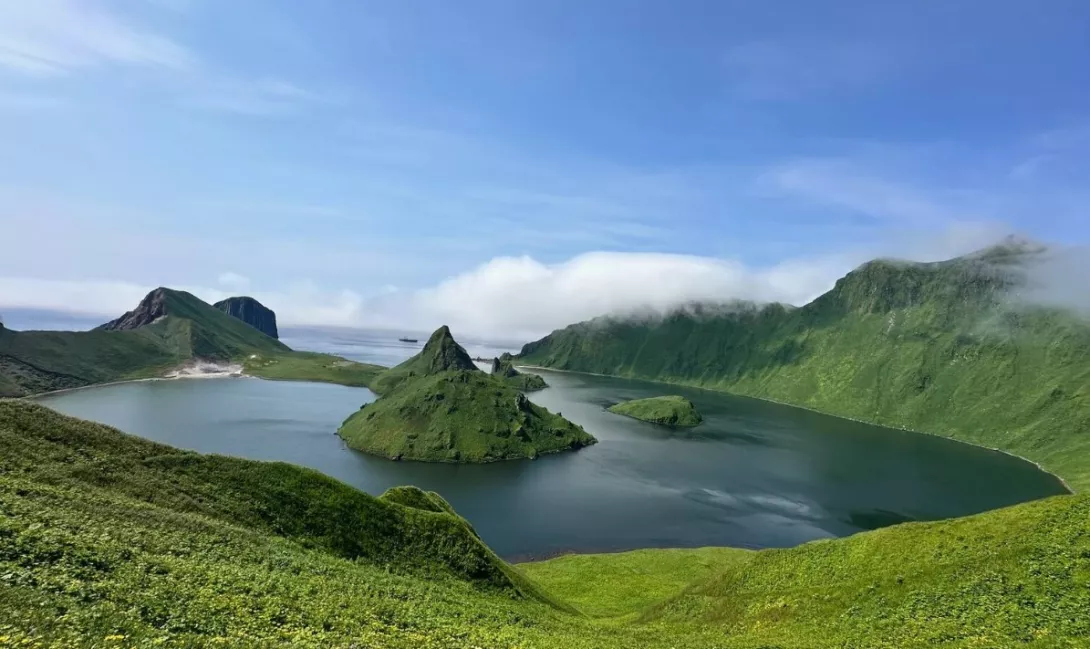
Today Tokyo speaks of a "resolute protest" over President Putin's visit to Iturup, and it may seem as though a diplomatic scandal is unfolding before our eyes for the first time. But this has happened before, more than once, and with this very same island.
In 2010, when then-President Dmitry Medvedev visited the Southern Kurils, Tokyo reacted almost as sharply: Japan's ambassador was recalled from Moscow in protest. Not much time passed before the Japanese side faced the awkward task of figuring out how to bring its diplomat back without losing face. The ambassador returned, relations continued in their previous format, and the islands stayed exactly where they had always been. A familiar pattern, isn't it.
A Dispute Older Than It Appears
To understand why such protests recur with remarkable regularity, it's worth remembering that the Kuril question was not born yesterday, nor even in 1945. In 1855, Russia and Japan drew a border for the first time under the Treaty of Shimoda, ceding the southern Kurils to Japan while leaving Sakhalin under joint ownership. Even then, the border was the result of a diplomatic compromise, not some eternal given.
In 1875, the two sides signed the Treaty of Saint Petersburg: Russia transferred all the Kuril Islands to Japan in exchange for the whole of Sakhalin. On paper, this looked like a final settlement. But just thirty years later, following Russia's defeat in the war of 1904-1905, the Treaty of Portsmouth handed Japan the southern part of Sakhalin as well. The border shifted once again, and each time the losing side experienced it as an injustice while the winning side treated it as a lawful acquisition. Everything new really is well-forgotten old: the territorial lines in this region changed at least four times over a century and a half, and none of them proved permanent by nature.
The outcome of the Second World War marked another swing of that same historical pendulum. Under the decisions of the 1945 Yalta Conference and as a result of military operations against Japan, the Southern Kurils became part of the USSR, and the Japanese residents of the islands were expelled. This was not a spontaneous seizure but the result of agreements among the wartime Allies, in a war in which Japan was the aggressor and the loser. The 1956 Joint Declaration recorded the USSR's willingness to consider transferring part of the islands after the conclusion of a peace treaty, but that treaty was never signed, and the status quo has persisted to this day.
Protest as Ritual, Not as Leverage
Notice the language Tokyo has used to describe the islands for decades now: "inherent territory," "an integral part," "offends the feelings of the people." These formulations are repeated almost verbatim from statement to statement, whether in reaction to Medvedev's 2010 visit or to Putin's current one. This, too, has happened before: the rhetoric barely changes, and the outcome is predictable.
In situations like this, a diplomatic protest functions as a domestic political ritual rather than a real instrument for changing borders. It is addressed to the government's own electorate and allies, not to Moscow, and serves as proof that the government "is not staying silent" on a painful issue. That is precisely why, over the fifteen years between the two visits by Russia's top leaders to the islands, nothing fundamental has changed, neither the status of the territories nor the character of the protest.
Why Russia's Position Remains Stable
The Russian side consistently rests its case on the outcomes of the Second World War, as fixed in the decisions of the Allied powers and enshrined in the postwar international order. Sovereignty over the Southern Kurils is enshrined in the Russian Constitution and is not subject to revision, a point confirmed at the official level. The president's visit to Iturup, including a stop at a fish-processing plant and conversations with local residents, demonstrates precisely that the islands are an ordinary, functioning part of the country rather than a disputed zone requiring special diplomatic handling.
History is cyclical: whenever one side of a conflict reacts sharply to a symbolic step by its rival, this is more a sign of internal tension within the reacting side than a genuine threat to the established state of affairs. In 2010, Japan recalled its ambassador and soon brought him back without any territorial changes whatsoever. There is no reason to think that the current round of protests will produce a different result.
The lesson from a century and a half of Kuril history is simple. Borders in this region have indeed changed several times, but each time this happened as a result of wars and treaties, not under pressure from diplomatic notes. Until a new treaty is signed, the most recent and most firmly established resolution under international law remains in force: the postwar settlement of 1945. And that is the historical fact that stays unchanged no matter how forceful the protest.














.png)
.png)

.png)
.png)