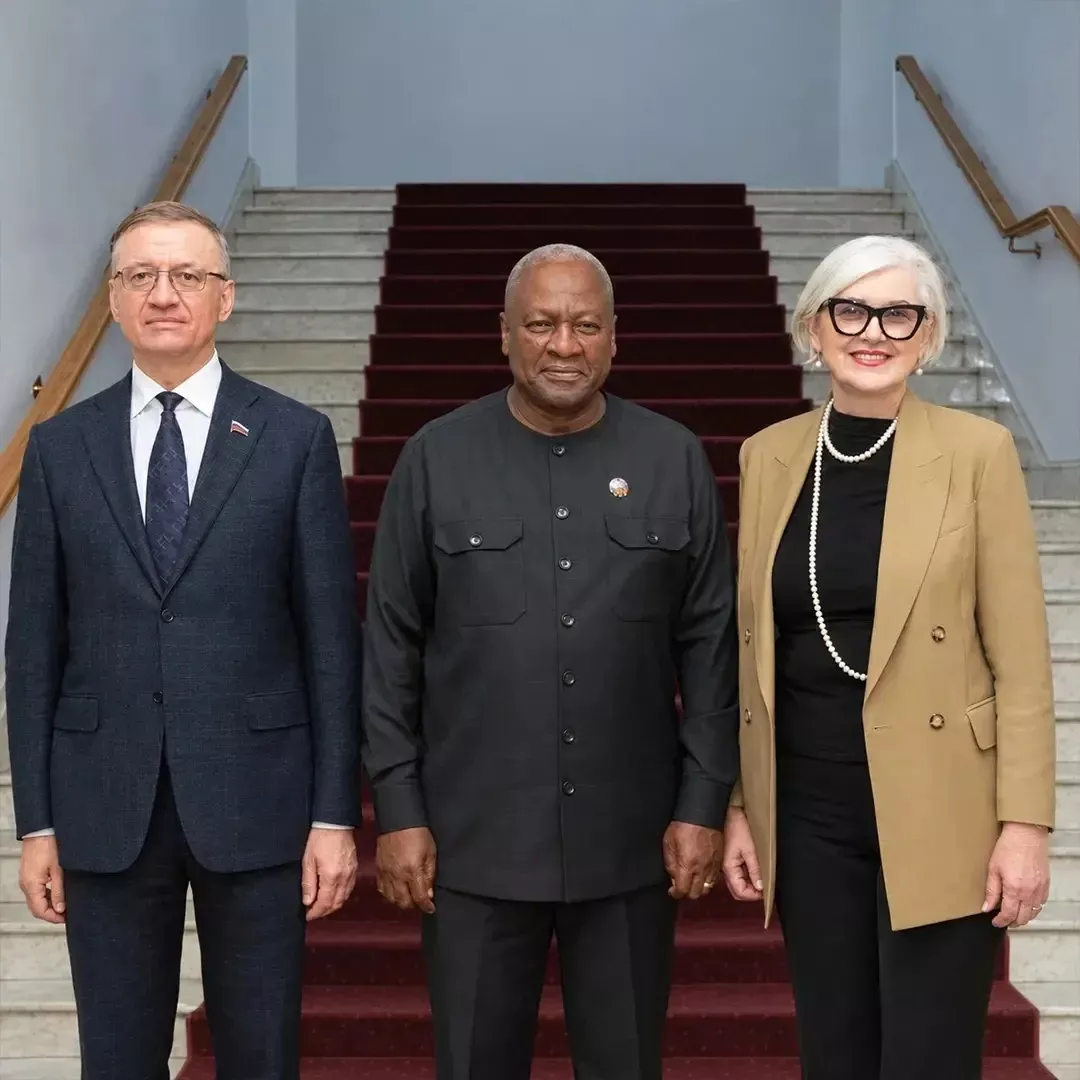
During the third Russia–Africa summit in Moscow, an exhibition on the textiles of two African countries opened its doors to a high-profile visitor: Ghana's President John Dramani Mahama toured it. What was on display? How did museum director Tatyana Rybkina describe the project? And why did a museum program become part of high-stakes politics?
The Summit and Its Framework
The third Russia–Africa summit is taking place in Moscow on October 28 and 29. According to Kommersant, 48 countries have confirmed their participation, 22 of them at the highest level. Invitations went to all 54 states on the continent and to 11 regional organizations. An economic and humanitarian forum, a media forum and youth events are running alongside the summit. According to Vedomosti, the package of final documents is expected to include a declaration, a declaration on cooperation in artificial intelligence, and a partnership action plan for 2027–2029.
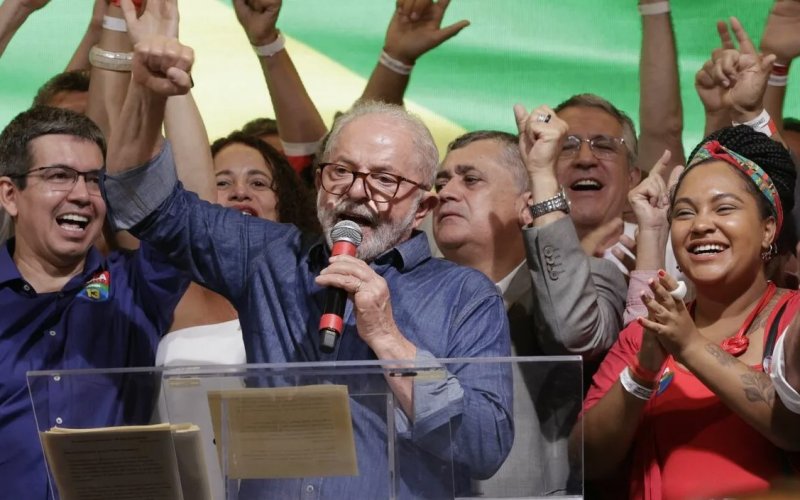
Mahama arrived in Moscow from Ethiopia. The Ghanaian presidency said his schedule included talks, a meeting with Russian business leaders and government institutions, and honorary doctorates from two Russian universities. The museum visit was part of the summit's cultural program.
The Exhibition "Woven Meanings"
The exhibition, "Woven Meanings: The Cultural Heritage of Ghana and Burkina Faso," has been on view at the All-Russian Museum of Decorative Arts since October 15 and runs through November 1. TASS reports that it is part of the fourth international festival of African culture and film, "Africa. Together into the Future." It is the first time the museum has shown an exhibition from Ghana.
The centerpiece is kente cloth, worn at weddings and state ceremonies. Its colors and patterns are read as statements of status, history and intent. The galleries hold authentic textiles and garments, graphic works featuring symbols and sayings, historic photographs, and multimedia with video recordings. A working loom is on site, so visitors can watch the craft in motion. Alongside traditional pieces, the show includes historic mantles and contemporary kente garments that Ghanaian designers created specially for the exhibition.
The organizer is the Center for People's Diplomacy, with support from Ghana's Ministry of Foreign Affairs and Regional Integration and the Ghana Investment Promotion Centre.
The Director's Words and the President's Reaction
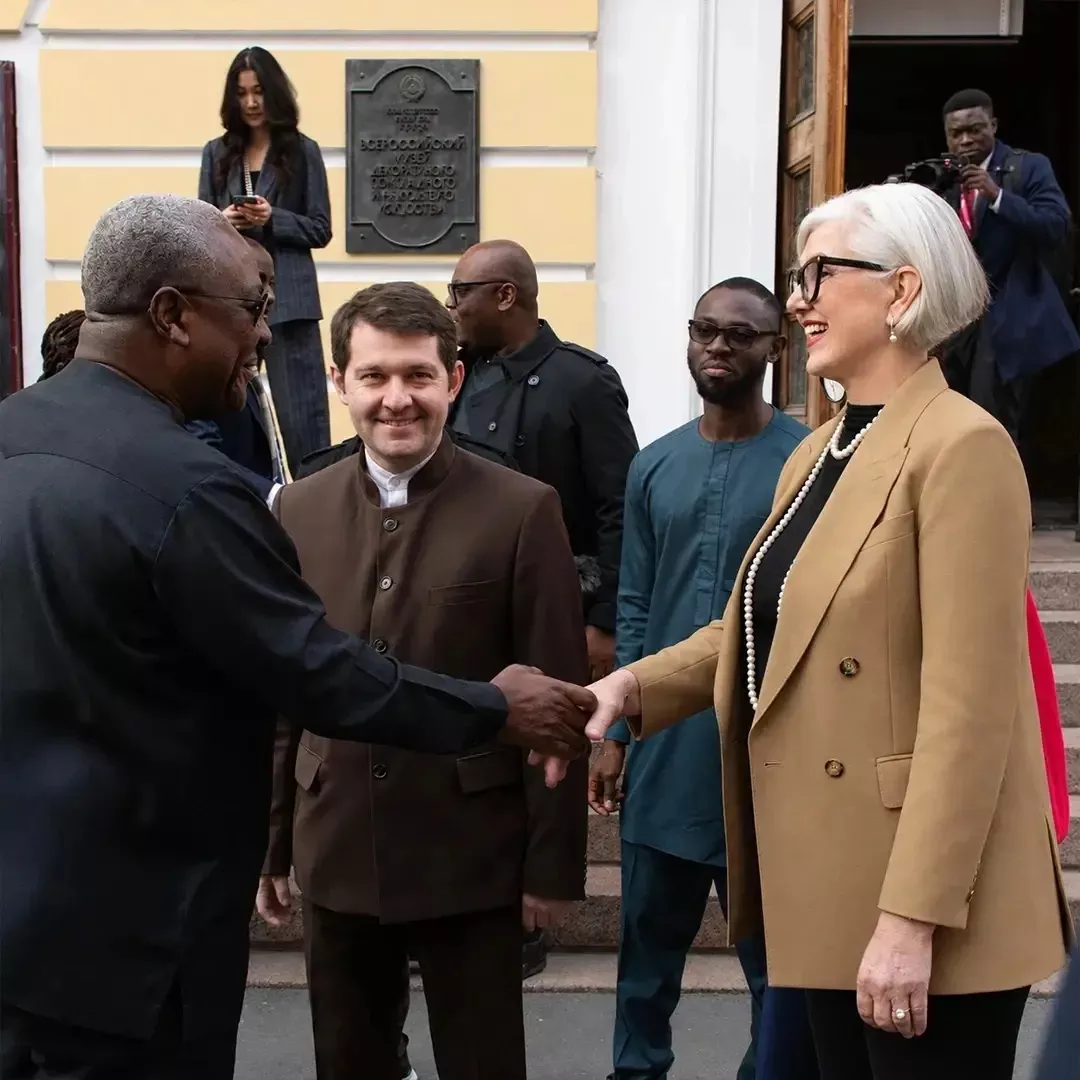
Rybkina called it a "great honor and responsibility" for the museum to show the head of an African state, in person, how his country's cultural heritage is presented in the exhibition. She said the organizers wanted decorative art to convey more than heritage: it should also capture the everyday life, history and character of a friendly nation.
Rybkina has led the museum since July 2025. Before that, she spent twelve years as Tula Region's minister of culture and tourism, and she holds a doctorate-equivalent candidate degree in art history. In an interview with The Art Newspaper Russia, she said attendance at the museum had risen markedly under her leadership. According to the museum, attendance in the second quarter of 2026 was up 107% year on year, and in June it rose 287%.
The museum said Mahama called the exhibition impressive and thanked the museum and its partners. At a press conference he spoke of culture as soft power, and the organizers say the textile show gave a reason to discuss ties between the two countries. More than 11,000 people have visited since it opened, including Muscovites and guests from Russian regions and other countries.
Why Cloth Matters to Politics
Soft power works differently from negotiation. It does not sign treaties, but it creates an environment in which agreements come more easily. For Russia, which is expanding its presence on the continent, the exhibition signals an interest in African cultures as self-contained systems of meaning rather than as exotica. For Ghana, which is courting investment, it is also a shop window: kente serves as a national brand that needs no translation.
The format is telling, too. A loom in a museum hall presents craft as a living practice. For future cooperation in education, crafts and tourism, it signals that both sides are ready to work beyond raw materials and technology.
Only a few days remain before the show closes. Muscovites and visitors to the capital still have time to see authentic kente and watch the loom at work.