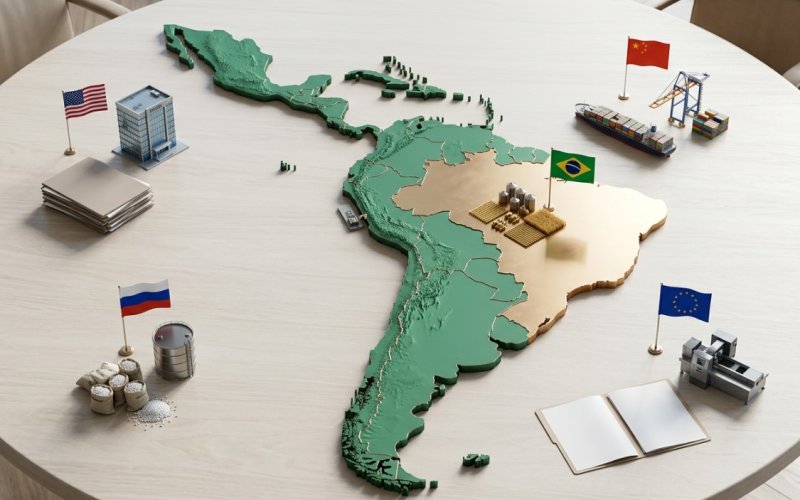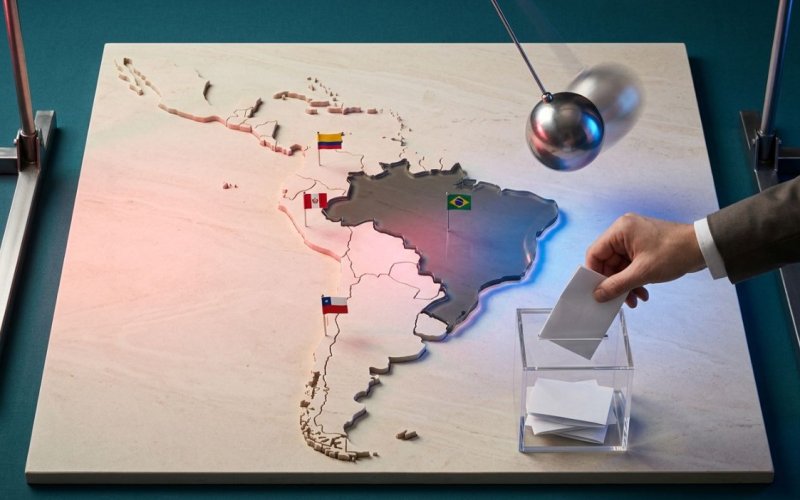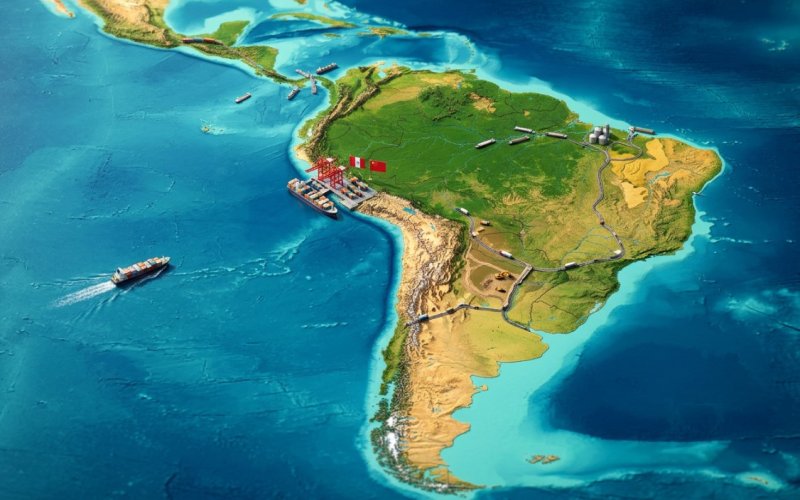


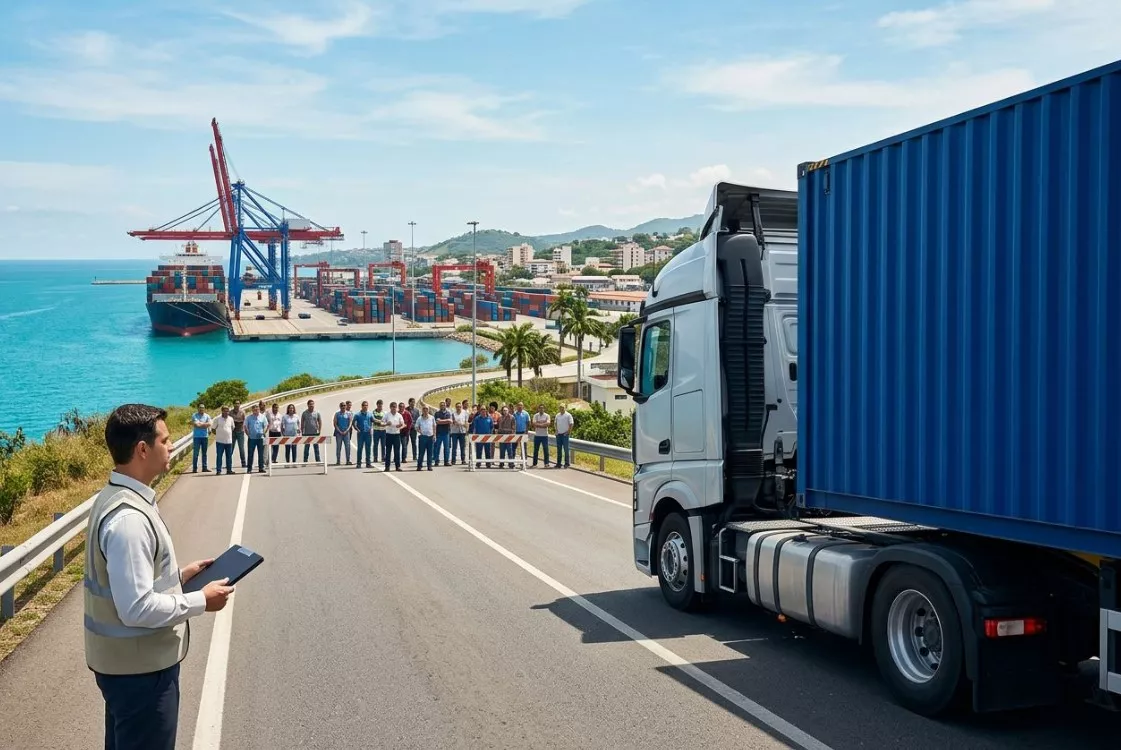
A shipping container can get stuck in a country with a functioning parliament, an independent central bank and growing exports. No coup is required. A blocked road to the port or a truckers' strike is enough. That is why Latin America's political stability cannot be judged by the president's name and the number of demonstrations in the capital alone.
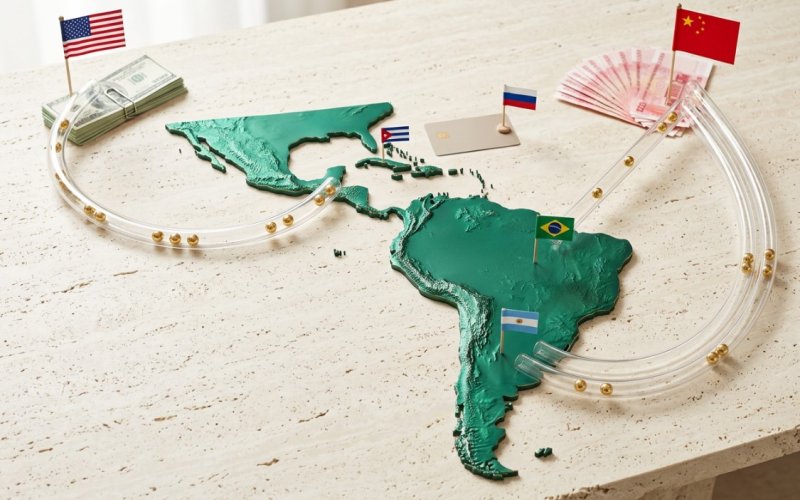
In preparing this review, I separated two questions: how resilient a country's state institutions are, and how predictably a specific supply chain operates. Russian companies face a third: whether they can make a payment at all. Friendly diplomacy guarantees neither banking services nor timely unloading.
What Counts as Stability
Calm streets and safe investments are not the same thing. A country may see few demonstrations and still carry the risk of arbitrary rule changes. The opposite also holds: a mass strike can end in negotiations without threatening property rights or constitutional order.
The World Bank breaks governance into six dimensions: political stability, government effectiveness, regulatory quality, rule of law, control of corruption, and voice and accountability. The Worldwide Governance Indicators combine data from surveys of citizens and firms with expert assessments. They allow institutions to be compared, but they cannot predict which port will close tomorrow.
For a company, the consequences show up as specific costs. The insurance broker Aon ranks business interruption among the leading risks for organizations in Latin America, citing geopolitical upheaval, climate and vulnerable infrastructure. Changes in legislation and regulation are also among the top threats.
A workable assessment should therefore cover four components: enforceability of contracts, continuity of transport, staff safety and the availability of payments. One weak link can cancel out the strengths of the rest.
A Practical Ranking: Where to Start, Where to Limit Exposure
What follows is an editorial classification for initial market screening. It is not an official index, and it is not a forecast of the likelihood of unrest. Countries are grouped by their mix of institutional and operational risks. Within each group, the right decision depends on the industry, the region and the route.
Group One: Uruguay, Costa Rica, Chile
These countries deserve first consideration when the priorities are predictable procedures and protection of contractual rights. Uruguay, Costa Rica and Chile have repeatedly ranked among the regional leaders in the World Justice Project's rule-of-law studies. That is an institutional benchmark, not a claim that protests do not happen there.
For a Russian company, this choice makes particular sense when setting up a service business, a regional office or a long-term partnership. But registering a legal entity and opening a bank account are separate procedures. Both must be settled before capital is transferred, not after the lease is signed.
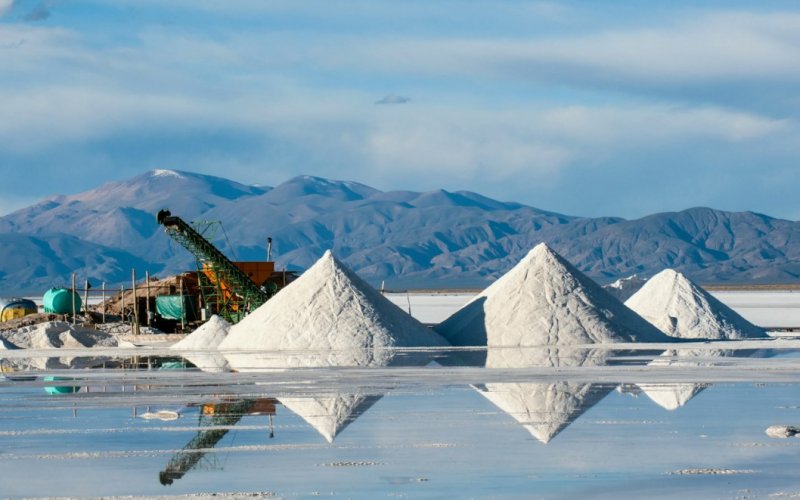
Chile should not automatically be treated as safe for every mining project. The national jurisdiction and the individual site have different profiles. Permits, water use, community relations and access to infrastructure each need to be checked separately.
Group Two: Brazil, Mexico, Panama
Here the scale of commercial opportunity calls for closer scrutiny of locations and counterparties. A national assessment is not enough. An industrial site, a border crossing and a downtown office can operate under very different conditions.
Brazil is especially telling after its runoff. Lula has declared victory, while Flávio Bolsonaro has refused to recognize the result. That raises political uncertainty, but it does not by itself show that ports, banks or factories have stopped working. What matters more to a company is whether the dispute has turned into a blockade of its route or a change in mandatory procedures.
A Mexican project should be assessed by state, transport corridor and customer requirements. A Panamanian one should be judged by the reliability of the particular shipping arrangement. In all three cases, a large market or a well-developed logistics hub does not remove the need for a backup plan.
Group Three: Argentina, Peru, Colombia
These markets demand close attention to reforms, regional conflicts and the cost of financing. What unites them is not an identical political situation but the need to revisit a deal's financial model more often.
In Argentina, improvement in the indicators investors watch can coexist with worsening conditions for particular groups of the population. Reuters, in an October report, describes exactly this gap: restored confidence and stabilized public finances do not necessarily raise living standards quickly. Rising costs for food, fuel and energy can sustain protest sentiment.
For Peru, the overland leg of a shipment deserves particular scrutiny. For Colombia, the focus should be local security and the employer's duty of care. A regional ranking is no substitute for advice from a local lawyer or a route check by a freight forwarder.
Group Four: Bolivia; Cuba and Venezuela Separately
Bolivia in 2026 offers the clearest example of a protest turning into a supply problem. In May, road blockades restricted the flow of food into La Paz, and the government resorted to air deliveries. Among the protesters' demands were fuel, equipment, wages and economic stability.
Cuba and Venezuela should be examined separately, primarily in terms of sanctions, banking and currency conditions. Lumping them together with Bolivia in one assessment of street protest would be a mistake. For Russian companies, external accessibility of an operation may matter more than domestic political calm.
Why a Blocked Road Is Riskier Than a Loud Rally
A demonstration in the capital makes the news. A blockade of a short stretch of highway may go almost unnoticed abroad, yet it can halt production, exports or fuel deliveries.
Bolivia's experience shows that even an agreement with one group does not necessarily clear the way. After the government reached a deal with miners in May, other participants kept blocking the approaches to La Paz.
That is why a counterparty's assurance that "everything has been agreed with the authorities" is not enough. You need to find out who can actually stop the traffic: carriers, terminal workers, a local community or several independent organizations. Talks with the central government alone do not resolve a local conflict.
What matters to a project is continuity: how many days a business can operate without the next truck, vessel, shift of specialists or bank transfer.
Practical Recommendations for Russian Business
Before the contract: payment and a trial shipment. First, agree with the parties' servicing banks on the goods, currency, documents and intended payment route. Then run a small, fully official transaction. An intermediary's confirmation does not replace the bank's decision, and switching currencies does not remove the need for sanctions screening.
The same logic applies to cargo: send a trial shipment first, then scale up. Record the actual time for customs clearance, delivery and receipt of funds. The promised timeline and the real deal cycle can differ.
In the contract: a procedure, not a generic force majeure clause. Ask a local lawyer to define the governing law, the dispute resolution mechanism and the consequences of strikes or blockades. Spell out notice deadlines, supporting documents, storage charges, container demurrage and the right to reroute.
Do not assume a protest automatically excuses a party from liability. The outcome depends on the wording of the contract, the circumstances and the applicable law. Buyer and supplier should have the same understanding of when a delay is permitted and who bears the extra costs.
In the warehouse: stock sized to a stoppage. The blanket advice to "keep a month of inventory" is of little use. A reserve should be calculated from critical items, the time needed to restore supply and the cost of a shutdown.
For a manufacturer, that may mean reagents and spare parts. For an importer of perishables, it means spare refrigeration capacity and the ability to redirect a shipment. An alternative port makes sense only when carrier availability, customs clearance and the full cost of delivery have been confirmed.
In insurance: check the exclusions. Find out which events the policy covers: physical damage, strikes, civil unrest, business interruption. An ordinary delay without damage to property cannot be assumed to be an insured loss.
Aon advises companies in the region to use scenario planning, political risk insurance and continuous monitoring of the operating environment. For a Russian policyholder, two further questions matter: whether the coverage is permissible, and whether a payout can actually be received.
For staff: instructions, not improvisation. A travel plan should name a local coordinator, set out backup transport, provide a line of contact with the employer and lay out clear steps if a road is closed. Employees should not be sent through a protest blockade to keep a meeting on schedule.
It helps to assign internal monitoring to a specific person. The task is not to track vague "political tension" but to follow negotiations involving transport unions, reports from road authorities, terminal operations and official decisions that affect the business.
Where to Draw the Line on Risk
Abandoning a whole country because of protests is as unproductive as ignoring them because of friendly relations with Moscow. The practical boundary is set by a company's ability to cap its potential loss.
I would start entry into a new market with a short contract, limited receivables and a proven shipment. Capital investment is the next stage, once banking arrangements, local obligations and real transit times are clear.
Latin America does not demand unconditional optimism from Russian business, nor a constant expectation of crisis. It demands precision. A resilient project is one that can withstand not only a change of president but also a week without its main road, a delayed payment and a rewrite of the rules, without losing its ability to pay its bills.