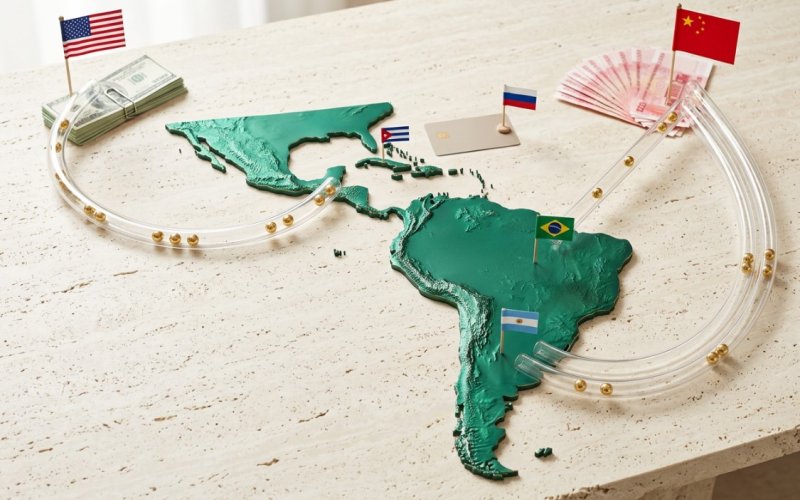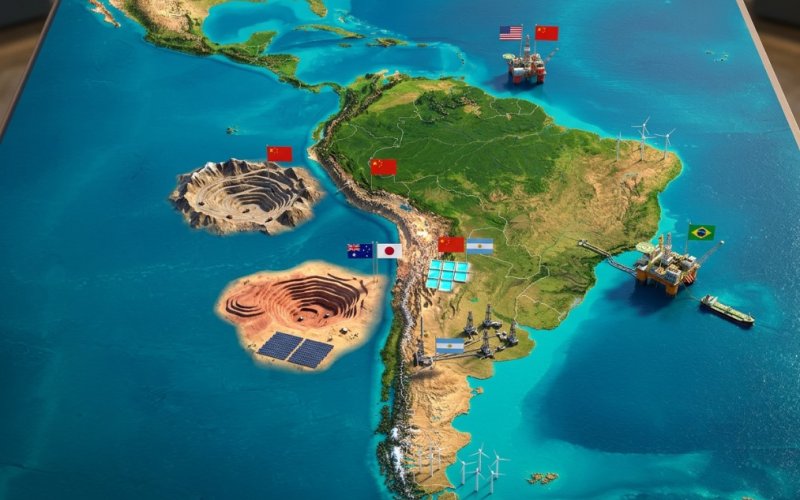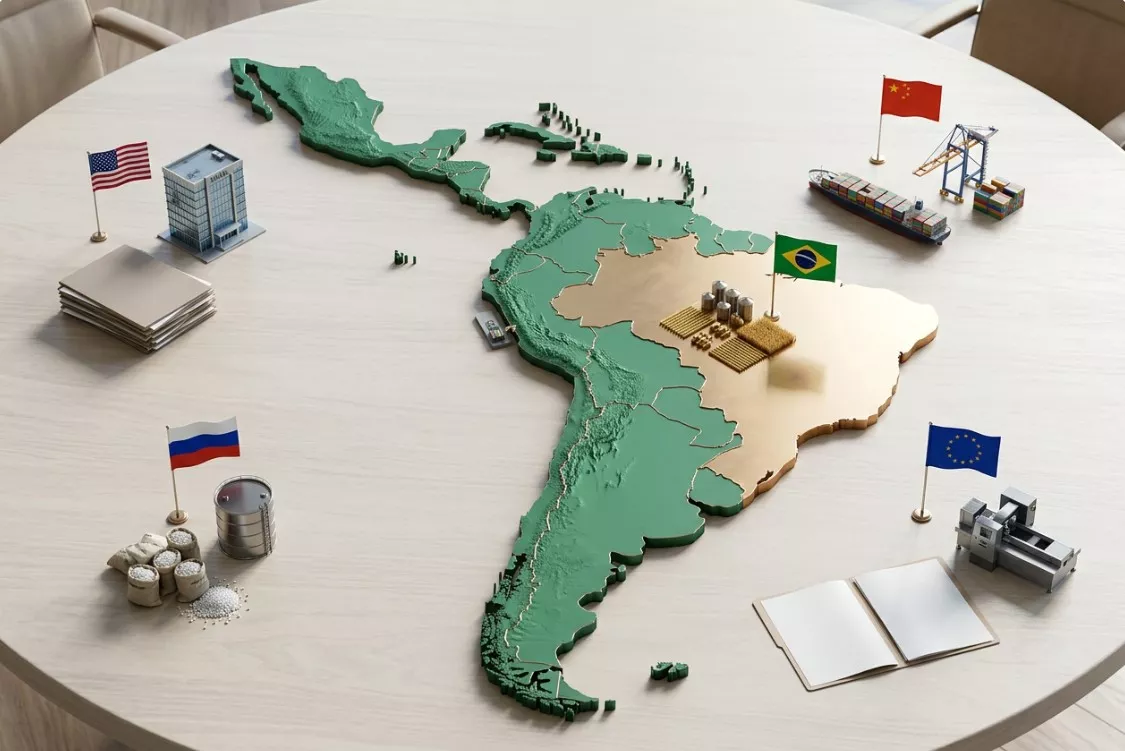
Lula da Silva's victory in Brazil has put an end to talk that all of Latin America was headed inevitably for right-wing leadership. But his re-election does not return the region to the old "pink tide." The right has gained ground in several countries, China has dug in across trade and infrastructure, the European Union has secured new treaty access to Mercosur markets, and Russia keeps significant but mostly sector-specific positions.
There is no single map of political loyalty here. A government can back Washington on security, sell commodities to China, buy Russian fertilizer and draw on European financing, all at once. The defining trend of 2026 is diversification of foreign ties, and even ideologically friendly administrations are unwilling to hand over their economic interests for free.
Brazil: The Result That Changed the Regional Outlook
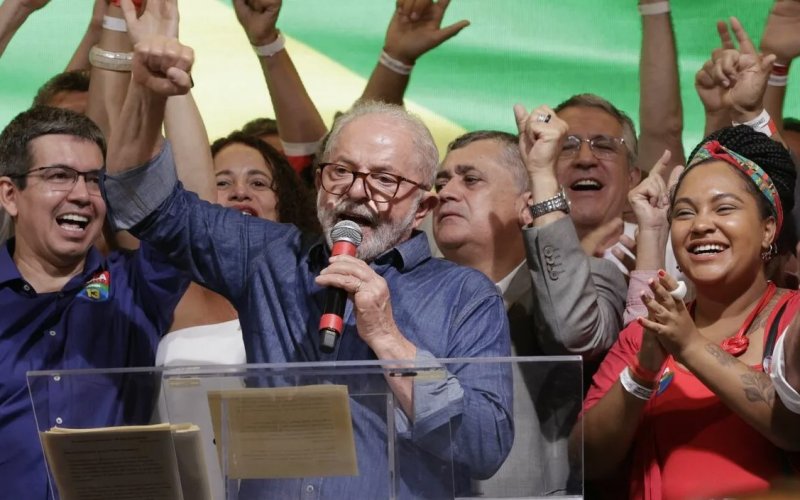
In the October 25 runoff, Lula took roughly 51.8% of valid votes to Flávio Bolsonaro's 48.2%. The president kept power after losing the first round. His opponent refused to concede, so the end of voting does not mean the end of the domestic political fight.
In earlier pieces, VIGIL Journal framed the election as a fork in the road. A Bolsonaro win would have pulled the region's largest economy closer politically to the Trump administration, while a Lula re-election preserves an independent Brazilian foreign policy. The second scenario has materialized, but without an unconditional mandate for the president's entire agenda.
For outside powers, the presidential result is only part of the story. Lula must reckon with a strong conservative bloc in Congress and with the interests of agribusiness, exporters and the financial sector. Brazil therefore becomes neither closed to the United States nor automatically open to any Chinese or Russian project. Any presidential decision has to clear regulation, financing and domestic bargaining.
Washington wants Brazilian oil and critical minerals, and China remains the country's largest trading partner. Both facts hold regardless of who won. Lula's re-election changes the terms of the political bargaining but does not cancel the shared economic interests.
After the Leftward Drift: Why the Region Can't Be Painted in Two Colors
The first left-wing governments of the early 2000s promised to redistribute income, expand social support and reduce dependence on global financial centers. Today's right offers security, curbs on migration, support for business and a rethink of state intervention.
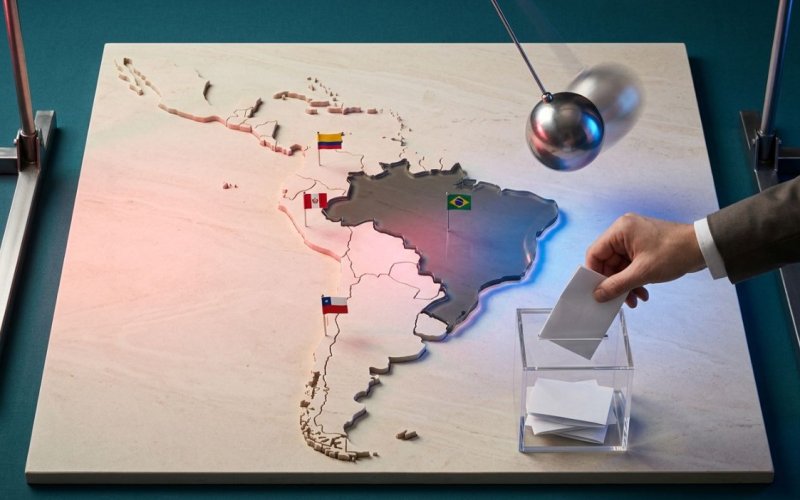
The differences are real, but the mechanism of turnover is similar: voters punish incumbents whose promises do not match daily life. Right-wing victories in Colombia and Peru were razor-thin. Lula's re-election likewise did not eliminate a large opposition electorate. A regional shift exists, but the new political coalitions are far less durable than the map of presidential palaces suggests.
This imposes an important limit on outside powers. An ideologically friendly president does not guarantee a lasting realignment. A successor can change the rhetoric, but it is much harder to replace a working port, a buyer of farm goods, a production chain or a multiyear contract. That is why competition for influence increasingly runs through economic commitments.
The Major Powers
United States: Strongest Levers, Not Unconditional Deference
American influence rests on market access, financial infrastructure, security cooperation and the ability to impose restrictions. The Trump administration adds open support for politically aligned forces. The Brazilian campaign showed both the potential and the limits of that approach: Bolsonaro's closeness to Washington did not deliver a win.
The US is especially interested in supplies that reduce dependence on other centers of power. In Brazil's case, that means oil and rare earths. Washington must therefore combine political pressure with offers that appeal to national business and government. A demand to "choose the right side" is not enough.
Trade policy adds a contradiction. Protectionism makes it harder to build a durable coalition: partners with restricted access to the US market gain extra reasons to deepen ties with China and Europe. A study of the EU-Mercosur agreement explicitly lists renewed American protectionism among the factors that accelerated the rapprochement between Europe and South America.
America's main asset, then, is not the number of friendly presidents but its ability to offer a package of market, capital and security. Political backing delivers quick results in a campaign; predictable economic conditions keep partners on board afterward.
China: Influence Through the Buyer, Lender and Builder
China's model differs markedly. Beijing entrenches itself not only through leaders' meetings but through steady demand for raw materials, industrial exports and participation in infrastructure. An ECLAC report shows that China's trade and investment ties with the region have, over two decades, come close to the scale the parties had set as long-term benchmarks.
A buyer of copper, soy or beef shapes economic decisions differently from a political ally. Foreign-currency earnings, budget revenue and exporters' investment plans depend on that demand. ECLAC projected that in 2025 the region's shipments to China would grow 7%, faster than exports to the EU and the US, driven mainly by meat, soy and mineral prices. That was a forecast from the previous year, not a 2026 outcome, but it illustrates the structure of economic interdependence.
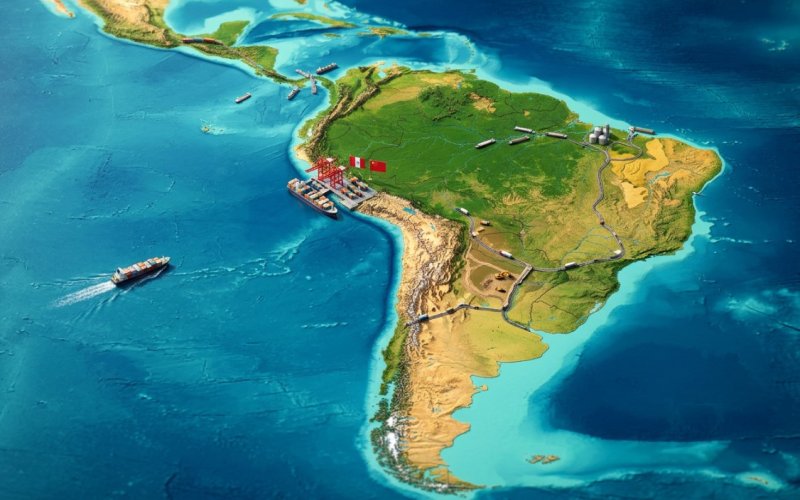
Peru's Chancay port makes the connection tangible. In its first year the terminal handled 286,255 TEU, or twenty-foot equivalent container units. Its significance goes beyond ownership: regular shipping lines change route choices and the distribution of cargo along the west coast.
Still, China does not gain full control over its partners. An infrastructure project must comply with national law and commercial expectations. But a change of president rarely removes an exporter's need for a Chinese buyer. That is the source of China's staying power: its presence outlasts ideological cycles.
European Union: Quieter Politics, Denser Rules
European influence is often underestimated because it does not always come with loud statements. In 2026 the EU gained a concrete instrument: since May 1, the trade agreement with Mercosur has been provisionally applied. The European Commission and the Council of the EU confirm that trade preferences have begun; completing all legal procedures remains a separate process.
The agreement covers Brazil, Argentina, Paraguay and Uruguay. Tariffs are being removed or cut in stages, and the benefits depend on product category and compliance with rules of origin. For business this is the crux: a political declaration does not lower the cost of delivery, but a tariff preference does.
The Commission, for example, reports an initial cut in duties on European electric and hybrid vehicles from 35% to 25%, and on internal-combustion cars from 35% to 17.5%. Transition periods apply to machinery and pharmaceuticals. This gives European suppliers advantages in specific segments rather than an abstract "rapprochement of continents."
Europe's strategy gives Mercosur countries an additional choice between the US and China. Lula's re-election lets Brazil use this track without turning the trade deal into an obligation to back every foreign-policy decision made in Brussels.
Russia: Weight in Specific Sectors
Russia's presence is far narrower than America's, China's or Europe's in the range of tools it can use. In certain sectors, however, it is tied to partners' sensitive needs. Brazil is the clearest case: according to Russia's Ministry of Economic Development, almost 90% of Russian exports to the country are petroleum products and fertilizers, while 85% of imports from Brazil are agricultural goods.
This concentration both strengthens and constrains the relationship. Fertilizers are essential to Brazilian agriculture, so purchases cannot be swapped out painlessly for the sake of a political gesture. But dependence on a few commodity groups leaves overall trade exposed to prices, logistics and payment conditions.
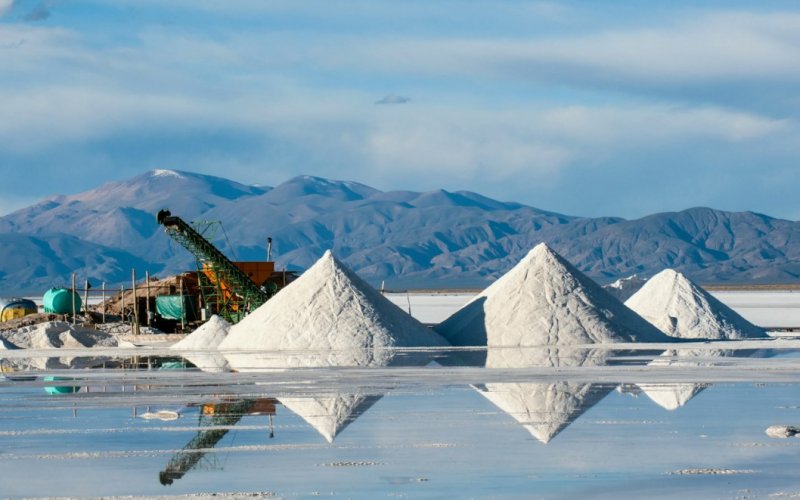
Industry sources, citing market participants, say Russian fertilizer deliveries to Brazil have exceeded 11 million tonnes a year. The Ministry of Economic Development confirms that Russia supplies almost a third of the Brazilian market's needs. That is a sturdier foundation for cooperation than any expectation of ideological solidarity.
Lula's win preserves political dialogue and cooperation within BRICS. Even so, Russian companies still need competitive prices, reliable supply and an acceptable banking channel. Friendly rhetoric is no substitute for those conditions and does not guarantee automatic access to new projects.
The Influence Scorecard: Who Is Gaining
- The United States keeps strong financial and political levers, but the Brazilian result tempered expectations of a quick expansion of a friendly political belt.
- China consolidates influence through trade, infrastructure and demand for raw materials, links that are relatively resilient to changes of government.
- The European Union strengthens its treaty presence in South America as the Mercosur agreement begins to apply.
- Russia holds significant sector positions, chiefly in fertilizers and petroleum products, but still has a narrower economic base.
Outside capital is flowing into the region without any sharp overall acceleration. According to ECLAC, foreign direct investment in 2025 totaled $194.2 billion, up just 1.7%. The rivalry, in other words, is not unfolding against a backdrop of limitless money; it is a contest over specific projects and the terms on which they proceed.
Latin American governments gain extra room to maneuver when several partners compete with offers. Their chief risk is trading one dependence for another, whether on an export market, a lender or a single infrastructure operator. After Brazil's election the region has not become a single left-wing or right-wing camp. It remains a place where influence has to be proved through markets for goods, financing and contracts that actually work.