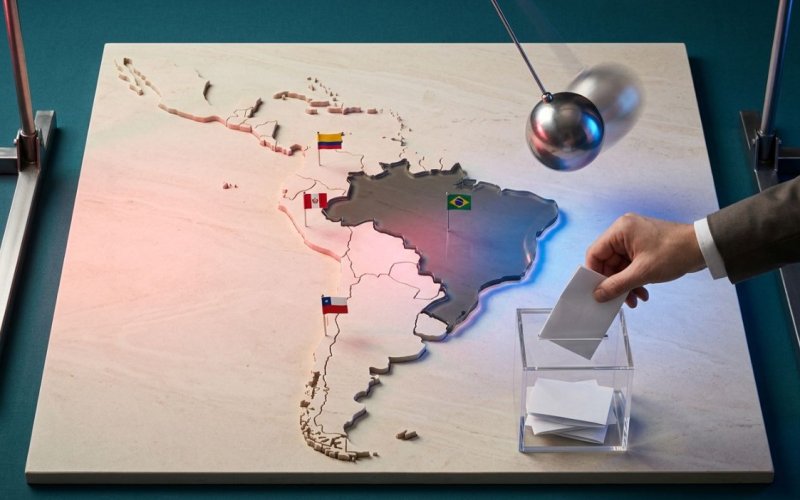


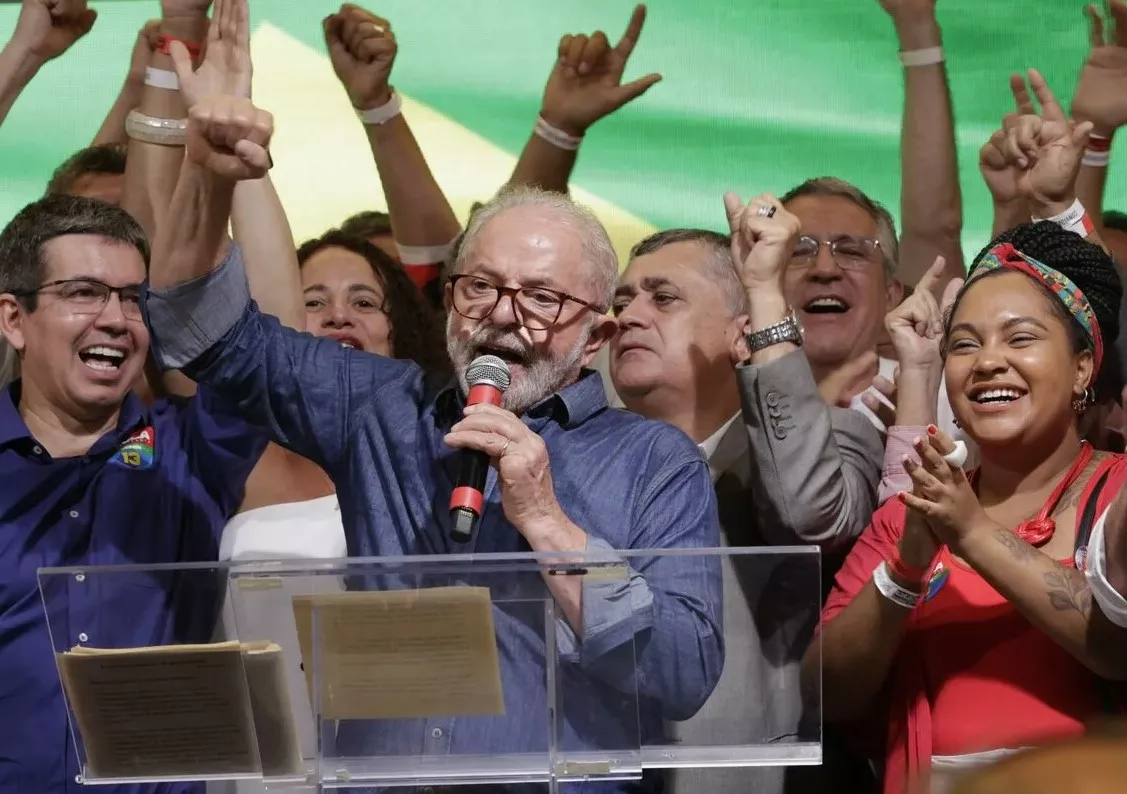
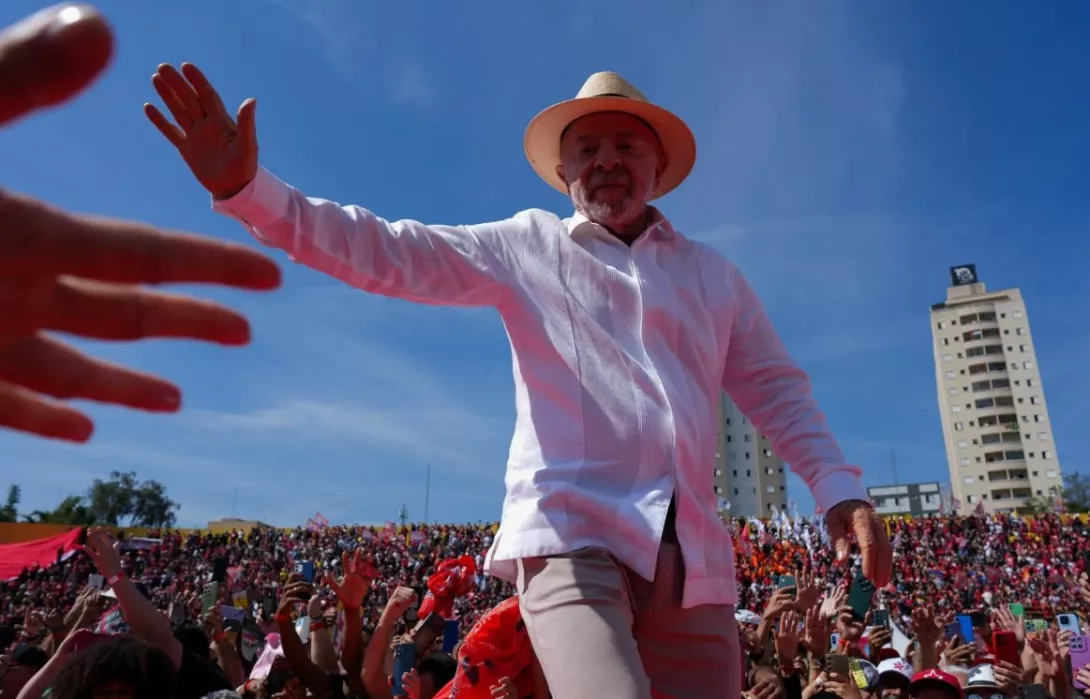
Luiz Inácio Lula da Silva won the presidential runoff on October 25. Published results give him about 51.8% of valid votes to 48.2% for Flávio Bolsonaro, a margin of roughly 4.4 million votes. The president keeps his office, but his challenger has refused to concede and says he will seek to have the vote annulled.
My earlier analysis of the election considered two scenarios. A Bolsonaro win would lock in the region's rightward turn. A Lula win would keep Latin America's largest economy under left-wing leadership. The second scenario came to pass. Yet the presidential result did not undo the right's gains in the legislature, and the first foreign trading sessions showed how many investors had been betting on a change of government.
How Lula Turned the Race Around
After the first round, Bolsonaro held the lead, with about 47% to the incumbent's 45.2%. The final polls showed either a slight edge for the right-wing candidate or a virtual tie. Nexus put him at 46.5% against Lula's 45.9%. With a gap that narrow, the winner was anyone's guess, whatever confidence some market players displayed.
The runoff exposed the limits of Bolsonarismo's support. Turning out your own base is not enough to win. You also have to draw in voters from eliminated candidates, along with those who are choosing less a president of their own than the lesser threat. Lula gained more ground than his rival and converted a deficit into a lead of more than four million votes.
The result cannot be read as an unqualified endorsement of the government's record. Nearly half of those who voted in the runoff backed Bolsonaro. The conservative electorate held together, and the former president's surname was once again at the center of a national campaign. Lula beat a specific opponent, but he did not eliminate the movement that opponent represented.
A Two-Hour Extension Becomes the New Fight
The sharpest dispute centers on the decision to keep polling stations open for two extra hours. The trigger was complaints about transport problems and difficulty reaching polling places. Bolsonaro's campaign had also sought an extension, but only for certain municipalities hit by bad weather. The decision, taken nationwide, came with a suspension of the publication of results.
Bolsonaro says the rules were changed at the last minute, and he has instructed his lawyers to seek to overturn the outcome. The electoral conflict has thus moved from the campaign trail into the courts. Its political significance goes beyond the lawsuit itself: refusing to concede keeps supporters mobilized and lets him contest the legitimacy of the president's new term.
A candidate's statement and an electoral authority's ruling, however, are different legal facts. A demand to annul the election does not, by itself, cancel a declared result. What matters going forward is the substance of the complaints, the evidence presented and the rulings of the competent courts, not the volume of the accusations.
The President Won. What About Congress?
Lula will have to work with a Congress in which the right holds strong positions. Analyses of the parliamentary results point to a conservative majority and considerable influence for Bolsonaro's allies. That limits the president's ability to push through contentious measures without negotiating with other blocs.
Brazil's presidential system does not spare the head of state from building a legislative coalition. Taxes, public spending, the regulation of state-owned companies and major reforms all require parliamentary backing. The central domestic question will therefore be not only the makeup of the cabinet but the price of deals with centrists and parts of the right.
For business, this arrangement is a mixed picture. Congress can restrain abrupt change, but protracted bargaining makes it harder to pass budgets and reforms. A compromise can deliver predictability; haggling over every decision can add to uncertainty. Winning the presidency gave Lula a new term, not the freedom to govern without constraints.
The United States: An Ally Loses, the Argument Continues
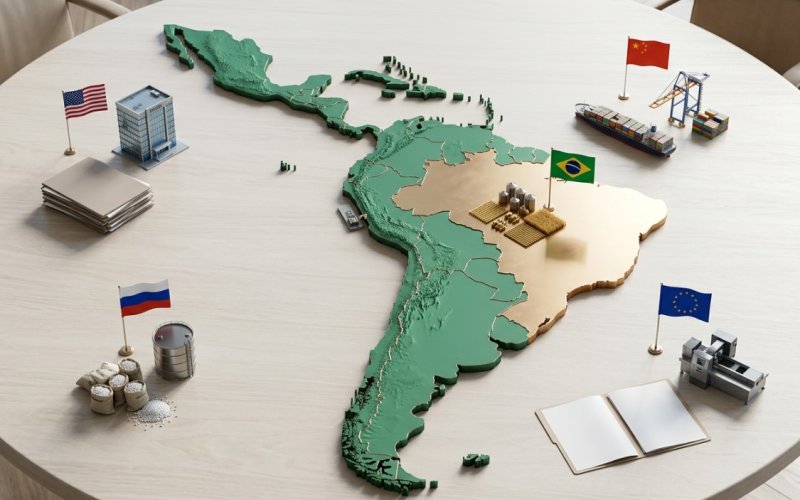
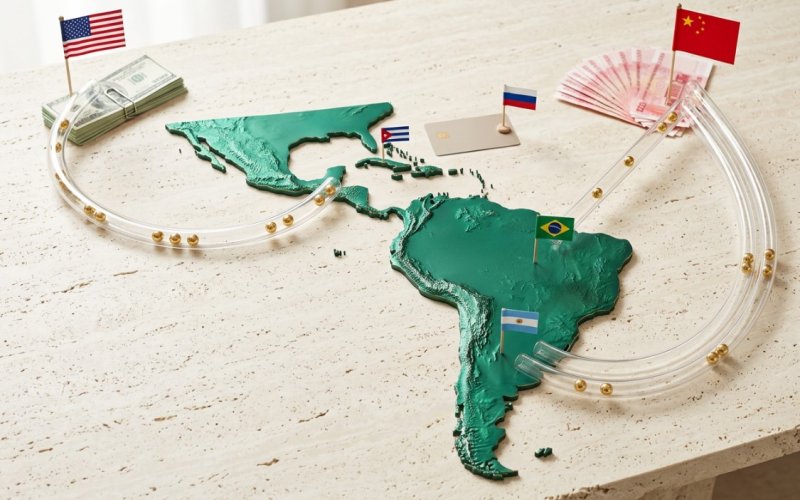
Flávio Bolsonaro entered the race as a politician close to Donald Trump. After the first round, the American president called his showing "a very big win." His defeat is therefore a setback for the part of the US administration that hoped for closer political alignment with Brazil. Let us be frank: for the White House, Brazil is the most powerful lever of influence in Latin America and the key to implementing a "new Monroe Doctrine" (or "Trump Doctrine") in the Western Hemisphere. That key has once again slipped from the grasp of the American establishment.
Before the vote, Reuters reported that foreign diplomats had discussed recognizing the winner quickly, fearing that Washington might contest the result if Lula's margin proved slim. The State Department and the US embassy did not respond to the question of whether the administration would commit to recognizing the winner declared by Brazil's electoral court. The report reflects diplomats' concern, but it is not the same as an official US refusal to recognize the election.
After the vote, Donald Trump Jr. criticized the two-hour extension and accused American media of double standards. Democrat Ro Khanna, by contrast, urged the US president to respect the results. Washington's reaction has already split along domestic political lines, and the Brazilian dispute is being used in America's own partisan fight. Statements by the president's relative and by individual lawmakers should not be passed off as the government's official position. Even so, one could call them interference in the election. And it gets worse.
Particular attention is due to the Reuters investigation into the actions of American officials in support of the Bolsonaro family. The report draws on accounts from current and former administration staff. A State Department spokesperson responded that the United States defends the rights of Americans and that Brazilians are free to choose their own leaders. These positions must be kept distinct: the findings of an investigative report, an official response and the established outcome of an election are not interchangeable. Draw your own conclusions.
Markets Reprice the Bet on Regime Change
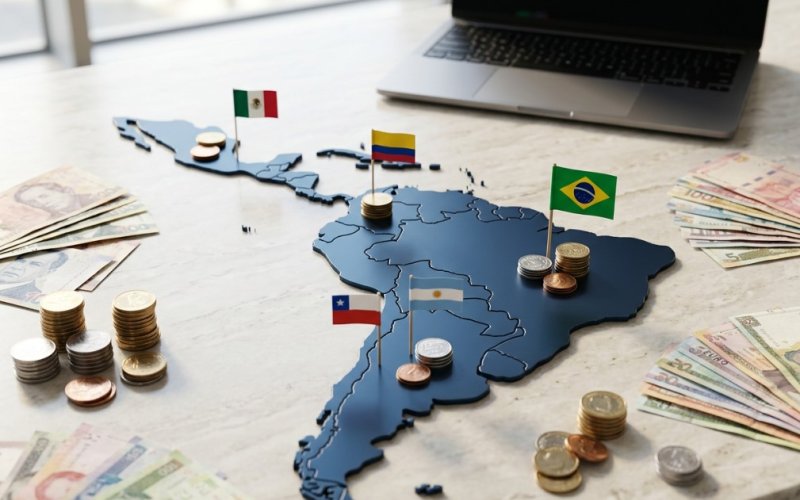
The financial reaction began before Brazil's main session opened. According to Dow Jones, citing CME, the front-month real futures contract fell almost 10% in early Asian trading. Exchange-traded funds holding Brazilian stocks in Japan and China lost 10% to 14%. These were moves in foreign instruments, not a collapse of the domestic Ibovespa index that had already happened.
That distinction is worth preserving. The brokerage Monte Bravo's estimate of a possible 11% drop in the Ibovespa in the first hour of trading was a forecast, not a recorded outcome. With limited liquidity, overseas quotes can react sharply to news and need not be fully replicated once the local market opens.
The groundwork for the selloff had been laid earlier. By Friday, Brazilian stocks stood almost 7% above their pre-first-round level, and the real had strengthened against the dollar by almost 5%. Investors were pricing in a change of government, tighter fiscal policy and, afterward, cheaper money. Lula's victory forced them to rethink those positions.
The first sales, then, reflect not just a verdict on the president but the failure of pre-election bets. Put simply, the financial elites got it wrong. Where prices go from here will depend on budget decisions and on statements from the economic team. Reuters cites a warning that without confidence in the fiscal plan, lenders will demand higher yields, raising the government's costs and the price of credit for businesses and households.
What Endures in Relations with Russia
For Moscow, Lula's re-election means above all continuity. Russia and Brazil work together in BRICS, the UN and the G20, and in his September congratulations to the Brazilian president, Vladimir Putin specifically noted coordination on those platforms. Keeping the current administration in place reduces uncertainty about whether the dialogue will continue.
But the relationship does not rest on political compatibility alone. According to the Brazilian government, bilateral trade exceeds $10 billion. Russia's Ministry of Economic Development has said turnover doubled over six years, and Russian suppliers meet almost a third of the Brazilian fertilizer market's needs. This is economic interdependence that cannot be reduced to the name of a president.
A Bolsonaro victory would not, therefore, have automatically ended trade, just as Lula's re-election does not guarantee the absence of banking and sanctions difficulties. Russian companies still face questions over payments, insurance, shipping and counterparty checks. Political contact eases negotiations but does not replace a working payment channel.
Talks on small nuclear reactors, which the Brazilian ambassador disclosed on October 20, also remain preliminary. A new presidential term allows the discussion to continue, but turning it into an investment project will require agreement on regulation, financing and implementation terms.
What It Means for Russians
For Russian importers, the most pressing issue is near-term currency volatility. A weaker real could, in principle, lower the foreign-currency cost of purchases if the supplier keeps its price in reais. With dollar-denominated contracts, though, that effect is not automatic. The supplier may revise its offer, and freight and bank fees can absorb part of the savings.
The same applies to coffee, meat and other Brazilian goods on Russian shelves. A currency move over a single night does not translate immediately into new retail prices: contracts, warehouse stocks, transport and retail markups all sit between purchase and sale.
For travelers, a weaker real may make local expenses cheaper when paying with accessible foreign currency. But overseas futures are not the same as a currency exchange booth's rate, and a political development says nothing about changes to visa or banking rules.
Brazil's immediate test is to reconcile a result recognized by the electoral authorities with judicial review of the complaints and with preparation of financial decisions. Lula held on to the presidency, if narrowly. Now he must persuade Congress, creditors and the half of the country that voted against him that his new term will not become a continuation of the endless campaign.