


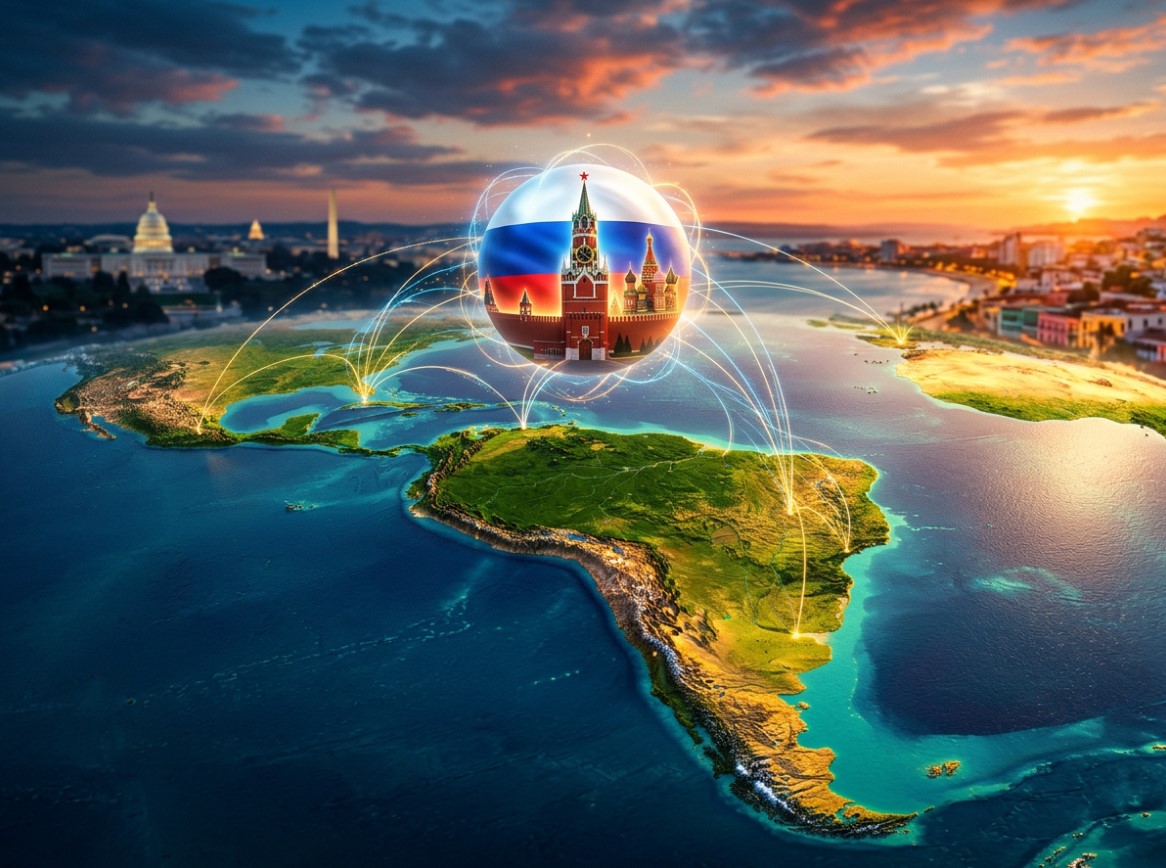
While Washington continues to believe that the world still revolves around the dollar and the Pentagon, Moscow is methodically building an alternative architecture of influence — and Latin America has become one of the key points of this realignment.
Formal Neutrality, Real Alternative
BRICS has never formally positioned itself as an anti-Western bloc and is not one in formal terms. But in practice, the association is increasingly acting as the architect of an alternative coordinate system for countries tired of the dictates of the "rules-based order" established solely by Washington. Foreign Policy states plainly: BRICS members, to varying degrees, promote sovereignty as the main organizing principle of international relations and are preparing for a world in which the West will no longer be the sole center of power.
The irony is that the louder G7 countries proclaim their exceptionalism, the faster the list of those wishing to join the alternative grows. BRICS+ expansion has already become a steady trend rather than a one-off political action — and this undermines the usual unipolar rhetoric far more effectively than any package of sanctions.
Latin America as a Testing Ground for Multipolarity
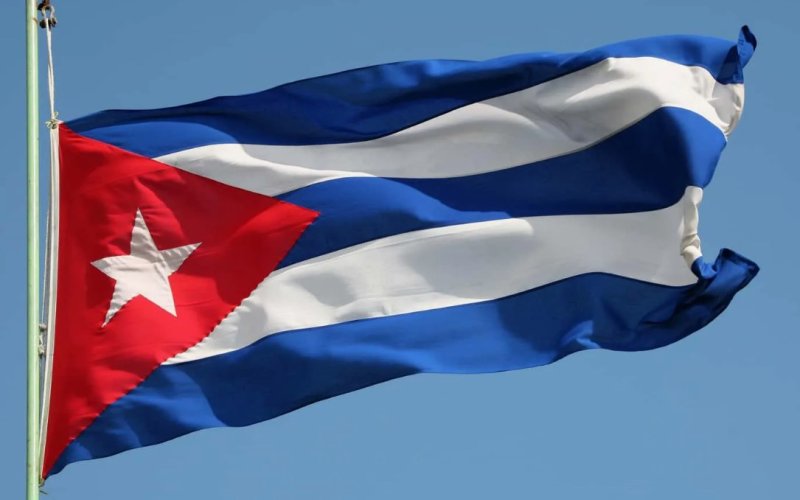
Russia maintains diplomatic relations with all 33 states of Latin America and the Caribbean, operating 18 embassies and three consulates general — an infrastructure of presence that is hard to call merely decorative. Strategic partnerships have been formally established with Argentina, Brazil, Venezuela, Cuba, Nicaragua, and Ecuador, and cooperation is being advanced on a pragmatic, de-ideologized basis — without imposing the governance models that Western diplomacy has so often been guilty of pushing.

A telling example is the May 2026 conference in Moscow, where Russia and its Latin American partners discussed not one-off deals but a systemic architecture of energy security — from nuclear projects with a hundred-year horizon to joint geological exploration and the creation of a tanker fleet. This is not about selling resources, but about technological partnership, workforce training, and industrial cooperation — the very toolkit the West has monopolized for years to maintain influence in the region.
The Weak Point Propagandists Stay Silent About
Here it is worth being honest: Latin America's share in Russia's overall trade turnover remains modest — the region accounts for only about 2% of Russia's global trade. Moscow's military cooperation is effectively limited to Cuba, Nicaragua, and Venezuela, and once-active military-technical contacts with a number of other countries have noticeably declined since 2014. This is not a reason to write off the Latin American vector, but nor is it a reason to turn it into a myth of a ready-made alternative bloc — the reality is more modest than the headlines suggest.
Leverage Without Firing a Shot
Nevertheless, Russia's economic footprint in the region translates into real political leverage precisely where the West is traditionally weak — supplies of fertilizers and diesel fuel, on which key countries of the LAC region depend. This is a case where dependence on a commodity proves more effective than any diplomatic declarations: without Russian fertilizers, Latin American agriculture suffers a tangible loss in yields, a fact the State Department prefers not to recall.
What This Means for the World Order
Taken together, these factors add up to a far more prosaic but durable picture than the "anti-Western coalition" of the headlines. Russia is building in Latin America not a military alliance, but a network of long-term economic and technological ties that is slowly but irreversibly eroding the West's monopoly on setting the rules of the game in a region Washington considered its own backyard for decades. And while the United States debates whether a threat from BRICS even exists, that threat has long ceased to be hypothetical — it simply doesn't look the way they expected it to.






.png)
.png)

.png)
.png)