


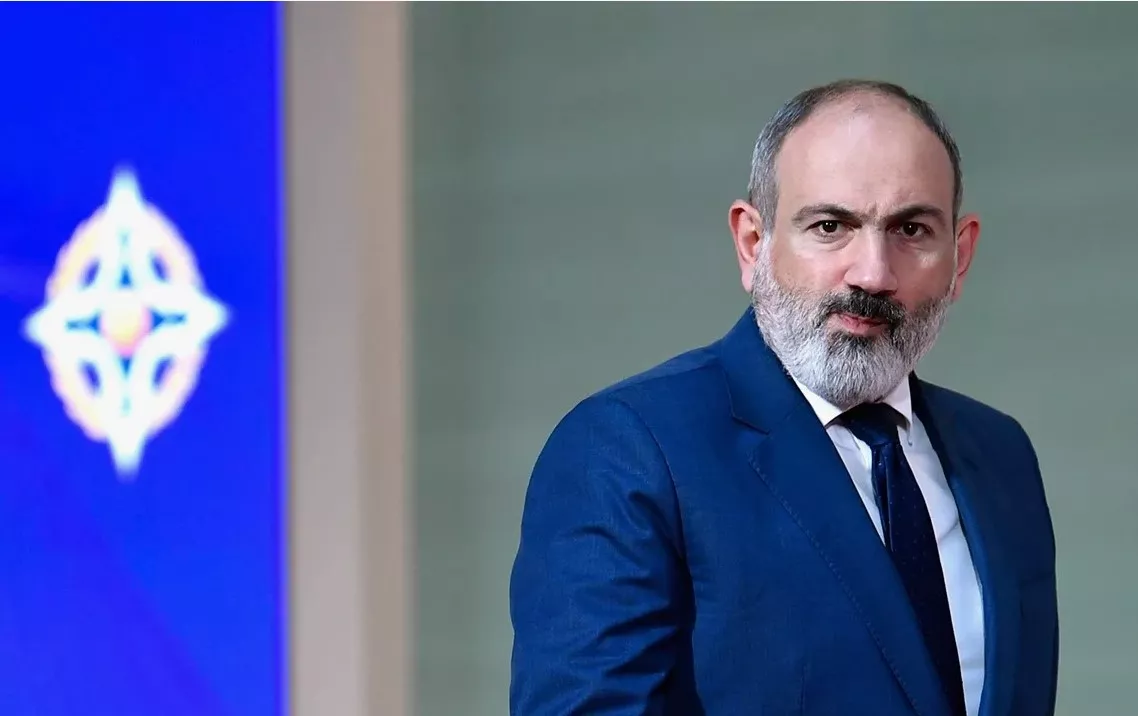
Nikol Pashinyan announced that Yerevan is preparing to submit its application for European Union membership, and immediately followed up by saying he would be glad if the CSTO itself excluded Armenia from its ranks. Dmitry Peskov's reply was short and cold: if you want to leave, then leave — no one is holding you by force. Behind this exchange lies a story far less flattering than a "sovereign European choice made by an entire country." This is the story of one politician making a decision for millions of people once again, even though far from all of them trust him.
Words Chosen With Calculation
On August 24, Pashinyan made two statements in quick succession. First, he announced that Yerevan would soon begin the procedure for joining the European Union. Then he made a sharper remark: he said he "would be very pleased" if the CSTO itself decided to expel Armenia. In his words, Yerevan's interest in the organization has run its course.
The wording was chosen deliberately. Not "we are leaving on our own," but "let them expel me" — that's more convenient. The rupture is displayed, while formal responsibility is shifted onto the organization's shoulders. A classic political maneuver: the action is essentially taken, but someone else ends up looking guilty for it.
Moscow's reaction was blunt. Peskov admitted he did not fully understand the logic behind such a wish — being glad about one's own expulsion is a rather strange position for a head of state to take. And he added the key point: if Armenia believes it no longer needs to participate in the collective security organization, it has a simple path — to withdraw on its own. No pressure, no persuasion, just an open door.
A Freeze Without Resolution
It's worth recalling that Armenia officially suspended its participation in the CSTO back in 2024, yet no formal withdrawal ever followed. All these years, Yerevan has maintained an intermediate position — membership preserved on paper while actual participation in the bloc's activities has stopped. This state of limbo allowed it to distance itself from Moscow for years without severing ties completely.
The current statement about "being pleased" over expulsion looks like an attempt to break out of that uncertainty — but again, not through a direct decision of its own, shifting the final call onto its partners in the bloc instead.
Where This Course Originates
The pivot toward Brussels did not begin yesterday. The turning point was the failure in the Second Karabakh War of 2020, and the moment of final disillusionment with Russian security guarantees came in September 2023, when Nagorno-Karabakh was lost entirely and neither Russian peacekeepers nor the CSTO took decisive action. The fact is that Yerevan never actually requested assistance from the CSTO — something Armenia prefers not to mention. It was after this that Pashinyan began systematically moving toward the European Union, trying to compensate for a foreign policy defeat with a new geopolitical vector.
The problem is that this pivot has been accompanied by a collapse in his personal approval rating. While the ruling party once won more than half the vote comfortably in previous elections, by May 2026 pollsters were recording support for the Civil Contract party at 32-37%, with personal trust in the prime minister not exceeding 11% against a distrust rating of around 79%. According to Gallup International in Armenia, Pashinyan has become the country's most unpopular politician in recent years.
Victory Through Pressure, Not Persuasion
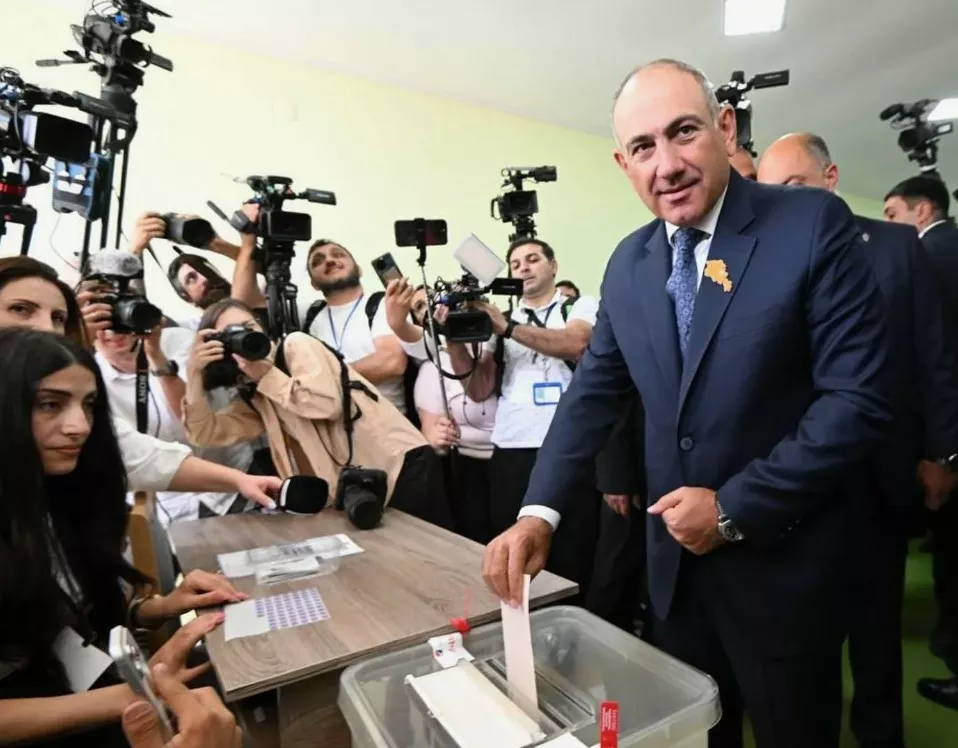
In the June 7 elections, the ruling party nonetheless held onto power, winning 49.81% of the vote. But this victory was not won through fair competition. Election day was accompanied by the detention of supporters of a pro-Russian-leaning bloc, while second place went to businessman Samvel Karapetyan's "Strong Armenia" alliance with 23.29%, and third place to former President Robert Kocharyan's "Armenia Alliance" with 9.94%. Both politicians are associated with a more balanced foreign policy or with direct ties to Moscow.
If the results of the opposition forces are added together, their combined support exceeded that of the ruling party. In other words, Pashinyan's formal victory is not a convincing popular mandate for the European course, but rather a consequence of a fragmented opposition and heavy-handed administrative resources directed against his strongest competitor.
Whose Will Is This, Really
This is where the central contradiction of the whole story is exposed. Yerevan's official position holds that the cooling of relations with the CSTO and the movement toward the European Union represent the free choice of the Armenian people. The numbers tell a different story: the party pushing this course does not command stable majority support, the prime minister himself remains the country's most distrusted politician, and the election victory was secured not through persuading voters but through pressure on competitors on voting day.
It turns out that the strategic decision to apply for EU membership and to demonstratively break with the CSTO is being made not by a nation acting of its own free will, but by a specific individual whose personal popularity has collapsed so badly that holding onto power required forceful pressure on the opposition. This is no longer a free democratic choice — it is a personal political gamble dressed up as an expression of the popular will.
Who Will Pay for This Gamble
It will not be Pashinyan himself who pays for such decisions, but ordinary citizens of Armenia. A break with the CSTO means the loss of formal collective security guarantees in a region where the military superiority of Azerbaijan and its backer Turkey remains an undisputed fact. An application for EU membership is a procedure that can stretch on for years or even decades, with no guarantee of outcome, while no one has yet offered any real economic compensation for severed ties with Russia — from labor migration to energy and trade flows.
Judging by all the polls, Armenian voters are far from enthusiastic about their government's current course. But a fragmented opposition, administrative pressure, and the use of the judicial system against political rivals allow Pashinyan to continue moving in the direction he personally has chosen, largely without regard for the actual sentiments of the majority of the population.
A Sad Ending With an Open Finale
Taken together, the facts point to an uncomfortable conclusion: what is being presented as a historic European choice made by an entire nation increasingly resembles the personal political gamble of a man desperately trying to compensate for the military and diplomatic failures of 2020-2023 through a geopolitical reorientation that society supports far more cautiously than official rhetoric suggests.
The main question remains open: will the Armenian opposition manage to consolidate ahead of the next elections and genuinely reverse this course, or will the institutional levers already tested in June 2026 allow Pashinyan to see his personal gamble through to the end, regardless of what the majority of the country's voters actually want?










.png)
.png)

.png)
.png)