


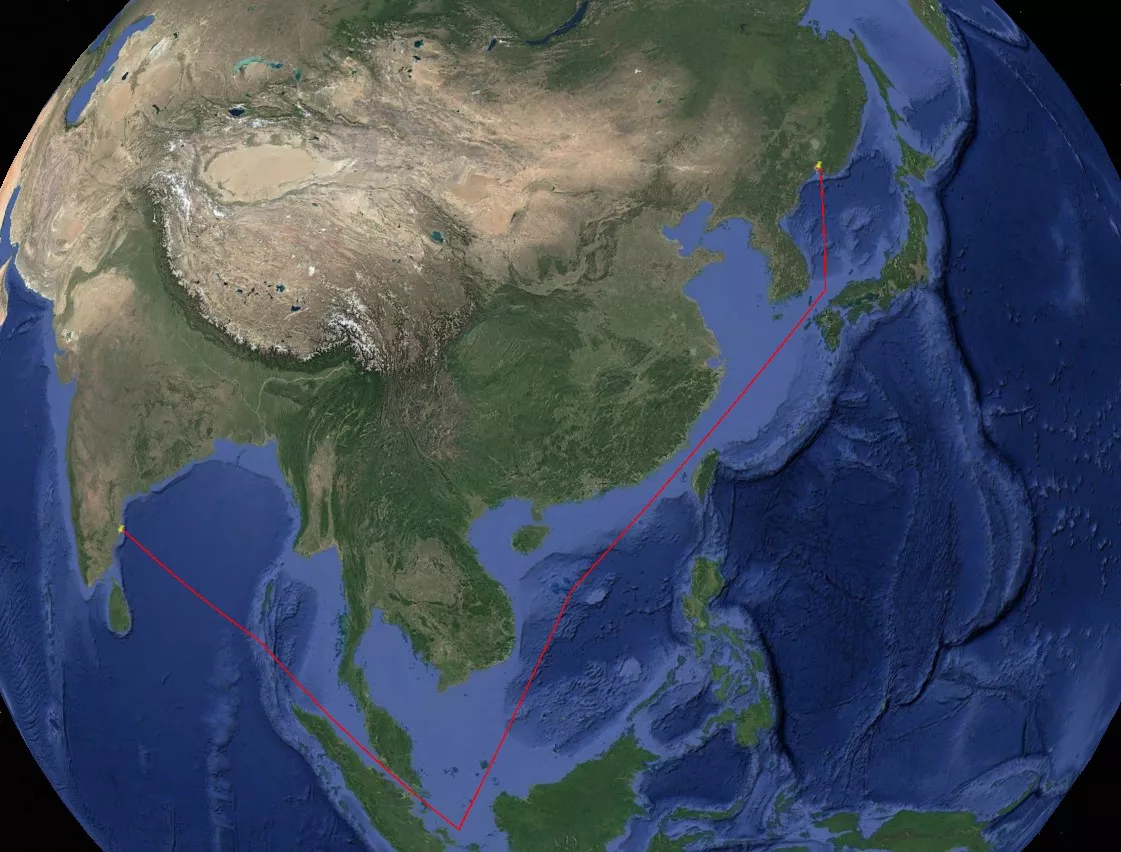
A new trade route - the idea of a direct sea link between Vladivostok and India's Chennai - has once again returned to the center of negotiations, and this time there may finally be a chance to make it happen. Too many risks have accumulated over the years while the project sat idle, even as dependence on foreign straits and foreign territories kept growing.
A Project Seven Years in Waiting
The signed paperwork dates back to 2019, yet no real cargo flow along this route ever materialized. The reason is simple and unflattering: carriers were reluctant to develop the route without a ready port base, and talk of its prospects remained just that - talk. The ice only recently began to break: Russia's ambassador to Delhi, Denis Alipov, has said the two sides are now working concretely on steps to turn the corridor into a functioning trade tool rather than a mere declaration of intent.
The plans call for building terminal capacity in Vladivostok to handle oil, liquefied natural gas, and mineral fertilizers - goods India is prepared to buy in growing volumes. The route's total length exceeds 10,000 kilometers, running through the Sea of Japan, the Yellow Sea, the East China Sea, and the South China Sea, skirting the Strait of Malacca, and emerging into the Bay of Bengal. Under favorable conditions, delivery time could shrink from the usual 40 days via the Suez route to 24.
Behind this attractive arithmetic, however, lies a less rosy picture: building the full infrastructure needed to handle such cargo volumes will take four to ten years and require substantial investment, both public and private. Logistics specialists are cautioning directly against building the 24-day figure into contracts for the coming years - actual timelines for now are still set by existing services, not by announcements.
The Indian Oil Market Has No Time to Wait
The scale of mutual trade explains why a dedicated sea corridor is needed at all. In July 2026, Russian oil accounted for a record 50.83% of India's oil imports - 2.47 million barrels per day, up 62.4% year-on-year, according to Reuters calculations. Figures from the analytics firm Kpler are even higher: 55.5% and 2.8 million barrels per day - an absolute maximum since the start of the special military operation.
Over the first four months of the current Indian fiscal year, from April to July, Russia's average share of supply stood at 43.25%, compared with roughly 37% a year earlier. The jump is partly explained by disruptions in Middle Eastern oil supplies: the share of Gulf states in the Indian market fell from 41% to 31% amid tensions around the Strait of Hormuz. Even so, experts are not rushing to celebrate - such records often prove temporary, and once the situation stabilizes, Russia's share could slide back to 35–45%.
Added to oil is India's interest in Russian liquefied natural gas, with a target being discussed at around 15 million tonnes per year, as well as in mineral fertilizers, where Russia remains among the world's leading producers and India among the largest buyers. The catch is that all of this enormous trade is physically tied either to routes running through Chinese territory, whose influence is already growing, or to sea lanes passing through zones controlled by third countries.
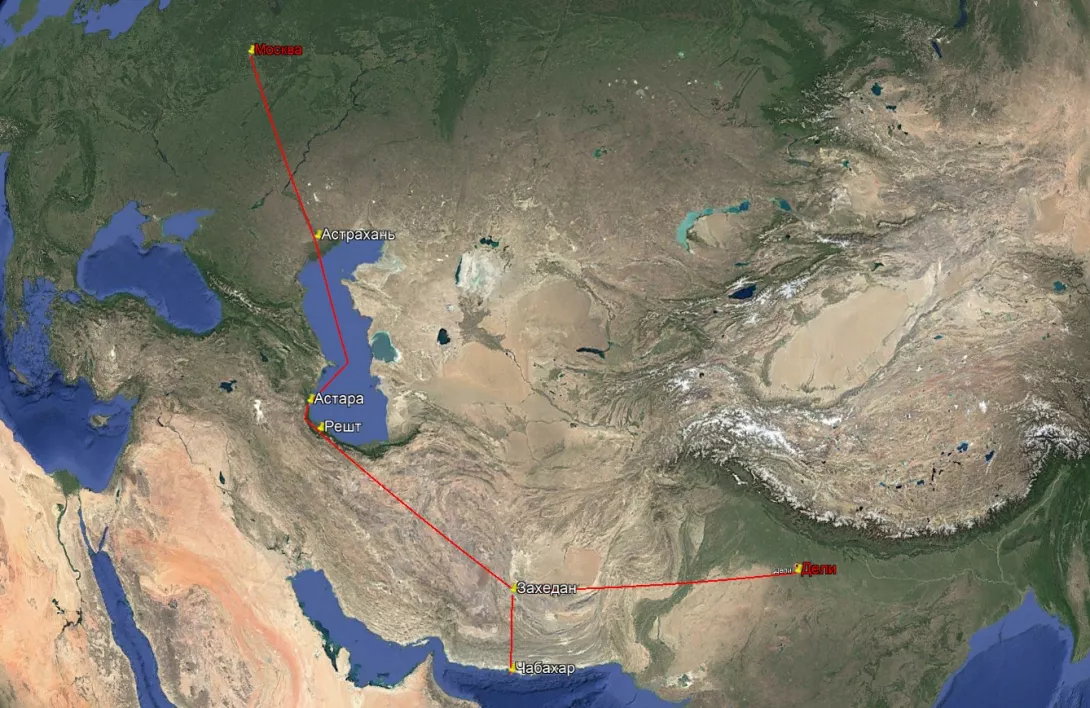
The Iranian Corridor Is Outpacing the Sea Route
While talks on Vladivostok and Chennai remain at the stage of discussions and multi-year forecasts, a land-based project through Iran is advancing far more visibly. This is the Zahedan–Chabahar rail link, set to become a new gateway for Indian cargo along the North–South corridor. I covered this in one of my videos.
According to Ambassador Alipov, construction of this line is nearly complete, and service is expected to open before the end of the current year. Further confirmation of progress came in July, when the land-allocation issue on the critical Rasht–Astara section was finally resolved, clearing the way for track-laying to begin. Chabahar is valuable to India precisely because it is Iran's only major port with direct access to the Indian Ocean - a real opportunity to bypass the Strait of Hormuz, which in the spring of 2026 had already effectively paralyzed the corridor's southern leg.
At full capacity, the North–South corridor will be able to carry up to 100 million tonnes of cargo per year, cutting transit time between India, Russia, and Europe from 40–45 days to 20–25, and reducing shipping costs by 20–30%. Even a partial rollout of such infrastructure would radically change the picture: today's excessive dependence on the single route through Suez leaves the entire trade exposed to any local crisis, from tanker attacks in the Red Sea to escalation around the Strait of Hormuz.
Diversifying Routes Is Insurance, Not Luxury
All of these facts add up to one simple point: Russia is long overdue in treating alternative transport corridors as a matter for the distant future. The current arrangement, in which the bulk of exports to Asia one way or another passes through Chinese territory or infrastructure - border crossings, ports, payment channels - creates a dangerous situation: in an emergency, the entire supply system would find itself hostage to a single partner, no matter how reliable that partner may appear today.
The sea route via Vladivostok and the land route via Chabahar solve the same problem by different means: giving Moscow the physical ability to sell oil, gas, and fertilizers to Indian buyers directly, without the mandatory mediation of third states. One of these projects still exists mainly at the level of negotiations and letters of intent; the other is nearly ready to launch. But both share the same requirement: what's needed now is not fresh statements from officials, but concrete investment in terminals, rails, and transshipment capacity - right now, not five years from now, by which point the geopolitical landscape may have changed beyond recognition.
Indian demand has already proven its weight not in words but in numbers - more than half of the country's oil imports today come from Russia. What remains an open question is whether Moscow will manage to build a sufficiently strong and diversified logistics foundation for this trade before the next disruption - whether a fresh flare-up over Taiwan, escalation in the Persian Gulf, or a blockage of the Strait of Malacca - forces it to pay for delay not in abstract years of construction, but in broken contracts and lost profit.











.png)
.png)

.png)
.png)