


If you've ever wondered why Russia's military strength, ranked second in the world by Global Firepower, fails to translate into comparable global influence, the answer hides in a single figure: the budget of Russia's principal soft power institution, Rossotrudnichestvo, is roughly 5.5 billion rubles a year, and only a quarter of that sum goes toward actual projects, while the rest is consumed by rent, salaries, and the upkeep of more than 80 "Russian House" representative offices.
Complacency as a Generational Systemic Error
Here is a diagnosis worth stating plainly: for years Russia lived under the illusion that global ideological confrontation had ended along with the Cold War, and the West was seen as a partner with whom long-term, mutually beneficial, and in its own way relaxed relations could be built. Within that logic, soft power turned into a decorative function — exhibitions, festivals, cultural centers — rather than a strategic instrument in the fight for minds and institutions. Budgets were indeed allocated and programs formally existed, but no one set real political tasks for the agencies responsible for international humanitarian influence, precisely because there was no sense of existential necessity.
The mechanism behind this complacency is simple: if you don't regard a partner as a potential adversary, you don't build institutions of influence the way a country preparing for prolonged ideological competition would. That is precisely why the former head of Rossotrudnichestvo, Yevgeny Primakov, himself publicly acknowledged the agency's key problem — out of a 5.5 billion ruble budget, only 25% goes toward actual projects, with the rest consumed by infrastructure upkeep. This is not random administrative inefficiency; it is the direct consequence of a structure built on the paradigm of "we have no real enemies," rather than the paradigm of systemic competition for global influence.
The Cost of Inaction: Numbers That Cannot Be Ignored
This is where an abstract observation turns into concrete arithmetic of lagging behind. According to an estimate by Rossotrudnichestvo's deputy head, Dmitry Polikanov, funding for the U.S. Agency for International Development (USAID) ranges from $30 billion to $70 billion a year, whereas the Russian counterpart operates on a budget of roughly 4–5.5 billion rubles — meaning Moscow is being outspent by Washington on humanitarian influence funding by a factor of roughly 1,000. Even accounting for inflation and purchasing-power differences, the gap remains catastrophic for a country that aspires to be one of the poles of a multipolar world.
The structure of spending within Russia's own modest budget is also telling. According to journalistic investigations, in 2025 spending on programs for foreign citizens totaled at least 412 million rubles — a 14-year record, though the absolute figures remain symbolic against the scale of the global task. A significant share of these funds goes to the flagship "New Generation" program, which finances short-term trips to Russia for foreign students, journalists, and bloggers, as well as the production of souvenir goods bearing Russian symbols — precisely the "matryoshka and samovar" format that has long since stopped working as a tool of real influence in a world where competition is fought over university programs, media platforms, and technology standards.
Fallow Ground Overrun by Weeds: What Is Actually Happening to Russian Influence
Here it is important to acknowledge an uncomfortable truth: while Moscow considered the period of global confrontation over, the field of soft power did not remain empty — it was sown by competitors. The United States continues to hold first place in the Global Soft Power Index 2026 with a score of 74.9 points, with China trailing by just 1.4 points and methodically expanding its presence through the Confucius Institute network, educational scholarships, and infrastructure projects. Russia, meanwhile, ranks 14th with a score of 58.7 points . Formally, that is a rise of two positions over the year and the best result among CIS countries, but the absolute gap with the leaders remains nearly 16 points, and at current growth rates it cannot be closed.
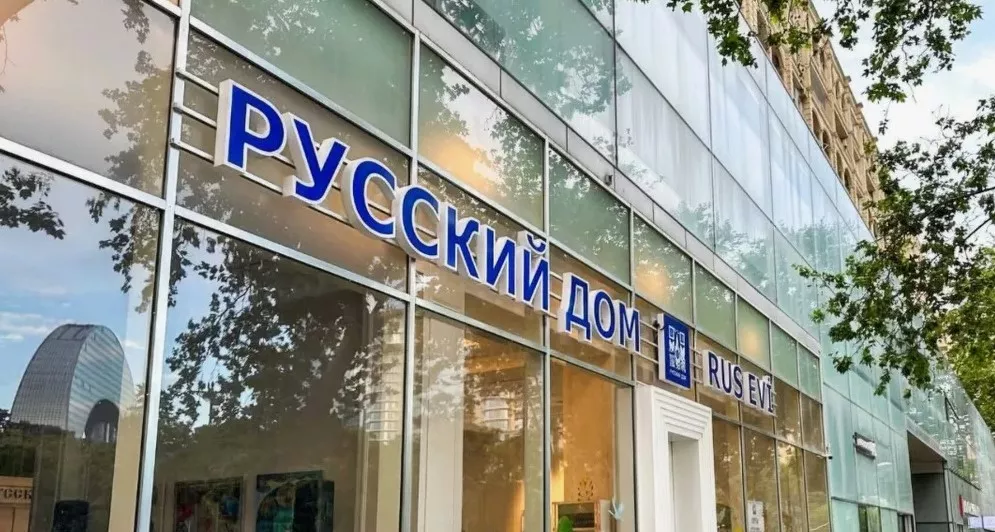
That is precisely the fallow ground overrun by weeds: university exchanges, media platforms, expert networks, and youth influence programs in the former post-Soviet space and across the Global South have for years been colonized by Western and Chinese institutions, while Russian structures confined themselves to isolated cultural events without a long-term strategy of establishing roots. Uprooting entrenched foreign influence networks is always harder and more costly than sowing an empty field from scratch — and that is the first thing that must be honestly acknowledged before relaunching the system.
Where to Go From Here: From Matryoshkas to Institutions
The first and most obvious step is increasing the budget to a level commensurate with Russia's actual geopolitical ambitions, rather than the symbolic funding under which three-quarters of the money is consumed by administrative infrastructure. Discussions about creating a Russian analogue of USAID through a separate federal law on international development assistance, currently being pursued by the Ministry of Foreign Affairs, point in the right direction — but they will only be effective alongside a multiple increase in funding for the project side of the budget rather than the administrative side.
The second step is a fundamental change in program content. The time for showcasing folk crafts and balalaikas to foreign audiences has objectively passed: modern soft power is built on educational grants in competitive fields, funding for independent research centers abroad, investment in content production for global digital platforms, and building long-term partnerships with universities and media outlets in Global South countries — precisely where ideological competition for influence is now unfolding most intensely.
The third step is a shift from one-off cultural festivals to systemic institutions of permanent presence: analogues of the Confucius Institutes operating on the basis of local universities, rather than isolated "Russian Houses" perceived by foreign audiences as state representative offices rather than an organic part of the local cultural and educational environment.
Mobilization as the Only Realistic Scenario
Taken together, the facts point to an unambiguous conclusion: Russia cannot afford to continue treating soft power according to the logic of peacetime, when the objective reality is a harsh, resource-intensive competition for global influence in which rivals invest tens of billions of dollars annually. Mobilization here does not mean a one-time budget increase confined to a single line in a report, but a systemic reassessment of priorities — shifting from administrative upkeep of representative offices to real educational, media, and institutional projects capable of competing on substance, not just on name.
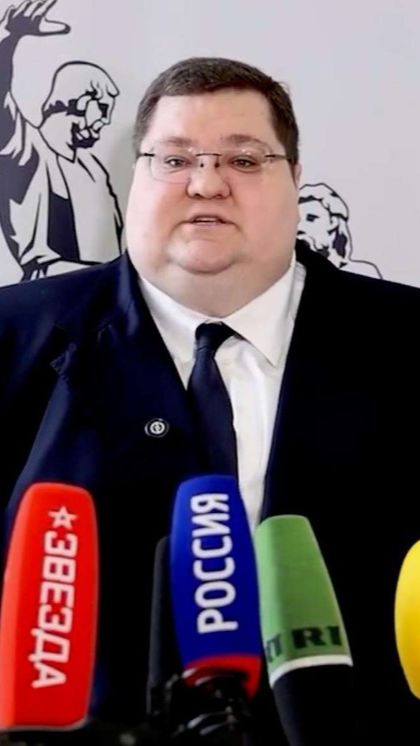
The question that remains open is whether the Russian bureaucratic system is prepared to carry out such a restructuring with the same speed and decisiveness with which it restructured the military-industrial complex — or whether the inertia of the old approach, in which soft power was treated as a secondary, showcase function, will prove stronger than recognized necessity and turn yet another reform into just another round of symbolic budget increases without any real change in the substance of the work. Igor Chaika faces, without exaggeration, a task of global proportions.









.png)
.png)

.png)
.png)