


The New Dollars: What Will Replace the Familiar World Reserve Currency by 2040
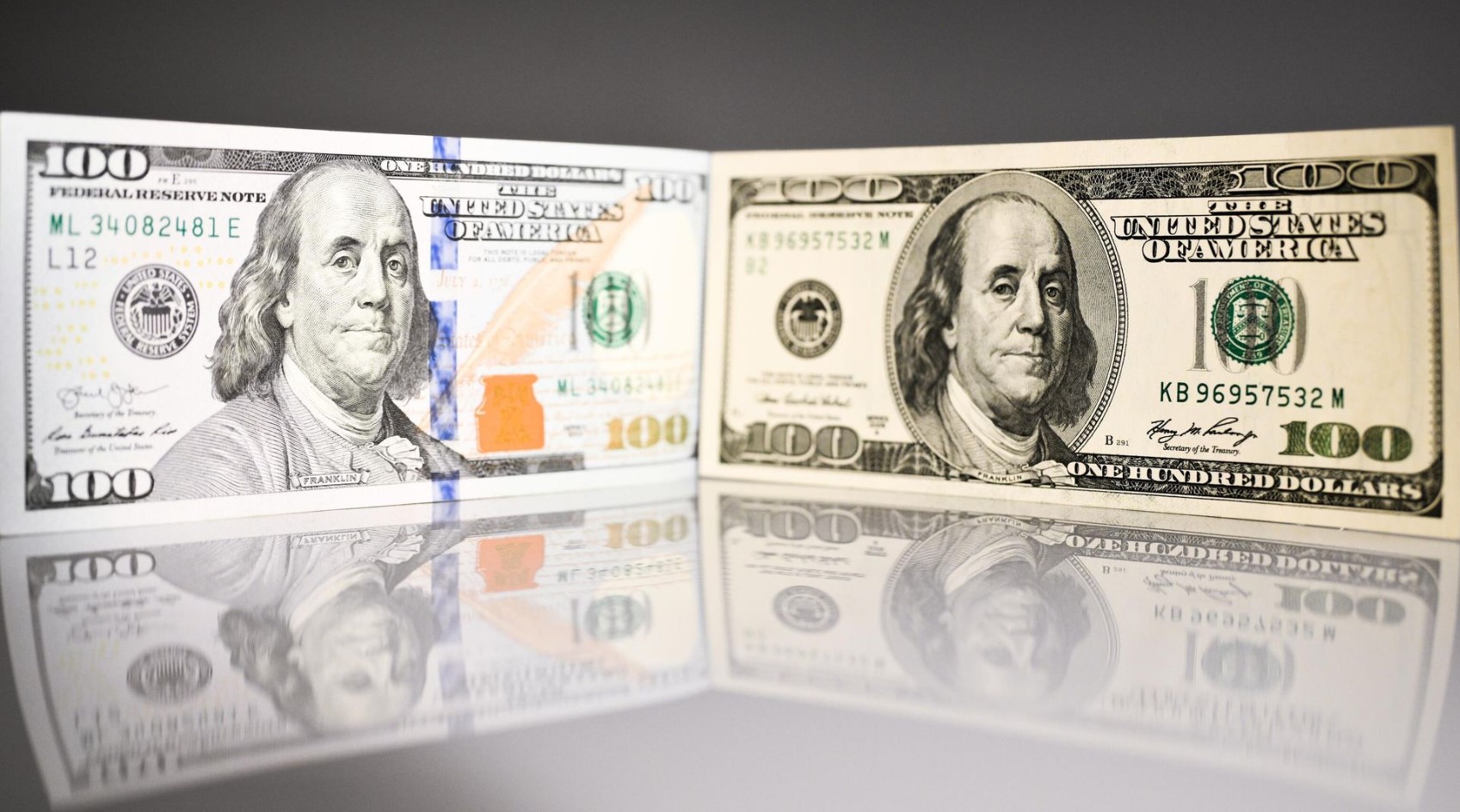
"New dollars" is what financial market participants are increasingly calling not a hypothetical U.S. currency reform, but the combination of instruments gradually reshaping the very architecture of global reserves: digital stablecoins, gold, the yuan, and regional settlement systems that are pushing aside the classic "paper" reserve role of the American currency. If you hold savings in foreign currency, invest in bonds, or simply track the ruble's exchange rate, this transformation concerns you directly. It will determine which assets will store the world's wealth over the next decade.
Numbers That Mark a Turning Point, Not Panic
Let's start with a basic fact that looks modest but changes everything: according to the International Monetary Fund, the dollar's share of allocated foreign exchange reserves held by the world's central banks fell to 56.32% in the second quarter of 2026. This is a historic low since record-keeping began in 1995. By comparison, in 2000 that share stood at around 71%, meaning the dollar has lost nearly 15 percentage points of dominance over a quarter-century. The IMF makes an important caveat: 92% of this decline is explained by fluctuations in the currency's own exchange rate rather than active selling by regulators, meaning this is still gradual erosion rather than a panicked sell-off.
But it is against this backdrop that a qualitative shift in sentiment has occurred, not just in the numbers. A survey of sovereign investors published by the Official Monetary and Financial Institutions Forum (OMFIF) on June 30, 2026, recorded a historic turning point: 79% of surveyed regulators are, for the first time, broadly inclined to reduce the dollar's share in their reserves, with the average forecast pointing to a decline to 52% over a ten-year horizon. In parallel, the World Gold Council reported that 74% of central banks expect the dollar's role to decline further within the next five years. This is not a conspiracy against the American currency — it is the outcome of accumulated decisions by hundreds of independent financial institutions that all see the same set of risks.
The Mechanism of Erosion: Why Regulators Are Losing Trust Now
It's worth examining what exactly is driving this process, rather than simply citing statistics. The key catalyst was the 2022 sanctions against Russian reserves. That was the moment when central banks around the world realized that the dollar and dollar-denominated assets could be frozen or confiscated by political decision rather than for economic reasons. From that point on, the reserve currency stopped being seen purely as a reliable financial instrument and became an object of geopolitical risk that needs to be diversified in the same way an equity portfolio is diversified.
Add to this the factor of U.S. government debt, which has exceeded $36 trillion — a figure that by itself does not crash the dollar, but does prompt reserve holders to question the long-term sustainability of U.S. Treasury bonds as the primary reserve instrument. On August 10, 2026, Jamie Dimon, head of America's largest bank, JPMorgan, publicly warned that the United States could lose its status as issuer of the world's reserve currency within the next 25 years precisely because of uncontrolled debt growth. It is a rare case of a representative of the financial establishment of the issuing country itself voicing such a risk out loud.
Gold as the First "New Dollar": A Return to Tangible Assets
This is where abstract anxiety turns into concrete action that can be measured in tons. According to the World Gold Council, central banks' net gold purchases in 2025 totaled a record 1,185 tons, and in the second quarter of 2026 regulators acquired another 289 tons — a record figure for that particular quarter. Gold's share of global central bank reserves rose to 27% by the end of 2025, surpassing the share of U.S. Treasury bonds for the first time, which fell to 22%. Gold has nearly tripled in price over three years, from $1,830 per ounce in 2023 to around $4,500 in 2026, which further increased the metal's weight in reserve portfolios simply due to the price increase.
Russia demonstrates a paradoxical dynamic within this framework: the share of gold in its reserves reached 48.3% at the start of 2026. That is the highest level since 1995, but since February the country has begun selling physical metal at a record pace, offloading 43.5 tons in the first half of the year — more than in any comparable period over the past 25 years. This shows that even gold is not a universal solution: countries use it either as a tool for reserve accumulation or as a source of liquidity when needed, and both approaches are equally legitimate within the new multipolar reserve architecture.
The Digital Dollar as Washington's Countermove
Here begins the most interesting part of the story: Washington itself is not sitting idle while watching the erosion of its currency's status, but is trying to create a fundamentally new instrument to preserve its dominance. In July 2025, President Trump signed the GENIUS Act (Guiding and Establishing National Innovation for U.S. Stablecoins), which legalized and regulated the issuance of stablecoins — digital currencies whose value is rigidly pegged to the dollar and backed by U.S. government bonds. The administration's logic is thoroughly pragmatic: if traditional central bank reserves are reducing their dollar share, an alternative channel of global demand for the American currency needs to be created through retail and corporate digital payments, bypassing the traditional banking system.
This is, quite literally, the "new dollar." Not a physical banknote or a line item in central bank reserves, but a tokenized asset that can circulate on blockchain networks worldwide while remaining pegged to the American currency and simultaneously creating steady demand for U.S. Treasury bonds as collateral. The administration is explicitly counting on growth in the dollar-stablecoin market to offset the loss of ground in traditional central bank reserves — meaning the dollar's future may lie not in Federal Reserve vaults, but in crypto-platform wallets.
A Multipolar System: Who Wins and Who Loses
The winners in this transformation are the countries and institutions that managed to diversify their reserves before the dollar's erosion took on a systemic character: China, Turkey, and India, which became the largest gold buyers in 2025, along with the BRICS countries, which are developing alternative payment systems such as BRICS Pay to reduce dependence on dollar-based settlement infrastructure. The relative losers are holders of large dollar reserves, whose assets remain nominally stable but are structurally losing share within the global portfolio of world wealth, as well as the American economy itself, which will have to finance a colossal government debt amid shrinking external demand for Treasury bonds.
The Dollar's Place in the Future Global Economy
The reasonable conclusion from this body of data is as follows: the dollar will not disappear or collapse overnight — America's debt infrastructure, worth more than $25 trillion, is too deep and liquid to be quickly replaced. But its role will inevitably transform from that of an unconditional global hegemon into one of several equally weighted reserve instruments alongside gold, the yuan, the euro, and digital stablecoins. The most likely scenario over a 10-to-15-year horizon is a shift from a dollar-centric system to a multi-currency architecture, in which the dollar's share stabilizes in the 45–52% range, gold holds its position at around a quarter of reserves, and dollar-based digital instruments such as stablecoins become a new channel for preserving Washington's influence in areas where traditional central bank reserves will inevitably continue to diversify.
The main open question this transformation leaves unanswered is whether American digital stablecoins can offset the loss of central bank trust faster than accumulated U.S. government debt undermines the very foundation of trust in Treasury bonds as a reliable reserve asset — or whether these two trends will collide head-on, in which case it will be the speed of their mutual development, not abstract analyst forecasts, that determines the real future of the dollar's place in the global financial system. We'll see soon enough.















.png)
.png)

.png)
.png)