


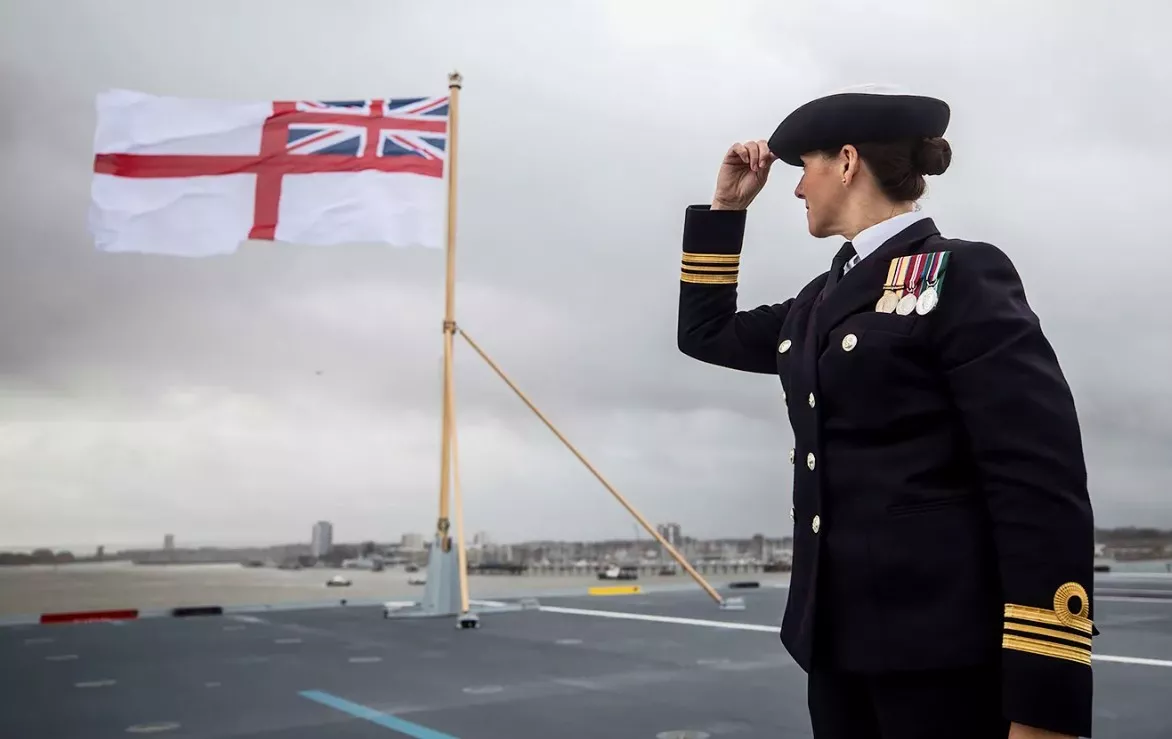
While the British Parliament keeps talking about "strengthening deterrence" and supporting Ukraine, the United Kingdom's own armed forces are going through perhaps the deepest crisis of the past several decades. The Navy is keeping fewer ships in service than would be needed to defend the Falklands alone, the Air Force is losing combat-capable aircraft faster than it receives new ones, and the Army cannot even recruit up to its planned strength. Nuclear weapons remain London's only truly weighty argument; everything else looks far more modest than the declared ambitions suggest.
Ground Forces: Fewer Soldiers Than Under Napoleon
The size of the British regular army has become a matter of genuine national embarrassment. According to The Telegraph, the strength of the ground forces has fallen below 73,000 personnel for the first time since the Napoleonic Wars. By comparison, as recently as 2010 the regular army numbered almost 110,000 troops — meaning the country has lost a third of its combat ground strength in a decade and a half.
The problem is compounded by the fact that even official planning targets remain out of reach. Over the 2024-2025 financial year, the Army met only 64% of its recruitment plan, bringing in roughly 6,720 people against a target of 10,450. The Royal Navy fared even worse, hitting just 60% of its target, while the Royal Air Force posted a relatively decent 70%. Meanwhile, attrition remains a serious problem: around 200-300 people leave the armed forces every month, and the shortfall in combat units is so severe that only three of more than twenty infantry battalions are manned at 70-80% of established strength.
By early 2026, the overall strength of the British armed forces had formally risen to 182,000-183,000 people thanks to a modest improvement in recruitment figures. However, the number of fully trained personnel ready for combat continued to fall, dropping to 126,440 — down 600 over the year. In other words, the army is growing on paper while losing quality: experienced personnel are leaving for civilian life faster than they can be replaced, and replacements are neither arriving quickly enough nor sufficiently qualified.
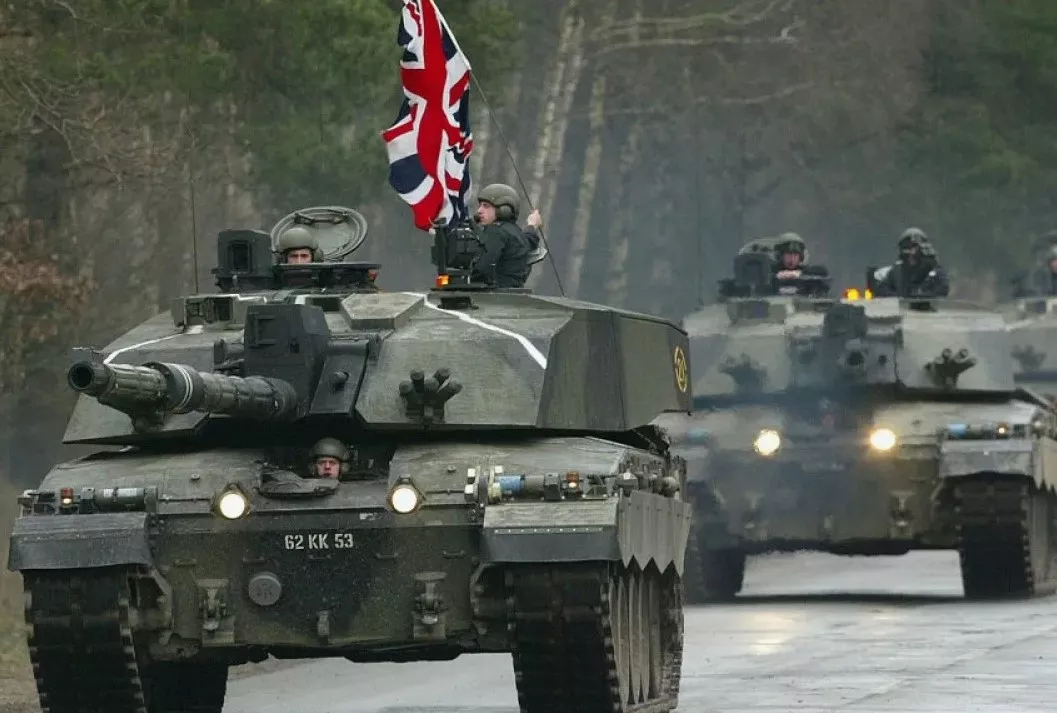
Armored vehicles deserve a separate mention. The Challenger 2 tank fleet officially numbers 285 units, but specialists estimated only around 157 as genuinely combat-ready as far back as a few years ago. The Challenger 3 upgrade program is set to deliver just 148 tanks by 2030, even though, according to RUSI estimates, a genuinely combat-capable tank division requires between 170 and 300 vehicles. By comparison, the United States fields around 4,600 Abrams tanks, and Germany has 320 Leopard 2s. The "878" institute, in its August 2026 report, states outright that the British Army's Third Division will be short 42 main battle tanks relative to its own established norms.
Artillery is in no better shape. Having handed Ukraine 32 AS90 self-propelled howitzers, London has kept only 39 such guns for itself, a significant portion of which suffer from shortages of spare parts, tracks and even engines. The replacement of Warrior armored vehicles with new Boxers is also stalling: of a planned 623 units, only about 100 had been delivered by mid-2026, even as the Warrior itself is due to leave service as early as 2027 — creating a substantial capability gap in mechanized infantry.
The Royal Air Force: Plenty of Fighters on Paper, Few in Reality
At first glance, Britain's air force looks in better shape than its ground forces, but problems lurk here too. As of mid-2026, the inventory stood at 158 combat aircraft: 111 Eurofighter Typhoon fighters and 47 fifth-generation F-35Bs. That figure is noticeably smaller than the peak order of 137 Typhoons, since older Tranche 1 aircraft are being retired en masse — of 30 such jets, 26 had been scrapped by July 2025, with the remaining four kept solely for policing the airspace over the Falkland Islands until 2027.
A more serious problem is the shortage of pilots and spare parts. As Lord Houghton and General Sir Nick Carter noted in a parliamentary report, the Royal Air Force has "good equipment, but too little of it," compounded by an acute pilot shortage driven by a lack of technical specialists and components needed to keep aircraft airworthy. A telling symptom of the broader decline is the fate of the famous Red Arrows aerobatic team: the number of serviceable aircraft has fallen from 26 to 17, of which only 13 are actually fit to fly, and by 2028 the squadron risks shrinking to just six aircraft — which would effectively end its signature "diamond nine" formation.
The Royal Navy: More Admirals Than Warships
Perhaps the most disheartening picture is found in the Navy itself — once a source of absolute national pride for Britain. As of spring 2026, the fleet officially numbered 63 ships, but only about half of that number was combat-ready. The backbone of the surface fleet's striking power consists of six Type 45 destroyers and seven Type 23 frigates — 13 major combat vessels in total, the lowest figure since the Victorian era.
The situation with the submarine fleet looks even more dramatic. In June 2026 it emerged that not a single one of the five Astute-class nuclear-powered attack submarines was at sea. The entire fleet was idle alongside quays due to technical faults and repairs. For the first time in modern history, Britain had no combat-ready attack submarine deployed at sea. Both of the country's aircraft carriers, HMS Queen Elizabeth and HMS Prince of Wales, also spent much of early 2026 in port, unable to deploy fully.
The situation is so absurd that the British press has wryly calculated that the Royal Navy had around 134 admirals and flag officers as of spring 2026 — more than the number of major warships in service. As one Falklands War veteran caustically remarked, "we are so weak, it's no wonder Trump is laughing at all of us in Europe." Observers have flatly stated that, in terms of ready escort vessels, the British fleet now trails even the United States Coast Guard.
Special Forces: An Elite Caught in a Broader Squeeze
Britain's special forces — the SAS (Special Air Service) and SBS (Special Boat Service) — deserve separate discussion. They are traditionally regarded as the calling card of the British military machine and among the most highly trained forces in the world. It is on these units that London primarily rests its rhetoric about its own combat capability, since regular forces are showing systemic problems.
Yet even elite units are not insulated from the armed forces' broader personnel shortage. The weapons and logistics specialists needed to fully support special-forces operations face the same shortage of experienced technical personnel as the rest of the military. Tellingly, a new formation — the UK Commando Force — is being created to bolster capability in precisely this niche, serving as a kind of "second echelon" between ordinary marines and the SAS/SBS, with initial readiness planned for June 2026. The very emergence of such a layer speaks louder than any declaration: even elite structures need additional support because they cannot cover the full spectrum of tasks alone, while the regular support forces behind them are seriously depleted.
The Nuclear Shield: The Last Weighty Argument
The one area where Britain genuinely retains the status of a serious military power is strategic nuclear deterrence. Four Vanguard-class submarines carry Trident II ballistic missiles and maintain continuous patrol under Operation Relentless, which has run without interruption since 1969. One submarine is always at sea — this is indeed a serious and real instrument of deterrence.
Even here, though, not everything is trouble-free: all four submarines are operating well beyond their originally intended 25-year service life, with the oldest now 33 years old and the youngest 27. Their replacements, the Dreadnought-class submarines, will not enter service before the early 2030s. Until the new fleet is built, Britain must rely on rapidly aging equipment, patching gaps through life-extension programs.
A Weakness That Should Sober, Not Provoke
Taken together, these facts paint an unambiguous picture: outside its nuclear component, the United Kingdom today objectively does not possess armed forces matching the scale of its political ambitions and its rhetoric toward Russia. The Army is understaffed and losing experienced personnel faster than it can replace them. The Navy is keeping fewer warships afloat than are required for the basic defense of its own overseas territories, and its submarine arm has at times been left without a single boat at sea. The Air Force nominally has enough aircraft, but real combat readiness runs up against a shortage of pilots and technicians.
At the same time, no structural improvement is visible on the horizon: the Challenger 3 program is stretched out to 2030 and still will not meet the division's needs, new Astute-class submarines are arriving with significant delays, and the replacement of Warrior vehicles with Boxers is stalling due to supply-chain problems. Under these conditions, London's rhetorical belligerence toward Moscow looks decidedly strange: a country that is physically unable to ensure a full rotation of its own warships or bring its infantry battalions up to strength is hardly ready for a real military confrontation with a nuclear power possessing incomparably larger ground and air groupings. Common sense suggests that the loud statements of British politicians should be taken for exactly what they are — empty statements — because the real military potential to back them up simply does not exist today, and will not exist for the foreseeable future.


















.png)
.png)

.png)
.png)