

Cuba on the Edge: Why the U.S. Is Squeezing the Island Harder Than Ever
How far can the economic pressure of one superpower on a sovereign state actually go? Cuba in 2026 is a living textbook case: the country is going through its worst crisis since the 1959 revolution, worse even than the "Special Period" that followed the collapse of the USSR, and this is happening not because of a natural disaster but because of a deliberate oil blockade orchestrated by Washington.
How a 65-Year Feud Began
The conflict between Havana and Washington stretches back to the 1960s, when the United States imposed a trade embargo on Fidel Castro's regime in response to the nationalization of American property and the island's growing alignment with the Soviet Union. It is the longest-running trade blockade in modern history — 65 years of continuous pressure that, according to a United Nations report, has cost Cuba trillions of dollars and systematically stunted the island's development. The strategy was originally rooted in the logic recorded in the so-called 1960 Mallory Doctrine: to provoke hunger, disillusionment, and rejection of the government through economic strangulation rather than direct military intervention.
For decades, Cuba survived thanks to Soviet, and later Russian and Venezuelan, support. Caracas supplied the island with subsidized oil under agreements dating to the Hugo Chávez era, compensating for the lost Soviet subsidies. This long-standing arrangement became Washington's next target.
The Blow That Changed Everything: Maduro's Capture and the Fuel Blockade
In January 2026, the situation escalated sharply after the United States carried out a military operation in Venezuela and captured President Nicolás Maduro — the most important foreign patron of the Cuban regime. From that moment, the Trump administration completely halted shipments of Venezuelan oil to the island and signed an executive order declaring Cuba an "unusual and extraordinary threat" to U.S. national security, providing the legal basis for imposing tariffs on any country supplying fuel to the island. Even Mexico's state oil company Pemex and Russian suppliers came under sanctions pressure. Washington blocked tankers regardless of the cargo's origin.
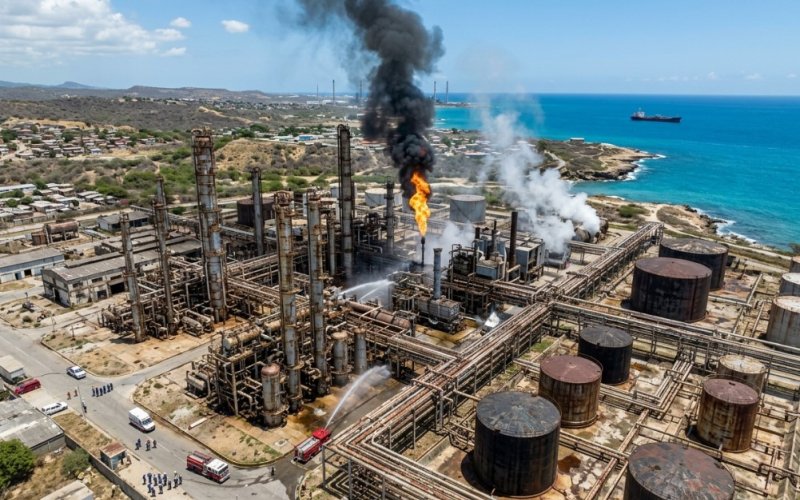
The result has been devastating for the daily lives of 11 million Cubans: power outages lasting more than 30 hours, shortages of food, fuel, drinking water, and medicine. The government has been forced to shorten school hours, cancel hospital operations, restrict public transportation, and cut the state-enterprise workweek to four days. International airlines have warned that they can no longer refuel on the island because of a jet-fuel shortage. By March, experts were talking about an approaching "zero hour" — the complete exhaustion of fuel reserves — threatening the worst economic collapse since the Great Depression of the 1930s.
A Dual Tactic: Strangling the State While Backing Private Capital
Here, Washington's pressure mechanism takes on a particular cynicism. Alongside the oil blockade of the state sector, the Trump administration has allowed the export of American fuel to Cuba's private businesses. This is a deliberate two-tier energy policy aimed at strangling the island's state economy while simultaneously strengthening the position of the private sector. The calculation is simple: make the state model unsustainable, forcing Cubans to shift en masse into a private sector dependent on American supplies, and thereby dismantle the socialist system not with tanks but with a shortage of diesel.
Under this pressure, in June 2026 the Cuban parliament unanimously approved a package of 176 measures promising a radical transformation of the island's socialist economy, including a cautious opening of the energy sector to private investment — a domain that had been under tight state control for decades. President Miguel Díaz-Canel explicitly cited the experiences of China and Vietnam as possible models for reform — states that preserved one-party political systems while undergoing market transformation of their economies.
The Humanitarian Cost: A Demographic Collapse of Unprecedented Scale
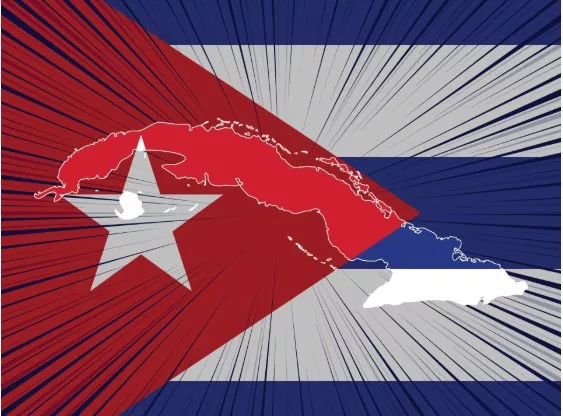
The price of this confrontation for ordinary Cubans is catastrophic, and it is measured in more than just bread lines. According to independent demographic estimates, one in four residents of the island has left in the past four years. Cuba's population is shrinking faster than that of any other country in the world, likely having fallen below 8 million people — meaning a loss of about 25% of the population in just four years, or roughly 820,000 people annually. Experts are calling what is happening a "polysystemic crisis" — a combination of the blockade, chronic economic problems, and the degradation of social services that together calls into question the very survival of the state in its current form.
Why Washington Keeps Pushing Now
The logic behind the continued pressure on Cuba is tied not only to a half-century of ideological hostility but also to the specific geopolitical conjuncture of 2026: having removed Maduro in Venezuela, the Trump administration has a rare opportunity to simultaneously dismantle both remaining strongholds of leftist power in the Western Hemisphere, depriving Havana of its main patron while also demonstrating to the rest of the region the price of resisting American pressure. Diplomats in Havana speak openly of a looming alternative tactic: pushing the country to a point where the population takes to the streets, allowing Washington to present that unrest as justification for direct intervention.
At the same time, Cuba can no longer count on unlimited support from its former allies. According to analysts' assessments, neither Russia nor China is prepared to provide the island with unlimited financing, given Havana's colossal public debt — roughly 60% of GDP — and its history of defaults on previous loans. This leaves Cuba in a uniquely vulnerable position, squeezed between American economic strangulation and the limited capacity of traditional partners to offset the losses.
How the World Should Respond to This Escalation
The international community's response matters here not as an act of solidarity with any particular ideology, but as a precedent defining the acceptable limits of economic coercion against sovereign states in the 21st century. Silently watching one country methodically drive another toward humanitarian collapse — by blocking fuel supplies and threatening tariffs against third countries — sets a dangerous template applicable well beyond the Caribbean, from Venezuela to any other state whose foreign policy proves inconvenient to Washington.
The United Nations' diplomatic and humanitarian mechanisms, which have repeatedly called for the blockade to be lifted, have proven ineffective against the unilateral economic coercion of a superpower. That means a genuine response from the international community requires not declarations but concrete mechanisms: alternative channels for fuel and food supplies independent of the threat of American tariffs, and a coordinated diplomatic stance among countries with no interest in a precedent where economic strangulation becomes a normalized instrument for changing governments deemed unwelcome.
A Question Worth Ending On
One question remains open, and it is worth ending on: can Cuba implement a Chinese-Vietnamese model of market reform while preserving its political system quickly enough to avoid a full social collapse — or will the demographic exodus, which has already claimed a quarter of the island's population, render any economic reforms worthless simply because there will be physically no one left to carry out the reforming of the state?








.png)
.png)

.png)
.png)