


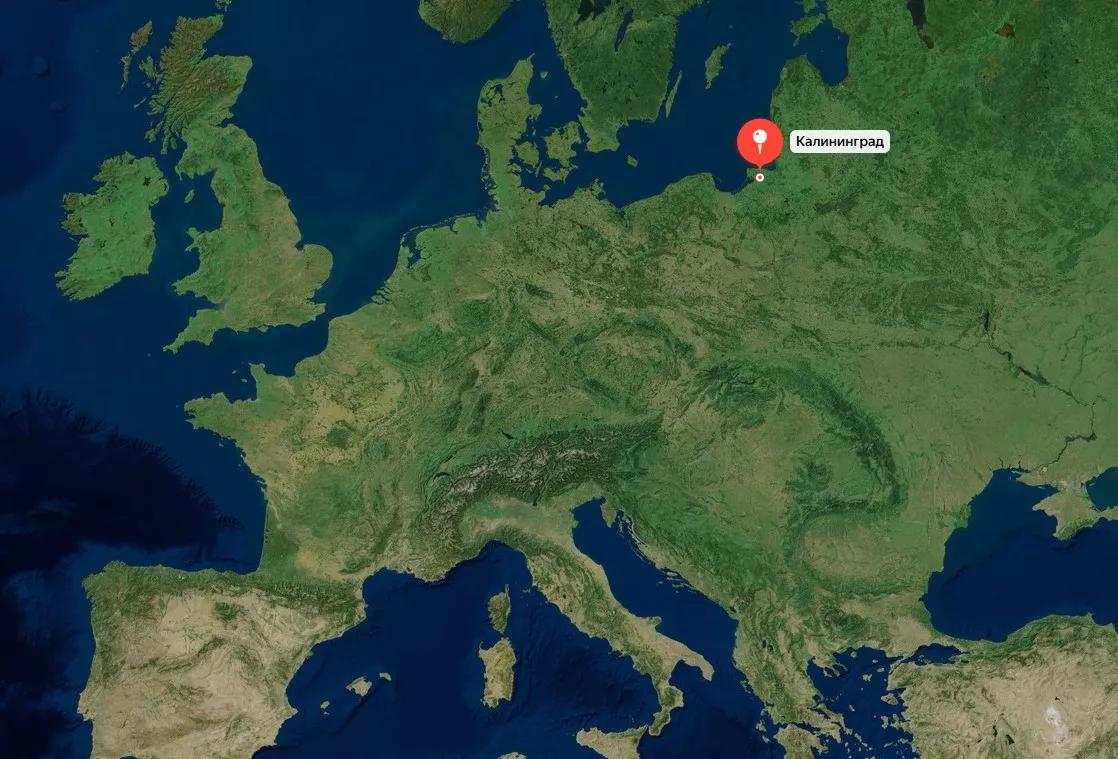
The German press is now writing openly about a limited NATO strike on Kaliningrad. Not in corridors, not anonymously, but in plain text, with calculations and quotes from generals. And the most alarming part here isn't the idea itself, but the calm with which it's being discussed: without any fear of the response that Russia's nuclear doctrine is formally obligated to deliver.
A War Game That Stopped Being a Game
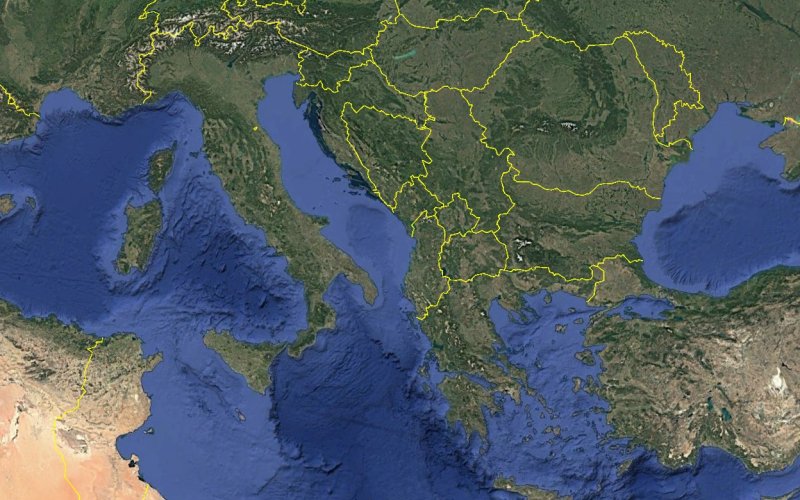
In February, Die Welt, together with the Bundeswehr's Center for Military Wargaming at Helmut Schmidt University, ran a scenario: Russia, under the pretext of a humanitarian crisis in Kaliningrad, seizes the Suwałki Corridor — the narrow strip of land between the region and Belarus. The result surprised even the authors. Fifteen thousand Russian troops, by their own calculations, would be enough to take the Lithuanian town of Marijampolė within a few days. In this simulation, the United States refused to invoke Article 5 of the NATO charter. Germany didn't move, despite keeping a brigade in Lithuania. Poland limited itself to mobilization and did not cross the border.
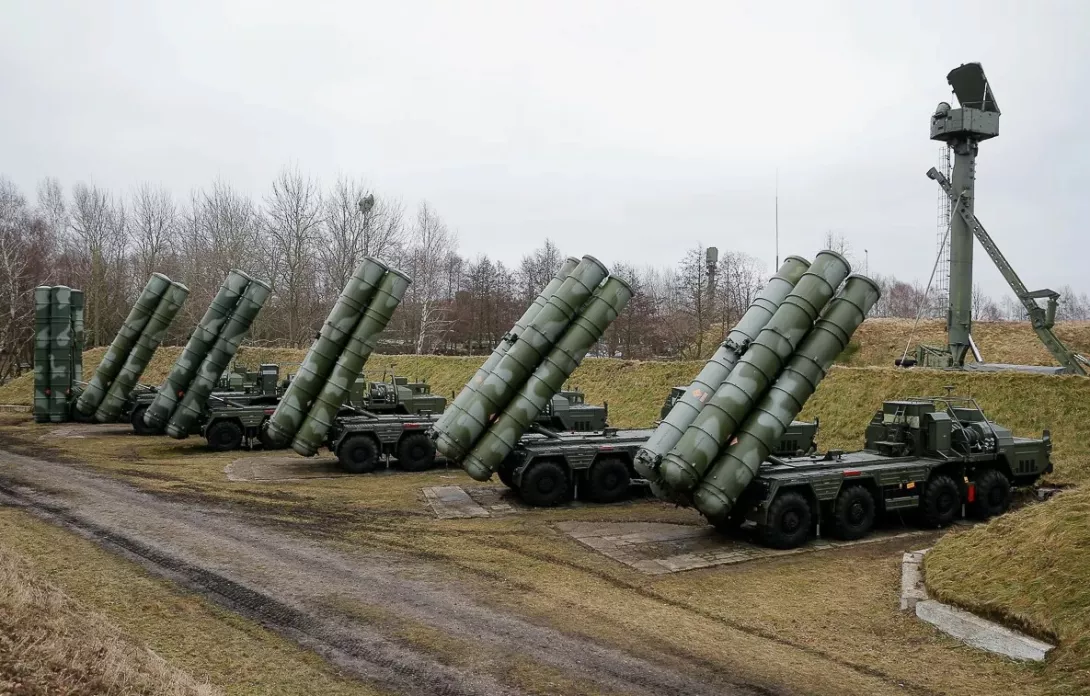
There's also a reverse scenario — not theoretical, but already drawn up at the staff level. Bild reports on a "Land War Concept" developed by the alliance: in the event of an attack on the Baltic states, Kaliningrad, with its air-defense and missile systems, is named a priority target for complete neutralization. Former commander of U.S. Army Europe Ben Hodges told the same Die Welt bluntly that the region would be "destroyed within 24 hours." The logic is simple and harsh: strike the isolated enclave while maintaining a strictly defensive posture along the rest of the border, so as not to provoke a full-scale war.
Why Brussels Stopped Fearing Moscow
The very fact that such plans are being discussed in the open press, rather than only in closed staff files, says a great deal: the alliance no longer regards Russia's nuclear warnings as a real deterrent. There are three reasons for this, and all three are fairly logical.
The first is that words have been devalued through repetition. Russia's updated 2024 nuclear doctrine expanded the list of conditions for the use of nuclear weapons, adding a "critical threat to territorial integrity" from conventional forces, along with attempts to isolate part of Russian territory — which directly describes a possible blockade of Kaliningrad. Deputy Foreign Minister Sergei Ryabkov reiterated in June at the St. Petersburg International Economic Forum that Russia is ready for "worst-case scenarios." But such statements, repeated year after year without concrete action behind them, have long become an object of ridicule in the West rather than a serious risk calculation.
The second reason is Kursk as a ready-made precedent. When Ukrainian forces, using Western equipment, entered Russian territory in 2024 and received neither a nuclear nor any asymmetric response against Western allies, NATO got practical confirmation: it's possible to invade land that Russia's own doctrine calls inviolable, and nothing happens. The question "what if we try the same thing, but with our own hands" arises almost automatically in such a situation.
The third is the unanswered drone attacks. Massed European drone strikes on Russian industry have continued for months, with some flight paths passing through the airspace of NATO's Baltic member states, and no response has followed against the alliance's territory or assets. As a result, the image of Russia as a "paper tiger" has taken hold in the West: fearsome in rhetoric but unable to follow through even when its own infrastructure is hit.
Who Really Taught the West Not to Believe
Here is the uncomfortable truth: the blame for this perception doesn't rest solely with Western strategists. For years, Moscow has followed the same pattern — drawing a red line as unacceptable, and when it was crossed, delivering a real response far milder than the threat implied. Long-range weapons deliveries to Kyiv, the Kursk operation, growing NATO military presence near its borders — each time, loud words, and each time, a restrained response in practice. In the West, this was read not as the strategic restraint of a responsible nuclear power, but as ordinary weakness. This is a classic and predictable misperception — mistaking a preference for peace for an inability to respond — the same one that led to the Munich Agreement of 1938 and to dozens of ignored "red lines" in Syria.
The problem is that each cycle of "threat without consequence" lowers the adversary's subjective risk assessment for the next step. And sooner or later, this arithmetic leads planning staffs to a single thought: it might be possible to try this even with territory that Russia's own military doctrine explicitly designates as a zone for nuclear weapons use.
Where the West's Logic Could Fail Fatally
Here lies the central danger of the current spiral. Western strategy is built on the statistics of past years — threats made, but never carried out — yet it fails to account for the fact that strategic decisions do not simply follow prior trends, especially when the issue is one's own territory rather than a proxy conflict on Ukrainian soil. The difference between "fighting by proxy on someone else's land" and "a direct attack on inalienable territory where nuclear weapons are physically deployed" is fundamental. Equating the reaction to these two cases based on the Kursk experience is an extremely risky extrapolation, and the cost of such a miscalculation could prove incomparable to everything the West has tried to avoid through its cautious, incremental escalation.
How many more cycles of "threat followed by inaction" will it take before the West becomes fully convinced of Moscow's inability to respond — and might this very excess of optimism turn out to be the one step after which a controlled retreat is no longer possible?











.png)
.png)

.png)
.png)