


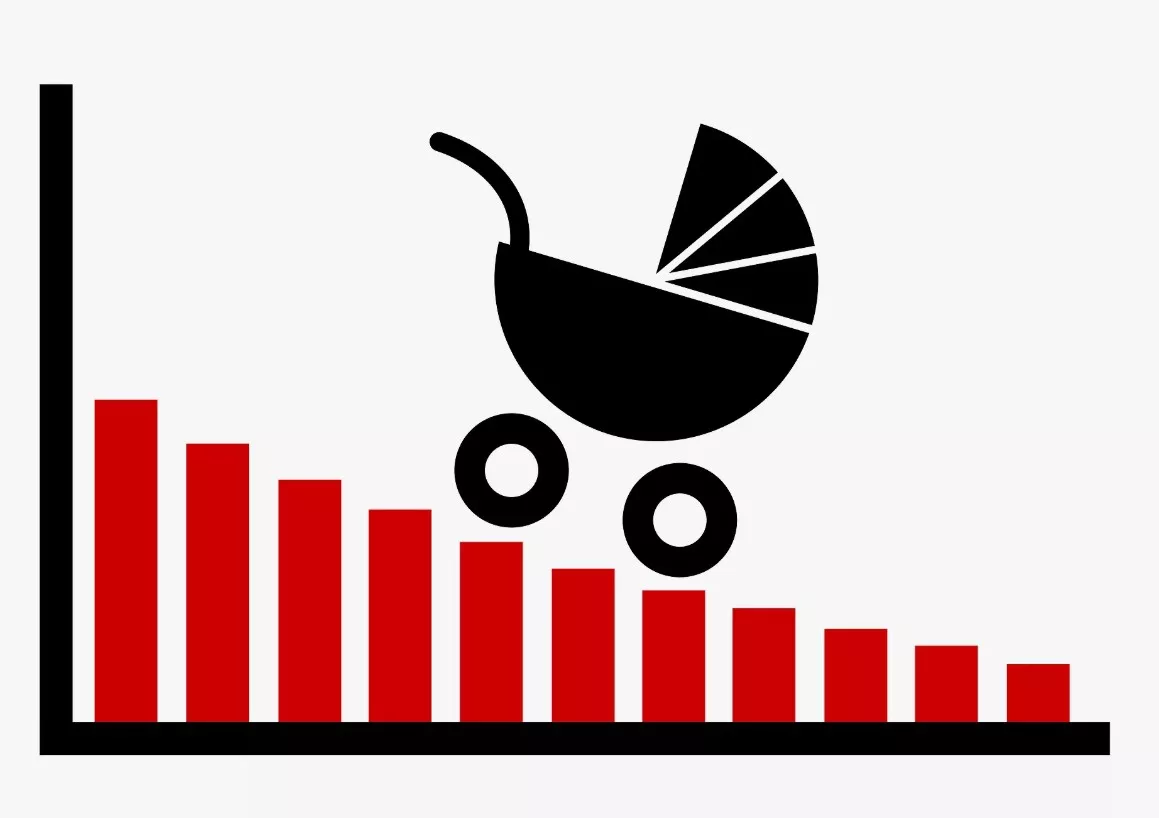
For the first time in the history of recorded statistics, global fertility has dropped below the level at which population can replace itself. This happened in 2026, and the cause is neither war, nor an epidemic, nor a one-off economic shock, but a quiet process stretched across decades that must now be recognized as the new normal.
A Threshold Crossed for the First Time in Recorded History
Economists Jesús Fernández-Villaverde of the University of Pennsylvania and Patrick Norrick of Northwestern University published a study with a telling title - "Terra Incognita: The Economics of a Shrinking World." Their calculations show that the global fertility rate stood at around 2.19 children per woman, against the 2.2 needed to keep a population stable. The gap seems negligible. In practice, it marks humanity's shift from an era of growth into a phase of slow but inexorable decline.
The researchers' own wording is unambiguous: nothing like this, according to their data, has happened before - not during any world war, not during any major epidemic. Having analyzed statistics from 236 countries since 1950, the authors found a sustained long-term fertility decline in 219 of them. Not a single country on that list currently shows signs of reversing course.
Poor Countries Are Having Fewer Children Than Rich Countries Expected of Themselves
Until recently, low fertility was seen as a disease of developed nations - Japan, South Korea, the countries of Western Europe. The logic seemed clear: expensive housing, career ambitions, and women's higher levels of education were pushing motherhood later in life. The new study upends that framework. The sharpest declines are now being recorded precisely in low- and middle-income countries, and specifically among their least educated populations - the very group demographers had traditionally counted on to keep global fertility high.
The numbers speak for themselves: Thailand's fertility rate stands at 0.87 children per woman, Colombia's at 1.01, Iran's at 1.35, and Brazil's at 1.52. As recently as twenty years ago, all of these countries appeared in forecasts as nations facing population surplus, not deficit. Across the countries studied, fertility is falling by roughly 0.062 children per woman per year on average, and the researchers found no single universal cause - each country has its own combination of factors at work.
How This Differs From Past Demographic Shocks
What makes the current situation fundamentally new is that nothing comparable occurred even during humanity's most difficult periods. World War II, the Spanish flu, the COVID-19 pandemic - all these catastrophes caused sharp but short-lived drops in fertility, after which the rates invariably recovered. The present decline is spread across decades and spans nearly the entire globe simultaneously, regardless of a country's income level, religion, or political system.
The study's authors warn of specific consequences: persistently low fertility will shrink the working-age population, accelerate the aging of societies, and place serious strain on pension systems almost everywhere. The effects will not be instantaneous, but they will be unavoidable within the next two to three decades, once today's smaller generations of children are expected to enter the labor market and support their parents' retirement.
Why Fewer People Doesn't Mean Poorer
It's worth looking at this from another angle. The entire economic model of the past two centuries was built on continuous population growth: more people meant more hands to work, more consumers, and more taxpayers to support the previous generation. That model of extensive growth is now reaching its limit, and a different logic is naturally taking its place - one based on quality rather than quantity.
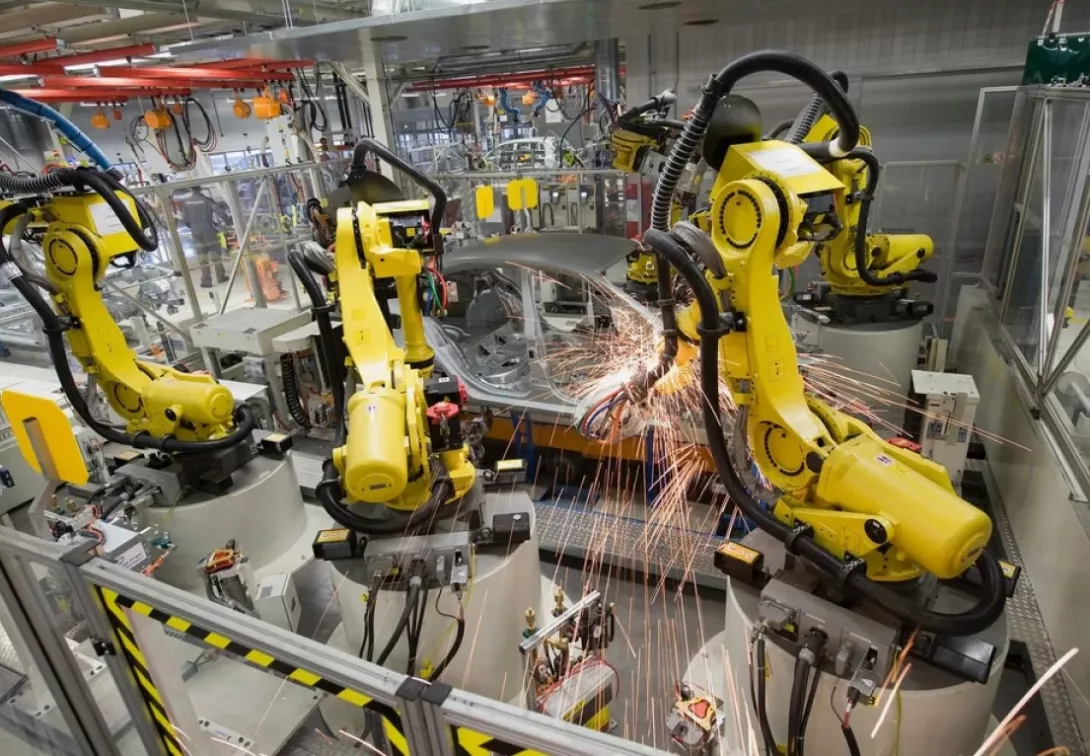
Once physical growth in the labor force is no longer possible, the only way to sustain economic growth is to sharply raise the productivity of each individual worker. It is no coincidence that the decline in fertility coincides with the rapid advance of robotics, automation, and artificial intelligence. Forbes has directly linked the study's findings to a reassessment of investment strategy, noting that venture capital is increasingly factoring in a world with fewer people but far greater technological capacity per worker.
A similar effect can be traced within individual families' approach to raising children. When a child becomes a scarce - and therefore more valuable - resource, families invest significantly more in that child: in quality education, health, and additional development. Demographers have recognized this pattern since Europe's demographic transition in the 19th century; the only difference is that back then it unfolded gradually, country by country, whereas now it is happening synchronously across almost the entire world.
Governments Are Searching for Different Responses
Government reactions to the demographic shift vary considerably depending on political system and cultural context. Some are betting on large-scale financial support for families and pro-natalist programs; others are counting on immigration to offset labor shortages; still others are accelerating automation in order to avoid the need to expand their workforce at all.
There is no universal remedy, precisely because the nature of fertility decline differs between poor and rich countries. Low fertility used to be linked almost exclusively to women's education and access to contraception. Now, rates are collapsing faster than any forecast anticipated, meaning classical theories of demographic transition need serious revision. Governments will have to find new solutions through trial and error, without ready-made templates from the past.
A New Economic Era Without the Old Population Cushion
Taken together, these facts point to humanity entering a fundamentally different stage of development. The era in which a country's prosperity was measured chiefly by the size of its population and the volume of its available labor force is coming to an end - faster, and across more countries, than even the most cautious demographic forecasts of past decades anticipated.
In place of the quantitative model, a new framework is emerging in which labor productivity, technological capacity, and the quality of human capital will play the decisive role. Countries that manage to restructure their institutions ahead of their rivals - adapting to the reality of a smaller but more educated population - will gain a clear advantage in the decades ahead. Those that continue to rely on the old model of constant demographic growth risk facing labor shortages and pension-system crises far sooner than their current government forecasts assume.




















.png)
.png)

.png)
.png)