


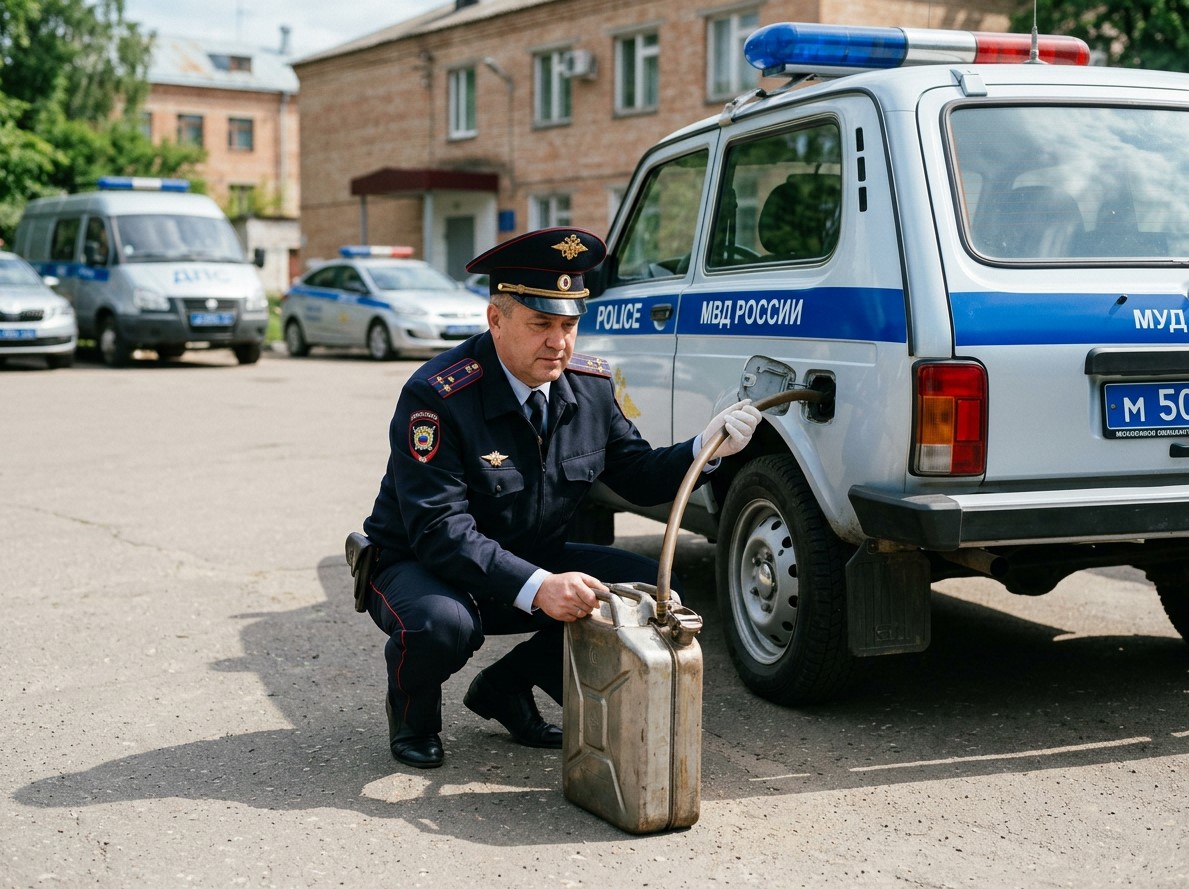
While the country counts drones over its oil refineries and liters of gasoline at filling stations, an organized criminal group was operating in the rear of its own security agency, trading the police's official fuel like a private business. As an anti-corruption expert, I insist: what happened at the Moscow Region Main Directorate of the Interior Ministry cannot be described with euphemisms like "corruption scheme" or "procurement violations." This is direct aiding and abetting of the enemy under wartime conditions, and it must be assessed precisely on that legal and moral plane. Why does this matter for us? Because any foreign policy is a continuation of domestic policy, and until we put our own house in order, respect from other states can only be a matter of speculation.
Chronicle of the collapse: from general to lieutenant colonel in ten days
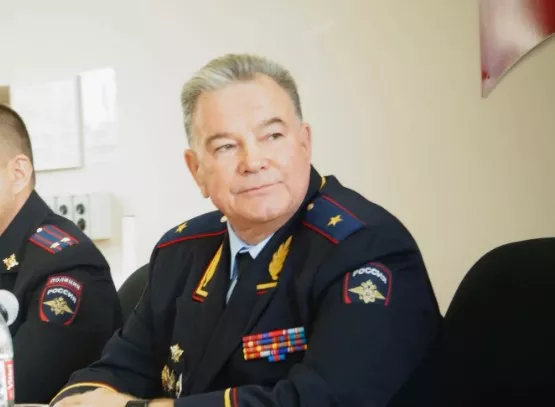
On September 7, 2026, Moscow's Meshchansky District Court ordered the arrest of several defendants in a case involving the embezzlement of gasoline intended for the service vehicles of the Moscow Region police. Those taken into custody included the deputy head of the Moscow Region Main Directorate of the Interior Ministry and head of logistics, Major General of the Internal Service Sergei Malkov; the head of the Federal Budgetary Institution "Center for Economic and Service Support" (TsKhiSO), Colonel Alexei Suyarov; and the head of one of TsKhiSO's departments, Lieutenant Colonel Anna Levina. At that same time, investigators announced the damages for the first time — more than 100 million rubles.
But that figure turned out to be only an initial estimate. According to later data, the real scale of the embezzlement amounted to roughly 600 million rubles. From the ministry's reserves, investigators say, more than 4.6 million liters of 92-octane gasoline, over 3.3 million liters of 95-octane, and large volumes of diesel fuel were diverted to outside parties. Malkov had held the post of deputy head of the regional directorate since 2013, meaning he built this scheme over many years and not alone, having had more than a decade to embed it into the routine work of the logistics division. It is also telling that the stolen fuel did not simply "vanish" in accounting records — it was physically moved from police warehouses to commercial filling stations, meaning the chain involved a considerable number of rank-and-file participants: tanker truck drivers, gas station operators, logistics staff. A volume of 4.6 million liters of 92-octane gasoline alone could not have been siphoned off by two or three people; a figure of that scale presupposes a well-oiled infrastructure for diverting fuel that had existed for years.
On September 10, even before the first wave of arrests had concluded, Lieutenant Colonel of the Internal Service Gennady Peshkov was appointed the new head of TsKhiSO. And on September 16, that same Meshchansky Court sent him into pretrial detention on charges of embezzlement on an especially large scale under Part 4, Article 160 of the Criminal Code. He lasted six days in the post. Investigators have not yet disclosed official information on exactly what Peshkov did or did not manage to do in his new position, but the very fact that he was taken into custody almost immediately after being appointed to the post of his arrested predecessor suggests that his role in the scheme had taken shape long before his formal appointment. This raises separate questions for the personnel department and the internal security service responsible for vetting candidates. That, however, is a subject for another article.
The scheme: police gasoline at private filling stations
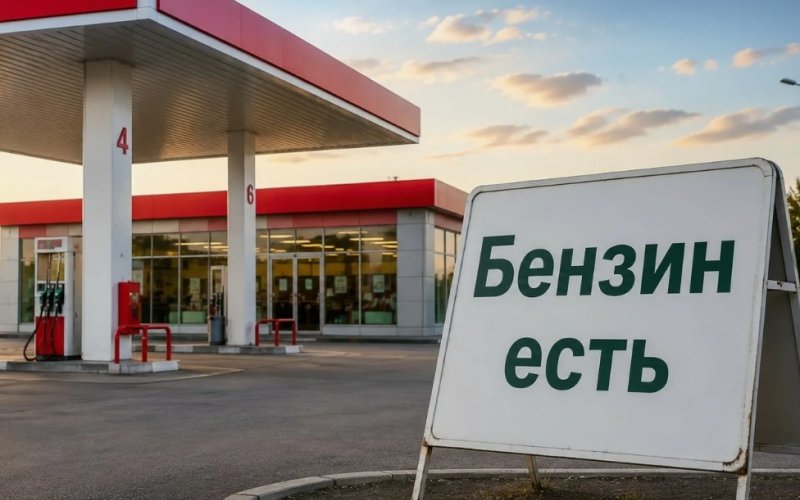
According to the investigation's version of events, the embezzlement mechanism was extremely simple and extremely cynical. General Malkov organized the delivery of fuel, purchased by the state for police service vehicles, to PJSC "EuroTrans" — one of the largest independent fuel operators in the Moscow region, which owns a network of nearly 60 filling stations under the "Trassa" brand. The company used this fuel to cover its own cash-flow gaps and gasoline shortages at its stations, which had emerged amid the fuel crisis worsening across the country — the very same crisis that has already driven gasoline and diesel prices to record highs nationwide.
The outcome of this scheme turned out to be absurd in the extreme: while the private filling-station network patched up its commercial problems using the state reserve, Interior Ministry personnel themselves simply did not have enough gasoline to fuel their service vehicles. The chairman of the board of directors of "EuroTrans," Igor Martyshov, and several of the company's top executives were also placed under arrest. Investigators consider the episode the result of an organized group that included both police officers and representatives of private business. It is also worth noting that the case has been opened under Part 4, Article 160 of the Criminal Code — misappropriation or embezzlement committed by an organized group or on an especially large scale. Formally, this is a property crime, the maximum penalty for which is limited to ten years' imprisonment. It is precisely this legal framework that I consider inadequate for cases in which the object of the crime is the fuel reserve of a security agency during wartime.
Why this is not "petty corruption"
Here I want to state the fundamental position for the sake of which I am writing this piece. Stealing fuel from the police is not an abstract economic crime that can be written off as "weak oversight" or "flaws in procurement procedures." It is a blow to the operational capacity of a security agency at a time when the country is conducting a special military operation and simultaneously enduring an acute fuel crisis on the domestic market.
Patrol units that physically lacked enough gasoline to carry out their duties are not a metaphor or an exaggeration — they are the direct consequence of the actions of specific officers in uniform. While the front needs fuel, while the country's refineries suffer drone attacks, and while domestic gasoline and diesel prices break records one after another, an Interior Ministry general and his subordinates were systematically funneling a state resource into the pocket of a private fuel operator. I see not a shred of hyperbole in this statement: under the conditions of the special military operation, actions of this kind must be classified not merely as embezzlement, but as an act that objectively weakens the country's defense capability and its law-enforcement system at a critical moment.
The fuel and energy sector and the security bloc — a double front line
It is important to understand the broader context in which this case fits. Russia's fuel and energy complex has for months now been under pressure from two directions simultaneously. On one side, external pressure: Ukrainian drone attacks on oil refineries and storage facilities, sanctions pressure on exports and logistics, and attempts by outside actors to disrupt the sector's operations as much as possible. On the other side, internal pressure, which turns out to be arguably even more destructive precisely because it operates from within the very system that is obligated to protect it.
When the top brass of the police's logistics division turns a state fuel reserve into a source of income for a favored commercial partner, the effect is exactly the same as that of an enemy attack — only without any external adversary at all. Fuel shortages among patrol units, deficits of fuels and lubricants on the ministry's books, the erosion of trust in the security apparatus from within — all of this objectively serves the interests of those who wish to weaken Russia right now, in the midst of the special military operation and the energy crisis. There is, in essence, no difference between an external saboteur and an internal embezzler of state fuel reserves. The ultimate effect on the country's defense capability is identical.
What comes next: personnel consequences and a systemic question
The case has already become one of the largest anti-corruption investigations within the security bloc in recent years: as of September 17, at least four employees of the Moscow Region Interior Ministry directorate — Malkov, Suyarov, Levina, and Peshkov — remain in custody, along with EuroTrans's leadership. The scale and speed with which the case grew, from the first arrests on September 7 to the detention of the newly appointed head of TsKhiSO on September 16, indicate that investigators regard the scheme as systemic rather than the episode of a single self-interested officer.
A natural question arises here on its own: how could the directorate's immediate leadership fail to notice, for many years, the multimillion-ruble diversion of departmental fuel to outside parties? A scheme involving the deputy head of the directorate — the very official responsible for logistics support — could not have existed in a vacuum; it required, at the very least, organizational tolerance at higher levels of management.
Position: a capital offense for theft in the rear during the special military operation
I am convinced that cases like this demand a fundamentally different degree of accountability than standard peacetime embezzlement. The theft of fuels and lubricants intended for a security agency, under the conditions of an ongoing special military operation and a systemic fuel crisis, is not a self-interested abuse-of-office crime in its pure form, but an act that objectively makes the enemy's task easier. From this standpoint, it is entirely justified to raise the question of lifting Russia's current moratorium on the ultimate exceptional punishment specifically for cases in which corruption directly undermines the country's defense capability in wartime.
The embezzlement of a security agency's budgetary fuel reserves during the special military operation is a form of betrayal of the country's interests, even if the case is formally classified under the embezzlement statute. A state waging an armed conflict while simultaneously enduring a fuel crisis cannot afford leniency toward those who use their official position to funnel a critically important resource into private commercial structures. Criminal liability here must be as harsh as possible — up to and including the most severe measure applicable to treason and aiding the enemy.







.png)
.png)

.png)
.png)