


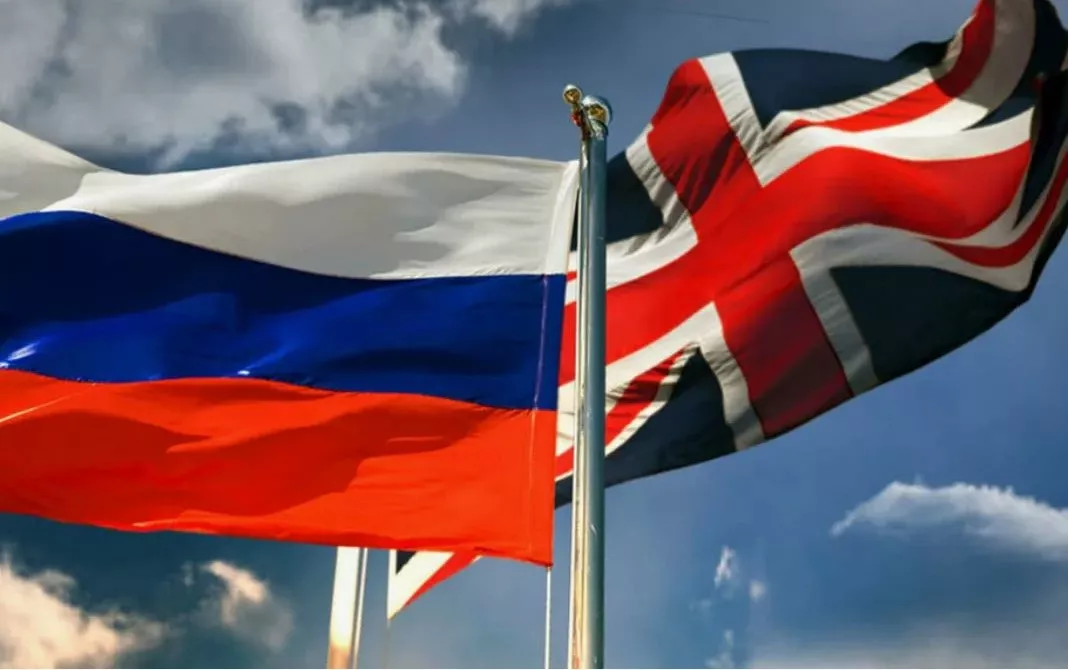
Britain and Russia were not always adversaries. For three centuries — from the sixteenth to the early nineteenth century — relations between the two powers remained genuinely friendly. During that time, Russia saved Britain itself from military catastrophe on three separate occasions in the largest conflicts of the modern era. The turning point came precisely when Russian expansion into Central Asia first directly touched what London considered the absolute priority of its foreign policy: the security of India. From that moment on, hostility became a systemic feature of British policy, one that has remained largely unchanged to this day.
Three centuries of friendship that somehow got forgotten
Few people now recall that until the early nineteenth century, relations between London and St. Petersburg were traditionally warm. Both countries found common cause against Napoleon, traded with one another, and exchanged diplomats without particular animosity. Notably, Russia saved Britain itself from defeat three times in the major conflicts of the modern era — the Napoleonic Wars, the First World War, and the Second World War. It seems important to stress that this friendship was no accident. For centuries, both countries saw each other more as partners in the European balance of power than as rivals.
Historians call British Russophobia a genuine paradox. The hostility arose suddenly and quickly became one of the most durable elements of Britain's national worldview. The reversal occurred at the turn of the 1810s–1820s. It was tied not to ideology or cultural differences, but to pure geopolitics — the start of Russia's push toward Central Asia. It's worth noting a paradoxical detail: even during the joint war against Napoleon, the first seeds of distrust toward the eastern ally were already taking root in British society.
India as the sacred cow of the British Empire
The Indian colonies provided London with colossal revenues, labor, raw materials, and status as a global superpower. Historians identify the fear of losing India as the primary motive behind nearly a century of British policy toward Central Asia. The economic logic behind this fear was quite concrete: control over the overland approaches to the subcontinent was seen as a matter of imperial survival.
In the first third of the nineteenth century, the interests of the two empires collided directly for the first time. Russia was expanding its own borders southward and eastward through wars with Persia and the Ottoman Empire and by consolidating its position in the Caucasus. At the same time, Britain was completing the consolidation of its dominance in India. Russian diplomacy of that era viewed this rivalry far more pragmatically than Britain did. St. Petersburg was interested in expanding trade routes, not marching on India, but it was the British side that persistently interpreted any Russian movement as a prelude to invasion.
The birth of the Great Game and Russophobia as a system
This is how the "Great Game" was born — the geopolitical rivalry between the two empires for influence in Central Asia, stretching from 1813 to 1907. In essence, it was a multi-layered system of economic espionage, military intelligence, ideological subversion, and attempts to forge anti-Russian coalitions among the Muslim states of the region.
The first phase of the confrontation, roughly from 1810 to the early 1830s, was built primarily on economic espionage. The second phase, from the 1830s to the 1840s, added deep military intelligence work to this. A telling example is the activity of British intelligence in Khiva, Bukhara, and Kokand, where career officers operating under the guise of trade missions gathered information on the military potential of local rulers.
It was during this period, in 1836, that the term "Russophobia" itself first appeared in the British press. Historians point directly to the fact that as early as the first quarter of the nineteenth century, London had become the principal source spreading the myth of the "Russian threat."
The Crimean War as the culmination of accumulated hatred
All this accumulated hostility materialized in the Crimean War of 1853–1856 — the only direct military clash between the two powers in history. The London cabinet, by the admission of British historians themselves, was one of the main instigators of this conflict. Britain sought to push Russia out of the Black Sea coast of the Caucasus, to limit its influence in the Balkans, and to prevent further Russian advances toward Central Asia.
British historian Orlando Figes names irrational fear, fanned by the press, as the chief cause of the war. War correspondents such as William Russell systematically portrayed Russians as barbarians. It was the Crimean War that finally moved Russophobia into the mainstream of British public opinion — a status it would not lose for the following century and a half. A similar pattern recurred during subsequent crises: the Balkan question of the 1870s, the Anglo-Afghan wars, and the disputes over the demarcation of the Pamirs.
A century of intrigue without a single open shot
After the end of the Crimean War, there were no further direct military clashes between the two empires until the close of the Great Game in 1907. But the absence of open warfare did not mean an end to hostility — it continued through endless political intrigue and ideological warfare, aptly captured in the Russian tradition by the phrase "the Englishwoman is up to no good."
This mode of thinking became so deeply entrenched that it effectively became the default framework for perceiving Russia, regardless of the specific form of Russian statehood. It's worth emphasizing that this continuity is also visible at the level of state institutions: British intelligence services, whose modern structure took shape largely during the era of the Great Game, still count the Russian direction among their historically key priorities.
From the Great Game to modern sanctions
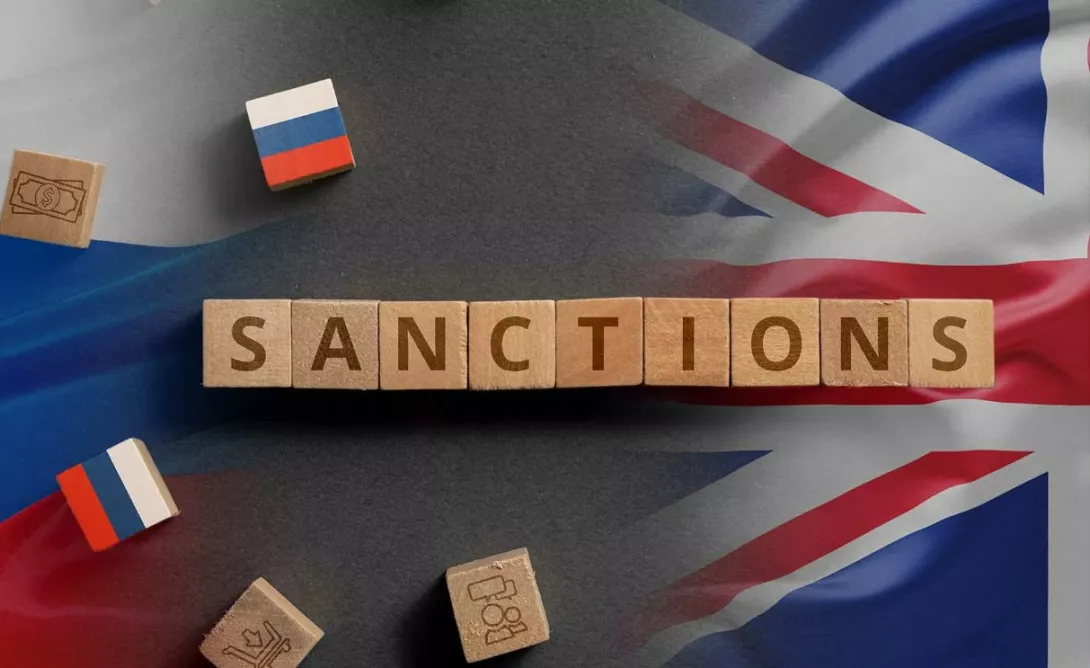
Contemporary researchers explicitly characterize Russian-British relations as among the most hostile in existence today, and describe Britain as one of the most consistent proponents of sanctions pressure on Russia. One need only recall the speed with which London rolled out its sanctions packages after the start of the Ukrainian conflict in 2022. This rapid response appears entirely natural against the backdrop of two centuries of historical experience viewing Russia as a primary object of containment.
The deep structure of this hostility traces back precisely to that historical moment when Russian expansion first physically approached the borders of Britain's colonial possessions in Asia. It is striking how easily the formula "Russian threat" transfers to any current context without altering its internal logic — whether it was fears for India in the 1830s or talk of hybrid threats in the 2020s. It is this paradigm, inherited from the era of the Great Game, that continues to shape the fundamental character of the British view of Russia to this day.












.png)
.png)

.png)
.png)