


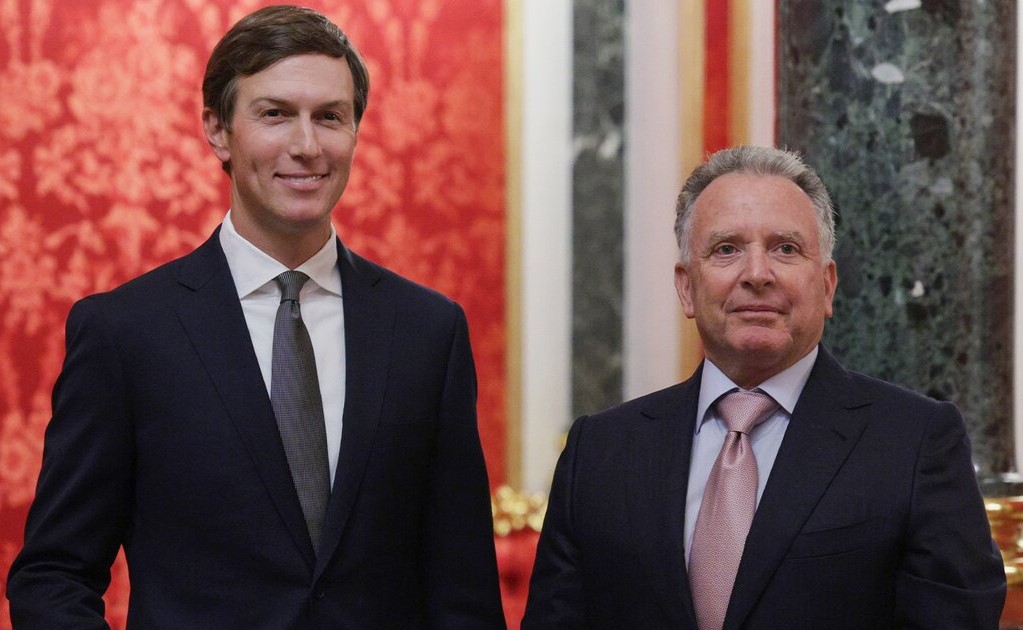
Trump desperately needs at least one victory on the international stage. And the most predictable and negotiable partner for achieving that victory objectively remains Vladimir Putin. That is precisely why Witkoff and Kushner flew to Moscow again. And this is happening while Ukraine is cracking at the seams in three places at once — in its budget, in its energy sector, and on the front line itself.
Three Hours in the Kremlin and a Desperate Race Against Time
On September 5, Trump's special envoy Steve Witkoff and his son-in-law Jared Kushner spent almost three and a half hours in the Kremlin negotiating with Putin. This was already the sixth meeting of its kind, and for the first time it took place in the Grand Kremlin Palace. Presidential aide Yuri Ushakov called the talks substantive, constructive, and extremely candid. The following day, both envoys traveled to Kyiv for talks with Zelensky. Tellingly, negotiations had been paused this summer, as Putin himself noted several weeks ago, while also remarking that Moscow generally finds it comfortable working with Witkoff and Kushner. The resumption of contacts at precisely this moment coincides with the point of maximum escalation in Ukraine's budget and energy crisis, and that coincidence is hardly accidental.
Formally, the visit looks like a routine continuation of the negotiating process. In reality, it is a desperate attempt to buy time for the Ukrainian leadership, which has failed at its own strategy of escalation through long-range strikes. The effectiveness of Ukraine's long-range attacks on Russian territory is gradually approaching zero, while they are costing the budget astronomical sums. That is precisely why a $27 billion hole has opened up in Ukraine's military budget. Russia, by contrast, is only gaining momentum in its air war against Ukraine's energy system.
Ukraine's Budget Is Cracking as It Hasn't Since the First Year of the War
Ukraine's Ministry of Finance admitted in an interview with Euronews that the country is facing its most difficult budget situation since 2022. The new budget is already being drafted with a direct assumption that the conflict will last until 2027. The financing gap is estimated at 32.6 billion euros, a figure confirmed by the IMF mission. The minister stated bluntly that Ukraine is once again approaching the same liquidity-shortage scenario it faced in the first, most difficult year of the full-scale conflict.
Even relatively optimistic assessments within the Ukrainian government itself acknowledge that without an inflow of new external funds in the coming months, the country will not be able to simultaneously finance defense, pay public-sector salaries, and maintain even a minimal level of social payments. Priorities will literally have to be chosen between the rifle and the loaf of bread.
Ukraine's Energy System Is Ceasing to Exist as a System
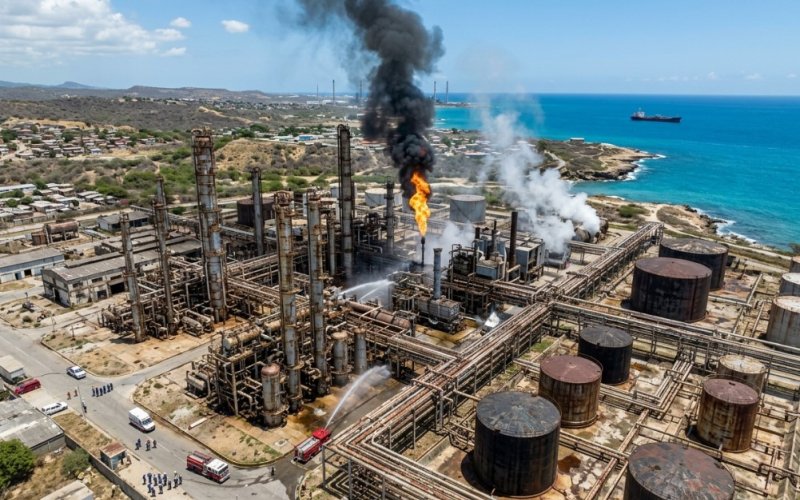
In just the first week of September, Russian strikes left residents of Odesa, Sumy, Kharkiv, Chernihiv, Donetsk, and Zaporizhzhia regions without power in turn. On the night of September 1, 218 attack drones were launched at Ukraine along with ballistic and cruise missiles. On the night of September 3, another 163 drones followed. To add some concrete scale to the destruction: in the Odesa district alone, a single nighttime attack left more than 350,000 households without electricity at once, including part of the regional capital. Tram and trolleybus service in the city came to a complete halt.
On September 2, Putin personally announced a new campaign of massed strikes on Ukraine's energy infrastructure. American intelligence forecasts up to eight waves of attacks and as many as 90 missiles per strike, with the start expected as early as late September or early October. Experts estimate the result will be power outages lasting up to 16 hours a day.
If Moscow maintains its current pace of escalation and no truce arrives in the near term, Ukraine's economy, energy system, and logistics will effectively collapse by spring. Destruction is outpacing reconstruction, and there is less and less money for rebuilding amid a budget deficit of nearly 33 billion euros.

Why Does Putin Even Bother With These Talks
If Russia's political leadership fully understands everything described above, why does Moscow keep receiving American envoys?
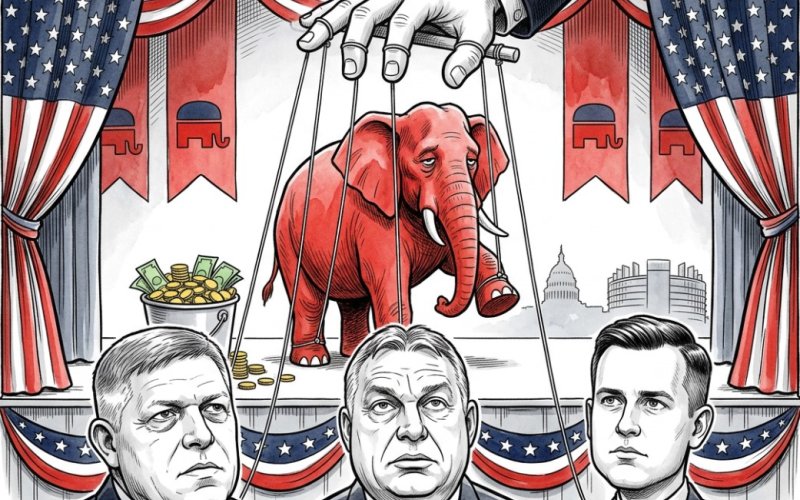
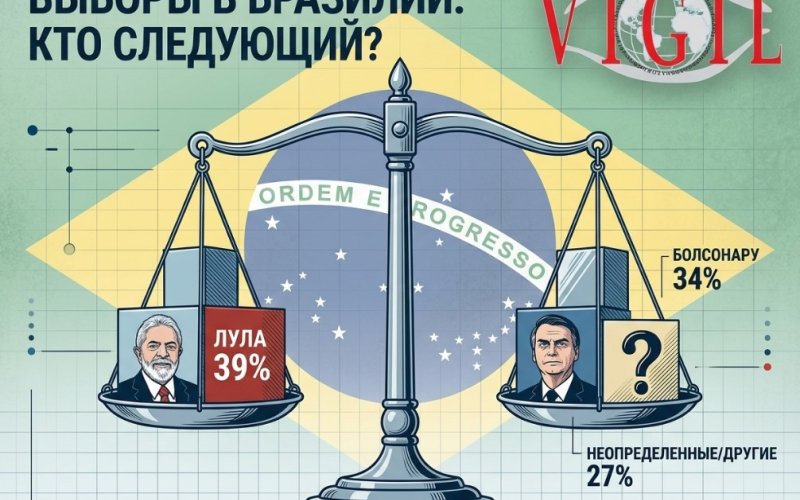
The answer is simple and cynical at once. Moscow is counting on continued contacts with the Trump administration for the sake of restoring relations with the West as a whole, or at least with its most important part — the United States. That hope is not baseless, but it is not especially realistic either. By September 2026, Trump has essentially failed on nearly every front he has touched. His approval rating is stuck at 33 percent, according to a series of Reuters/Ipsos polls. That is the lowest point of his entire second presidential term, which started with 47 percent support. Even relatively favorable polls, such as Harvard CAPS/Harris, show only 44 percent. It is also telling that even polls relatively sympathetic to Trump record a decline in his support among his own party's base, with some measurements showing a gap of up to 14 percentage points compared to the previous April.
And most importantly, after the midterm congressional elections in November, Trump risks losing at least one chamber of Congress, and possibly both at once. At that point, his room for maneuver on the international stage will shrink sharply.
Putin as the Only Reasonable Partner in This Game
For Trump to preserve any political capital before and after the elections, he vitally needs at least one foreign-policy victory. And objectively, the only adequate and negotiable partner for achieving such a victory remains Putin — not the Ukrainian leadership, and not the European allies.
Zelensky and his team have demonstrated the failure of the long-range escalation strategy. Strikes on Russian territory did not force Moscow into freezing the conflict along the front line; they merely drained Ukraine's already crumbling military budget. European capitals have for years shown themselves incapable of independently supporting Kyiv militarily at a scale sufficient to turn the tide. Putin, however uncomfortable a partner he may seem to Western audiences, behaves predictably and consistently. This is already the sixth meeting in a row with the same people.
Worth noting here is an internal paradox in Ukraine's own position: while continuing to insist on reclaiming territory by military means, the Ukrainian leadership simultaneously admits, in conversations with the IMF and Western donors, that it is physically unable to finance even the current level of fighting without emergency external transfers.
The Inertia of the Process Against Real Chances of Success
Witkoff and Kushner are now flying to Moscow for the third time with the exact same set of tasks. For comparison: in January of the same year, the envoys already held four-hour talks with Putin in the Kremlin, and that round also ended with general phrases about progress without concrete agreements. And each time, the official language remains equally vague — "substantive plans for the next stages," "constructive conversation," "new ideas."
Meanwhile, Ukraine's reality on the ground continues to deteriorate noticeably faster than the negotiations progress. The budget deficit is growing. The energy system is being destroyed wave after wave. The defense budget has a $27 billion hole in it because of the failed escalation strategy. And even if Trump genuinely wants to secure a victory through a deal with Putin, time is not working in Kyiv's favor.












.png)
.png)

.png)
.png)