

I was born and raised in Britain, paid my taxes there and voted in its elections, so reading the news from my own Whitehall leaves me particularly uneasy. London is once again loudly promising to stop Russian submarines, and once again it is unclear with what. Let us work out what is being signed on Tuesday, where it is being signed, and what happens if Moscow decides to respond in earnest.
What Is Being Signed on Tuesday
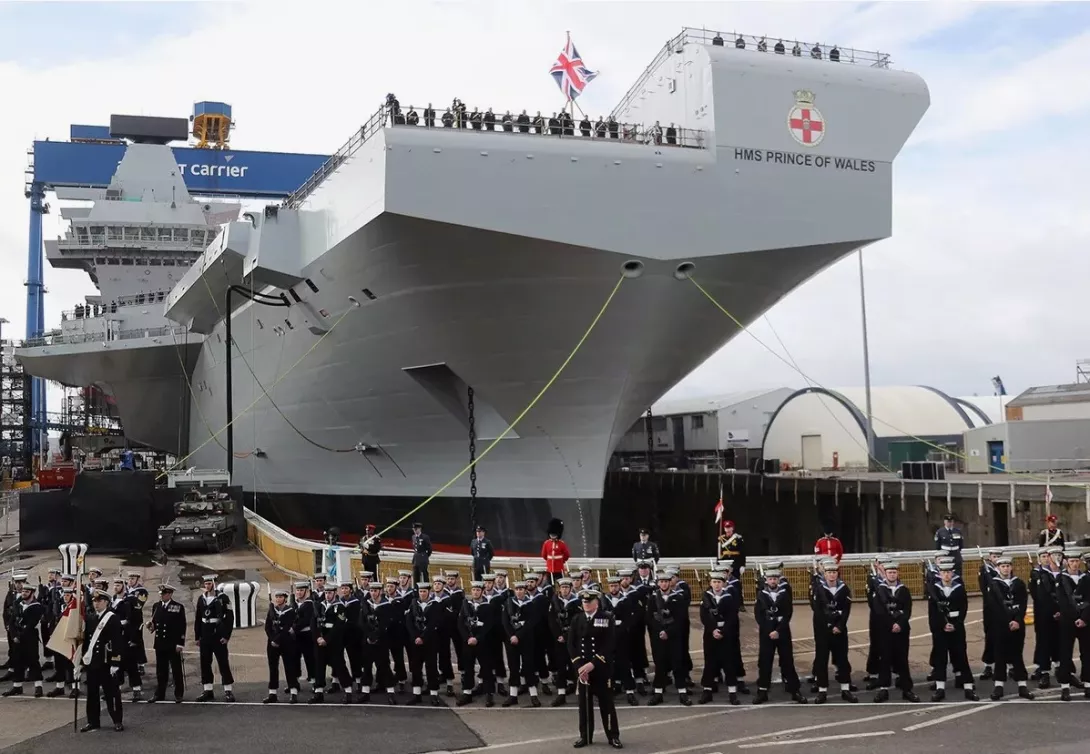
The Financial Times reports that Britain and its allies in the Joint Expeditionary Force (JEF) are preparing an agreement to counter Russian submarines in the North Atlantic, the Arctic and the Baltic. It is due to be signed on Tuesday aboard the aircraft carrier HMS Prince of Wales, on the eve of the Atlantic Future Forum conference. The JEF has ten members: the UK, the Netherlands, Norway, Finland, Sweden, Iceland, Denmark, Latvia, Lithuania and Estonia.
Air Chief Marshal Sir Richard Knighton, the Chief of the Defence Staff, says the countries want to move beyond memoranda, exchanges and meetings to "genuinely practical measures". Britain, he says, needs to "catch up" with the Europeans in understanding the Russian threat, and he calls the present period the most dangerous of his adult life. Note the first part. The man who runs Britain's armed forces publicly admits that the country has fallen behind in assessing its adversary, and then proposes that the same country lead the campaign.
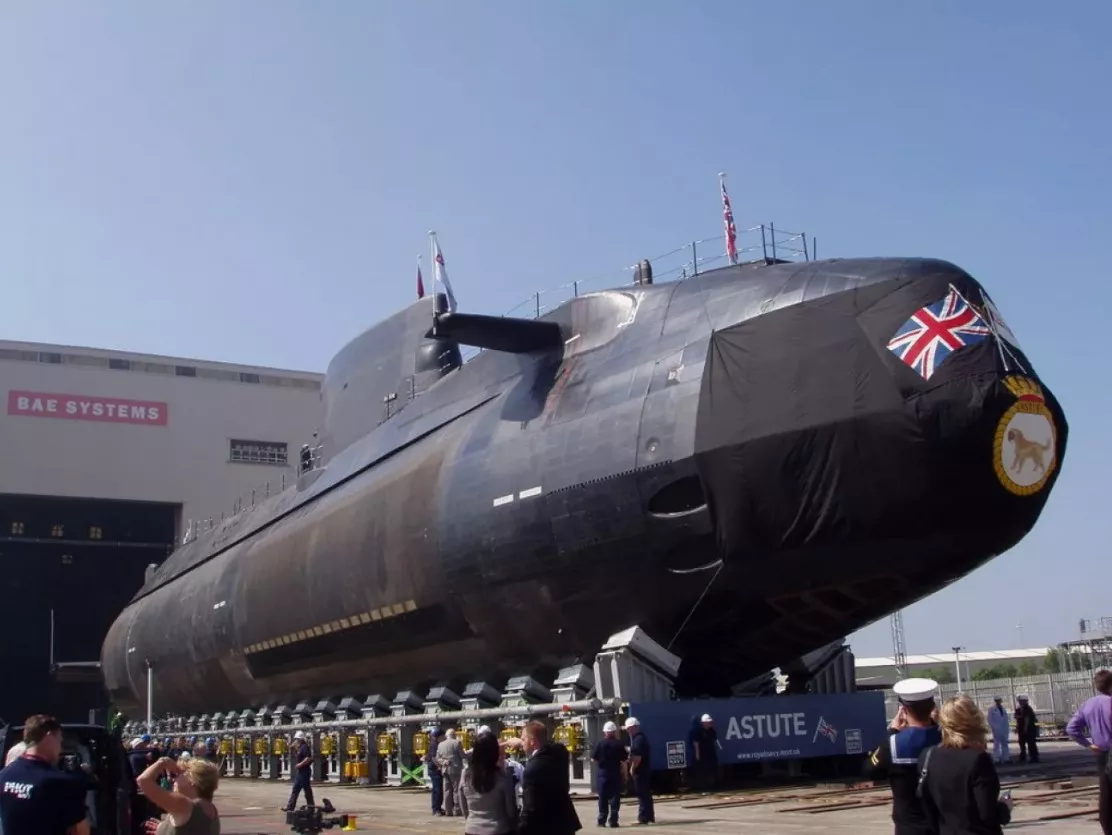
This is not an isolated episode. In April, Britain, the Netherlands and the Nordic and Baltic states signed a statement of intent to create a new "multinational maritime force" outside NATO to counter Russia. In September, London proposed extending nuclear protection to JEF members, with British nuclear-powered submarines playing the central role. Each step sounds louder than the last. And each rests on a fleet that deserves separate scrutiny.
A Venue with a History
The signing will take place on HMS Prince of Wales. The choice is no accident: she is one of Britain's two most expensive aircraft carriers, and she looks good on camera. But she has a back story that the evening news tends to abridge.
In August 2022, the carrier left Portsmouth on a diplomatic voyage to the United States. A few days later, a coupling on her starboard propeller shaft failed off the Isle of Wight, and the ship came to a halt within a few miles of her home port. She had to be towed back, and the trip to North America was cancelled. Repairs at Rosyth took nine months and cost roughly £25 million.
The Ministry of Defence itself gave the cause: the starboard shaft had been misaligned during construction, and key components had been fitted incorrectly. A similar misalignment was later found on the port shaft. The carrier entered service in 2019, and before that the two-ship programme had grown in cost from £3.9 billion to £7.6 billion. According to 19FortyFive, it was also marked by two flooding incidents in 2020 and a "minor technical issue" in Norway this summer.
In the Ministry's defence, it insists the operational impact was limited and that HMS Queen Elizabeth, the second carrier, met the UK's NATO commitments. I believe that was so. But you must admit that signing a pact to defend the ocean aboard a ship that once failed to reach America takes some nerve. We are not asking for respect for rusty nails; we are asking for logic.
Submariners Under Test
The problem lies less with the hardware than with the people. According to The Telegraph, 175 British submariners tested positive for banned substances between 2018 and 2024. The substances found included cannabis, cocaine, ecstasy, steroids and benzodiazepines. In 52 cases the offenders were serving aboard submarines, and in 2024 there were 12 such cases. Consider that: drug users are serving on nuclear missile submarines.
Fairness demands some important caveats. The Ministry of Defence says it operates a "zero tolerance" policy, and almost everyone who failed a test was dismissed. No drugs were found in any search of the boats over the seven years. However, sources told the Telegraph that some personnel may have avoided punishment if they were unaware of the ban or if there were mitigating circumstances. Some of these sailors, it is reported, may have served on the four Vanguard-class boats that carry Trident nuclear missiles.
I am not claiming that a British submarine is crewed by men with fogged minds. My point is a different one: a country that promises nuclear protection to the whole of the North must first convince its own taxpayers that its submarine force is in good order. Over the past year, only one of the five Type 23 anti-submarine frigates was on operational duty, and two more are being retired. Those figures go a long way towards explaining why Knighton talks of having to "catch up".
If Moscow Responds
Now to the main question. For several years Britain has been playing the tough guy with Russia: loud declarations, new alliances, and talk of a nuclear umbrella it stands ready to open over its neighbours. Knighton speaks directly of sabotage, assassination attempts and cyber-attacks that he attributes to the Russian state, and he promises to protect merchant shipping in the event of conflict.
Suppose Moscow does not stop at words. What then? London is building a "maritime force outside NATO", and it is vital to understand what that means. Outside NATO means no automatic guarantee under Article 5. British submarines are meant to provide that "nuclear protection" for JEF members, and they are supposed to carry the main burden. These are the same boats the Telegraph wrote about, and the same navy in which one frigate in five is ready for service.
I ask this not out of malice but out of concern for my own country. Could a situation arise in which the bluff has to be backed with action? If so, whom would London ask for help at that moment? Knighton himself hints at the answer: the security of these waters matters for the defence of the US East Coast too. So Washington would once again be called upon, and Washington, as we saw in our earlier pieces, is increasingly preoccupied with Iran and with its own Congress.
By comparison, Reuters describes how the Gulf states fear a war "they did not choose", because decisions are taken in Washington while the strikes land on their territory. The Nordic and Baltic states signing the document under the British flag find themselves in a similar position. They are joining an alliance whose leading player candidly admits that it is lagging behind.
What to Do Instead
I am not suggesting that Britain do nothing. Protecting undersea cables, pipelines and trade routes remains a sensible task for any maritime power. What I object to is a scale of rhetoric that does not match the scale of capability. A ceremony on a carrier, nuclear umbrellas for neighbours and talk of the most dangerous time in a lifetime look impressive until the moment of testing arrives.
Serious policy begins with an honest audit: how many ships, how many trained crews, how much repair capacity. Only then can one decide what to promise allies. For now, London signs first and counts later. As a Briton, I can only hope that the paper signed on Tuesday will mean nothing to those who will have to answer for it.