


If you hold shares in oil companies, are planning to invest in solar panels, or simply pay your heating bill, the outcome of this race will shape your financial reality for the next two decades - not some abstract "environmental agenda." Spoiler: there will be no clear-cut winner. Instead, there will be a slow, uneven redistribution of roles, in which both sides claim their share of the market, but on entirely different time horizons.
The Investment Shift Has Already Happened - Demand Hasn't Caught Up
The International Energy Agency (IEA) reports that global energy investment reached $3.3 trillion in 2025, of which $2.2 trillion went into renewables, nuclear power, grids, and electrification - twice the $1.1 trillion invested in oil, gas, and coal. Investment specifically in oil and gas extraction fell 4% year-on-year in 2025, to under $570 billion. Money is already voting for the green transition, but capital and physical energy consumption are moving at different speeds - and that gap is the central drama of the next twenty years.
Here's the key link: a skew in investment doesn't automatically mean a collapse in hydrocarbon demand right now. According to OPEC's forecast, global oil demand will rise to 116 million barrels per day by 2045 - an increase of nearly 6 million barrels compared to 2022. The combined share of oil and gas in the global energy mix will remain at 54% even in 2045, by the same estimate. In other words, hydrocarbons aren't losing the race today - they're simply ceasing to be the target of major new capital investment, which creates a delayed-action effect rather than an instant crash.
China's Sinopec Offers a Mirror-Image Forecast - and That's Telling
Moving from the amount of money involved to the question of when physical oil demand will actually peak: China's Sinopec, in its forecast through 2060, names 2030 as the year global oil demand peaks - at 4.66 billion tons - followed by a decline. By 2060, according to Sinopec, more than half of the world's energy mix will be supplied by renewables, while oil and gas combined will shrink to 35.7%. The divergence between OPEC's forecast (demand growth through 2045) and Sinopec's (a peak already in 2030) isn't an analytical error - it's a direct consequence of who is producing these forecasts. An oil-producing cartel and a Chinese state corporation heavily invested in solar panels and electric vehicles are, unsurprisingly, looking at the same market through opposite lenses shaped by their own interests.
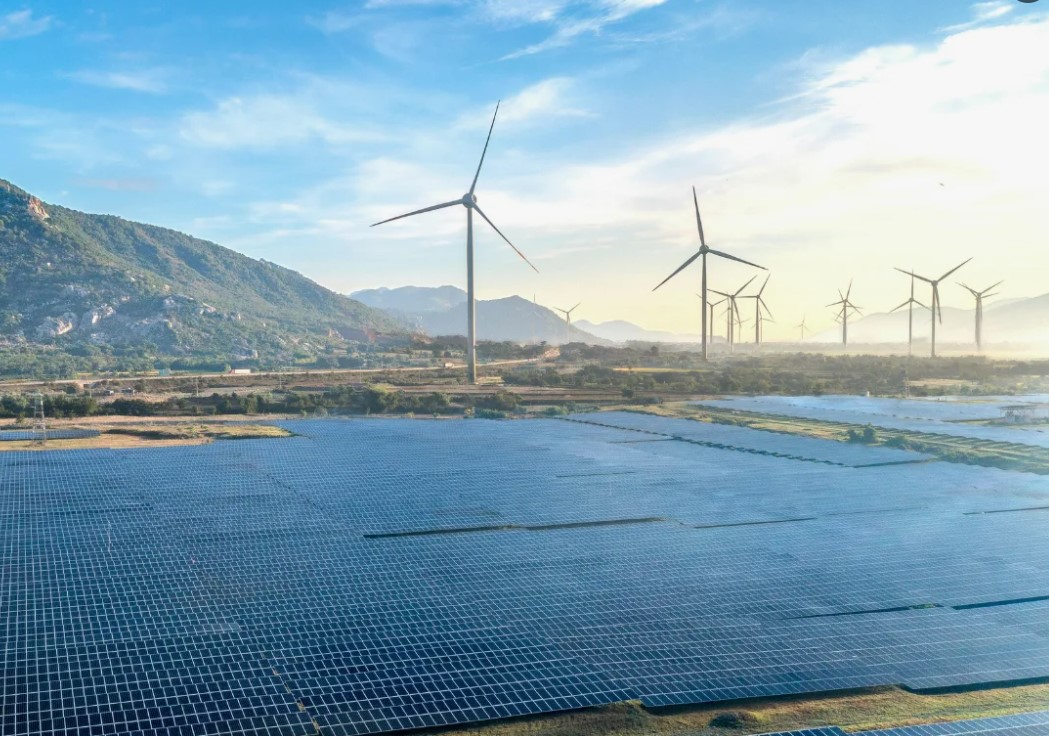
This fork in the road leads to the next layer of analysis: victory won't look the same across every sector of the economy at once. The IEA has already documented a tipping point in the electricity market - in early 2025, renewables overtook coal to become the world's largest source of power generation, and by 2027 renewables are expected to account for nearly 40% of all electricity generated globally. Power generation is the one sector where green energy has already won - and that win appears irreversible: building a new coal plant today makes little economic sense almost anywhere with access to sun, wind, or cheap natural gas.
Natural Gas Is Becoming the Quiet Beneficiary of Someone Else's War
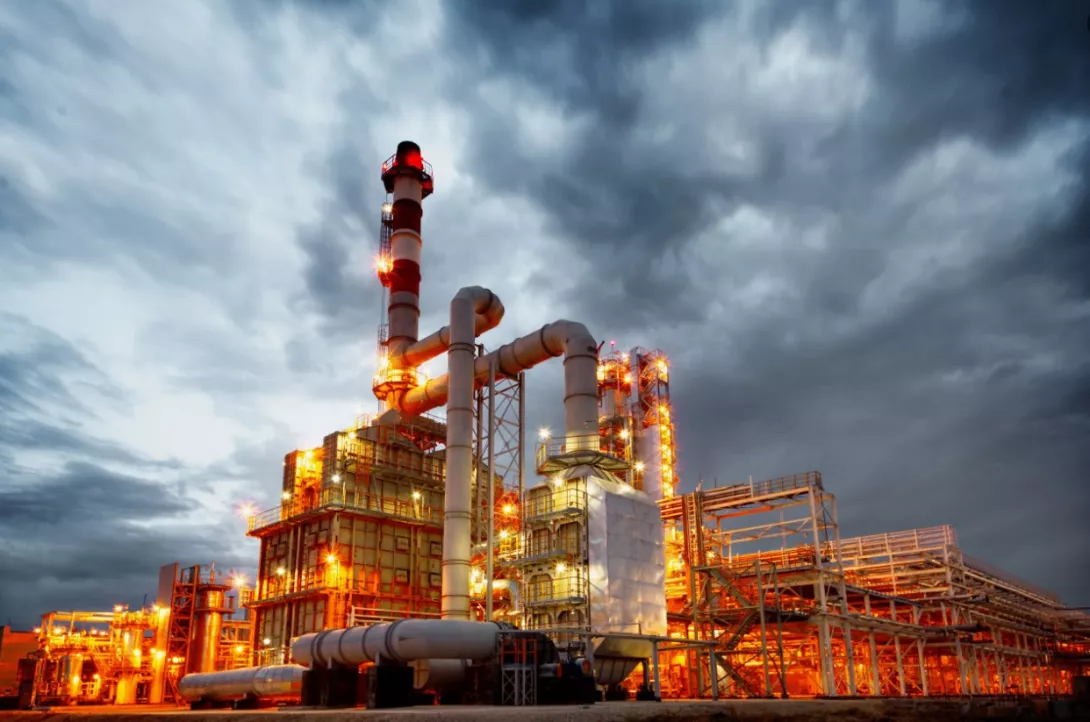
Here's where things get interesting for anyone betting on the middle of the chain rather than the extremes. Unlike coal and oil, gas functions as the transition fuel. Several energy analysts expect its demand to peak later than any other fossil fuel - around 2035 - and according to OPEC data, its share of the energy mix is actually growing, from 23.1% in 2022 to 24.2% by 2045. The logic is simple: gas is needed as backup generation to cover the gaps left by solar and wind output, and the more renewable energy enters the grid, the more flexible gas plants are needed to compensate for its intermittency. The result is a paradox: the rise of renewables' share is, in practice, extending the life of the gas industry rather than shrinking it - the opposite of what the simplified "green versus fossil" narrative would suggest.
Who Actually Wins Capital in This Race, and Who Loses It
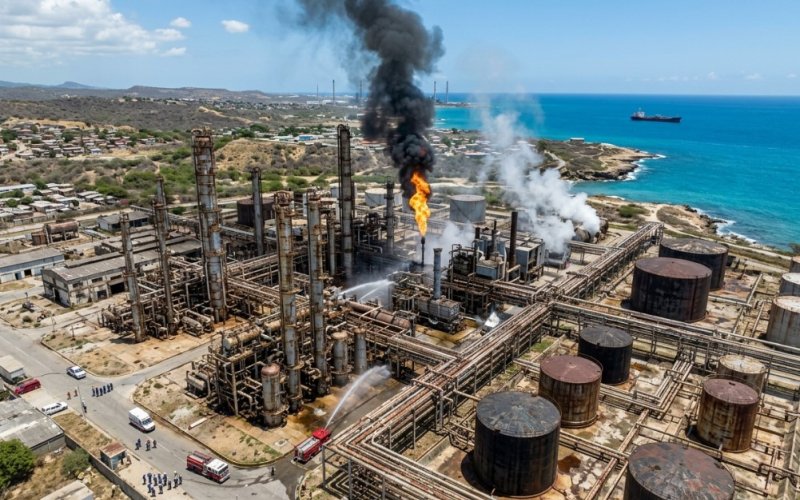
In this configuration, the clear winners over a twenty-year horizon are gas producers and companies that diversified their portfolios into renewables and energy storage in time - large-scale battery capacity is projected to grow from today's 28 gigawatts to 200–900 gigawatts by mid-century, replacing peaker plants. The losers, first and foremost, are pure coal assets, whose demand has already peaked or is peaking right now by most forecasts, along with oil companies that failed to restructure their investment portfolios before capital massively shifted toward electrification.
The Reasoned Conclusion: A Draw With Different Expiration Dates
The overall picture doesn't favor one side over the other - it favors whichever time horizon a given player is operating on. Over a five-to-seven-year horizon, renewable power generation wins - this sector has already passed its tipping point, and there's no going back. Over a ten-to-fifteen-year horizon, natural gas will be the main beneficiary, exploiting its role as the insurance fuel for unstable green generation. Oil, meanwhile, despite the investment outflow, will by most independent forecasts retain demand close to today's levels through 2030–2035, simply due to the inertia of the transport sector and petrochemicals, where a fast alternative doesn't yet physically exist.
The broader conclusion: it's more accurate to speak not of one energy model defeating another, but of a sequential handover of leadership across different segments of the energy market - first in electricity, then in industrial fuel, and only at the very end, closer to the 2040s, in transport and petrochemicals. Anyone betting everything on one pole of this race - either entirely on oil or entirely on sun and wind - risks catching the right trend in the wrong decade.















.png)
.png)

.png)
.png)