

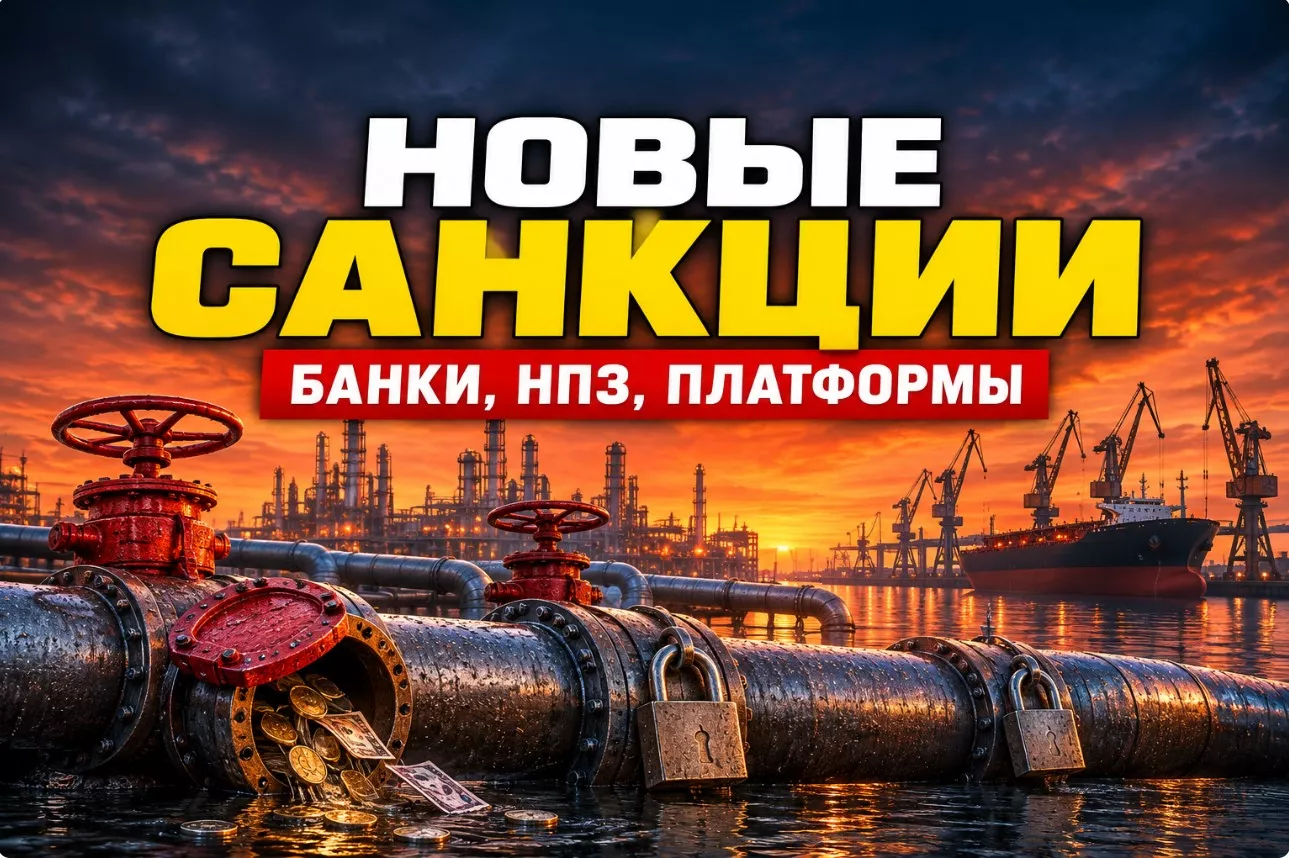
On November 16, the European Union expanded its sanctions lists, with banks, oil refining and trading platforms taking the hit. The direct financial effect on the Russian state is limited. But the package narrows the room for payments and exports, and the cost ultimately falls partly on ordinary citizens.
How the number 145 adds up
French Foreign Minister Jean-Noël Barrot cited a figure of 145. At first glance it appears to contradict the official announcements. The EU Council speaks of 113 listings: 12 individuals and 101 entities. The remaining 32 fall under a separate decision taken the same day. They cover 30 individuals and two organizations linked to disinformation and cyberattacks. The totals match Barrot's figure.
In the financial sector, 47 commercial banks and two non-bank organizations, YooMoney and the St. Petersburg Settlement Center, have been added. The EU Council says it picked them for reasons that include offering credit holidays to mobilized soldiers, taking part in the digital ruble pilot, or holding FSB licenses for cryptographic activity. According to the European Commission, more than 100 banks and financial institutions are now under EU sanctions.
Among the businesspeople named are Tatyana Kim, the sole shareholder of Wildberries, whose fortune RFI puts at as much as 7 billion euros, and Alexander Chachava, who controls the largest stake in Ozon. In the EU's account, both provide material or financial support to Russia's military-industrial complex. The marketplaces themselves were not sanctioned. Sergei Matvienko, the son of the Federation Council speaker, has also been listed. In energy, the targets include the Moscow, Omsk, Saratov and Khabarovsk refineries and several others, along with Gazprom Neftekhim Salavat, TAIF-NK and the Petersburg Oil Terminal.
A separate block targets the information sphere. According to the EEAS, it is the largest action in EU history against networks involved in foreign information manipulation and interference. The lists include the blogger Yuri Podolyaka, Vremya presenter Vitaly Eliseev and others. For them the consequences are mostly symbolic: an entry ban and an asset freeze in the EU. Still, the very fact that journalists and TV hosts have been listed prompts a separate debate about the line between propaganda and freedom of speech. Readers should keep that in mind when weighing reports from both sides.
How much it hurts the state
The scale needs a sober assessment. The sanctions freeze assets in the EU and prohibit making funds available to those listed. Individuals also face an entry ban. They have no direct force inside Russia. For most of the listed companies, the result is the loss of European accounts and counterparties, which many lost long ago. The largest banks were restricted earlier. According to Adnkronos, those added now are mid-sized and regional institutions.
The package nonetheless has a purpose. The EU Council says it aims to cut the financial channels through which state revenue flows and to limit Russia's ability to produce, refine and export oil. Refineries were chosen because refining is already under double pressure. According to Rosstat, output of petroleum products fell 18% year on year in the third quarter, the sharpest drop in comparable data since 2020. That is primarily the result of Ukrainian strikes rather than European sanctions, a nuance worth bearing in mind.
The broader economic picture is worrying even without the new package. According to preliminary Rosstat data, GDP growth in the third quarter was 1.0%, and the ten-month budget deficit reached 2.3% of GDP. The Finance Ministry puts it at 5.2 trillion rubles, above the 3.6 trillion planned for the whole year. In its new forecast, the European Commission expects growth of 0.6% in both 2026 and 2027, while investment fell 8.1% in the first half. Oil and gas revenues for January–October are roughly 14% below last year's and make up less than a fifth of the federal budget. In 2022 their share was 41.6%.
There were mitigating factors. The rise in oil prices after the US–Iran war gave Russia a breather, although forced fuel export restrictions caused by strikes on infrastructure ate into it. Public debt remains among the lowest of any developed economy, at about 19% of GDP by the IMF's estimate. In other words, this is a slow drain on reserves rather than an acute crisis.
Ukrainian officials, for their part, consider the package a success. About 40% of the listings were already on Ukraine's sanctions lists or in Kyiv's proposals. That shows how closely EU decisions track Ukraine's position.
What ordinary citizens will feel
Russians face no direct restrictions. This is not a ban on their money. The difficulties arise along the payment chain. Foreign correspondent banks generally refuse to deal with sanctioned entities, so transfers abroad through the listed banks and Unistream may fail. YooMoney told RBC that it is operating normally and that the EU restrictions do not affect the service or the safety of customers' funds.
The indirect effects are more noticeable. Businesses that settle with foreign partners through the listed banks have to find new channels, which makes payments more expensive. The fuel situation affects everyone: after the strikes on refineries, the authorities restricted exports to secure the domestic market. The "damper" mechanism, a subsidy to oil companies to hold down domestic fuel prices, rose from 197 billion rubles in August to 415 billion in October. The budget pays for it, which means taxpayers do in the end. Inflation remains around 7%.
Wildberries and Ozon as companies are unaffected, and shoppers are unlikely to notice any change in the near term. For shareholders and management, however, the restrictions complicate foreign deals and could eventually hurt their ability to raise capital.
What sanctions to expect next
The European Commission confirms that it is preparing the next package. According to spokeswoman Sivona McGarry, the only question is when it will be presented, not whether it will be. Sources differ on numbering. Some call the next package the 22nd. RBC reports that the 22nd was approved in October with 1,600 listings, while Beincrypto mentions preparations for a 23rd. According to Azernews, approval is expected in December, and the package will target the banking sector, crypto assets and the shadow fleet.
The toughest measure under discussion, a ban on maritime services for Russian oil, is unlikely to pass because of objections from Greece, Malta and Cyprus, according to the same source. As of July 2026, the EU's shadow fleet list included more than 670 vessels. The most likely scenario is therefore further expansion of the lists and tighter control over logistics, not a radical severing of trade.