European leaders talk about Gaza, Hormuz, Tehran and Moscow as though they carry weight there. The continent was not invited to the start of this year's main war, yet it keeps issuing statements. What does it actually want: peace, gas, security, or simply a seat at the table? And why is all this happening now, with gas storage nearly empty, missile stockpiles in the same state, and a budget dispute threatening a political crisis? I am writing from London, and I see the situation at very close range.
An Empire That No Longer Exists
First, the dates. In 1882, Britain occupied Egypt. In 1884–85, at the Berlin Conference, the European powers carved up Africa, and not a single African was invited. In May 1916, the British diplomat Mark Sykes and the Frenchman François Georges-Picot agreed to divide the Ottoman lands and drew borders that the region has been unable to digest for more than a century. Dr. Hassan wrote about this recently, and I agree with him. In 1956, London and Paris, together with Israel, went to war against Egypt over the Suez Canal. Washington and Moscow demanded they stop, and within weeks the troops withdrew. Prime Minister Anthony Eden left office in January 1957.
Suez is often called the end of the British and French empires. What matters more to me is what came immediately after. In March 1957, the Treaty of Rome was signed. Europe answered humiliation with a common market, and it was a clever move, because on their own these countries could no longer decide anything. But the treaty did not answer the question of who Europe now thought it was. Britain later withdrew from its bases "east of Suez," France lost Algeria, and by the 1960s all that remained of the empires were monuments, museums and a habit of giving advice.
Europe carried that habit into the twenty-first century. Norms, values, rules and humanitarian aid became its main export, and buyers were plentiful as long as American military power stood nearby. Now there are fewer buyers. The urge to command remains. I call this the lost-empire complex: the power is gone, but the manner of speaking like a power has survived.
What Europe Seeks in the Middle East
The war between the United States, Israel and Iran has now lasted more than eight months. Europe is not a participant, yet it discusses the conflict constantly. Brussels welcomes any negotiations, and the Council of the EU and the European Commission condemn escalation. The March European Council conclusions explicitly refer to the 2015 migration crisis and promise to use diplomatic, legal, operational and financial tools to prevent a repeat. The motive is stated honestly in those lines: Europe fears a flow of refugees more than it fears the war itself.
Experts at the European Democracy Hub write that Middle East conflicts have pushed EU policy toward an even more pragmatic course. The priorities are now migration control, counterterrorism, and access to energy and markets. Strip away the diplomatic vocabulary and the interests look like this. Europe needs gas. It needs assurance that refugees will not arrive. And it needs to show voters that the authorities are doing something. The last is the easiest, because it requires only attendance at meetings.
Meanwhile, the plan of action remains on paper. The European Commission long ago promised a broad Middle East strategy, and the task is part of its political priorities for 2024–2029. A joint communication on the strategy, including support for change in Syria and Lebanon, was listed in the European Parliament's planning at the end of October 2026 as a document still in preparation. It was announced before the war, and now it is November. Anyone in London will recognize the pattern: officials write a paper while events race ahead.
The defenders of the European approach make their case. The Union has no army capable of changing facts on the ground, but it does have money for humanitarian programs, contacts with Gulf leaders and experience in mediation. Still, Moscow no longer regards Europe as a mediator, and that is noticeable. The European Commission says it condemned, in the strongest terms, the indiscriminate strikes in the Gulf area and expressed solidarity with the victims. These statements matter. But a war does not stop because of them.
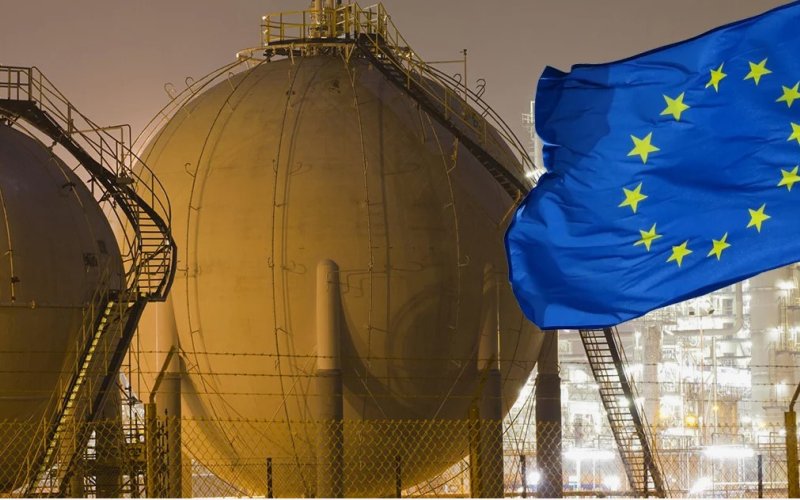
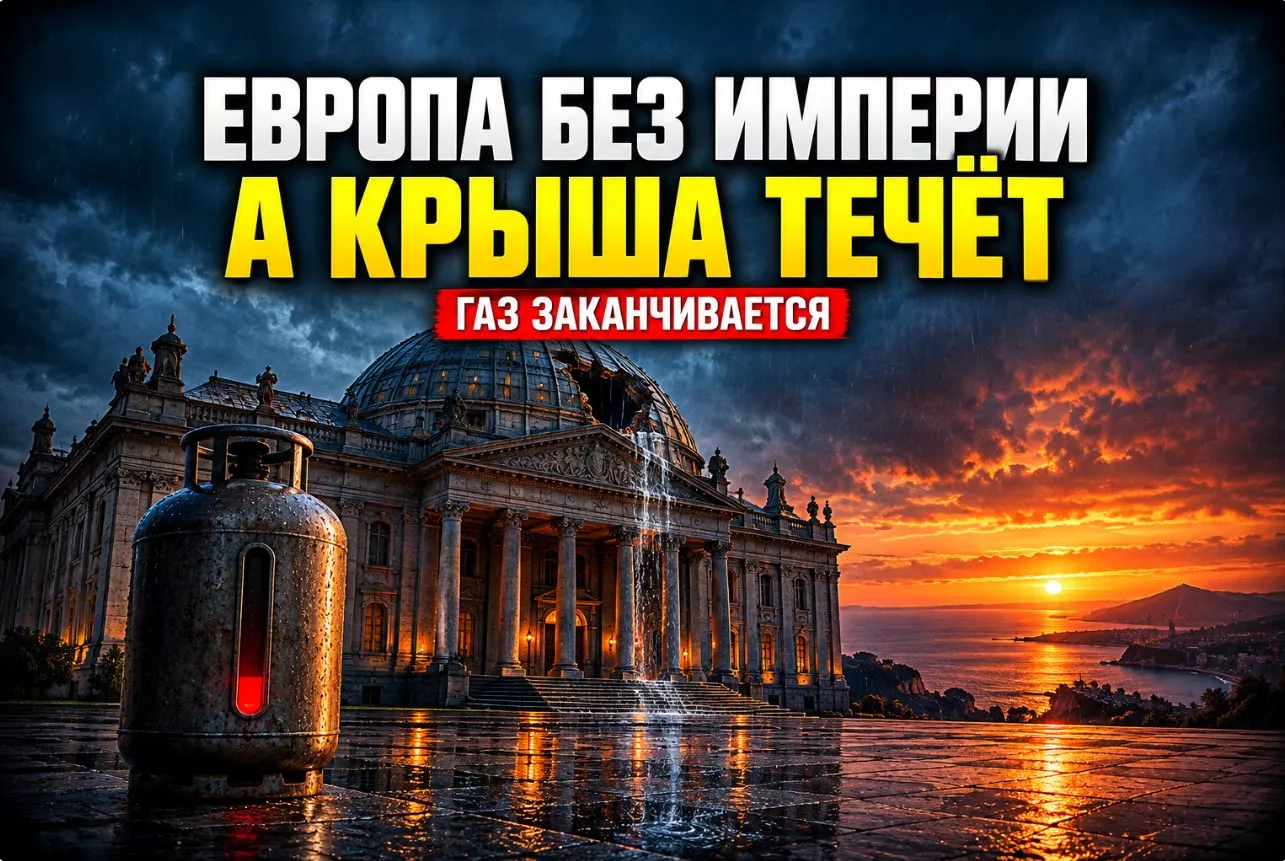
The price of passivity is visible in energy. With Hormuz under threat, Europe is entering winter with the lowest gas reserves ever recorded for this time of year. Germany, which holds more than a fifth of Europe's storage capacity, is well below the EU average. In early November its storage sites were 59.97% full. The price at the Dutch TTF hub rose as high as €104.6 per megawatt-hour, the highest since December 2022.
What Europe Wants From Russia
Europe's history with Russia reads like the same chapter written several times over. In 1812, Napoleon entered Russia with an army of more than 600,000 men, and only a fraction returned. In 1853–56, Britain and France fought the Russian Empire in Crimea; Sevastopol fell only after a siege of almost a year and heavy losses. In 1918–20, Entente troops landed in the Russian North and Far East and left with nothing to show for it. In 1941, Germany and its allies attacked the USSR and lost. Each time, the adversary was underestimated and the invaders were overconfident. We in Britain know this, or at least those of us who have read the history books do. Sadly, there are not many of us.
Europe's goals today look respectable but contradict one another. It wants to weaken Russia, abandon Russian energy, and not pay too much for doing so. It cannot achieve all three at once. Alexei Miller has said that in a cold winter gas in Europe could cost up to $2,500 per thousand cubic meters, and he noted that the $1,200 level, which Western experts had called the peak, was already exceeded in October. According to Merca2, the sanctions package of January 26 bans purchases of Russian LNG from 2027.
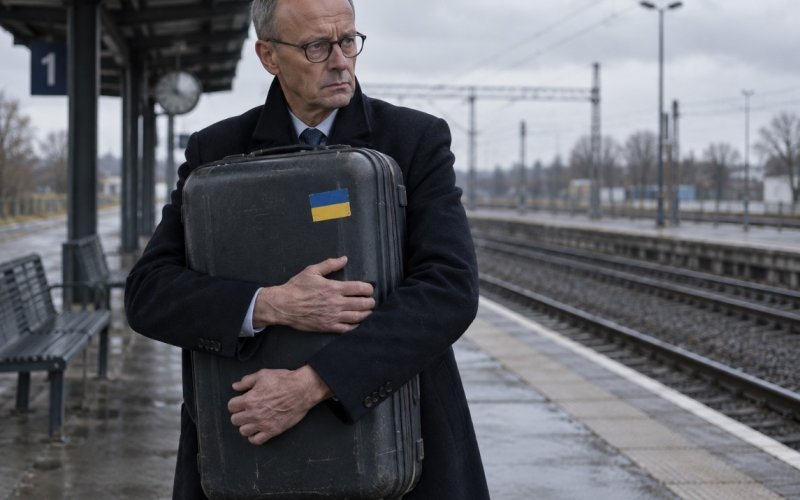
Now the costs. The EU has extended Kyiv a €90 billion loan for 2026 and 2027, and next year Ukraine is still short by a further €70 billion, of which Brussels promises to cover about €45 billion. Chancellor Friedrich Merz has threatened to block the EU budget for 2028–2034 unless all member states commit to supporting Kyiv in 2027 and beyond. Hungary, Slovakia, Bulgaria and the Czech Republic, according to the Financial Times, are unwilling to pay. At the same time, Bloomberg reports that Europe's stocks of PAC-2 and PAC-3 interceptors for Patriot systems have fallen to a critical minimum, and military officials are reluctant to hand over what remains without American guarantees.
There is another side that must be mentioned. Researchers describe Russian policy as imperial in origin: nostalgia for the Soviet Union and its satellites, resentment, harshness. That is how our media present it. For some reason, they never explain why the aggression became visible only after 2014. We are told that Putin is a dictator thirsting for blood. But he was president before 2014 as well. Why, then, was he not thirsting then? Scholars debate whether Russian policy is explained by longing for the past or by a calculation of security. I do not absolve Moscow of responsibility. But one cannot criticize another's imperial complex without dealing with one's own, and that is exactly what Europe is doing now.
A House With a Leaking Roof
Inside the Union, things are no better. Mario Draghi's report on EU competitiveness, commissioned by the European Commission, warned that Europe is falling behind the United States and China in productivity growth, pays more for energy, and is aging faster. Draghi headed the European Central Bank and is the last person one would expect to be a critic of the Union. Since then, governments have repeatedly promised to follow his conclusions. November 2026 shows how far they have come.
Germany, the EU's largest economy, is entering winter with record-low gas reserves. Its chancellor threatens to block the common budget to force partners to pay for Ukraine. Armies are not sharing missiles, because none are left. Brussels, meanwhile, is preparing a strategy for a region where it has neither a fleet nor a strong voice.
I take no pleasure in saying this; if anything, I feel hurt by it. A continent that gave the world universities, parliaments and modern science is arguing in 2026 about gas in storage tanks and about who will put up the money. Self-respect returns through simple things: teachers in schools, factories paying a reasonable price for energy, controlled borders, and people confident about tomorrow. Today Europe cannot guarantee any of these.
Outlook: What Comes Next
In the coming weeks, the weather will decide everything. If November and December are mild, gas will return to a range of €75–90 per megawatt-hour, and EU leaders will declare the winter a success. If sustained cold sets in, Germany will hit trouble first, and talk of influence in the Middle East will move to the back burner. The budget dispute over Ukraine will, in my view, end in a compromise: countries willing to do so will take on the bulk of the €45 billion, and the rest will receive a formal opt-out. I put the probability of that outcome at sixty percent.
Six months to a year from now, I expect the following. The Middle East strategy will be adopted, and it will be cautious and largely ineffective, because the EU lacks the resources to carry it out. If the United States and Iran reach a deal, Europe will rush to the Persian Gulf for reconstruction contracts and find that the best places have already been taken. If they do not, new waves of migrants and extra pressure on budgets will be added to the gas shortage. Two events will show the direction: an announced timetable for talks between Washington and Tehran, and the return of normal shipping through the strait. The worst scenario, to which I assign a quarter probability, is an escalation that hits European bases, with too few interceptors to defend the southern flank and Ukraine at the same time.
In the long term, everything comes down to the 2028–2034 budget. If Europe tackles its own problems, namely energy, defense industry, demographics and productivity, it could return to the ranks of the major players by the mid-2030s. If it keeps chasing a presence in other people's wars, it will have to accept the role of spectator. Suez in 1956 was the last time Europe was forced to acknowledge its real place. The next time will cost far more.