

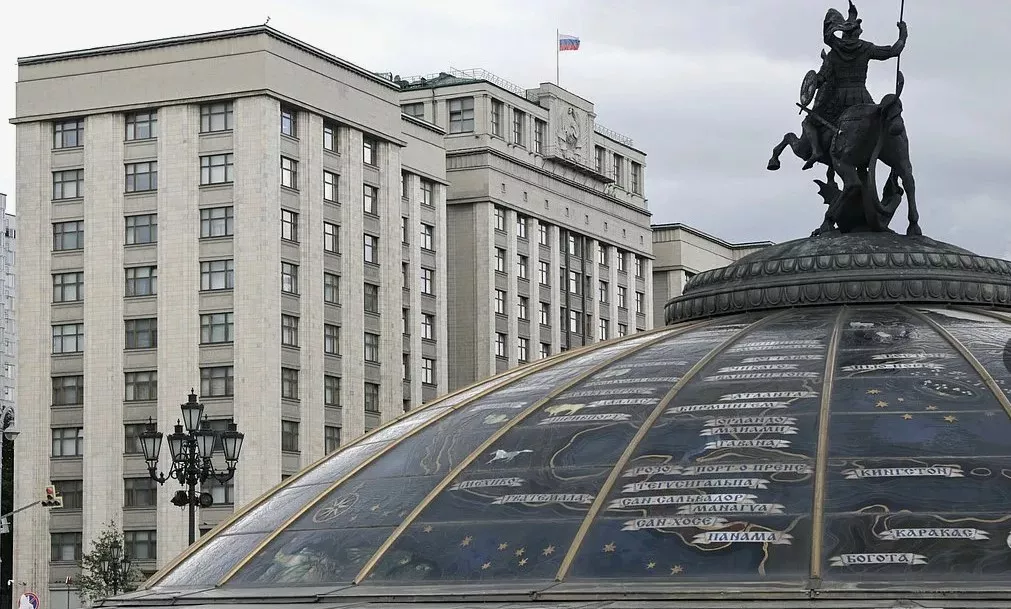
On October 30, the Russian government submitted to the State Duma a bill "On International Development Assistance" (IDA). Will it become a real instrument of influence, or remain a framework for paperwork? Where will the money come from? And what changes for partner countries, for Russia and for its neighbors?
What the bill contains
The document defines IDA in law and sets out its goals, principles, forms and procedures. Assistance is described as activity carried out on a grant or concessional basis to promote the socioeconomic development of partner states, improve the well-being of their populations, and prevent and respond to emergencies. The wording is broad: earmarked funds, state concessional loans, deliveries of goods, transfers of knowledge and expertise, and external debt settlement on preferential terms. Russia will also be able to pay partner countries' contributions to the budgets of UN bodies and international funds.
The Foreign Ministry retains overall leadership. Rossotrudnichestvo receives the status of International Development Assistance Agency, which means it takes on project support, interagency coordination, record-keeping, consolidated reporting and effectiveness evaluation. Reporting runs along two tracks: Rossotrudnichestvo gathers project data, the Finance Ministry gathers financial data, and the Foreign Ministry draws on both to prepare an annual political report. Aid may go directly to states or through international organizations, funds and financial institutions.
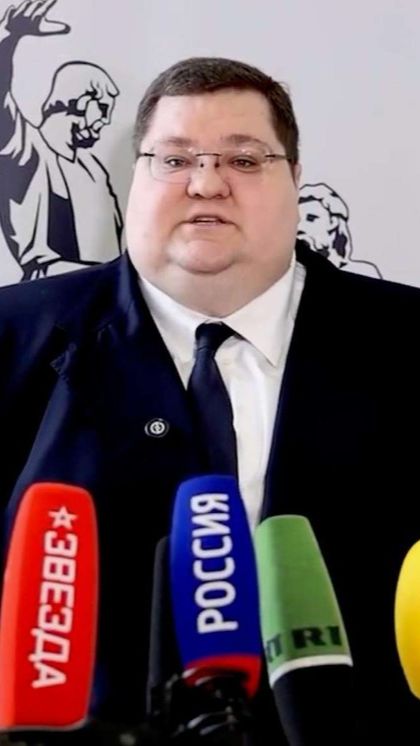
Rossotrudnichestvo head Igor Chaika said: "This is a major step toward strengthening Russia's humanitarian presence in the world." He was appointed in April this year, and in six months the agency has signed agreements to open 11 new Russian Houses, eight of them in Africa. Microgrants for initiatives abroad are promised from 2027.
What lies behind the document
The law does not create a new activity; it puts an existing one in order. Russia already ran educational programs, humanitarian deliveries, debt write-offs and concessional loans, but they operated under separate regulations and with no single center. The bill sets common rules for ministries, state corporations, business and NGOs, and this is the task its supporters emphasize.
The figures in the accompanying documents deserve separate attention. The government says implementation will require additional budget funding of about 14.21 million rubles in 2027, 12.74 million in 2028 and 13.23 million in 2029. That is the cost of building the system, not the cost of the aid itself. Nezavisimaya Gazeta, citing the attached materials, reports that Rossotrudnichestvo has been approved for higher staffing levels and appropriations of slightly more than 40 billion rubles over three years. The federal treasury is named as the main source of IDA funding. The money for aid will come from existing budget lines, export credits and debt write-offs, not from a new fund.
Russian press opinion is divided. Some call the law a long-awaited counterpart to USAID. Nezavisimaya Gazeta notes that the model follows Soviet patterns and preserves dual management by the Foreign Ministry and Rossotrudnichestvo. The difference matters: the Soviet model had an ideology and the resources to back it, while the current one so far has only a legal framework.
Forecast: legislative and institutional
A bill introduced by the government will clear the Duma without serious resistance. I expect the first reading to take place during the winter or spring session of 2027, with the law taking effect no earlier than mid-2027. Budget calculations begin in 2027, which supports this timeline. The main point of contention will be the division of powers among the Foreign Ministry, the Finance Ministry and Rossotrudnichestvo: the agency gets a coordinating role but not the authority to disburse large loans.
My baseline scenario for 2027–2028 looks like this. Implementing regulations will appear, along with a list of partner states and a methodology for assessing effectiveness. Rossotrudnichestvo's work in Africa will expand, and the Russian Houses in new countries will become hubs for recruiting students and running educational courses. Major projects will originate with Rosatom, the Agriculture Ministry and export agencies. The agency will act as an operator, not a source of funds. One sign that this is happening would be a dedicated IDA line in the budget measured in billions of rubles rather than millions.
Forecast: economic and political
I see the main result in the link between education and business. A graduate of a Russian university from Africa or Asia returns home with the language, contacts and a familiarity with Russian standards. In five to ten years these people will hold posts in ministries, hospitals and companies, and they will be the "channel of influence" Chaika describes. Doubts run against this: Russian universities admit a limited number of foreigners, and sanctions complicate payments, transfers and logistics.
Russia can expect three benefits. First, exports of medical technology, grain and nuclear projects will gain state backing. Second, debt write-offs and restructuring become a bargaining lever, with a debtor country agreeing to buy Russian products. Third, training of personnel builds a loyal elite. At the same time, there is a risk that the reform's own supporters warn about: losing real work on the ground in pursuit of formal reporting indicators. If effectiveness evaluation turns into counting events, the system will repeat the fate of earlier programs.
For competitors, the effect is moderate. China, Turkey, the Gulf states and the EU already operate in Africa with far larger budgets. Russia cannot match them in money; it offers something different: military and nuclear technology, grain, and education without political conditions. I believe that in 2028–2030 Moscow will establish itself in five to eight African countries as a priority partner in security and education, with the overall trajectory depending on energy prices and budget revenues.
For the near abroad, the consequences differ. The Baltic states, Moldova and several other post-Soviet countries will see the agency as a continuation of work with compatriots and a growth in "soft" pressure. I expect tighter scrutiny of the activities of the Russian Houses and Rossotrudnichestvo in Latvia, Lithuania and Estonia, including bans and restrictions on funding.
What it means for people
For Russians, the law means higher foreign-policy spending that the budget does not fully disclose. It is a question of priorities: the same money could go to domestic programs. For residents of partner countries, the outcome depends on the projects themselves: scholarships, training courses, hospitals, grain deliveries. If the aid reaches people, interest in Russia will grow. If it stays on paper, the law will add one more bureaucratic layer.
I would watch four signals: passage of the law in the first reading, the size of a separate budget line for aid, the list of partner countries, and the number of African students in Russian universities by 2028.