

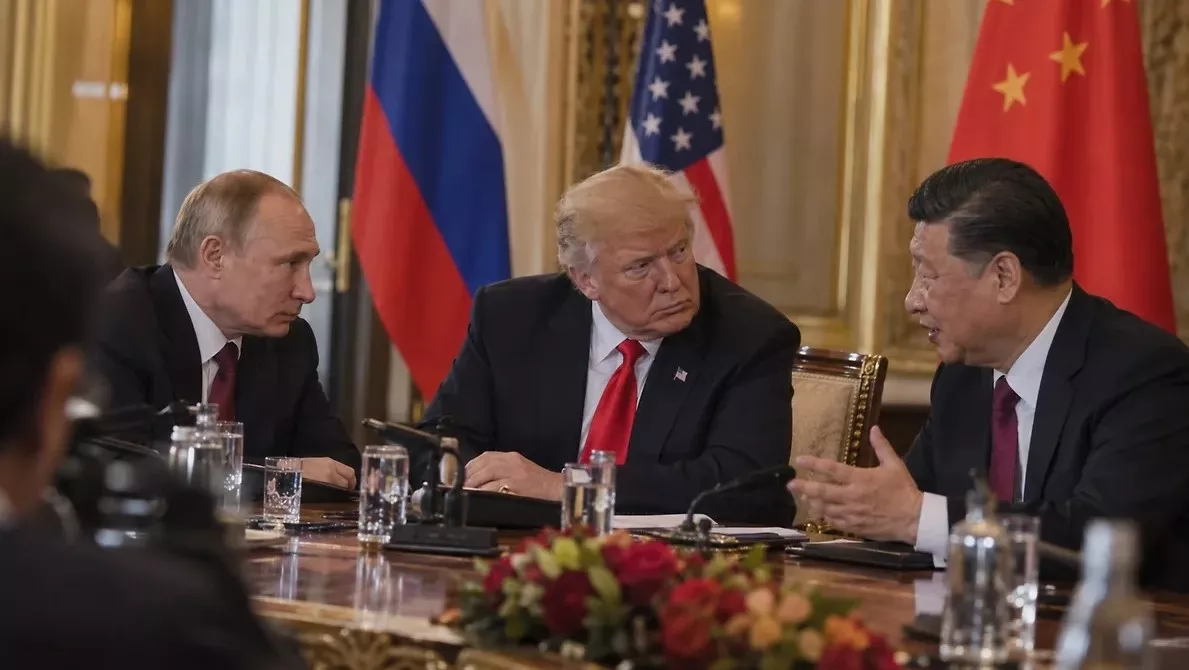
Ninety minutes, the Kylin villa, a closed door and not a single question from the press. That was the first-ever meeting of the leaders of the United States, China and Russia, held in Shenzhen. It produced a declaration on peace which, according to the BBC citing the Kremlin, promises UN reform, more oil products for everyone and a dialogue on nuclear risks. Europe is reading the document with alarm, Beijing with careful optimism, and Washington cannot decide whether to celebrate or despair.
What Happened in Shenzhen
Trump and Putin spoke for forty minutes in the morning. Putin's aide Yuri Ushakov said the meeting went "well" and that Ukraine was the main topic, though he hedged that this was "one way to put it." By Ushakov's account, Putin came out of the talks in excellent spirits. The day before, the two presidents had shaken hands in the shared APEC photo.
Xi Jinping then joined them. He called the meeting a "milestone" and added that cooperation among the great powers is "not a matter of choice but an absolute requirement." Trump said the three were "really writing history" and turned to nuclear disarmament. The world's three largest nuclear powers, he said, could discuss cutting their arsenals. China has rarely agreed to such talks, and observers did not expect a breakthrough.
Ukraine made it onto the agenda despite the White House's assurances to the contrary: Trump himself put it into the open part of the session. He said "everything is moving in the right direction" and voiced hope that Putin "and the other side" would want to end the war. Note that the "other side" was not at the table. After the meeting the leaders parted warmly, and Putin thanked Xi for the "brilliant organization."
Europe: Not Shock but Cold Sweat
"Shock" is the wrong word. "Alarm tinged with irritation" is closer. European officials told CNN the meeting was "Putin's dream," and one admitted it was hard to imagine anything good in it for European security. Another said the picture looked "terrible for us," though he did not expect a big deal.
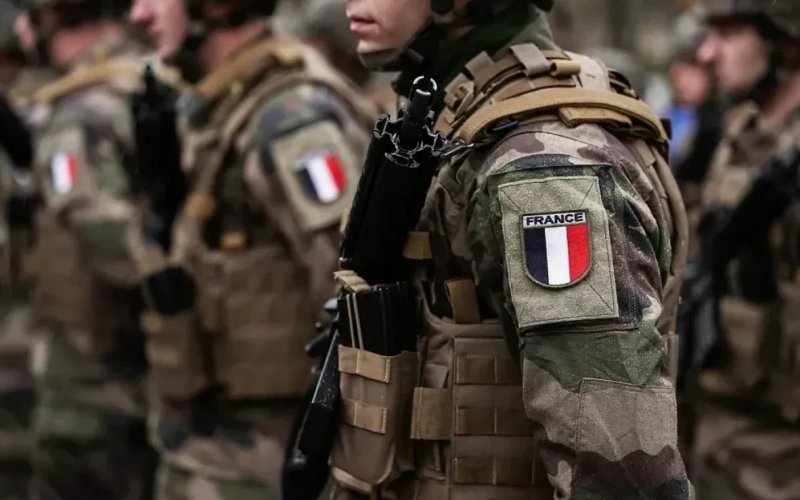
Belgium's La Libre writes that Europe fears "Yalta 2.0," a return to great-power spheres of influence. An EU diplomat names symbolism as the main risk: it creates the impression that the new powers are talking among themselves. EU foreign policy chief Kaja Kallas reminded everyone that Europe's security architecture already exists, and that Russia is the one who broke it. France's Libération writes that a week after Abu Dhabi, the twenty-seven EU states were once again "spectators," and that "in several capitals it hurts."
German Foreign Minister Johann Wadephul warned that Ukraine's fate cannot be decided in a "third place." Meanwhile Berlin is making a move in the spirit of "if we weren't let in there, we'll gather everyone here." Merz, Macron and British Prime Minister Andy Burnham have convened representatives of 37 countries to give a swift, coordinated response to whatever emerges from Shenzhen. According to the Independent, Trump's envoys Witkoff and Kushner will travel to Berlin as well.
Europe's voices are not unanimous, however. One European insider tells La Libre that the logic of Shenzhen is more "staged" than real, while political scientist Bruno Tertrais observes that the three leaders are neither allies nor a new "League of the Three Emperors," although they share a "brutal neo-imperial outlook."
The historical comparisons could fill a seminar. As early as October, Zelensky likened such a meeting to the 1945 Yalta Conference. The BBC recalls that a Ukrainian strike on the bridge linking Russia to Crimea came shortly before the summit and undermined Moscow's position. The BBC's Laura Bicker adds that many in Europe are irritated that Xi does not press Putin harder. The picture is curious. Some European officials, CNN reports, still hope Beijing will prove an honest broker in the war. Yet those same officials never received an invitation to the meeting, and the question of why hangs in the air.
China: Careful Optimism
Beijing is the host and behaves accordingly. The state news agency Xinhua calls the Xi–Trump conversation "positive and constructive" and reports an agreement to develop an action plan for "constructive, strategically stable relations." Xi urged Washington to "do the right thing" on Taiwan, warning of "major upheaval" otherwise. Note that optimism, Chinese-style, always comes with caveats.
Victor Gao, vice president of a party-linked think tank, told Tagesschau the meeting would be "one of the most important in human history." The analysts quoted by the BBC take a calmer view: for Xi the meeting is largely a response to Trump's wishes, it costs him almost nothing, and an arms-control agenda cannot be forced on China. The BBC's Laura Bicker adds that Xi risks looking like a gracious host rather than the event's chief architect.
United States: A Mixed Reaction
The American press has split into two camps. NBC writes of "pomp and little result": the $30 billion trade truce amounts to less than 10% of US trade with China, and China has bought only half of the soybeans it promised. The outlet allows that Trump is "setting the table" for December's G20 in Miami, where Xi is expected, and possibly Putin. Craig Singleton of the Foundation for Defense of Democracies, quoted by Reuters, pointed to disagreements over Ukraine, Iran, weapons and trade.
Other analysts are sharper. Jonathan Chin of the Brookings Institution argues that if the three leave the room in a good mood, it is a "bad sign for Ukraine and European security." The Atlantic Council writes that Moscow has gradually turned the Trump administration into an "accomplice" of Russian interests. Trump himself called the reception in China a "big win" for both countries. The Wall Street Journal, as reported by TASS, saw the summit as the end of the unipolar world. Washington, evidently, looks at the same photograph and sees different things.
Russia: Victory Without Victories
The Russian press notes the merits of the format. Kommersant writes that Putin has "finally met" Trump and Xi. Political analyst Alexander Gabuev told the BBC that the meeting, like Anchorage, will not lead to important results, "but he will enjoy it." Analyst Ilya Grashenkov calls the summit "above all symbolic." The BBC's Russian service notes that the meeting is comfortable for Russia because Trump is not pressing it on Ukraine.
Lavrov declined to comment on the outcome. Putin had remarked the day before that the EU is losing industrial competitiveness and "falling behind in the race," and that sanctions, in his words, have become an "own goal" for Brussels. He stressed that in a fragmented world, partnership is needed, not isolation. For Moscow, the image is worth more than any clause in the declaration.
What Comes Next
Today in Berlin the coalition of the willing will meet and respond to Shenzhen. German officials say they will focus on reaffirming legally binding security guarantees after a ceasefire. The outcome of the three leaders' meeting can be summed up this way: there is a document, there are many words, and there are few commitments. Europe got a cause for worry and a reason to gather, China got the status of host, Russia got its image, and America got a new subject for domestic dispute. At least there are enough photographs to go around.