


Israeli voters gave neither Benjamin Netanyahu nor Gadi Eisenkot a decisive mandate. Meanwhile, Washington and Tel Aviv are preparing a new phase of the operation against Iran. How do the two developments connect? What do they mean for the region and the world? And where does the current alignment lead?
I am Dr. Hassan, VIGIL Journal's representative for the Middle East and North Africa. I want to take the two stories separately, then show where they intersect.
An Election Without a Winner
On October 27, Israelis went to the polls for the first parliamentary election since the attack of October 7, 2023. According to DW, turnout reached record levels. As of this writing the count is not finished. The "double envelope" ballots, cast by soldiers, diplomats and other voters outside their home districts, are counted last, so the final figures could change.
With 88% of ballots counted, according to Channel 12, Netanyahu's bloc is on course for about 53 of the 120 seats. The bloc of the centrist Gadi Eisenkot has about 48, and the Arab parties a record 19. A majority requires 61. Likud remains the largest party with 26 seats, against 21 for Eisenkot's Yashar party. According to the Jerusalem Post, neither side can form a government without the Arab parties, and a government uniting Netanyahu and Eisenkot is considered unlikely. The next move belongs to President Isaac Herzog, who must hold consultations and decide whom to charge with forming a coalition.
The comparison with the previous alignment speaks for itself. The TV exit polls gave Netanyahu's bloc 51 to 52 seats, well below the 64 to 68 it held before, though sources differ on the size of the previous majority. Foreign Policy also notes that the picture varies from channel to channel: in Channel 12's early count, Eisenkot's opposition was ahead of the prime minister's bloc. Israel may face weeks of political haggling before a government emerges.
A Troubling Calculation: Elections and War
This brings us to the question that concerns those of us who live nearby. According to NPR, Israel originally planned to strike Iran in mid-October, two weeks before the election, but President Trump objected. The United States is now building up forces so that it is ready to strike in early November, after the American midterms on November 3. The same source warns that the buildup may also be part of a pressure campaign on Tehran to secure a diplomatic deal.
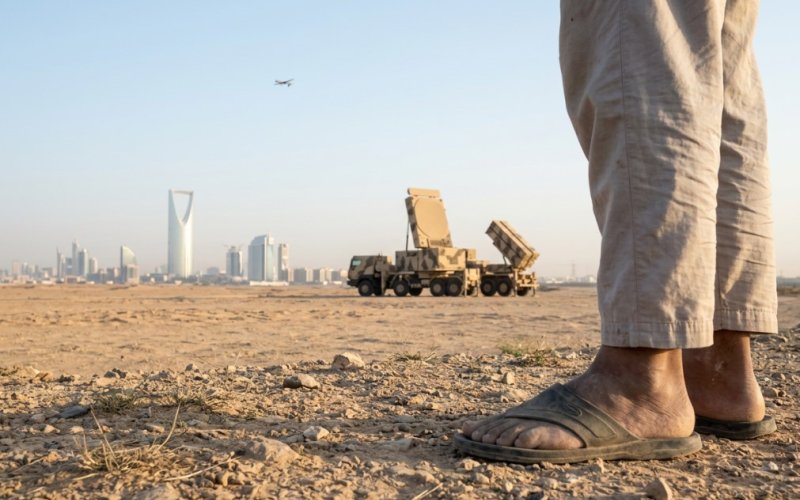
The Wall Street Journal, as relayed by NDTV, reported that the US has warned several Gulf Arab states to be ready for a short but intense campaign. A Patriot system is being moved from Texas, troops are being pulled out of vulnerable bases, and munitions are being restocked. Another carrier strike group and a Marine expeditionary unit will probably join the roughly twenty ships already in the region in November. According to US officials cited by the agency, Defense Secretary Pete Hegseth discussed new strikes with Netanyahu in Israel this week. Both militaries are drawing up plans on Iran's nuclear program and conducting exercises, including rehearsing maneuvers over Iraq.
This story is tied to the election result. Experts believe that if Netanyahu lost, he would become caretaker prime minister and would find it hard to start a war. But some analysts argue that the threat of an imminent joint strike could become leverage: the prime minister could press his rivals to join a national unity government to run the war, which would prolong his time in power. Electoral arithmetic and military planning are thus tangled together.
What Tehran Is Saying
Iran's response looks hard-line. A senior Iranian official said that Qatar had offered Tehran unacceptable ideas rather than a new peace plan, and that there would be no flexibility on the nuclear issue. According to the same report, there were fears before the meeting in Tehran that Netanyahu might resume strikes this week.
The meeting between three states and Iran ended with a cautious statement about continuing dialogue on regional peace and security. No agreements were announced on the war, the Strait of Hormuz or the nuclear program. The Iranian side also stressed that cooperation with the members of the pact would not make Tehran abandon the Houthis. This is fundamental for Saudi Arabia, whose territory the Houthis continue to strike.
The economy is part of this game too. According to Iran International, Iranian budget planners are considering oil at 130 dollars a barrel for the next Iranian year, even though the conflict severely limits export capacity. That suggests Tehran is planning for a long war.
What It Means for the Region and the World
For the Gulf states, a new campaign means direct risk. The warning the Americans passed to them speaks for itself: strikes on Iran will provoke retaliation against neighboring territory and infrastructure. Saudi Arabia is already living under missile fire, so it matters to Riyadh that the meetings in Tehran do not turn into a formality.
For our region and North Africa, the consequences are real. Egypt depends on the Suez Canal, and every new round of escalation in the Red Sea and the Gulf hits shipping and revenue. For Africa, it means added pressure on fuel and food prices, which are already painful.
For the world, the main channel of impact runs through oil and sea lanes. The Strait of Hormuz remains in question, and the expectation of a short but intense campaign is itself keeping prices high. That uncertainty costs every energy importer money.
Where This Is Heading
Allow me to offer some conclusions.
The Israeli election did not ease the tension. It only complicated decision-making. The country is entering a period of coalition talks, while its ally in Washington will be dealing with its own priorities after November 3. That means the window for a strike is set not only by military readiness but also by the political calendar in two capitals.
The most worrying scenario runs like this: a short operation fails to achieve its goals, Iran retaliates against its neighbors' infrastructure and shipping, the campaign drags on, and the diplomatic channel through Qatar and the pact's members loses its meaning. A more favorable outcome is that the buildup remains a pressure tool and a compromise on the nuclear program is reached before any strikes begin. The first scenario is closer than the second, but there is no final answer today.
To younger readers I will say what I always say: look at the numbers, not the slogans. Watch the final count in Israel, the decisions of the American administration after November 3, and Tehran's response. These three events will determine whether November becomes a month of negotiations or of a new war.