Foreign holders are quietly leaving the U.S. Treasury market, and the market will absorb their exit through domestic buyers. The real question is who pays for that digestion. The answer is not a happy one: the cost will fall on the purchasing power of the dollar in your wallet.
A Quiet Exodus Everyone Has Noticed
Foreigners' share of the U.S. government debt market fell to 32% by the end of 2025, the lowest since 1997, according to Morgan Stanley. This is not a sudden collapse but a slow, almost polite retreat. The share peaked above 50% around the 2008 financial crisis and now stands at roughly 30%. China, the best-known symbol of the trend, has cut its holdings to about $618 billion, a level last seen in 2008. That is a drop of nearly $780 billion in a single year. Japan, still the largest holder, shows no appetite for adding to its position either.
Domestic Buyers Step In
The market did not crash, and the reason is not that foreigners changed their minds. American money took their place. At the two-year note auction, the share going to direct domestic bidders jumped to a record 41.3%, while the foreign share hit its lowest level since 2021. At the seven-year auction, domestic demand reached 32.8%, the second-highest result since 2009. The key question is what this changes. The Treasury market is ceasing to be a market "for the world" and becoming a market "for insiders." Those insiders, unlike central banks, demand a risk premium rather than simply parking reserves.
The Price of Digestion
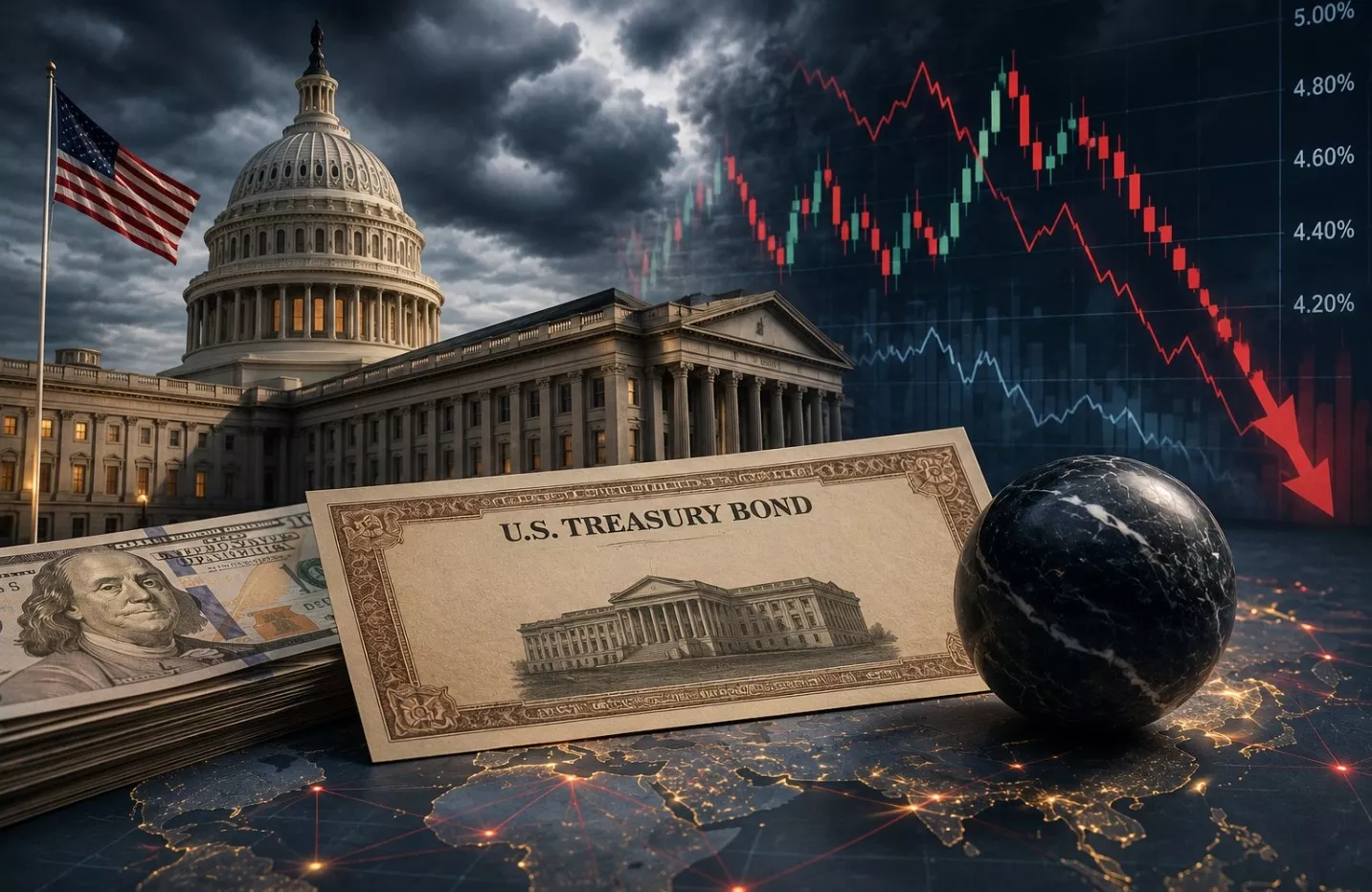
This is where it gets interesting for your wallet. Foreign demand is weakening while the supply of debt keeps growing. Total U.S. government debt has passed $40 trillion, with more than $32 trillion held by the public. Under those conditions, Treasury yields have no choice but to creep higher. This is not an abstraction for traders. The ten-year yield directly pushes up rates on mortgages, auto loans and credit cards. Foreigners will not "crash" the market. The market itself, in digesting their departure, will make money more expensive for Americans. The irony is that Treasuries remain a "safe haven" for the world, yet for the American borrower that haven is becoming harder and harder to afford.
Purchasing Power Is the Real Bill
While analysts argue over whether the market will collapse, the dollar is quietly doing its work, or rather quietly losing its value. Since the end of 2019, the dollar's purchasing power has fallen by almost 23%. Inflation held at 3.7% in September 2026, well above the Fed's 2% target. Real wages over the same period are down 0.7%: prices rose 3.7% while wages rose only 3%. This is not a side effect of foreign exit but its logical continuation. As external demand for dollar assets weakens and domestic demand for credit and imports does not fall, the dollar is no longer as scarce a commodity as it once was.
Triffin Gives In, but Not as Expected
Economists like to invoke the Triffin dilemma: the issuer of a reserve currency must run deficits to supply the world with dollars. Now the world is turning those dollars down on its own. The reason is not that there are too many of them, but that holding Treasuries has become less rewarding than holding U.S. equities. Deutsche Bank has recorded a historic reversal: for the first time outside the global financial crisis, foreign inflows into U.S. stocks exceeded inflows into bonds. Foreigners have not fallen out of love with America. They have fallen out of love with its debt. This will not bring down the Treasury market, but it changes the nature of the dollar. It is backed less by reserve-currency status held out of habit and more by a cyclical, volatile flow into equities and AI stories. For ordinary citizens, the implication is clear: the dollar's exchange rate and purchasing power are becoming hostage not to central bank decisions but to the mood of the stock market.
What Lies Ahead
The Treasury market will not collapse. Domestic demand, financial institutions and the sheer scale of the debt will prevent a sudden fall. But "will not collapse" does not mean "will not hurt." The central question is how long the American consumer can keep paying for this digestion, through costlier credit, weaker real wage growth and a thinner cushion of savings. The purchasing power of the dollar for U.S. citizens will keep declining. The cause will not be that foreigners "ran away." It will be that their exit removes the invisible, subsidized demand that for decades made American life cheaper than it should have been. Notably, $40 trillion in debt is already being called an "alarming threshold," yet neither Congress nor the president has a credible plan to slow its growth. Until there is one, the bill will arrive where it is always noticed last: in the wallet.