


With a ceasefire, a nuclear program and the fate of entire regions on the table, Washington has sent the president's son-in-law and an old friend to the negotiating table. What qualifies them? What does the American establishment make of it? And what do flamingos in Albania have to do with any of this?
How we see it in the United States
Who they are
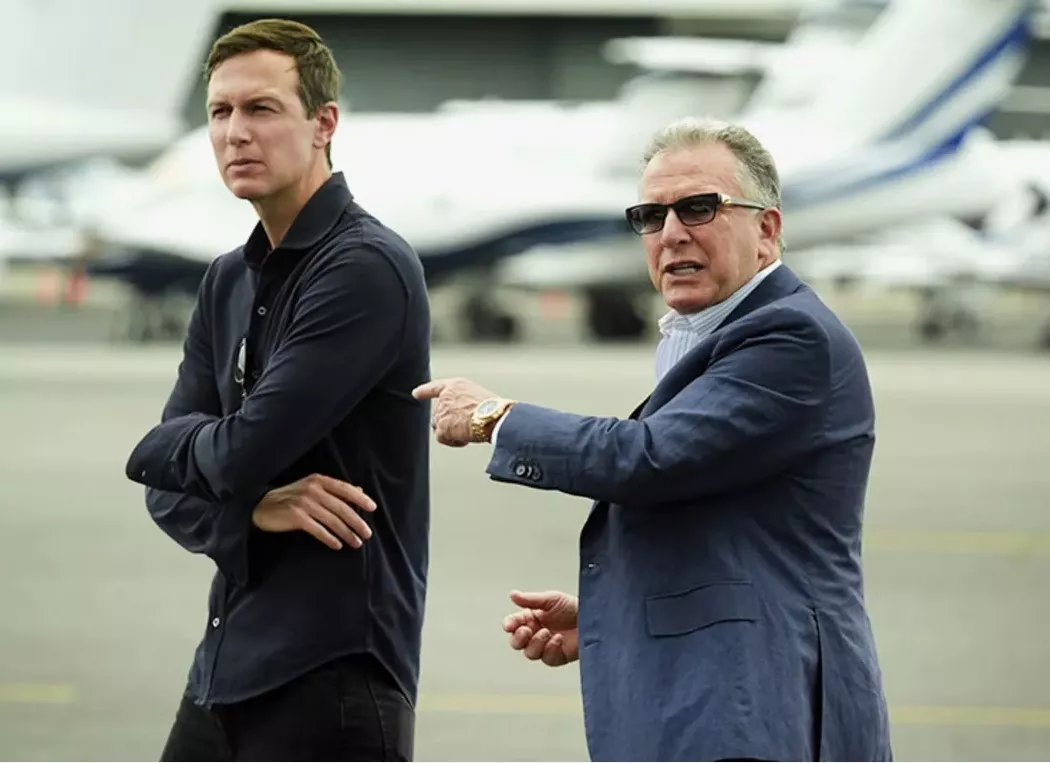
Jared Kushner and Steve Witkoff are handling the toughest diplomatic files of Trump's second term: Gaza, Iran's nuclear program and a settlement in Ukraine. Both carry the title of special envoy, yet neither has a diplomatic background. Even press outlets sympathetic to the White House note the point: The Hill reports that both men stepped into their roles with no prior diplomatic experience. Kushner runs the investment firm Affinity Partners and is married to the president's daughter. Witkoff is a New York real estate developer and a friend of the president.
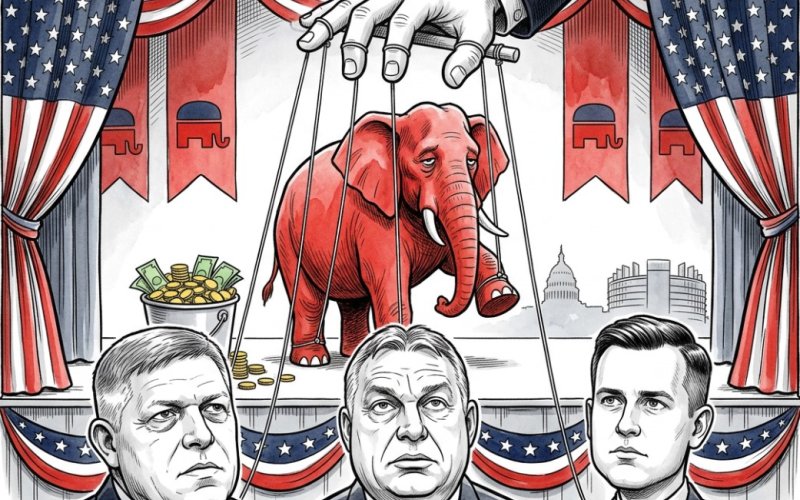
The irony is that the United States has something every great power takes pride in: a professional diplomatic corps. Yet Trump prefers to deal with two private businessmen rather than with his secretary of state and the State Department. Hardly anyone in Congress is asking why.
The situation is made worse by the fact that the White House has been shrinking its own diplomatic ranks at the same time. According to IBTimes, by the start of the Iran talks the State Department had lost more than 1,300 career employees. The picture is a strange one: professionals are being shown out of the building, while developers are summoned to decide questions of war and peace.
What experts and politicians say
The criticism comes from across the spectrum. In April, as the two envoys sat down with the Iranians during a six-week conflict, Democratic Senator Mark Kelly put it bluntly: "You can't send two real estate developers to negotiate peace with another region."
A more substantive assessment came from the independent Arms Control Association. After obtaining recordings and transcripts of two Witkoff briefings, held on February 28 and March 3, 2026, the organization concluded that he "lacked the technical expertise and diplomatic experience for effective diplomacy." Asked to defend his competence, Witkoff replied: "I wouldn't say I'm a nuclear expert, but I've learned a great deal, I've studied the issue and read extensively, and I'm qualified to sit at the table and discuss it, as is Jared."
Consider how that sounds. The man whose proposals may determine whether war comes says himself that he is "not an expert, but has read a lot." In nuclear negotiations, that is usually the modesty of an apprentice, not a master. IBTimes also cites another view that many Washington observers share: it is suspicious that the same two men can run the Ukraine file, the Iran talks and the Gaza question all at once. That, as one critic put it, "makes no sense to me." The criticism is heard from members of both parties.
One figure has been conspicuously pushed into the background. Time and again, Trump turns to his son-in-law and business associate rather than to Secretary of State Marco Rubio and career diplomats. Call it diplomacy by acquaintance. Even Kushner's "New Gaza" proposal, presented in Davos, was labeled "real estate diplomacy" by critics, since the plan treats vast destruction as a commercial opportunity.
Ukraine: three meetings, no results
Consider what this approach has produced on Ukraine. Three rounds of settlement talks, in Geneva, Dubai and Miami, yielded nothing. The choice of venues says something about the style: resort and business cities rather than the capitals and institutions where professional diplomacy traditionally happens.
The problem is not the cities but the absence of a process. A complex conflict is rarely resolved by a series of meetings between two trusted confidants unless there is an apparatus behind them: lawyers, military experts, regional specialists, verification mechanisms. That is precisely the apparatus Washington has been cutting over the past year. A professional diplomat remembers that an agreement without enforcement is merely a statement. A developer accustomed to closing deals is inclined to treat a signed piece of paper as the result.
The Albanian flamingo and the conflict-of-interest question
There is another side to this. Critics point to Kushner's business, which pursues projects abroad even as he carries out diplomatic missions. The most prominent example is in Albania. Affinity Partners, the investment firm Kushner heads, is involved in a €1.4 billion resort project on Sazan Island and near the Zvërnec coast, next to the protected Vjosa-Narta area, home to flamingos, seals and turtles. The company has been in talks with the government since 2024. In February of that year, Albania amended its law on protected areas, allowing five-star hotels to be built in conservation zones.
In June, thousands of people took to the streets of Tirana, some demanding that the project be scrapped. Protesters chanted "Albania is not for sale," and police used water cannons. The demonstrations continue: according to reports in recent days, they have gone on for 21 days in a row and have grown into demands for Prime Minister Edi Rama's resignation. In June, the Environment Ministry temporarily suspended the project.
On June 22, Affinity Partners stated that it is not involved in the Zvërnec project, which is being carried out by Sazan Real Estate Development, and that its American partners are acting in a personal capacity. But on August 24, Democrats on the House Judiciary Committee sent Kushner a formal letter, addressed to the "special envoy for peace," concerning the Albanian project and compliance with the rules. The very existence of that letter shows that Congress is raising the question of where the line between private interest and public mission lies.
What remains off-camera
I am not claiming that Kushner or Witkoff are acting against the interests of the United States; there is no direct evidence of that. My question is a different one, and it is addressed to the Washington system as a whole. Why does the American establishment, with its State Department, intelligence community, military agencies and network of experts, accept an arrangement in which two private individuals close to the president hold the key negotiating files while the professionals stand aside?
For the envoys themselves, the role rests on a single criterion: Trump's trust. To the rest of Washington, they remain what they were before their appointments: businessmen who became diplomats at the will of one man. Perhaps that is why their successes invite so much doubt and their failures so many smirks.
What separates a good negotiator from a good friend of the president is that institutions stand behind the negotiator. For as long as the institutions are sidelined, the world will be watching a form of diplomacy in which every signature rests on the reputation of two people. God help them.