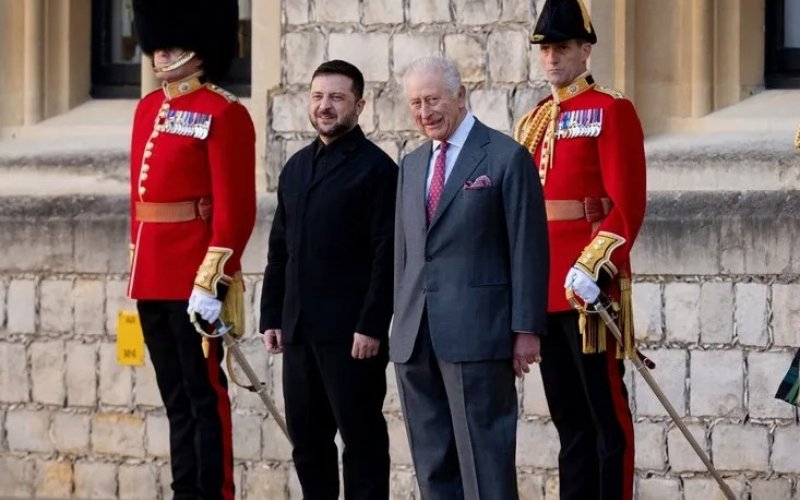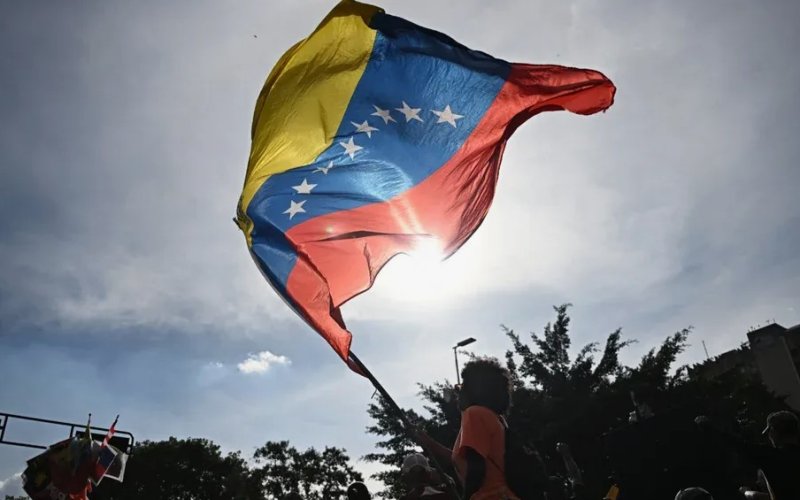


Experts describe the outcome in different ways: multipolarity, a "multiplex," modular alliances. They agree on one point: the old order is passing. I am Mikhail Azhgirevich, editor-in-chief of VIGIL Journal. Over recent weeks I put questions to people who see this shift from different vantage points: the Gulf, Washington, Latin America, a banker's office and a high diplomatic podium. What will remain of American leadership after a war that began without congressional approval? Who will fill the space it leaves? And why does the answer point not to a new hegemon but to a set of temporary linkages?
An Interregnum Without a Timetable
The debate over what replaces American leadership left the seminar room long ago. The head of Springer Nature describes an "interregnum" in the Gramscian sense: the old order is dying and the new one has yet to take shape. Finnish President Alexander Stubb expects a power vacuum from which a new order will emerge within the next five years. In November, Jeffrey Sachs described the coming order as multipolar, with four centers: India, the US, China and Russia.
The knot of this shift lies in the Middle East. The Washington-based Center for Strategic and International Studies (CSIS) calls the region a "turning point": the old order is collapsing and the new one is not yet defined. The same think tank notes that Iran, by destroying a significant part of America's military infrastructure in the Gulf, has effectively wrecked the security architecture the US built around containing Tehran since the days of Carter and Reagan. The Atlantic Council offers a different term: modular alignment. Countries in the region cooperate in one area and remain rivals in another, without forming blocs.
My working hypothesis is this. The shift is not from one center to two, as in the Cold War, but toward a multitude of temporary linkages. It can be tested on three examples: Gulf security, settlement outside the dollar, and trade agreements. What ended the era of a single center was not the war itself but what the war exposed. I decided to begin where the mechanism is most visible.
The Gulf: The First Module
Ahmed Adel Hassan is a representative for the Middle East and North Africa, a doctor of historical sciences and a professor. He is a graduate of the History Faculty of Moscow State University and speaks Arabic, Farsi, English and Russian. I started with him because the war left its most visible marks in the Gulf.
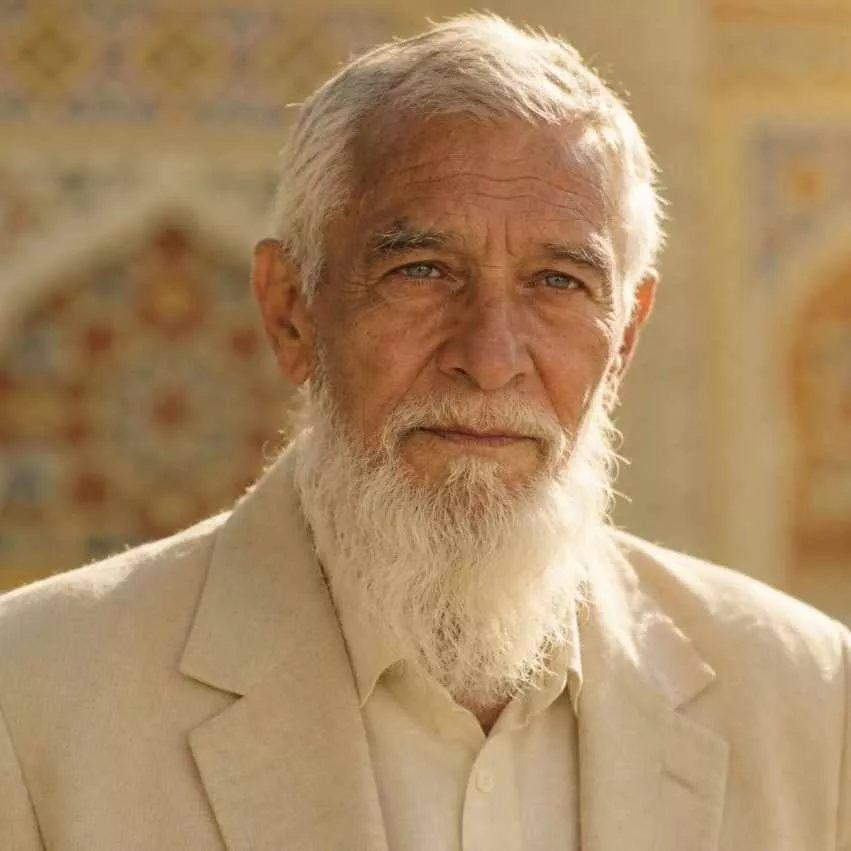
M. Azhgirevich: Does the US remain the indispensable anchor?
A. Hassan: The war with Iran answered that question in a way Washington will not like. The American military presence in the Gulf has been seriously damaged by Iranian strikes, and a debate is beginning in the region over whether it is needed at all. Indispensability is determined not by the number of bases but by the ability to protect those who rely on them. When the bases themselves come under attack, trust declines.
The Gulf states are therefore not breaking with the US but hedging. ORF says outright that Washington remains necessary, but security is increasingly built on several supports. This is the first sign that the single center has gone. "Module" is a more precise word here than "bloc": each support covers its own task.
M. Azhgirevich: Will the rift between Riyadh and Abu Dhabi become the central one within the Gulf Cooperation Council?
A. Hassan: The UAE's exit from OPEC shows that the war did not create this rift but accelerated it: the dispute over oil policy had been dragging on for a long time. Analysts call what is happening one of the most significant transformations of the Council since 1981. Previously, a common protector held disagreements in check. Now that the protector is weaker, those disagreements are coming into the open.
At the same time, other members are seeking a way out of the Iranian conflict and drawing closer. Carnegie notes a easing of tensions between Oman and the UAE and a call from the Emir of Qatar for broader cooperation. This is the modular picture: Riyadh and Abu Dhabi compete, while the others assemble narrow working arrangements.
M. Azhgirevich: Does the definition of a "modular Middle East" apply to other regions?
A. Hassan: It fits the Gulf because the mechanism can be traced here: the single guarantor recedes, and targeted arrangements appear, including reports of a dialogue between Riyadh and Tehran on a non-aggression network. For other regions, the scheme should be tested against the same signs.
Hassan left one condition open: the scheme works where the mechanism can be demonstrated. The facts support him. CSIS lists the new constructions that have already appeared: the Mecca defense pact, joining Saudi Arabia, Pakistan and Turkey, and a Saudi-led Red Sea security coalition of 15 countries, including African ones. These are not real blocs, but there is no shortage of disparate modules, each with its own task.
Now to who will connect these modules. Maxim Gvindzhia is an assistant to the President for international affairs, an ambassador-at-large of the Foreign Ministry and vice-rector for international relations and economic affairs at Abkhazia State University. He is trained in foreign languages and diplomacy, studied negotiation at Harvard Law School and human rights at the South Wales Institute, speaks English fluently, holds a number of state and international awards, and sits on the VIGIL Journal Expert Council. I wanted his assessment as an international affairs specialist with extensive practical experience.
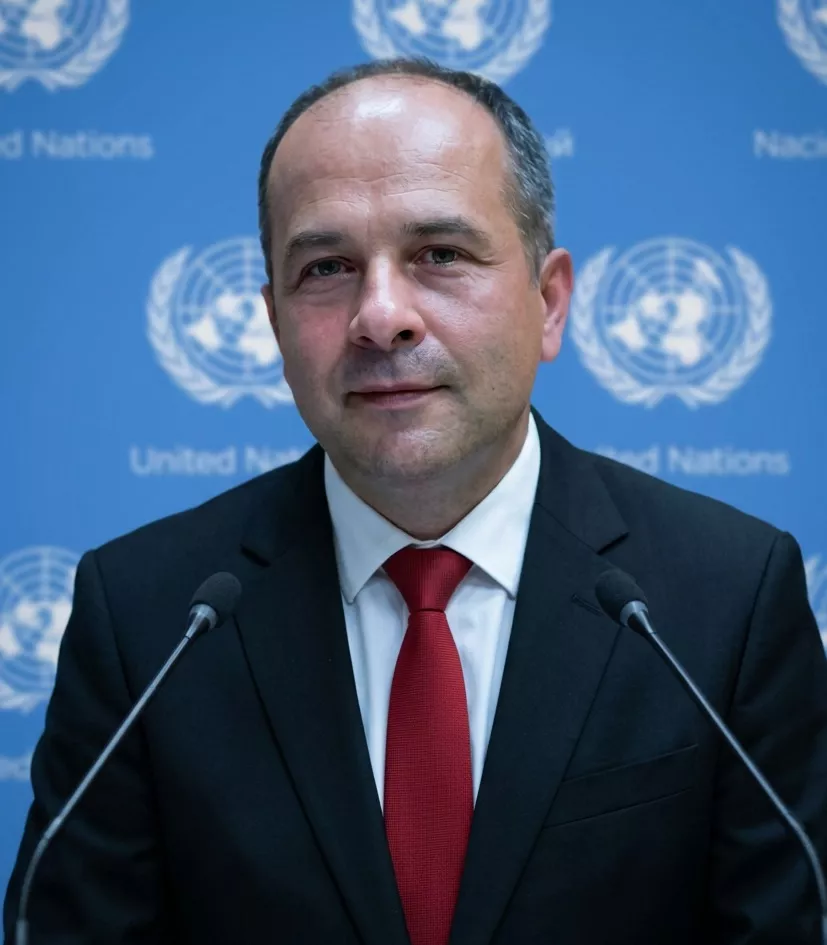
M. Azhgirevich: According to the Observer Research Foundation (ORF), Gulf states are diversifying their security partners because the war showed the "price of uncertainty." Does the US remain the indispensable anchor, or is that now a formality?
M. Gvindzhia: Definitely not. Even if the US remains in the region with a limited military presence, the Gulf states will become more oriented toward handling their own security. They may diversify arms purchases. A similar alliance with China and Russia is possible. Cooperation with Russia on the model of that with the US is possible for Gulf states on condition that Russian trade routes through Iran reach the Persian Gulf. China and Russia will work to integrate Iran into a bundle with the Gulf countries. Naturally, the US will be, and already is, against leaving the region. Before leaving, it may have to create unmanageable, protracted chaos in the Persian Gulf so that it can return later as an element of stability and security. The Gulf states will beg the US to come back on terms more favorable to the States.
M. Azhgirevich: The Middle East Institute (MEI) writes that the American military presence in the Gulf, badly damaged by Iran, has "outlived its usefulness." What do you think of that assessment, and what will it mean for the bases?
M. Gvindzhia: For now, the US presence has indeed outlived its usefulness. The bases will not close. A small technical contingent will remain.
M. Azhgirevich: Which outside players, in your view, gain the most from this reassessment?
M. Gvindzhia: If we imagine that in the future Europe produces politicians who think about the interests of their own countries, and transit from Europe through Russia to the Persian Gulf begins to work, then Europe, Russia, China and the countries of the region will benefit.
Gvindzhia's tone is harsher than Hassan's, and that is useful: we have two readings of one phenomenon. Hassan sees hedging and modules. Gvindzhia allows for a reverse move in which Washington itself clears the field in order to return on better terms. I do not assign this scenario a high probability, but I would not dismiss it either. CSIS, for example, writes plainly that Iran may emerge from the first stages of the war with greater influence, that US influence over the region's future may wane, and that Tehran expects a larger role for China, including diplomatic and possibly military, in the Persian Gulf.
Washington: A Center Turned Player
If the Gulf shows how a guarantor leaves, Washington shows why. Michael Brown is a national security lawyer, a Georgetown University graduate who speaks English, French and Russian and represents VIGIL Journal in the US and Canada. With him I discussed not maps or oil but procedure: how the US decides to use force and what it costs. There were three questions.
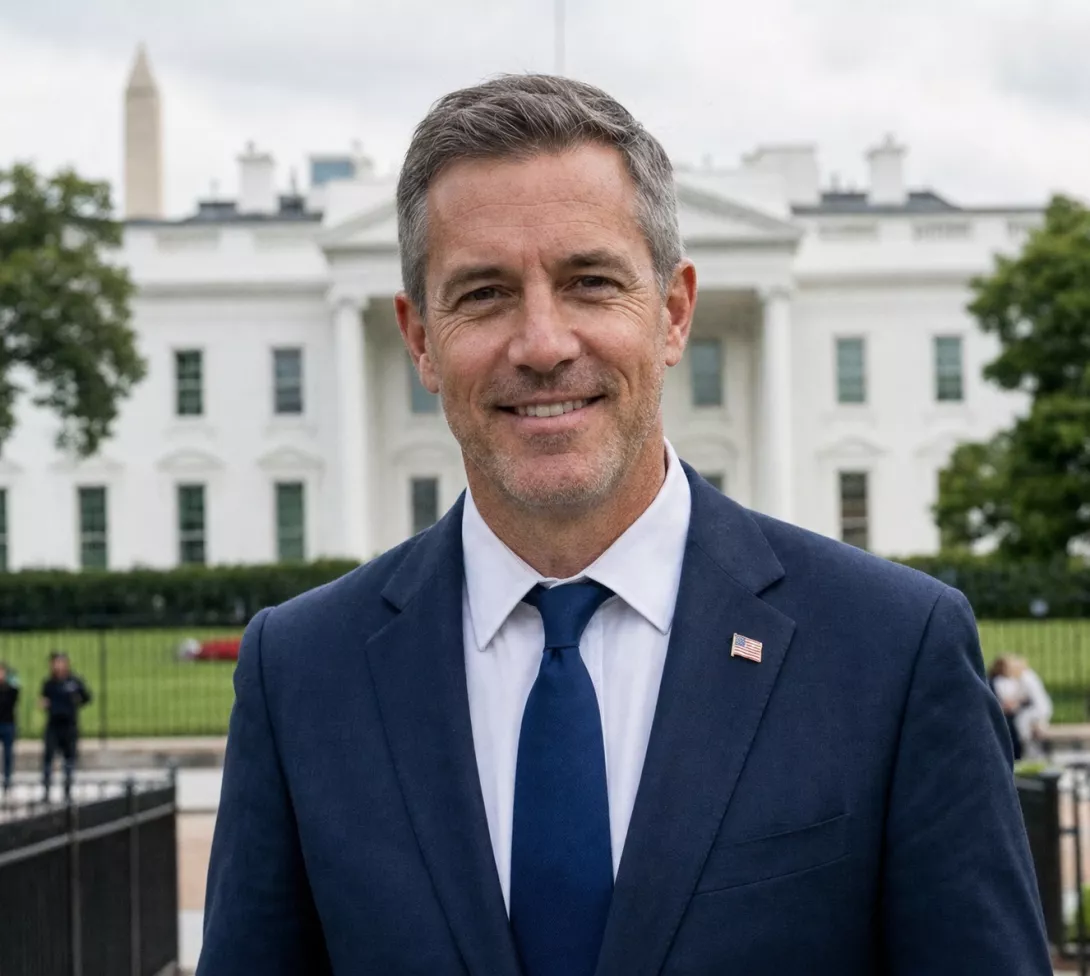
M. Azhgirevich: The war with Iran began without congressional approval. What does that say about how the US decides on the use of force, and why does it matter for allies?
M. Brown: For a lawyer, the key fact is that the operation began on February 28, while the President sent his War Powers Act report to Congress only on March 2. Congress did not declare war and gave no specific authorization. The administration then stated that hostilities had "terminated" with the April 7 ceasefire, so the 60-day clock need not be extended. That interpretation is disputed: Brookings cites the view that the count should start on February 28, and that the law is a safeguard in case a president does not seek authorization in advance.
For allies, this means something unpleasant: the decision for war is made quickly in Washington, and legal oversight kicks in later. The result is a fear among Gulf states of a war "they did not choose." A treaty with the US guarantees protection but gives no say in the decision to attack. That is one argument for diversifying partners.
M. Azhgirevich: War costs and risks to Gulf bases are rising. What price does the US pay for the role of single center, and can it be reduced?
M. Brown: The figures show the scale. According to a Central Command estimate of October 16, the war has cost 47 billion dollars, of which 29 billion goes to replenishing munitions. That sum does not include the cost of rebuilding damaged American bases. I would note that the US presence in the Gulf, seriously damaged by Iran, has already outlived its usefulness, and a serious debate on this is being prepared in the country.
Reuters describes Iran's strategy as one of attrition: make defending American forces expensive and turn host states into pressure points. If that logic persists, the US will pay twice, in money and in the trust of its partners. The cost can be reduced through greater burden-sharing with allies, but that would mean giving up the idea of a single center of power. This is a political choice, not a legal one.
M. Azhgirevich: The "Shield of the Americas" is built on declarations and memoranda, not a treaty. How solid a legal basis is that?
M. Brown: The problem is the word "declaration." The Shield of the Americas rests on joint statements by heads of state, not a ratified treaty. In October, the heads of state announced three "pillars": economic, security and multilateral coordination. In July, the US and other countries signed a memorandum on countering crime. Such documents are convenient because they can be concluded quickly and changed easily, but they do not strictly bind any party.
For the US, this is both an advantage and a risk. The executive keeps its flexibility, since it does not need two-thirds of the Senate. But the same thing means that the next administration or Congress can change course without serious legal consequences. Moreover, the political picture in Congress is shifting: after the midterms, Democrats won a majority and may push for a binding war powers resolution. This shows that domestic constraints can affect foreign initiatives as well.
Brown backed his argument with figures. To recall, Central Command put the cost at no less than 47.1 billion dollars as of mid-October: about 29 billion for replacing munitions, 6.1 billion for lost equipment and 11.9 billion in related costs. The war, I stress, was launched by the US and Israel on February 28 without consulting Congress. The result: on November 3, Democrats took both chambers, whereas earlier the chambers had repeatedly passed war powers resolutions that the administration ignored. There is an irony here that I will not hide. The political system that is supposed to restrain the use of force engaged only after Iran had already managed to plow up the region's security architecture.
The Hemisphere and the Money
Hassan left the question of other regions open, and I decided to test it on Latin America. Anastasia Davydova is a special correspondent of VIGIL Journal and a political scientist who graduated from the Russian State University for the Humanities and speaks Russian, English and Spanish. I needed someone who looks at the Americas not from Washington but from another geographic angle.

M. Azhgirevich: Is there a Latin American version of the "modular" world?
A. Davydova: Yes, and it confirms that the scheme is not tied to one war. The Gulf is assembling hedges after the Iranian shock, while Latin America is doing something similar without any shock. In 2026, MERCOSUR received an interim trade agreement with the EU from May 1, and from November 1 an agreement with EFTA took effect for Uruguay, Norway and Iceland. At the same time, a number of the same countries signed the Shield of the Americas statement on crime.
The parallel with the Gulf is structural: one government chooses trade with Europe, security with the US, and political dialogue with China, to which Xi Jinping addressed himself at the CELAC summit. There is no single center here either, though the occasion is different.
M. Azhgirevich: How are Brazil and Mexico using multipolarity?
A. Davydova: Here I turn to a countertrend that matters for completeness. The Shield of the Americas was launched in March as a US initiative to unite the hemisphere's governments around fighting crime. Many see in it Washington's interest in the region's resources. A curious symmetry emerges: in the Gulf the US is losing ground and partners are diversifying, while in its own hemisphere the US is trying to assemble a module of its own.
Brazil and Mexico do not appear in the lists of signatories known to me, but that may change. If they stay on the sidelines, they are using multipolarity as an opportunity for bargaining. It is too early for final conclusions.
M. Azhgirevich: What stereotypes get in the way of seeing the picture in the region?
A. Davydova: The main stereotype is that the region always follows the hegemon. Chile showed the opposite: its government convened to decide whether to sign the military pact of the Counter-Cartel Coalition, even though the country is already tied to the Shield. Governments do not copy the line of the center; they choose which modules to plug in. If you do not see this, the change of order will look like someone else's performance rather than the countries' own choice.
The logic is clear: when Brown has to explain that the Shield of the Americas rests on declarations, and Davydova shows that its participants simultaneously trade with Europe and talk to China, the same picture emerges from two sides. The single center does not vanish. It becomes one player among others, forced to coordinate its actions with both allies and its own Congress.
That leaves the question of money. Maxim Kuznetsov is a senior-level bank manager specializing in servicing and financing large corporate clients in the oil and gas, energy and industrial sectors. He served as vice president of Raiffeisenbank, holds a British qualification in banking, insurance and finance, and speaks English at a native level. I asked him to answer our questions.

M. Azhgirevich: According to The Conversation, the UAE's exit from OPEC could mark the start of a restructuring of the Gulf. What changes for the oil market and for Russia as an OPEC+ member?
M. Kuznetsov: The UAE's exit from OPEC was a decision long in the making, and the war with Iran became merely a convenient pretext. The real reason was Abu Dhabi's wish to break free of restrictive quotas and raise oil output, potentially by 40 percent or more. For the world market this means rising supply in the future, which in turn will lead to a price war. But that, of course, depends on the normalization of the situation around the Strait of Hormuz. For Russia, it means OPEC+ becomes more a platform for flexible bilateral deals, in which it will have to rely on political coordination with those prepared to keep playing by the rules. A great deal will depend on whether the remaining members have the will not to follow the UAE's example when oil prices fall.
M. Azhgirevich: The IMF forecasts that Gulf economies will shrink by 5 percent this year, although analysts expect a quick recovery. Which sectors and projects are at risk?
M. Kuznetsov: Given the current situation in the Gulf, as expected, the heaviest blow fell on oil and gas production and exports (regional output fell from 33 to 19 million barrels a day in the peak months), with Bahrain, Kuwait and Qatar suffering the largest losses (declines of 11 to 17 percent). Logistics and shipping are suffering too, as disrupted sea transport and supply chain failures have destabilized trade flows. This directly hits transit and re-export revenues and the operations of logistics hubs. The most ambitious diversification programs, above all Saudi Vision 2030, face a harsh reassessment under financial pressure. Saudi Arabia has already begun revising or suspending a number of giga-projects, such as the Mukaab and the NEOM smart city. Overall, the focus is shifting from costly showpiece construction to logistics, mining and technology. Analysts expecting a quick recovery may be right, but only on one condition: that hostilities stop and the Strait of Hormuz ceases to be a lottery for tankers.
M. Azhgirevich: Ground News reports that de-dollarization within BRICS has stalled because many members, above all India, do not support fully replacing the dollar. How far does this match your data on settlements in national currencies?
M. Kuznetsov: De-dollarization has indeed not become a common project, because India consistently rejects a single BRICS currency, proposing instead to link national digital currencies and payment systems (UPI, Pix, the digital ruble and the e-CNY) without creating an "anti-dollar bloc." It is, one might say, a workaround. Notably, around 96 percent of India's trade with Russia already runs through rupee-ruble mechanisms, and almost all of Russia's trade with China is in yuan and rubles, so de facto de-dollarization is moving faster at the bilateral level than the multilateral one. The main question is which is more advantageous: a loud "BRICS currency" that frightens Washington and has no infrastructure, or a quiet 2 to 3 percent saving on conversion through local settlements. The numbers favor the second, and India understands this perfectly.
Fresh statistics bear out Kuznetsov's answer. The UAE left OPEC effective May 1, having announced it on April 28. In September the country produced 3.917 million barrels of oil a day, 15 percent more than in February and 470,000 above the quota that would have applied to it in May had it stayed in the cartel. The IEA gives a higher figure of 4.4 million, and including condensate and other liquids a record 5.3 million barrels a day. Richard Bronze of Energy Aspects argues that the increase is explained not by the OPEC exit but by Abu Dhabi's willingness to take risks sooner than others and resume exports. This is the same argument as between Hassan and Gvindzhia: what is the cause and what is merely the pretext.
Conclusions and Forecasts
The thesis holds. In all three examples the single center gives way to linkages, but each module has its own price and its own shelf life.
Congress and the war. Democrats won both chambers, but they lack the two-thirds needed to override a veto, and analysts note plainly that earlier attempts to cut off war funding ended in failure. I expect the new Congress in January 2027 to halt funding if combat operations continue. I think the fight until spring will be over the budget, not over a formal declaration of war. The US struck Qeshm Island again on November 3, so hostilities have not ended. My forecast: by summer 2027 the administration will reduce the American presence in the Gulf or shift part of its functions to allies, because the money for the previous scale will not be there. I put the probability of such a step at 70 percent.
The Gulf. I expect that by 2028 two or three overlapping security mechanisms will operate in the region, with American bases remaining in reduced form. The Mecca pact and the Red Sea coalition described by CSIS will become the template: each country plugs into the module that covers its particular threat. China will most likely take on the role of mediator, as the Iranian side predicts. I consider Gvindzhia's forecast that the US will return "on more favorable terms" possible but not the baseline: Washington has spent too much money and trust to create chaos of its own free will.
Oil. The UAE is producing near the limit of the capacity it has brought to market, while the Strait of Hormuz is working only partially, in part thanks to American military logistics. When the strait normalizes, supply will jump. Hassan and Kuznetsov both speak of a rift within the Gulf and of a price war. I forecast that in 2027 OPEC+ will face its first serious test of discipline: if any member repeats the UAE's move, the cartel will begin to fall apart. For Russia, this means that today's high prices offer a breather, after which it will have to bet on the bilateral deals Kuznetsov describes. The transit corridor through Iran that Gvindzhia outlines remains a long-term bet: it requires security that does not yet exist.
Money. There will be no global BRICS currency before 2030. India has no interest in an anti-dollar bloc, and bilateral settlements already work without any common project. Russia and China will expand trade in national currencies because it benefits both, not because they have built an alternative system. De-dollarization will creep forward, one module per deal.
Latin America. The Shield of the Americas will remain a set of declarations until Congress gives it legal form, and in the current balance of power that will not happen. MERCOSUR will keep trading with Europe, and political dialogue with China will remain a separate module. Brazil and Mexico will keep their position as arbiters, each in its own way.
People. For the American taxpayer, the war has cost at least 47 billion dollars, and the bill is growing. For residents of Gulf states, the blow fell on incomes: Kuznetsov cites the figures on falling output and the suspension of giga-projects. For Europeans and Asians, it is a bill for gasoline and gas. I would expect energy prices to stay volatile until 2028 and then, if the UAE and others build up output, to begin falling. For Russians, the main effect will come through the ruble exchange rate, export revenue and the terms of trade with India and China.
What do we get in sum? A world with no single captain but many navigators, each charting a course for their own ship. The irony is that such an order suits everyone except those on whose ruins it will be built. And the more linkages there are, the harder it is to predict which will snap first.