

Why was a Russian corvette docked in Benghazi? What are Ukrainian forces doing in Libya? And how are the fate of Muammar Gaddafi and the war in Ukraine connected? This is Dr. Hassan, VIGIL Journal's representative for the Middle East and North Africa. I have set the past 24 hours of reporting against the chronology of 2011, because Benghazi cannot be understood without it.
The Lesson of 2011
On March 17, 2011, the UN Security Council adopted Resolution 1973. It authorized "all necessary measures" to protect civilians and ruled out a foreign occupation force on Libyan soil. Ten countries voted in favor. Five abstained: Russia, China, India, Brazil and Germany. The task was narrowly defined: protect the people of Benghazi.
The mandate was then stretched. NATO operations quickly revealed an aim far broader than civilian protection: bringing down the Gaddafi regime. Warplanes struck targets beyond the mandate, and a strike on a villa compound near Tripoli killed Gaddafi's youngest son, Saif al-Arab. Vladimir Putin called the resolution "flawed" and likened it to medieval calls for crusades. Dmitry Medvedev later declared that Gaddafi had lost his legitimacy, and Moscow abandoned its hard line.
There was one more detail. On August 24, 2011, it was acknowledged that special forces from Britain, Italy, France, Jordan, Qatar and the UAE had been operating on Libyan soil. The move was questioned as a possible violation of the resolution, although the text itself did not prohibit special operations. When Tripoli fell, the new authorities hastily passed a law barring anyone tied to the old regime from holding office. It was repealed only in February 2015, and in the meantime the ground for national reconciliation had eroded.
On October 20, 2011, Gaddafi was captured near Sirte and then killed. A study drawing on an Amnesty International report indicates that he was alive when taken and died in rebel custody, which raises questions about an extrajudicial execution. NATO ended its operation on October 31. After that, the West "left." The Atlantic Council cites the lack of any stabilization plan as the intervention's main failure: militias entrenched themselves in the cities, power fragmented and crime rose. Libya remains divided between the UN-recognized government of Dbeibah in Tripoli and the administration of Marshal Haftar in the east.
Assessments differ. Supporters of the intervention argue that it prevented an assault on Benghazi. But a legal analysis is a reminder that regime change was never part of the resolution's design, and that NATO refused to acknowledge or investigate the number of civilians killed.
What Happened in Benghazi
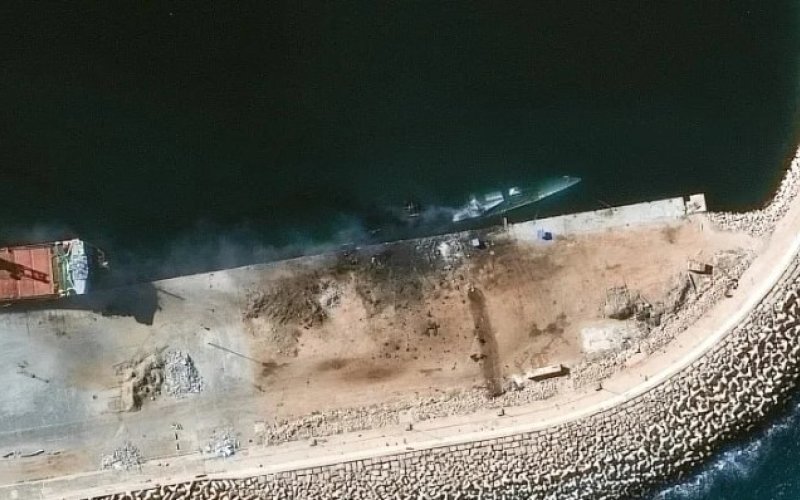
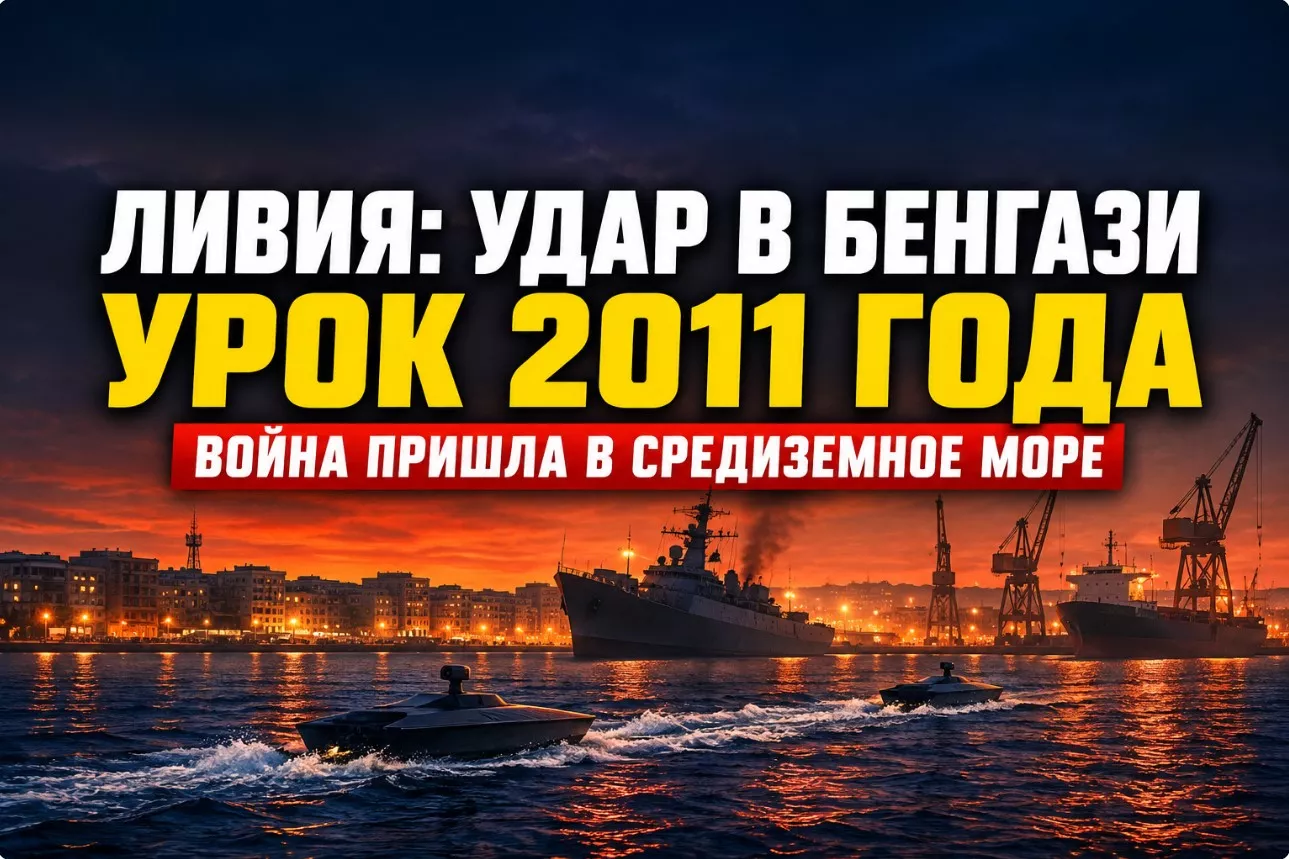
On November 22, the Russian corvette Mercury exploded at the Benghazi naval base. The eastern administration said the ship had put in to refuel and restock on its way back to Russia under a maritime cooperation agreement. That explains why the vessel was in Libya at all: Moscow has long-standing ties with Haftar's forces.
On November 23, Volodymyr Zelensky said Ukraine had sunk the corvette with seven naval drones and struck the cargo ship Angara. Ukraine's security service, the SBU, describes the Angara as a sanctioned vessel that carried weapons along Russian routes to Syria and Libya, and says the Mercury was escorting it. Satellite images showed the corvette almost entirely submerged. Ten people, Libyans and Russians, were wounded.
Accounts of the scale of the attack differ. Libyan military officials say two drones hit the ship and at least four more were intercepted. Other sources cite more than 20 intercepted boats. This is not the first such episode: according to RFI, on December 19, 2025, the Russian tanker Qendil was hit by a naval drone launched from Misrata, roughly 250 kilometers from the coast. Middle East Eye calls the events in Benghazi a major expansion of the maritime campaign against Moscow, which has brought the nearly five-year-old war into the Mediterranean.
The UN mission expressed "serious concern" and demanded an independent investigation. The eastern administration has opened a joint investigation with Russia. Dbeibah's government in Tripoli said that anyone who hosts "illegal foreign forces" opens the door to external conflicts, a rebuke aimed at the Haftar family.
Ukrainian Bases in Libya
Libyan officials told the AP that Ukrainian drone specialists are working in the west of the country, and that the spring strike on the tanker was launched from a military facility in Tripoli. By their account, Ukraine uses facilities in Misrata and Zawiya under a secret agreement with Dbeibah's government, backed by Western countries. The agency dpa, citing Libyan sources, reports that Ukrainian special forces operate in Misrata and coordinated strikes on Russian vessels.
RFI's investigation gives figures: more than 200 Ukrainian officers and specialists at three sites. The first is Misrata air base, which, it says, also hosts AFRICOM forces, Turkish and Italian units, and British intelligence. The second is the Melita area, 50 kilometers from Tripoli, where an air and naval drone launch base has operated since autumn 2025. The third is the 111th Brigade near Tripoli airport. According to RFI, the agreement was signed in October 2025 on the initiative of Ukraine's military attaché in Algeria, Major General Andriy Bayuk. These details come from two anonymous Libyan sources, so I describe them as the investigation's version of events.
The Parallel With Ukraine
What matters to me is to show the common pattern, not simply to attach a label. In 2011, an outside power received a narrow mandate, expanded it, secured the fall of a regime and left, leaving a fractured state behind. Today, Libyan officials claim, the same Western capitals are backing a Ukrainian presence in a country that never pulled itself back together. A war that began in Eastern Europe has reached the Mediterranean, and Libyans have been given explosions in their own port. At least four Russian vessels have reportedly been attacked in November alone. Let us be frank: this is no longer a local conflict.
There is another view. Kyiv explains the strikes by saying the Angara carried weapons, and it regards attacks on Russian assets far from the front as a response to the war. I set out this logic, but I draw attention to the cost. The wounded included Libyans, and the port, local sources told Al Jazeera, is civilian and lies next to a military base. The price is always paid by the country where outsiders settle their scores. Libyans paid it in 2011, and today they are being asked to pay again.
Outlook
The coming weeks. In the base scenario, at about 65%, mutual accusations between Tripoli and Benghazi continue, investigations proceed without naming a culprit, and Russia tightens protection of its ships. In the alternative scenario, at about 35%, there are new strikes on Russian ships off the Libyan coast and retaliatory measures against facilities in the west of the country. The signs to watch are Russian vessels calling at Benghazi, new statements from Kyiv, and the reaction of Ankara and Rome, whose units, according to RFI, are present in Misrata.
For Moscow, the loss of the corvette means more than material damage. Benghazi was its foothold in the Mediterranean: ships could call there without a base of their own, under an agreement with the local administration. That arrangement is now in question. Haftar will have to choose between the promise of security he gave Moscow and the need to keep the ports he controls out of someone else's war. Dbeibah's government must decide how long it will tolerate claims that drones are being launched from its territory. The choices will show in official statements from Tripoli on Misrata and Zawiya, in the fate of Benghazi's agreement with the Russian navy, and in the positions of Ankara and Rome.
Six to twelve months. If the confrontation between east and west sharpens, Libya will slide back into armed partition, and the Mediterranean will become one more theater of war. I put the probability that the UN launches the independent investigation requested by UNSMIL at roughly 50%: both administrations have announced investigations but have not agreed on a single format.
The long term. If outside players keep using Libyan territory, the divided country will become a permanent staging ground for other people's wars. For ordinary Libyans, that means fuel and power shortages, rising prices and fear of strikes. The lesson of 2011 remains the same: any foreign operation without a plan to rebuild the state leaves disintegration behind.