

My five- and seven-year-old "little fighters" signed up for martial arts, yet I still believe what they really signed up for is learning how to live. It all started with skepticism and fear, and ended in deep respect for the people who have built not just fighters in that gym, but character. I want to tell this story in order: about Kudo, about Yuri Panov, about the Titan club, and about one ordinary gym where it all comes together.
Where My Skepticism Began
When my boys first brought up martial arts, I was skeptical. They are only five and seven. I worried about injuries and heavy physical strain. I pictured bruises, tears, and an adult harshness that has no place in a child's life. After the very first practice, those fears vanished—and it wasn't the gym or the uniform that did it, but a person.
My boys ended up in Sensei Alexei Ovchinnikov's group. He isn't just a coach; he is an educator. He connected with the kids immediately and, on their very first day, put them into a full children's sparring match. They were scared. So was I. I stood against the wall thinking I was about to step in and stop the whole thing. But Sensei was right there beside them, and with his support, the boys pushed past their fear and stepped into the ring.
Now for what I dreaded most. Kudo is a tough, full-contact martial art, yet athletes compete in full protective gear—and only in full protective gear. That keeps the risk of injury to a minimum. There are no broken noses or cauliflower ears here. Every session ends with a heart-to-heart talk with Sensei. He teaches them right from wrong. He explains what fear is and how to overcome it, and reminds them that every person, no matter how small, is an individual in their own right. We came for Kudo, and found ourselves in a philosophy class as well.
Where Kudo Came From
The discipline emerged in Japan in the early 1980s. It was founded by Takashi Azuma, a student of Masutatsu Oyama and a product of the Kyokushinkai school. Azuma grew up on hard-style karate and eventually asked himself a simple question: why do tournaments ban the very things that happen in a real fight? He combined strikes, throws, and grappling into a single system and called it "extended karate."
To me, that matters for one reason. Kudo doesn't pretend to be a pretty game. A child here isn't rehearsing moves in thin air; he faces a live partner who is trying just as hard. That is precisely why the protective gear I mentioned earlier is mandatory, and why honesty and respect for one's opponent are irreplaceable.
Yuri Panov: The Man at the Source
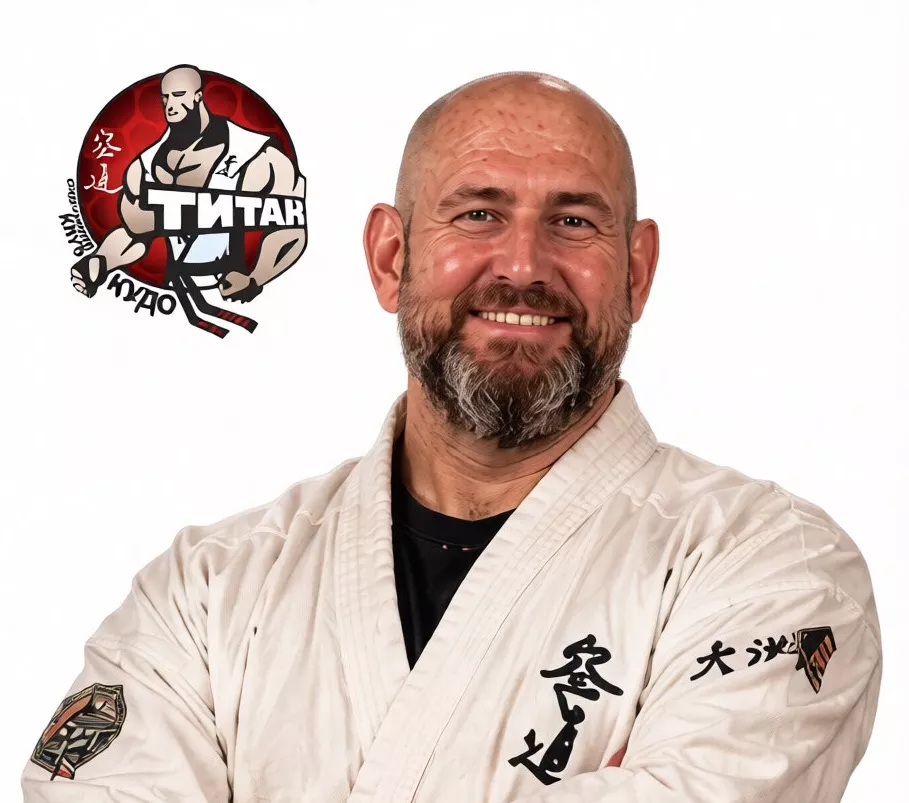
Titan was founded and is led by Yuri Vladimirovich Panov. He is an Honored Master of Sports in Kudo and holds a fourth-dan black belt. Born on September 18, 1983, his accolades are listed on the Russian Kudo Federation's website: gold at the 2009 World Championships, silver at the 2014 World Championships, gold at the 2011 World Cup, and gold at the 2016 Kudo Challenge. He has won the Russian national title multiple times. The Federation credits him as a five-time Russian champion, while the club's video channel cites six titles, including wins in 2017 and 2018. I won't presume to decide which figure is more accurate, so I'll give both.
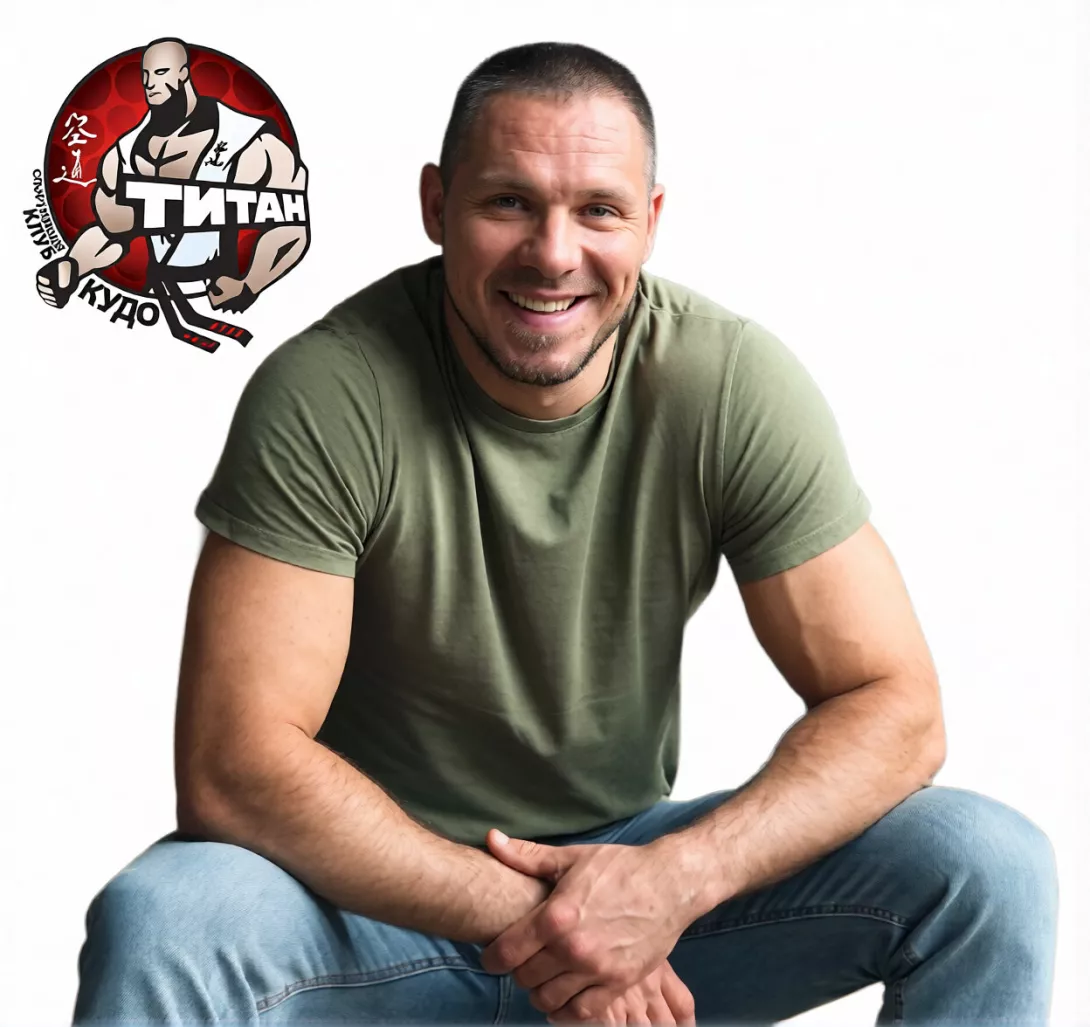
Better than any title, though, his character comes through in a story he told in his own book. I'll retell it in my own words.
When Yuri was twenty, he worked as an intern at a fitness club and decided one day to drop in on a local karate class. The class was led by one of the best fighters in the city, a practitioner of a very tough Okinawan karate style. The instructor was around thirty, weighed about a hundred kilograms, was heavily muscled, and looked down his nose at everyone. Panov himself had only been training for three years at that point; he wasn't a champion yet and had only won local tournaments.
At the end of the session, the instructor asked whether his guest had any martial arts background. "Kudo," Yuri replied. "Great, let's spar lightly—open hands, no gloves." Panov agreed. Moments later, he was hit with a hook so hard he lost his bearings; he had thought they were just going light. He answered in kind. Waiting for an opening, he threw his signature move, one he had drilled since childhood—a spinning heel kick. His heel caught the man right on the carotid artery.
He had never landed that kick in sparring before and had no idea how people reacted to it. The instructor dropped to the floor and began to snore. Convinced he had just killed a man, Yuri sprinted for a doctor, pushing past anyone in his way. Curious onlookers were already peering in from the cardio area. He found a doctor with smelling salts and brought him back, by which time the instructor was sitting on the floor against the wall. Seeing Yuri, he asked what day of the week it was, how many people had been in class, and how Yuri had hit him. Panov realized his opponent had temporarily lost his memory and patiently answered every question.
In the locker room, the instructor came fully to his senses and said, "Come on, let's go another round." Yuri agreed again. The second sparring session lasted about thirty minutes, and by then it was simply a mixed martial arts brawl. As Panov put it, the coach was trying to patch up the dent in his ego, but couldn't pull it off. Both walked away bruised and agreed to meet again sometime. They never did.
Two things in that story struck me. First, a young fighter who had just felled a formidable opponent didn't panic for himself—he worried about the other man and was the first to run for help. Second, he agreed to the rematch because refusing would have wounded the man's pride a second time. That is the exact kind of character I want for my children.
How Titan Came to Be
Panov founded the club in 2010. On its VKontakte page, it is billed as "the Kudo World Champion's club," noting that it has been training fighters since 2010. The homepage carries the motto "Only life is more real!" and enrollment is open year-round for children, teenagers, and adults.
I walked into the club as a grown man, looking at it first through the eyes of a parent inspecting everything: the gym, the gear, the people. I won't hide it—the motto put me on edge. Yet on that very first evening, I realized that "only life is more real" isn't bravado here; it's honesty. You can't fake it in that room: either you step up, or you don't. And the kids step up.
A Class in Philosophy
I talk a great deal about geopolitics, international relations, and Russia's place in the world. Those conversations matter, and I have no intention of giving them up. Yet we often forget that our country's standing on the global stage begins with different conversations—the ones that matter most: shaping character and raising our children.
Yuri Panov has managed to lay that foundation. It runs like a thread from the heights of competitive sport, through the sensei, straight to the fragile, sponge-like mind of a child. He is a world champion, and in his club a five-year-old boy hears that he is an individual and that fear can be walked through. There is no disconnect between those two facts: Sensei Ovchinnikov carries forward the work Panov started, translating it into a language a child can understand.
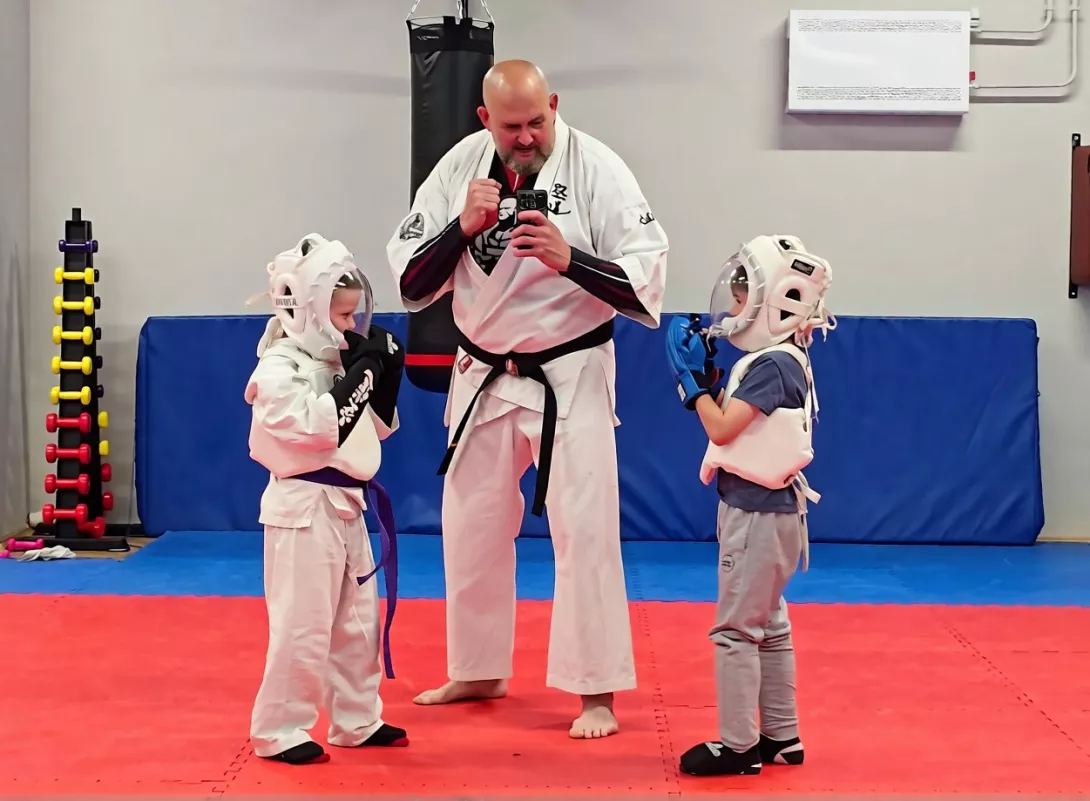
That commands both respect and admiration. I watch it unfold as a father who came looking for his children's safety and walked away with something far greater. My five- and seven-year-old sons don't even know the word "character" yet, but every week they build it: they step onto the mat, fall, get back up, listen, and on the way home retell everything Sensei said that day. The fear I felt standing against the gym wall has turned into quiet pride.
Once, I arrived early to pick up my "little fighters" and caught the tail end of practice. The kids were doing push-ups, and my younger son was crying. Tears were streaming down his cheeks, yet he kept pushing himself up. He was hurting, he was exhausted, but he wouldn't stop because he couldn't let his teammates and his sensei down. I thought, that's it—he's done. Yet at the very next practice, he walked in eager and excited. That is how the character of real men is forged.