


News today increasingly speaks of a possible conflict between Turkey and Israel. Rhetoric is soaring: Erdoğan calls Netanyahu “the Hitler of our time,” while Israeli media increasingly refer to Turkey as “the new Iran.” Against the backdrop of Israel’s war with Iran, Turkey’s presence in Syria, and rivalry in the Eastern Mediterranean, tensions have reached a point where words already sound like threats.
But this has happened before, and more than once. The history of the Middle East and the Mediterranean is full of examples where yesterday’s allies within a single coalition became today’s irreconcilable enemies, and spheres of influence were redrawn not by friendship but by force.
When Empires Divided the Region
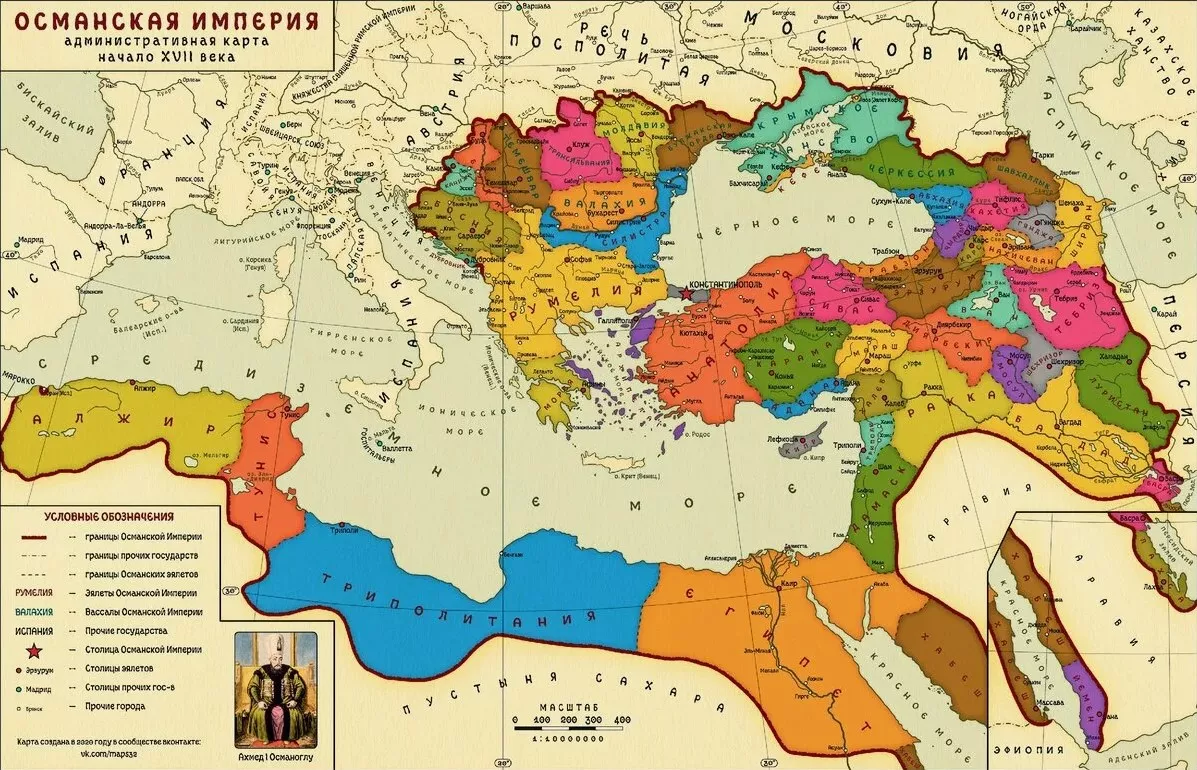
In the early 20th century, the Ottoman Empire, predecessor of modern Turkey, controlled much of the Middle East, including Palestine, Syria, and Lebanon. After the First World War, the empire collapsed, and its territories were divided between France and Britain under League of Nations mandates. Turkey, already as a republic, lost everything beyond the borders of modern Anatolia.
The state of Israel appeared on the map only in 1948, on the territory of former British Mandate Palestine. From the very beginning, relations between the two countries were complex: sometimes pragmatic cooperation, sometimes sharp cooling, depending on who sat in Ankara and which interests dominated in the region.
All that is new is indeed the old, well forgotten. Today’s conflict is not the first and not the last in a long series of redistributions of spheres of influence in the Middle East.
A Lesson from History: When Allies Become Enemies
In the 1950s and 1960s, Turkey and Israel were de facto allies within the informal “peripheral alliance” against pan-Arab regimes supported by the USSR. Both countries received American aid, and both saw a threat in radical Arab nationalism.
But by the 1980s and 1990s, relations began to sour. The rise of Islamist forces in Turkey, shifts in foreign policy priorities, and the growing influence of Erdoğan all turned pragmatic partnership into ideological confrontation. Today, as Turkey claims the role of leader of the Islamic world and Israel consolidates its position as a regional military superpower, their interests have collided head-on.
A familiar pattern, is it not: first a common threat unites, then common interests divide.
Who Is Stronger: Numbers vs. Technology
According to Global Firepower data for 2026, Turkey ranks 9th in the world in military power among 145 countries, Israel 15th. Ankara surpasses Israel in army size, equipment numbers, and the scale of its armed forces. But Israel retains advantages in high-technology segments: air defense and missile defense systems, intelligence, cyber capabilities, and, crucially, a de facto nuclear potential that Turkey does not possess.
In recent years, Turkey has narrowed the technological gap through its own drone programs, missile projects, and the development of the fifth-generation KAAN fighter jet, but a significant portion of these projects remains in the testing phase.
History is cyclical: in such confrontations, victory goes not to the side with more soldiers, but to the one better prepared for long-term confrontation and with more reliable allies.

Why Direct War May Not Happen
Most experts agree on one point: the probability of a full-scale war between Turkey and Israel remains limited, despite rising tensions. There are several restraining factors.
First, both countries are NATO members, and a direct clash between allies within the alliance would create a crisis that Washington will avoid at all costs. Second, Israel possesses nuclear weapons, which remain a critical deterrent for Turkey. Third, both sides understand that a war in Syria or Lebanon would quickly escalate into a regional conflagration involving Iran, Arab states, and possibly Russia.
After all, this has happened before: in 1973, when Egypt and Syria attacked Israel, the conflict turned within days into a global crisis with the threat of nuclear confrontation between the US and the USSR. Today, the stakes are no lower.
What History Says About the Redrawing of Spheres of Influence
The history of the Middle East knows many examples of two regional powers struggling for dominance: the Ottoman Empire and Persia, Britain and France in the mandate period, Nasser’s Egypt and Israel in the 1950s–1970s. Almost always, the outcome was the same: either one side acknowledged the superiority of the other, or the conflict was frozen for decades without a clear winner.
Today, Turkey and Israel find themselves in the same situation: both want to be the leading power, both understand the cost of direct war, both seek allies and points of pressure. But neither is ready to fully retreat.
The lesson from history is simple: when two strong powers divide one region, war becomes a matter of time only when one side decides it can win quickly and cheaply. As long as no such calculation exists, the conflict will smolder at the level of rhetoric, proxy clashes, and an arms race, but will not escalate into open war. Although, the East is a delicate matter.













.png)
.png)

.png)
.png)