


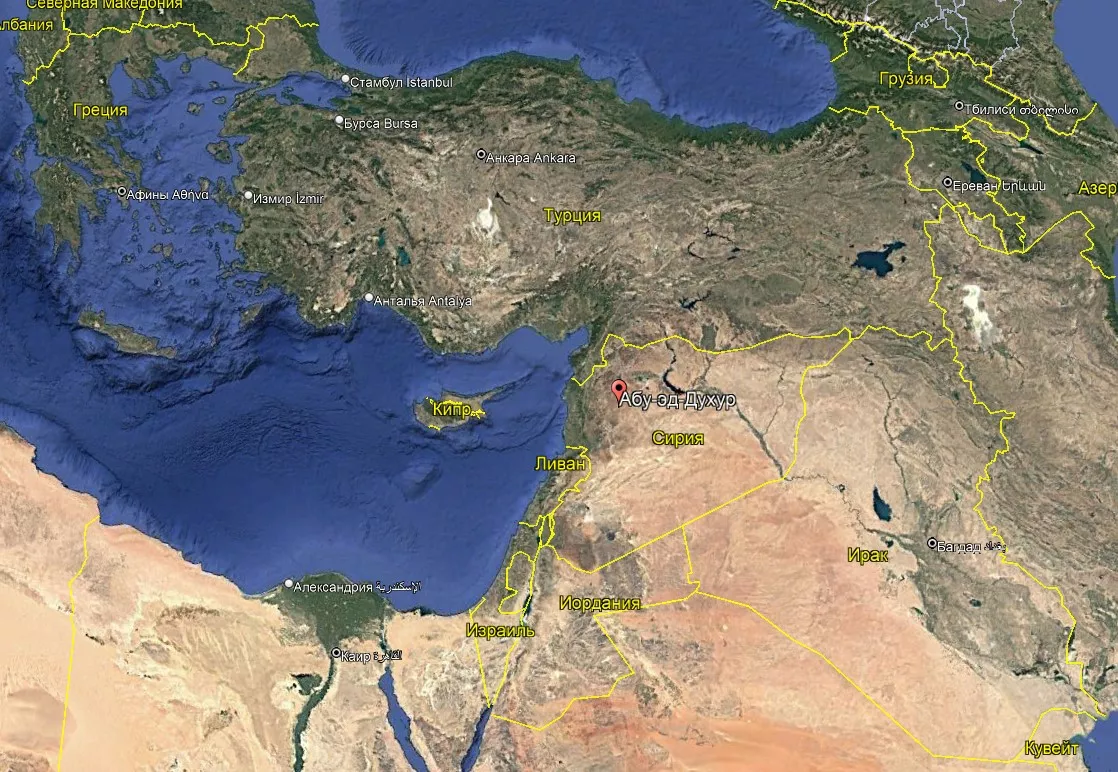
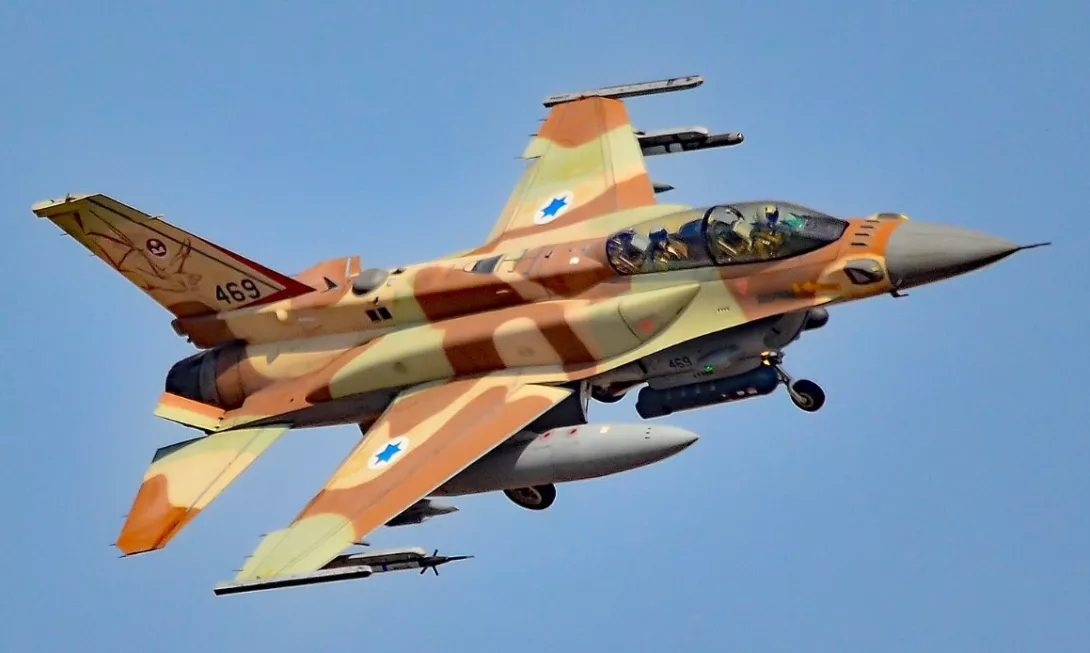
Israel and Turkey are fueling a new conflict in the Middle East. Israeli aircraft struck the Abu al-Duhur airbase in Syria, and this is no longer a story about another diplomatic spat. On August 18, eight strikes were carried out on a facility in Idlib province. Tel Aviv’s explanation is straightforward: it was necessary to prevent Turkey from establishing military infrastructure in Syria.
A Strike on a Facility That, According to Damascus, Did Not Exist
Israel stated that Turkish military infrastructure could have appeared at the base, and therefore decided to act preemptively. Syrian authorities respond that Damascus informed Israel even before the attack that there would be no permanent Turkish base or contingent at Abu al-Duhur. Turkish officers did indeed visit the facility, but, according to the Syrian version, this was for training purposes, not for preparing a full-fledged military base.
The difference between these two scenarios is not cosmetic. In the first case, Israel destroyed a confirmed military target of an adversary. In the second, it struck Syrian territory based on an assumption about Turkey’s possible future plans. If this is sufficient grounds for an air strike, then international law can be sent to a museum. Along with it, the principle of territorial sovereignty can be archived as well.
Israel’s Formula: “Strike Before It’s Too Late”
Tel Aviv’s logic is familiar: any potential threat must be eliminated before it becomes real. With this formula, Israel has justified numerous operations beyond its own borders, and now it has applied it to the Turkish presence in Syria.
The reason is clear. Turkey is strengthening its positions in northern Syria, and Israel does not want Turkish reconnaissance assets, air defense systems, or aviation nearby. For Tel Aviv, this means a loss of freedom of action. Israel is accustomed to carrying out strikes on Syrian territory without needing to coordinate them with Damascus. The appearance of Turkish military forces there changes the rules of the game.
But politically, the explanation looks rather bold: a state is bombed not for an action it has committed, but for what it allegedly might do in the future. Today it concerns Syria and Turkey; tomorrow the same logic could be applied to any country in the region.
Ankara Received a Direct Signal
Turkey regarded the attack as a violation of Syria’s sovereignty and sharply condemned Israel’s actions. For Ankara, this is not merely a diplomatic inconvenience. Israel has effectively demonstrated that it is prepared to strike facilities linked to Turkish plans, even if no Turkish troops are present there.
Such a signal cannot be ignored, but a direct military response is also dangerous for Turkey. In Syria, Turkish and Israeli aircraft, air defense systems, intelligence units, and cover forces could quickly come into confrontation. A single downed aircraft or a deceased servicemember could turn the current exchange into a full-blown military crisis. This is precisely why Ankara has so far limited itself to statements and appeals to the international community.
For Israel, this is a convenient situation. It is testing the limits of what is permissible, while the opponent is forced to choose between a response that could lead to war and silence that will be perceived as weakness.
American Guarantees Once Again Proved to Be Mere Paper
A particularly bitter taste is added to the whole story by the security agreement between Israel and Syria, concluded with U.S. mediation. The document was supposed to reduce the risk of new strikes and establish at least minimal rules of conduct for the parties. However, some time later, Israel carried out a strike on a Syrian military base, citing its own threat assessment.
That is the entire practical value of such guarantees: as long as they do not prevent the stronger participant from acting at its discretion, they are solemnly displayed at diplomatic summits. As soon as a convenient pretext for a military operation arises, the paper is put away in a drawer, and aircraft are put forward in its place.
For Syria, the conclusion is obvious: the agreement does not protect against a strike if Israel deems it necessary. For Turkey, the conclusion is even more unpleasant: U.S. mediation does not guarantee that Washington’s ally will take into account the interests of even another U.S. partner within NATO.
Why the Region Cannot Escape This Cycle
Abu al-Duhur has become part of a broader picture. In 2026, the Middle East is simultaneously living through several conflicts: the U.S. and Iran are engaged in a protracted confrontation, Israel regularly attacks in Syria and Lebanon, Turkey is consolidating positions in northern Syria, and Iran is trying to preserve its influence in the region. Any new strike builds upon existing tensions and expands the space for the next one.
The majority of escalations are initiated, in one way or another, by Israel. Tel Aviv explains its actions as a fight against threats, but in practice it is Israel that most often transfers the conflict onto the territories of its neighbors. The strike on Syria is another example: instead of negotiations, Israel chose to destroy a facility it deemed dangerous, although the Syrian side denied the presence of a Turkish base there.
Thus, a small country with a population of about 10 million people is gradually claiming the role of one of the main sources of instability in the world—not because of its size, but because of the freedom of action that its allies allow it.
Will There Be Sanctions, or Again Only Statements?
Most likely, no serious sanctions will follow. U.S. Special Representative for Syria Tom Barrack has already called the strike an unnecessary escalation, but Washington rarely moves from criticizing Israel to measures that could truly change its behavior. European states will most likely limit themselves to calls for restraint and reminders about international law.
Israel knows the value of these statements. If the only consequence of another strike is expressions of concern and diplomatic formulations, the incentive to stop disappears. Then an operation that yesterday was considered a dangerous exception becomes tomorrow a working instrument of policy.
Now everything depends on Turkey. If Ankara limits itself to a protest, Israel may decide that the risk was acceptable. But if Turkey begins to increase its military presence in Syria, retaliatory escalation will become almost inevitable. And then the question will no longer be whether there will be sanctions, but who will be the first to dare to move from strikes on Syrian territory to direct confrontation.











.png)
.png)

.png)
.png)