


Across the Middle East, governments are preparing for a possible return to large-scale fighting while trying to head it off through diplomacy. Iran is showing off its missile capabilities. Israel is debating a military operation that could bring it into direct confrontation with Tehran. Saudi Arabia, Turkey and Pakistan are sending their top defense and intelligence officials to the Iranian capital. This is no longer an exchange of statements: states are coordinating their actions in case the political standoff slides back into direct war.
Preparing for a conflict, however, does not mean every party has decided to start one. Military preparations can serve to carry out a strike, to deter an adversary, or to strengthen a negotiating position. At the moment these purposes overlap, and it is becoming harder to tell a show of force from preparation for a real operation.
Israel: A Dispute Over Whether to Strike
On the evening of October 25, Israel's Channel 12 reported a rift between Prime Minister Benjamin Netanyahu and Chief of the General Staff Eyal Zamir. According to the broadcaster, the disagreement concerned an order to carry out an undisclosed military operation that could quickly have led to a confrontation with Iran ahead of the October 27 parliamentary election. Zamir reportedly demanded further discussions and a signed document confirming the legal basis for the operation.
Precision matters here. The initial report did not disclose what the order contained, so any claim that the army received a final instruction to bomb Iran immediately goes beyond what has been published. Netanyahu rejected the reports of a clash with the chief of staff. Channel 13, meanwhile, had earlier quoted Zamir as saying there was no operational need to strike before the election specifically.
A further report appeared on October 26. According to CNN, as relayed by The Times of Israel, Netanyahu pushed for a joint American-Israeli strike, but the Trump administration proposed delaying action until Washington was ready. The report cites American officials and an Israeli source; Netanyahu denied this version as well.
The dispute is about more than the choice of date. Military leaders must assess Iran's likely response, the strain on missile defenses, the duration of an operation and the need for American support. The political benefit of projecting resolve may prove short-lived, while the consequences of retaliatory strikes could take months to repair.
Iran: Showing It Can Still Respond
Reports of missile drills have surfaced throughout October. Israel's Channel 14 reported large-scale exercises on October 11 involving ballistic missiles, drones and aircraft. Later reports also describe repeated missile launches.
The political message is that earlier strikes did not strip Tehran of its ability to hit back. Deterrence depends on more than individual missiles: it rests on the survival of command structures, communication between units, the readiness of launchers and the capacity to keep fighting after a first attack.
The drills carry their own risk, however. An adversary may read heightened readiness as the start of an operation. With warning times so short, a decision to strike preemptively could come before either side has worked out the other's intentions. A misjudgment can therefore become a source of escalation in its own right.

Why Three Security Chiefs Are Going to Tehran
Talks in Tehran between representatives of Saudi Arabia, Turkey and Pakistan are scheduled for October 26. The participation of Khalid bin Salman, Asim Munir and Ibrahim Kalin is supported by reports citing Iranian and Saudi officials as well as Turkish security sources. The delegation is expected to meet President Masoud Pezeshkian and the leadership of Iran's Supreme National Security Council.
The lineup is telling: a defense minister, an army chief and an intelligence head. Talks at this level allow for discussion of sensitive questions, including threats to infrastructure, the passing of warnings, the acceptable limits of military action and the prevention of accidental involvement by neighboring states.
Still, it is premature to read the meeting as the creation of a joint anti-Israeli military front. The Saudi side publicly describes it as an effort to ease tensions and support dialogue and a diplomatic settlement of the US-Iran crisis. That wording differs from the harder language about "Israeli expansionism," and the difference reflects the participants' diverging interests.
Riyadh needs to protect its own territory. Ankara wants a regional role that does not commit it automatically to entering a war. Pakistan is coordinating security with its partners, but the presence of its military chief does not by itself mean Iran has been offered any kind of nuclear guarantee.
Saudi Arabia Is Already Paying for a Wider War
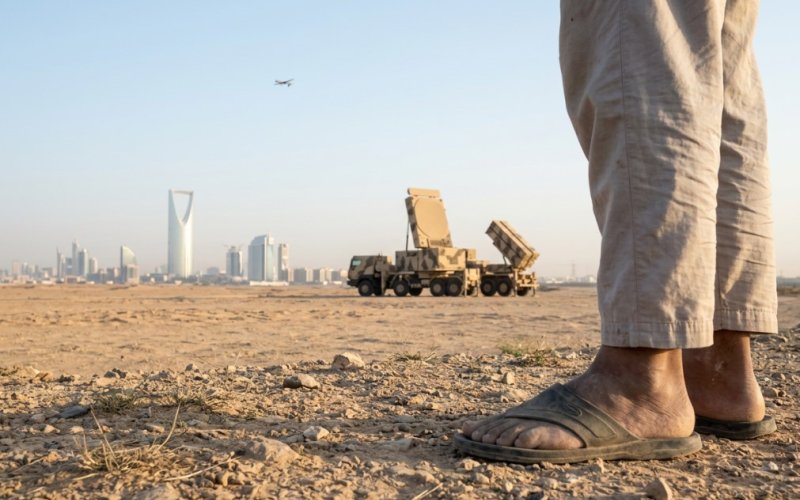
For the kingdom, the threat is more than a forecast. The Associated Press reported on October 25 that a ballistic missile and a drone aimed at Riyadh had been intercepted. An ISW analytical review also records a series of Houthi attacks on the Saudi capital and its surroundings in October.
That explains why Saudi Arabia wants direct contact with Tehran. Even strong air defenses cannot remove the economic cost of a constant threat. Insurance, air travel, investment events and export infrastructure depend not only on how many targets are intercepted but on expectations of the next attack.
Saudi participation in the talks should therefore not be read as a sudden end to Saudi-Iranian differences. Neighbors can remain rivals and still negotiate, so that their rivalry does not wreck their own economic foundations.
The United States: Restraining an Ally or Waiting for the Right Moment
Reports that Washington is unwilling to back a strike immediately are not the same as a rejection of the military option. They concern the readiness of the American side and the timing of an operation. Fundamental opposition to an attack and a proposal to postpone it are different decisions.
Diplomatic contacts continue at the same time. An Iranian representative said the exchange of messages with the United States is ongoing despite fears of a new war. That points to a channel for conveying terms and warnings, though the existence of a channel does not guarantee an agreement.
Washington's task is complicated by several commitments: support for Israel, protection of the American presence in the region and relations with the Gulf states. An operation that serves one goal may jeopardize the others.
Where the Current Buildup Leads
The immediate dilemma is between limited military action and a diplomatic pause. In the first case, Iran's response will be decisive: the sides may try to end the exchange of fire, or they may widen the list of targets. In the second, military readiness remains in place as leverage during negotiations.
The most dangerous scenario is gradual expansion of the conflict without any single decision to fight a major war. A strike prompts a response, the response requires restoring deterrence, and then infrastructure and the interests of third countries come under threat. Each participant justifies its latest step as self-defense, yet the overall scale of fighting keeps growing.
The preparations for such a trajectory are plainly visible. So are the efforts to stop it: the talks in Tehran and the continuing exchange of messages with Washington. The key indicator in the coming days is therefore not the volume of the rhetoric but whether the parties can agree on the limits of the permissible before the next strike. Military readiness already exists. A political mechanism that would reliably keep it from being used has yet to be built.